
5 Mistakes to Avoid With Bathroom Remodeling
Shower tile installed before the waterproof membrane is inspected is one of the most common re-do calls in residential remodeling. In Clark County, it also fails rough inspection, which means the tile comes back off at the homeowner’s expense. The five costliest bathroom remodeling mistakes aren’t tile color or vanity style. They’re paperwork and sequencing failures that happen before the demo crew shows up, and Boulder City homeowners keep making them because nobody walks them through the job order or the contract first. If you’d rather have a pro line it up, call (844) 797-9259.
Key Takeaways
- A lump-sum “full bathroom remodel” contract hides what’s excluded. Insist on line-item scope.
- Shower pan, drain, and rough plumbing work require a Clark County building permit. The permit holder is legally responsible for the inspection.
- Tile goes down after waterproofing inspection, not before. Vanity goes in after rough plumbing sign-off.
- Confirm rough-in dimensions before you buy a toilet, faucet, or drain assembly.
- Every change gets a written change order. Verbal “go ahead” is where surprise invoices come from.
Mistake 1: Signing a contract with no line-item scope
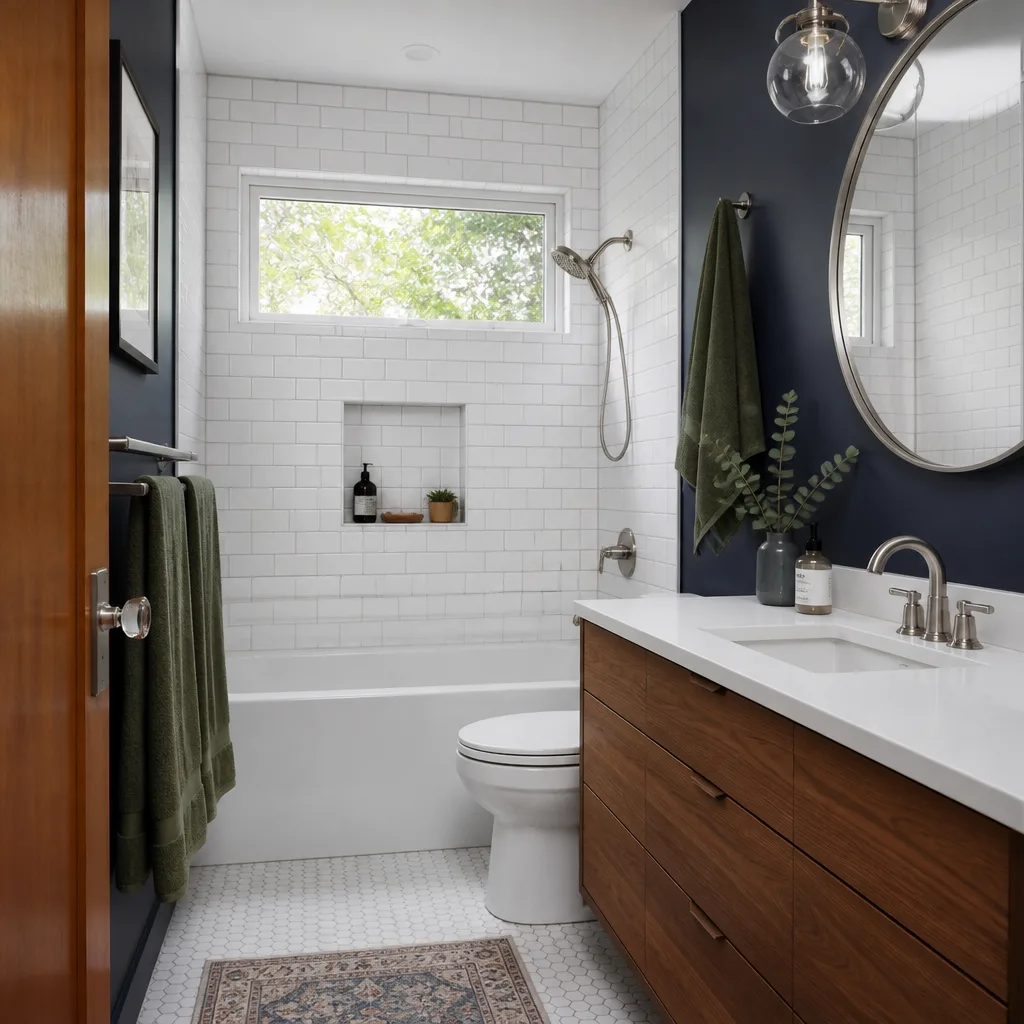
A contract that says “full bathroom remodel, $18,500” tells you almost nothing. It doesn’t say whether the tile is porcelain or ceramic, whether the old tub gets hauled away, whether the drywall behind the shower gets replaced when it’s soft, or whether the exhaust fan is included. Every one of those is a real line item on a real job. When the contract is a single number, the contractor and the homeowner are both guessing at what’s covered, and that gap is where disputes start.
What a line-item scope actually looks like:
- Demo and disposal: what comes out, who hauls it, dumpster included
- Rough-in: plumbing moved or reused, electrical for vanity and fan, any framing
- Substrate and waterproofing: cement board or foam board, membrane brand and method, flood test
- Tile: square footage, material and setting method, grout and caulk lines
- Fixtures: exact models, who supplies them, who installs them
- Finish work: paint, trim, caulk, final clean
We’ve walked into Boulder City bathrooms where the homeowner was quoted a “turnkey” price, then charged extra for the cement board, the shower valve, and the trip to the dump. All three were fair costs. None of them were in the contract. A written price before work begins, with the scope spelled out line by line, is what prevents that. The Garrison Standard puts it in writing every time, no exceptions, because a number that moves after the tools come out is a number you can’t plan around.
Mistake 2: Skipping the Clark County building permit
Shower pan replacement, drain relocation, and any rough plumbing or electrical change in a bathroom require a permit through Clark County. If your home is inside Boulder City limits, the city issues its own permits through its building department. Either way, the work needs to be inspected, and the homeowner is the one who owns the risk if it isn’t.
What gets flagged at inspection:
- A shower pan with no pre-slope, or a membrane that wasn’t flood-tested
- Drain assemblies installed without the right clamping ring
- Electrical work in a wet location without GFCI protection
- Ventilation that doesn’t meet code for the room’s square footage
Why it matters at resale: an unpermitted bathroom is a title and disclosure problem. A buyer’s inspector finds the new tile, pulls the permit history, finds nothing, and the deal slows down. Some lenders won’t finance over it. The fix is almost always more expensive than the permit would have been.
Who is legally responsible for pulling it? In Nevada, the licensed contractor performing the work pulls the permit, and the permit is issued to that contractor. If a homeowner pulls an owner-builder permit on work they hired out, they take on the inspection liability themselves. When you hire us for Bathroom Remodeling in Boulder City, the permit is pulled under our name, the inspections are scheduled by us, and the signed-off card stays with the project file. That’s not a favor. That’s how the job is supposed to run.
Mistake 3: Getting the sequencing wrong

Sequencing is where most bathroom re-dos come from. Tile goes down before the waterproofing is inspected, and the tile comes back off. The vanity goes in before rough plumbing is signed off, and the plumber has to work around cabinetry. Both are avoidable, and both cost the homeowner money when the order is wrong.
The order we follow on a full bathroom:
- Demo and haul-out
- Rough framing, plumbing, and electrical, then the rough inspection
- Substrate and waterproofing, then the flood test with the inspector present
- Tile floor, then walls, then grout and caulk
- Vanity, toilet, and trim after plumbing trim-out
- Paint, hardware, and final clean
That order isn’t a preference. It’s the sequence the inspection schedule requires. If a crew tells you they’ll “get the tile in first and catch up on the pan later,” that’s a red flag worth acting on before the first box of tile gets opened. We’ve seen this cost Boulder City homeowners entire weeks of rework and, in one case, a full re-tile when the membrane couldn’t be verified under the finished floor.
When to call a pro: anything past surface work (paint, a vanity swap, a light swap) should go to a licensed contractor. Waterproofing, plumbing rough-in, and electrical in wet locations are not weekend projects, and a botched shower pan leaks into the framing before you ever see it.
Related services in Boulder City: consider the Kitchen Remodeling in Boulder City team if you’re planning both rooms in the same season, and the broader General Contractor in Boulder City service for structural or permit-heavy work.
Mistake 4: Buying fixtures before you confirm rough-in dimensions
Fixtures go in after the space is measured, not before. A 12-inch rough-in toilet ordered for a 10-inch rough-in space won’t fit against the wall, and it’s a $400 return plus a week of delay while the right one ships. Rough-in is the distance from the finished back wall to the center of the drain or supply line. It’s a fixed dimension set by the plumbing in the floor or wall, and it doesn’t move just because you bought the toilet first.
What to confirm before you buy:
- Toilet rough-in (usually 10, 12, or 14 inches in older Boulder City homes, 12 is common)
- Faucet spread and valve type, especially if you’re keeping the existing valve body
- Vanity width and depth against doorway swing and cabinet clearance
- Shower drain location before you order a linear or offset drain assembly
We work with a documented roster of brands going into these jobs, including Kohler and Moen fixtures, along with Ameristar and Jerith products where the setup calls for them. When the model number is on the plan before we install, we can confirm rough-in specs against the plumbing before the box is opened. When the homeowner has already ordered, we check the fit and let them know before anything gets set, because a phone call before the return window closes is a lot cheaper than a reorder after.
Mistake 5: No written change-order process
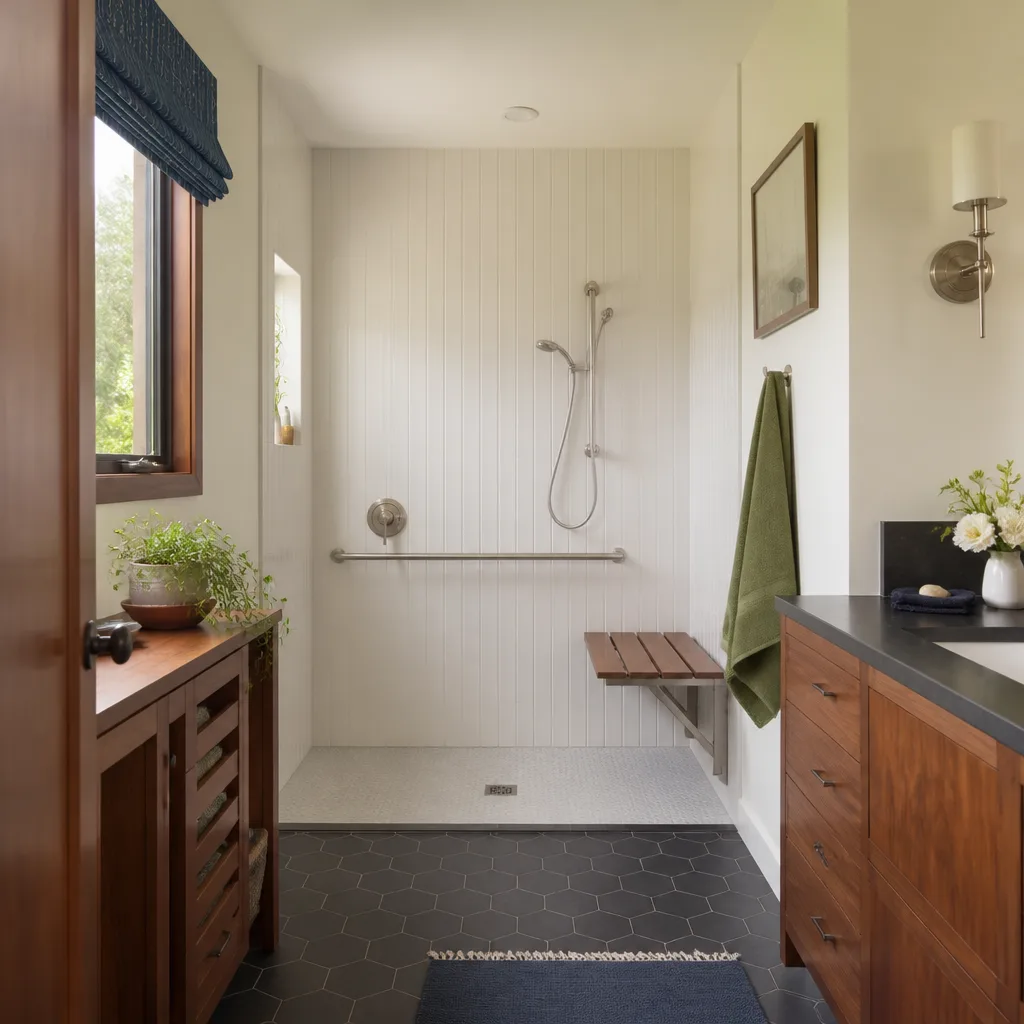
Verbal approvals for mid-job upgrades are the source of nearly every “surprise invoice” complaint we hear. The homeowner says “sure, go ahead and add the niche” over the phone. The contractor adds the niche and bills for it. Six weeks later the invoice arrives and nobody agrees on the price because nobody wrote it down. Both sides are telling the truth as they remember it. That’s the problem with verbal approvals.
A written change-order clause, in plain English, does four things:
- 1
States that no change to scope is authorized verbally, in either direction
- 2
Requires a written description of the change and the added or reduced cost before work starts
- 3
Confirms the change can affect the schedule, and by how much
- 4
Gets signed by the homeowner and filed with the original contract
That’s the standard we hold ourselves to. When a homeowner wants to move the shower valve, add a bench, or upgrade the tile mid-job, we write it up, price it, and get a signature before any of it gets installed. No change order, no change. It sounds rigid. In practice it’s the thing that keeps a Boulder City bathroom remodeling job on budget and on schedule, because the price on the original contract stays exactly where it started.
The Bottom Line
The five mistakes that cost Boulder City homeowners the most money aren’t design calls. They’re a contract with no line items, a permit that never got pulled, work done in the wrong order, fixtures bought before dimensions were confirmed, and a verbal “yes” that turned into a surprise invoice. Every one of them is preventable with a written scope, a pulled permit, a documented sequence, and a change-order process that gets signed.
Bradford Remodeling Boulder City works under The Garrison Standard, which puts the price and the guarantee in writing before any tool comes out. Every completed project carries the 365-Day Done Right Promise: if the work fails inside that window, we come back and correct it at no charge. Technicians are background-checked and uniformed, our technicians bring up to 22 years of experience to the job, and a live person answers the phone at any hour. For a bathroom you don’t have to second-guess, or for help on the broader project, see the Bradford Remodeling Boulder City home page.
If you’re in Boulder City and need help, Bradford Remodeling Boulder City offers free estimates. Call (844) 797-9259 to schedule yours.
Frequently Asked Questions
Yes, for anything beyond cosmetic work. Shower pan replacement, drain relocation, plumbing rough-in, and electrical changes all require a permit, either through Clark County or the city’s own building department depending on where the home sits. The licensed contractor performing the work pulls the permit, and the inspections get scheduled as the job progresses. Skipping it is a resale problem later and a liability issue now. Call (844) 797-9259 for a free estimate that includes the permit scope.
Plan on roughly $8,000 to $15,000 for a cosmetic refresh (tile, vanity, fixtures, paint on existing plumbing), $18,000 to $32,000 for a mid-range full remodel with a new shower pan and moved plumbing, and $35,000 and up for a layout change that moves walls or relocates the toilet and shower. Those ranges depend on the substrate condition under the old tile, which nobody knows until demo. Call (844) 797-9259 for a written line-item price on your specific bathroom; estimates are free.
A cosmetic refresh typically runs one to two weeks. A full remodel with permit and inspections usually runs four to six weeks, and the inspection schedule adds specific waiting days that no contractor can compress: the flood test, the rough inspection, and the final walk-through each have to be scheduled and passed. Layout changes that move plumbing land closer to six weeks. Call (844) 797-9259 for a schedule estimate on your project.
Not without a signed change order. Our written price before work begins covers the scope as itemized, so anything outside that scope is a separate written approval, priced before it’s installed. What can change the price is what’s behind the wall: hidden water damage, rotted framing, or a drain that’s plumbed differently than the plan assumed. When we find those, we stop, write it up, and get your approval before we proceed. Call (844) 797-9259 for a free estimate.
Written by the team at Bradford Remodeling Boulder City.
Need Construction Help?
Call Bradford Remodeling Boulder City - licensed & insured, here with fast after-hours help in Boulder City.
(844) 797-9259