Last updated November 17, 2026








Free written scope consultation - allowances, timeline, and change-order rules on paper before a single trade is scheduled
How to Hire a Construction Contractor in Boulder City: A Step-by-Step Guide
In a city of roughly 7,000 people, your contractor’s last client is probably someone you know. That cuts both ways. The social pressure to avoid a bad review runs in every direction, and “everybody says they’re good” quietly replaces the one thing that actually protects your money: a written scope of work. The usual advice to get three bids and check reviews was built for big-city markets with deep contractor pools. Boulder City doesn’t have one. Dismiss the wrong crew here and you may have dismissed the only qualified one. This guide gives you a vetting framework sized to a small-municipality market, from Nevada license checks to the exact contract language that separates a real guarantee from a slogan.
Quick Answer
To hire a construction contractor in Boulder City, verify the contractor’s license directly with the Nevada State Contractors Board, confirm the license classification matches your project type, and require a written contract with a line-item scope, fixed price, payment schedule, guarantee terms, and named subcontractors before you pay any deposit. Compare bids on unit costs, not presentation. In a tight market, those written documents matter more than any referral.
Styles & brands we work with
- Kitchen remodeling
- Bathroom remodeling
- Home additions & ADU
- Roofing
- Windows & doors
- Driveway & pavers
- Fence
Table of Contents
- How to Verify a Contractor’s Nevada License in Under Five Minutes
- What License Classifications Actually Mean for Your Project
- The Contract Line Items You Need Before Any Deposit
- How to Tell a Real Guarantee From a Marketing Phrase
- How to Compare Bids When Scopes Aren’t Identical
- Small-Market Red Flags: Spotting an Overextended Crew
- The Subcontractor Questions Most Homeowners Never Ask
- Why Referrals Aren’t Enough in a Small City
How to Verify a Contractor’s Nevada License in Under Five Minutes
Nevada requires anyone contracting for construction work to hold a license from the Nevada State Contractors Board (NSCB). The board’s public license lookup is free, and you can run it in about the time it takes to make coffee. You don’t need the contractor’s permission and you don’t need to ask them for paperwork. Look it up yourself.
Here’s the five-minute process:
- Ask for the contractor’s license number in writing, by text or email. A licensed contractor gives it without hesitation.
- Open the NSCB license search and enter that number.
- Confirm the status reads active. A suspended or expired license is a stop sign, not a negotiation point.
- Check that the classification listed covers the work you’re hiring for (more on that below).
- Look for any disciplinary actions or complaints on record, and read what they say rather than just counting them.
Boulder City sits in Clark County, and the same NSCB lookup covers contractors working here as anywhere in the state. If a crew shows up with an out-of-state license and a story about how Nevada reciprocity works, verify it anyway. We’ve seen homeowners in Boulder City hand over deposits to crews whose license had lapsed months earlier, usually because the referral was strong enough that nobody checked. A referral tells you someone was happy. A license lookup tells you someone can legally do the work.
What License Classifications Actually Mean for Your Project
Nevada licenses contractors by classification, and the classification has to fit the scope. Hiring a residential-only licensee for commercial work, or a specialty licensee for a whole-home remodel, creates a real problem: the work may fall outside what the license permits, and your recourse shrinks if something goes wrong.
Broadly, Nevada issues three categories of license:
- Class A (general engineering and general building). Covers large-scale and multi-trade construction. Overkill for most Boulder City homes, but it tells you the contractor has cleared a higher bar.
- Class B (general building). Covers construction of structures and most whole-property work, including remodels involving multiple trades. This is the classification most full-service remodeling contractors hold.
- Class C (specialty). Covers a defined trade: plumbing, electrical, roofing, cabinetry, and so on. A Class C contractor whose subclass matches the work is a legitimate hire for a single-trade job, but not the lead on a whole-home remodel that touches framing, mechanical, and finishes.
For a kitchen or whole-home project in Boulder City, you want a Class B general contractor or a firm holding both a Class B and the relevant Class C subclass for any trade work it self-performs. It’s not unusual to see a remodel firm that holds a general license and self-performs cabinetry installation, for example. The question to ask directly: “Which classification covers my scope, and will every trade on this job be performed by a licensed party?” If the answer is vague, that’s information. If you’re planning a larger project, our guide to working with a general contractor in Boulder City walks through how a compliant build is sequenced.
The Contract Line Items You Need Before Any Deposit
This is the part where Boulder City’s small-market dynamic matters most. In a referral-driven town, a handshake and a good name can feel like enough. It isn’t. A written contract is the only thing that survives a dispute, and the line items below are what a real one contains before a single dollar changes hands.
Your contract must include:
- Line-item scope of work. Every task, room, and material category broken out separately. “Kitchen remodel” is not a scope. “Remove 12 linear feet of upper cabinets; install KraftMaid semi-custom base and wall cabinets; rough-in for relocated sink; install Caesarstone countertop” is a scope.
- Fixed price, written before work starts. Not a range, not a “starting at.” A real number with no language allowing it to move at the door. Change orders should be written and signed separately, and only for work the homeowner approves in writing.
- Material specifications with brand and model. Documented manufacturers, not “premium cabinets.” If the brand roster includes KraftMaid, Wellborn, James Hardie, GAF, and Therma-Tru, the contract should name the actual product going into your house.
- Payment schedule tied to milestones. Never a large deposit before materials are ordered. Progress payments should correspond to completed, verifiable work.
- Permit responsibility. Who pulls them, who pays, who’s on site for inspection. In Boulder City, permit and inspection responsibility should be spelled out explicitly, not assumed.
- Guarantee terms. The duration, what fails are covered, and what the contractor will do about them. See the next section for how to read this.
- Named subcontractors. Every specialty trade expected on the job, by company. More on this below.
- Start and completion dates. Written, not promised verbally.
A written, line-item price before work starts is the single best predictor we know of a clean job. When we say the price is squared away, we mean it’s on paper with no language that lets it drift.
How to Tell a Real Guarantee From a Marketing Phrase
“Fully guaranteed” and “satisfaction guaranteed” are not guarantees. They’re adjectives. A real guarantee states three things: how long it lasts, what it covers, and what the contractor does when it fails. If any of those is missing, you have a slogan, not a promise.
Read the guarantee clause against this checklist:
- Duration in specific days or months. “We stand behind our work” has no shelf life. “365 days from completion” does.
- Covered failures named. What counts as a fail? A cabinet door that hangs wrong after six months, a roof detail that leaks, a tile joint that cracks. The clause should describe the standard a repair or install has to hold to.
- The remedy spelled out. The contractor returns and corrects the work at no charge. Not “at our discretion,” not “subject to review.” A free return visit is the remedy.
- The guarantee documents. It’s a signed document in your hand at job close, not a verbal assurance at the kickoff meeting.
Ask every contractor you interview to quote their guarantee clause verbatim and then hand you a copy of the actual document. In our experience, crews with a real guarantee are glad to show it, because it’s a selling point. Crews with a marketing phrase get vague fast. A full-year written guarantee on completed work, with a no-charge return visit if the repair fails inside the window, is the standard worth holding your hire to in Boulder City.
How to Compare Bids When Scopes Aren’t Identical
Three bids for the “same” project rarely describe the same work. One contractor prices a full tear-out, another prices a cabinet reface, and the third omits demolition entirely. Presented side by side, the cheapest number often reflects the smallest scope. Comparing the total prices tells you almost nothing.
Translate each bid into unit costs. Here’s the method:
- Break the work into the same categories across all bids. Demolition, rough-in, cabinetry, counters, fixtures, finishes, labor.
- Match every line to a quantity and a unit. “Cabinet install, 22 linear feet” and “cabinet install, 18 linear feet” are now comparable.
- Divide the line price by the quantity. Now you’re comparing dollars per linear foot, per square foot of tile, per fixture.
- Note what’s missing on each bid and request the missing lines in writing before you compare totals again.
- Flag any line with no unit or quantity. “Labor, $12,000” is a bid that hasn’t been scoped yet.
Brand-level detail makes this more useful. One bid might specify a mid-tier Therma-Tru door and another a builder-grade unit; both say “front door.” KraftMaid and Wellborn cabinets, or Cambria and a lesser slab, land at genuinely different unit costs, and the spec is what lets you see which bid actually includes the product. Once every bid is a unit-cost sheet, you’re comparing labor and materials instead of how well each contractor presents. The bid that wins on a unit-cost comparison is the one you hire.
Small-Market Red Flags: Spotting an Overextended Crew
A contractor running four Boulder City jobs at once with a two-person crew will produce delays that look like bad luck. In a large market this is annoying; in Boulder City it’s a problem because there’s no second wave of contractors standing by to pick up the slack. Here’s the list of signals we’d watch for:
- Your start date keeps moving with no written change. Overextension shows up first on scheduling. A confident crew commits dates in writing; an overloaded one negotiates them verbally and misses them.
- No one on site for days at a stretch. Gaps between phases with no crew present are normal if the schedule says so. Unexplained absences are not.
- Material deliveries don’t match the milestone. Cabinets that should have arrived two weeks ago suggest the contractor’s supplier relationships and cash flow are being stretched across several sites at once.
- The crew list is the same two faces on every job. A small firm can be excellent; a small firm with no bench is a capacity problem waiting to hit yours. Ask how many active projects they’re running.
- The project manager handles your job and three others. Ask directly how many projects the PM assigned to you is managing. A number above two or three is worth asking more about.
- Slow return on written requests. If emails about scope take a week now, don’t expect faster answers in the middle of the job.
None of these alone disqualifies a crew. Two or three together, in a small market, describe a contractor who took your job to keep another job funded.
The Subcontractor Questions Most Homeowners Never Ask
In a market this size, most general contractors sub out specialty trades. That’s normal and often the right call, since a licensed electrical or plumbing subcontractor is doing work a general contractor shouldn’t self-perform. The issue is that homeowners rarely ask who those subs will be. Ask before you sign.
Questions worth putting in writing:
- Which specialty trades will be subcontracted? Electrical, plumbing, HVAC, drywall, roofing, and tile are the usual candidates.
- Who are they, by name? Your contract should name them. That way there’s no substitution after signing.
- Are they licensed for their trade class? The NSCB lookup works for subs too. Run it.
- Who schedules them, and who supervises their work on site? Subcontractors don’t manage themselves. Someone on the GC’s side is responsible for seeing their work squared away.
- Are they covered the same way for guarantee purposes? The guarantee should survive a subcontractor’s failure, which means the GC’s 365-day terms apply even when the sub’s scope was the issue.
Your contract should name every specialty trade and confirm each is licensed and background-checked. On a kitchen project, this is where a general remodeling firm that coordinates the whole job reads a lot like our kitchen remodeling in Boulder City approach to documenting each trade and its scope. When the bathroom comes up, the same discipline applies to bathroom remodeling in Boulder City.
Why Referrals Aren’t Enough in a Small City
Referrals are a real signal. A Boulder City neighbor who’s happy with a crew is giving you information you can’t buy. But a referral doesn’t check a license, name a subcontractor, or hold a guarantee clause to a deadline. It also can’t tell you what the referral’s scope actually was. “They were great on our roof” doesn’t mean they can run a whole-home remodel. And in a tight network, the social cost of complaining about a local crew can be high enough that negative experiences go quietly unmentioned.
The referral is a starting point. The written documents are the actual vetting:
- Run the NSCB lookup. Five minutes, independently.
- Get a written, line-item price. No start on any work without one.
- Read the guarantee clause. Duration, coverage, remedy, in writing.
- Name the subcontractors. In the contract, before signing.
- Confirm background-checked, uniformed technicians. You should know who is walking into your home before the crew arrives, not after.
If a referral passes all five, you’ve confirmed what the network couldn’t. If it fails any of them, the referral was friendliness, not proof.
Common Mistakes to Avoid
- Comparing bids by total price only. Different scopes produce different totals. Unit costs are the only honest comparison.
- Skipping the NSCB lookup because the referral is strong. The best-known crew in town is still required to hold an active license. Check it anyway.
- Accepting “guaranteed” as a guarantee. Without a duration, a coverage list, and a remedy, the word carries no weight in a dispute.
- Paying a large deposit before materials are ordered. A progress schedule tied to completed work protects you; front-loaded deposits protect the contractor.
- Not asking about subcontractor names. Most Boulder City GCs sub specialty trades. Your contract should name them, license-check them, and cover them under the guarantee.
- Assuming the local contractor with the most yard signs has capacity. Yard signs measure marketing, not bandwidth. Ask directly how many active projects they’re running.
- Letting change orders happen verbally. Change orders must be priced and signed before the change is performed, or your written price has stopped protecting you.
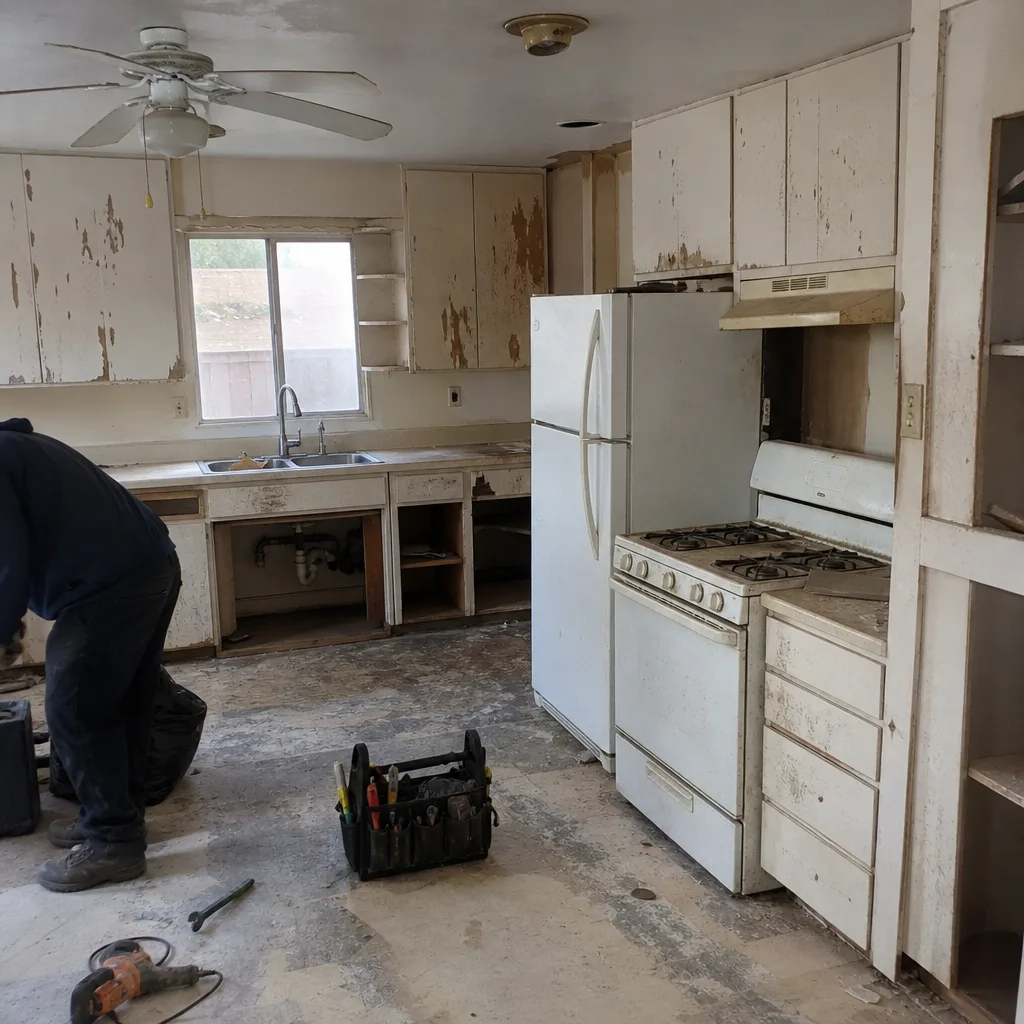
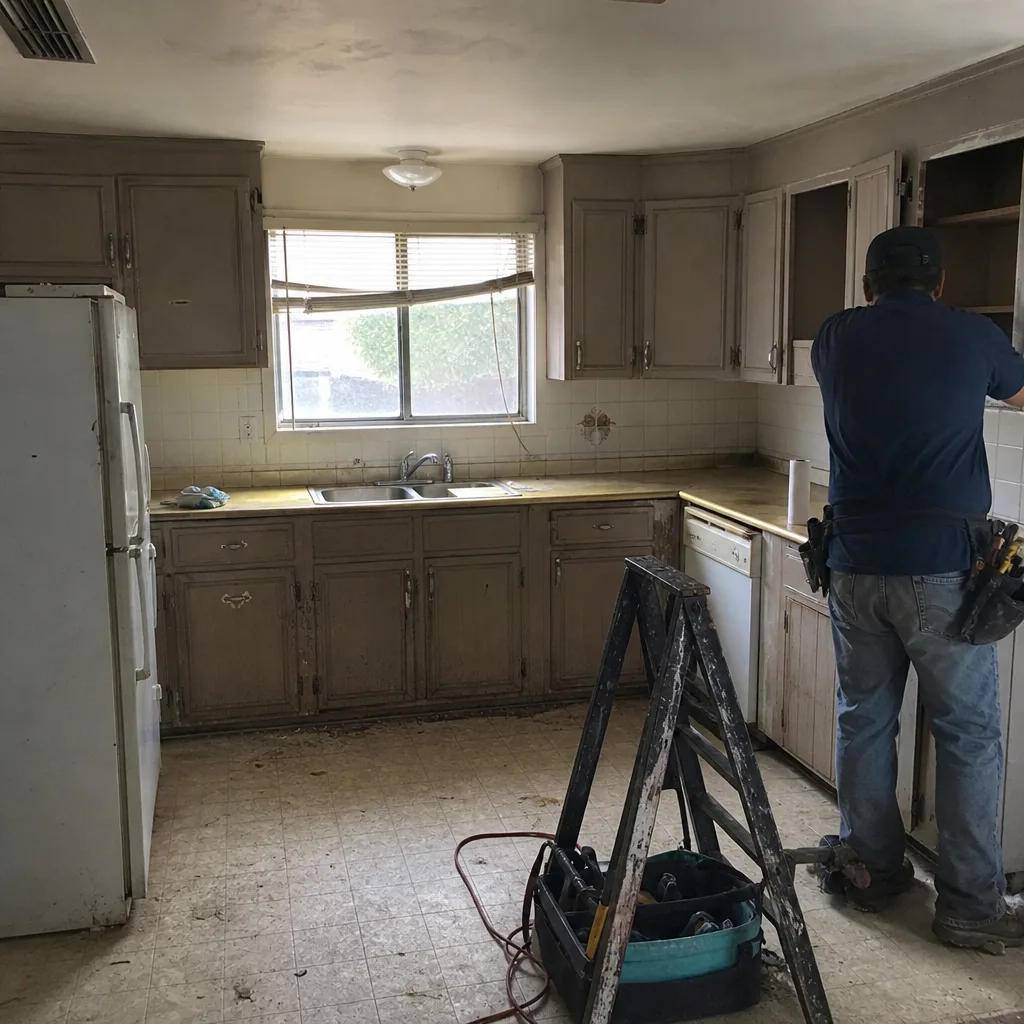
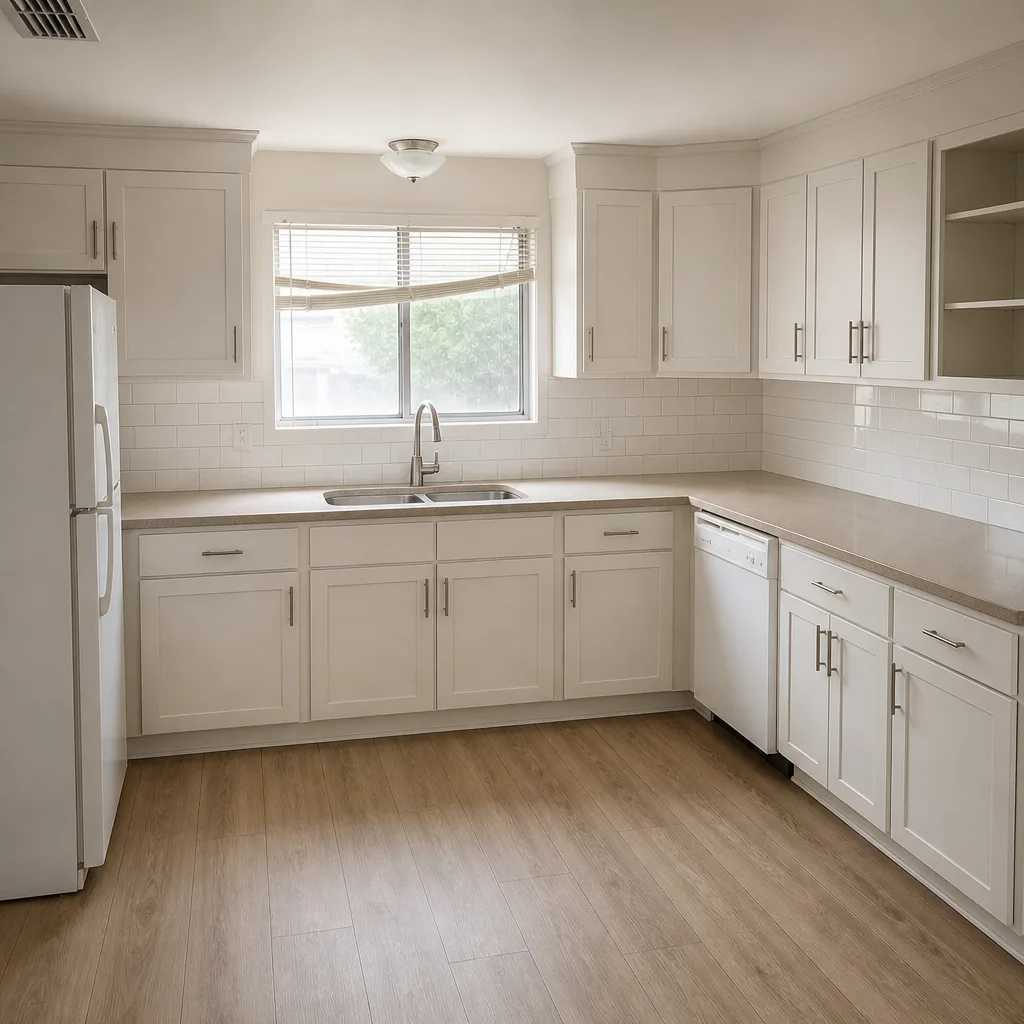
See the difference
 Before
 After
 Before
 After
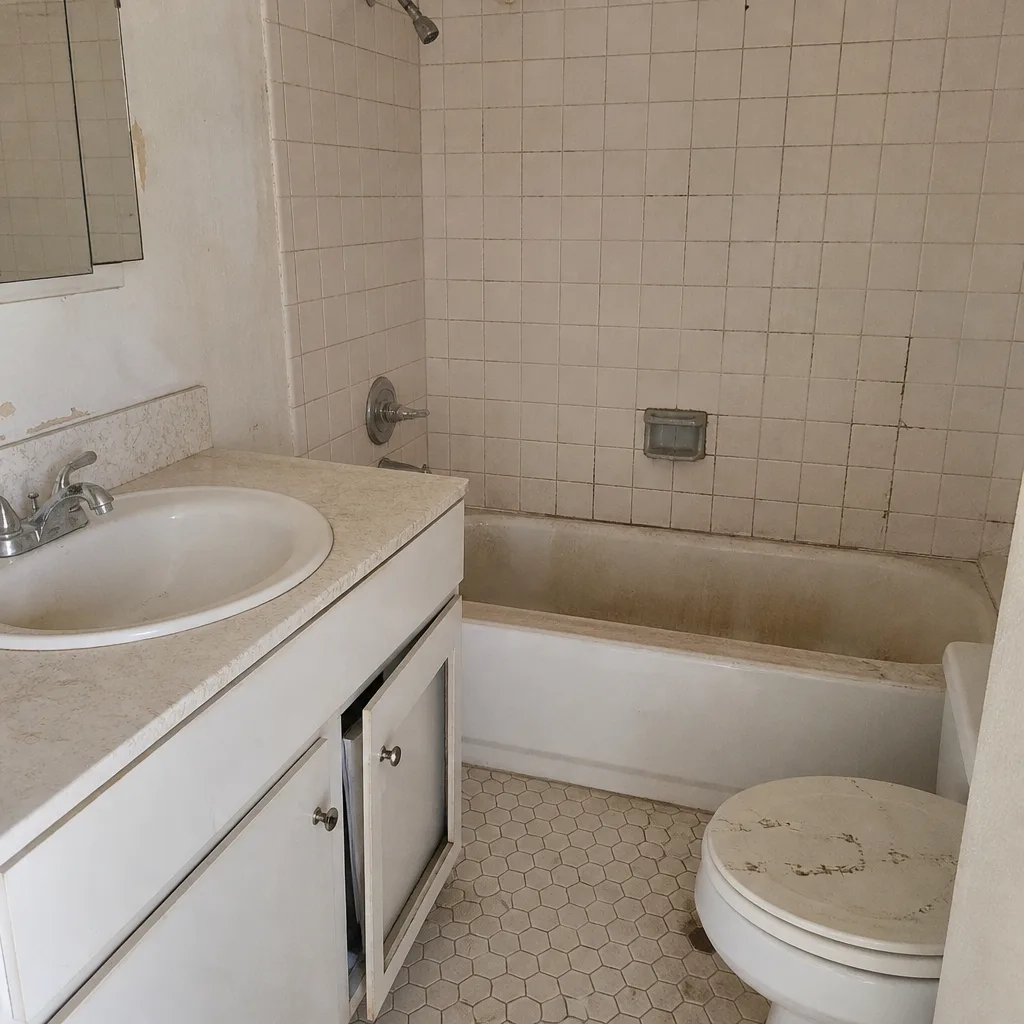 Before
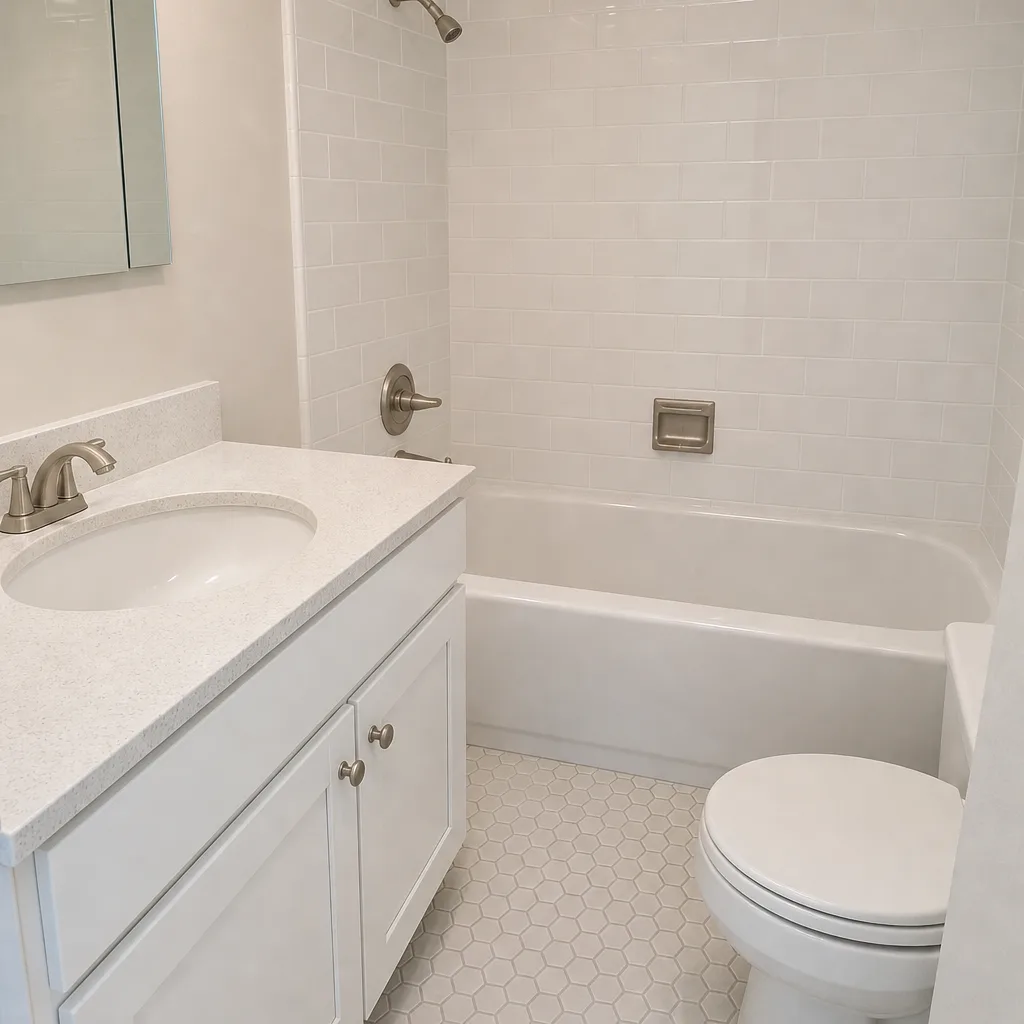 After
When to Call a Professional
Bring in a licensed professional when the work involves the permit system, more than one trade, or anything that can fail in an expensive way. Whole-home and structural work, kitchens and bathrooms that move plumbing or electrical, roof replacement and exterior cladding, and any project that requires a Boulder City inspection.
A kitchen project that touches plumbing and electrical is a professional job by definition. So is a bathroom with a relocated drain. A whole-home remodel always is. And any project where the budget exceeds what you can absorb if the work fails.
Bradford Remodeling Boulder City offers free estimates in Boulder City. Call (844) 797-9259 for a written, line-item quote before you commit.
Frequently Asked Questions

Contractors don’t typically charge for the estimate itself; the project cost is the number that matters, and that depends on scope. You should always receive a written, line-item price before any work starts with no language that lets it move at the door. Call (844) 797-9259 for a free, written estimate specific to your scope.
Yes. The NSCB public lookup is free and takes about five minutes, and it confirms active status, classification, and any disciplinary record. Don’t rely on the contractor’s word or on a referral, no matter how strong. Call (844) 797-9259 with questions about our licensed, insured status for your project.
The price shouldn’t change once it’s written. A disciplined contractor provides a fixed, line-item price before any work begins, and only signed change orders can modify it. If a contractor won’t commit to a written price, that’s a signal to walk. Call (844) 797-9259 for a written price with no numbers that move.
It covers completed work for a full year from job close. If the work fails within that window, the contractor returns and corrects it at no charge. That’s a specific duration, specific coverage, and a specific remedy, all in a written document you receive. Call (844) 797-9259 for a copy of the guarantee terms with your estimate.
Most remodel and construction work requires a permit through the city’s building department, and structural, electrical, plumbing, and mechanical work generally require inspection regardless of cosmetic scope. Your written contract should state who pulls the permit and who is on site for inspection. Call (844) 797-9259 to review your scope and permit needs.
Get start and completion dates in writing with your contract. A whole-home remodel runs considerably longer than a kitchen or bath, and the written schedule is the only reliable guide. A flurry of yard signs doesn’t tell you a crew has capacity for yours. Call (844) 797-9259 for a written project calendar with your free estimate.
The Bottom Line
In Boulder City, the “get three bids and check reviews” approach underserves you. The contractor pool is small, the referral network is tight, and social pressure can bury the complaints you’d want to hear. So the framework has to run on paper: verify the license directly with the NSCB and confirm the classification matches your scope, require a line-item written price before any deposit, read the guarantee clause for duration, coverage, and remedy, and name every subcontractor in the contract. Compare bids on unit costs, not presentation. That’s what squared away looks like, whether you hire us or anyone else in Boulder City. It’s how you protect the only thing that matters in a small market: a written record when the handshake isn’t enough.
If you’d rather start with the paperwork in hand, we’ll walk you through a free written estimate and hand you the guarantee terms up front. Call (844) 797-9259 to schedule your free estimate with Bradford Remodeling Boulder City, or start with our Bradford Remodeling Boulder City home page for what we do and how we work. Our technicians have up to 22 years of experience, and every price and every guarantee goes in writing before a single tool comes out.
Written by the team at Bradford Remodeling Boulder City.