
Last updated November 17, 2026







Free written scope consultation - allowances, timeline, and change-order rules on paper before a single trade is scheduled
Kitchen Remodeling Maintenance Schedule: What to Do and When
The caulk joint between your countertop and backsplash has a service life of 3 – 7 years in a dry desert climate – and when it fails, water migrates into the substrate behind the tile before you see a single visible crack. In Boulder City’s low-humidity environment, it fails on the shorter end of that range. That single fact explains why some remodeled kitchens look new at year twelve and others are already soft at the sink base by year five. This guide lays out a maintenance schedule organized by material and by season, the appliance tasks that keep warranties valid, and the under-sink inspection that catches slow leaks before they turn into subfloor replacements.
Quick Answer
Maintain a remodeled kitchen on three rhythms: a monthly 20-minute check (caulk, hardware, filters, disposal), a seasonal deep clean tied to your appliances and stone, and a 90-minute annual walkthrough that covers grout, seals, ventilation, and the under-sink plumbing. In Boulder City, hard water and low humidity push caulk and aerator maintenance to the shorter end of manufacturer timelines – so budget one extra caulk inspection each spring.
Styles & brands we work with
- Kitchen remodeling
- Bathroom remodeling
- Home additions & ADU
- Roofing
- Windows & doors
- Driveway & pavers
- Fence
Table of Contents
- The Annual 90-Minute Walkthrough
- Cabinet Hardware, Hinges, and Drawer Glides
- Quartz and Stone Countertops: Sealing and Care
- Grout Resealing and Caulk Inspection
- Appliance Maintenance That Protects Warranty Coverage
- Boulder City Hard Water: Aerators and Dishwashers
- The Under-Sink Inspection Checklist
- Documenting Maintenance to Support Your Guarantee
The Annual 90-Minute Walkthrough
Treat the annual walkthrough like a service appointment, not a chore. Block 90 minutes, put a flashlight and a roll of blue tape in your hand, and move through the kitchen in the same order every year so nothing gets skipped. Blue tape marks the spots that need a closer look – a hairline in the grout, a hinge that swings slightly lazy, a water stain on the cabinet floor under the sink.
- Open every cabinet and drawer. Look at hinge plates, glide tracks, and the cabinet floor for swelling, discoloration, or debris that hints at a leak.
- Run your finger along every caulk joint. Countertop-to-backsplash, sink-to-counter, and where the backsplash meets the wall. Any crack, gap, or peeling edge gets taped.
- Inspect grout lines under raking light. A flashlight held at a low angle reveals cracks and pinholes that daylight hides.
- Check the range hood. Remove the filter, hold it up to the light, and confirm the fan pulls a tissue against the grille.
- Look under the sink with a dry paper towel – more on this below.
- Test every GFCI outlet with its test button and confirm it resets.
- Note the date on a maintenance log or in a kitchen binder.
In Boulder City, the dry climate makes wood cabinets and hardwood floors more stable than they’d be in coastal markets, but it works against caulk and grout. The same low humidity that keeps a KraftMaid cabinet door from swelling also pulls moisture out of flexible sealants, which is why the annual walkthrough matters more here than the manufacturer’s national average suggests.
Cabinet Hardware, Hinges, and Drawer Glides
Cabinet hardware is the cheapest part of the kitchen to maintain and the most common source of irritation. A single loose hinge screw can tear out of the cabinet face over time, and repairing a stripped screw hole is a bigger job than tightening one.
- Monthly: tighten every visible screw on drawer pulls and door knobs with a screwdriver. Hand-tight, not power-tool tight.
- Quarterly: apply a drop of light machine oil to hinge pivot points. Wipe off excess – oil attracts dust, and desert dust finds every crevice.
- Annually: check the soft-close dampers on drawer glides. If a drawer slams, the damper is failing and can be replaced without replacing the glide.
- Annually: inspect the inside of the cabinet face where hinges mount. Any crack radiating from a hinge screw means the hole is working loose and should be filled and re-drilled before it fails.
Wood cabinet doors can also drift out of alignment over a year of use, especially in a kitchen with a dishwasher that vents humidity near a run of cabinets. A door that rubs the frame at the top corner needs its hinge adjusted by a quarter-turn, not a new door. If a door or drawer face has warped or the finish has lifted, that’s a defect worth documenting – and worth a conversation with your remodeling contractor if the kitchen is still inside the workmanship guarantee window. Our Kitchen Remodeling in Boulder City clients get a written scope at close that lists exactly which hardware brands and finishes were installed, which makes ordering replacement parts a phone call rather than a guessing game.
Quartz and Stone Countertops: Sealing and Care
Not all countertops need the same care. Quartz – Cambria and Caesarstone among them – is engineered with resin and does not require sealing. Natural stone, including granite and marble, does. Knowing which surface you have determines whether the annual task is “seal it” or “wipe it down and leave it alone.”
For quartz surfaces:
- Wipe daily with a damp microfiber cloth and mild dish soap. Skip abrasive pads and anything labeled “scrubbing.”
- Avoid leaving standing water or acidic cleaners (vinegar, lemon juice, citrus sprays) on the surface for long periods – they can dull the finish over years.
- Place a trivet under anything coming off the stove or out of the oven. Thermal shock can crack engineered stone even when the material is rated for heat.
For natural stone surfaces:
- Test for sealant need annually: drip a half-inch of water on the surface. If it beads, the seal is intact. If it darkens the stone within 15 minutes, it’s time to reseal.
- Clean with a stone-safe pH-neutral cleaner before sealing. Never use vinegar, ammonia, or bleach.
- Apply a penetrating sealer in a thin coat, let it sit per the product instructions (usually 15 – 20 minutes), then buff off the excess with a clean cloth.
- Cure 24 hours before normal use.
Boulder City’s hard water is a consideration here – mineral-heavy water left standing on stone can leave faint etch marks over years. Towel-dry the area around the sink after heavy use, particularly around the faucet base and the seam where backsplash meets counter. If you’re planning a new surface and want to know what brands and finishes are available for a specific look, our team at General Contractor in Boulder City can walk through the documented brand roster, including Cambria and Caesarstone, and put the exact specification in writing before the template is cut.
Grout Resealing and Caulk Inspection
Grout and caulk move on different timelines. Grout on a backsplash should be resealed every 2 – 3 years; caulk at the counter-to-backsplash joint should be replaced every 3 – 5 years in Boulder City’s climate. The distinction matters because caulk is a flexible joint designed to absorb minor movement, and once it cracks it channels water behind the tile rather than blocking it.
The annual grout and caulk routine:
- Inspect with a flashlight held low. Cracks read clearly when the light is angled across the surface.
- Pick out loose caulk with a plastic scraper. Never use a metal tool on a stone countertop edge – it will chip.
- Clean the joint with rubbing alcohol and let it dry completely. Caulk over damp surfaces fails in months, not years.
- Apply a thin bead of 100% silicone caulk (not paintable acrylic) in wet areas and along counter joints. Tool it with a damp finger and let it cure 24 hours.
- Reseal grout with a penetrating grout sealer on backsplash and floor tile every 2 – 3 years. Wipe off excess within 10 minutes.
If a caulk line fails and water reaches the substrate behind the backsplash, the damage rarely announces itself. Look for a dark line on the grout, a soft spot behind the tile when you press gently, or a mineral crust at the base. Any of those means the job is beyond a bead of caulk and worth a professional look. Our team has seen this pattern repeatedly in Boulder City homes built in the 1970s and 80s where the original backsplash was set over drywall – once moisture reaches drywall, the fix is tile removal, not caulk. Call (844) 797-9259 to schedule a free estimate if you spot any of those signs.
Appliance Maintenance That Protects Warranty Coverage
Every appliance in a kitchen carries a warranty, and nearly every warranty has a maintenance clause. Skip the maintenance and the manufacturer can deny a claim. The tasks differ by appliance type.
- Refrigerator: vacuum the condenser coils (under or behind the unit) every 6 – 12 months. Dust-clogged coils force the compressor to work harder and void coverage on premature failure. Replace the water filter every 6 months.
- Dishwasher: clean the filter monthly (most brands specify this), run a descaling cycle with a citric-acid cleaner quarterly, and check the door gasket for food debris.
- Range and oven: deep-clean the oven quarterly to prevent baked-on residue from affecting heat distribution. If gas, have the burners and connections checked annually by a licensed technician.
- Range hood: degrease the metal mesh filter every 2 – 3 months by soaking it in hot water and dish soap; replace charcoal filters in recirculating units every 4 – 6 months.
- Garbage disposal: run cold water (not hot) for 10 – 15 seconds after each use. Grind a handful of ice and a half-cup of coarse salt monthly to clean the grind chamber.
Keep receipts and dates. A warranty claim without a maintenance record is an argument; a warranty claim with one is a phone call. The appliances we install in Bathroom Remodeling in Boulder City projects are documented the same way – brand, model, delivery date – and that same documentation discipline carries into kitchens. If you’re facing an appliance failure inside the 365-Day Done Right Promise window and suspect an installation issue, that’s on us to inspect, not on you to diagnose.
Boulder City Hard Water: Aerators and Dishwashers
Boulder City water is hard – calcium and magnesium dissolved in the supply scale out on faucet aerators faster than the manufacturer’s national cleaning schedule anticipates. Manufacturer guidelines often say “clean the aerator once per year.” In Boulder City, we see aerators cake up in 4 – 6 months. That narrows flow, builds pressure at the cartridge, and shortens faucet life.
The adjusted Boulder City schedule:
- Faucet aerators: unscrew and rinse in white vinegar every 3 months. Any aerator with visible white scale gets a 30-minute vinegar soak before reinstalling.
- Dishwasher: descale every 2 months with a citric-acid or vinegar cycle. Hard water leaves scale on heating elements and spray arms, and scale costs efficiency before it causes a visible failure.
- Faucet cartridges: expect cartridge replacement roughly every 3 – 4 years rather than the 5 – 7 you might see quoted. Moen and Kohler offer cartridge replacement parts directly.
- Ice and water dispensers: descale the supply line every 6 months; mineral buildup here affects taste before it affects flow.
- Coffee makers and kettles: descale every 4 – 6 weeks. Boulder City homeowners who do this report their equipment lasting noticeably longer.
If your kitchen was remodeled and you’re seeing low flow at the sink, check the aerator before assuming a plumbing problem. Nine times out of ten the aerator is the culprit, and the fix is a 10-minute vinegar soak. If the aerator cleans up and flow is still poor, that’s when a plumber’s camera inspection is worth it.
The Under-Sink Inspection Checklist
The under-sink cabinet is where the most expensive repairs start as the smallest leaks. A drip from a supply line, a slow seep at the drain tailpiece, or a hairline crack at the disposal mount can take a year to reveal itself – and by then the cabinet base is soft. Once a cabinet base is water-damaged, the fix often reaches into the cabinet run, not just the cabinet box.
Do this quarterly:
- Dry the cabinet floor with a paper towel and inspect for moisture the next day.
- Run your finger along the supply lines – both hot and cold – and feel for dampness at the fittings.
- Check the drain connection at the P-trap for drips after filling the sink and releasing it. A drop now is a puddle in a year.
- Look at the disposal mount for rust or crust at the flange; either hints at a slow leak above the mounting ring.
- Confirm the shut-off valves turn freely. A stiff valve that won’t close is a valve that fails when you need it during an emergency.
- Check the dishwasher supply and drain lines where they pass through the cabinet.
A cheap water-alarm puck set on the cabinet floor is the single best $20 you’ll spend on kitchen maintenance. It’s the difference between a mopped-up puddle and a subfloor replacement. If your inspection turns up a soft cabinet floor or a dark ring on the wood, that’s a call to a professional – the damage is often wider than what’s visible, and covering it up with a new cabinet mat doesn’t stop the moisture behind the cabinet back panel. Call (844) 797-9259 for a free estimate; our team can trace the leak source and give you a written price on the repair.
Documenting Maintenance to Support Your Guarantee
A remodeled kitchen’s workmanship guarantee is only as strong as the paper trail behind it. If a cabinet fails at year eight and the question is whether the failure is a material defect, an installation defect, or a maintenance lapse, the documentation answers it fast. A dated maintenance log turns an argument into a scheduled inspection.
What to keep:
- The written scope from your remodeling contractor – material brands, model numbers, finishes, and product warranties. When Bradford Remodeling Boulder City closes a project, the homeowner gets a written scope, signed workmanship guarantee, and the manufacturer documentation for every installed product.
- A dated maintenance log – photos and notes of every annual walkthrough, any caulk replacement, any reseal.
- Appliance receipts and filter purchase records – warranty departments respond to evidence.
- Photos of any defect when you first see it.
The 365-Day Done Right Promise means that if installation-caused failure happens inside the first year, we return and correct it at no charge, no argument. Inside that window, we ask only for a call and a description – not a paper trail. Past the first year, the manufacturer warranty is doing the work, and maintenance records are what keep that warranty live. Maintaining the log is the difference between a kitchen that hits twenty years looking earned and one that hits year eight with a soft cabinet and no answers. For a broader look at how we structure a project from scope to close, visit our Bradford Remodeling Boulder City home page.
Common Mistakes to Avoid
- Assuming quartz needs to be sealed. Cambria, Caesarstone, and other engineered quartz don’t need sealer – applying one can dull the finish. Only natural stone gets sealed.
- Using vinegar on stone or grout. Vinegar etches marble, limestone, and travertine, and breaks down grout sealer over time. Boulder City hard water already stresses these surfaces; don’t stack the damage.
- Caulking over wet or dirty joints. Fresh caulk won’t bond to a damp substrate – it fails in months. Boulder City’s low humidity tempts homeowners to rush this step.
- Skipping the under-sink inspection. A slow drip under the sink is the single most common source of cabinet-base damage we see on service calls. A flashlight and a paper towel prevent most of them.
- Ignoring manufacturer maintenance schedules. Skipping a refrigerator coil cleaning or dishwasher filter cleaning can void the appliance warranty. Read the manual, then adjust for Boulder City hard water.
- Hanging wet towels or rags over a soft-close hinge. Hinge tension wears prematurely, and the cabinet door sags inside a year.
- Overtightening cabinet hardware. A power driver over-torques the screws and tears out the screw holes. Hand-tight with a screwdriver is the standard.
See the difference
 Before
 After
 Before
 After
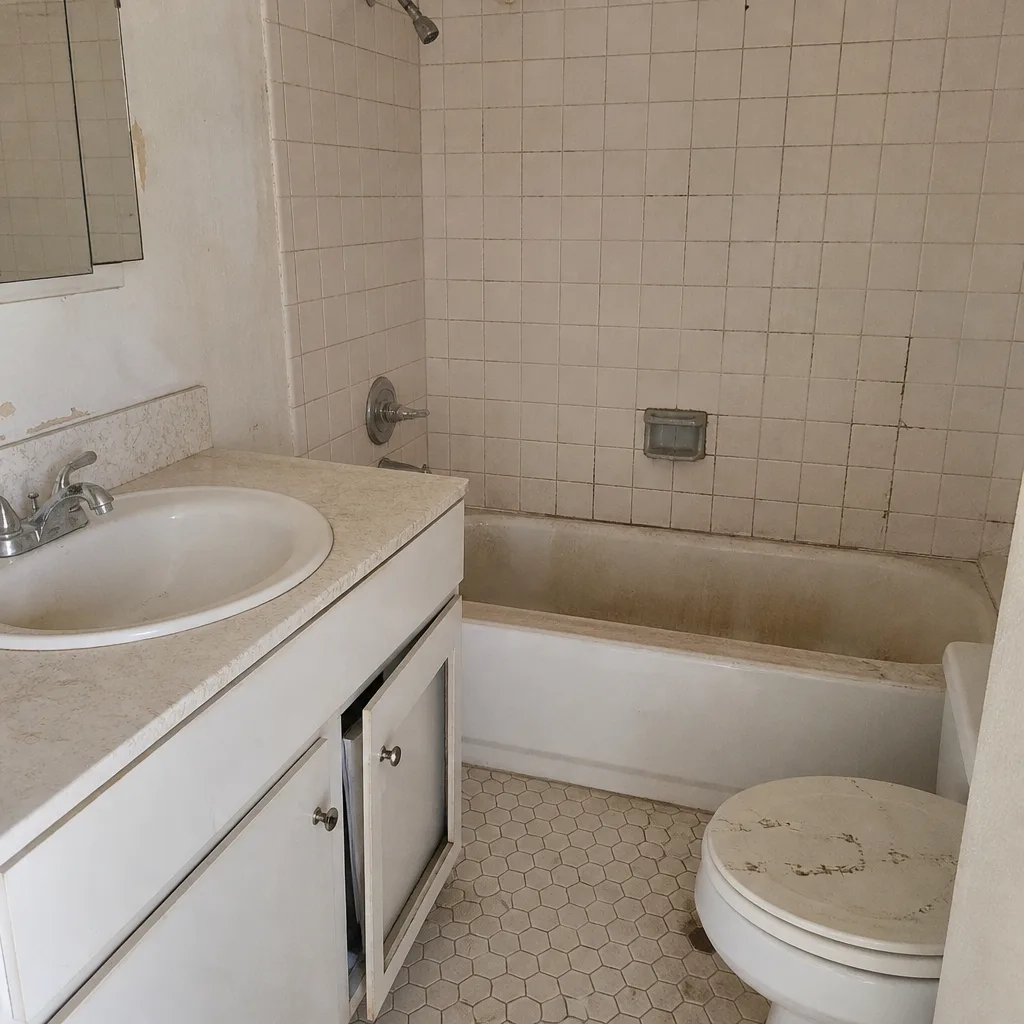 Before
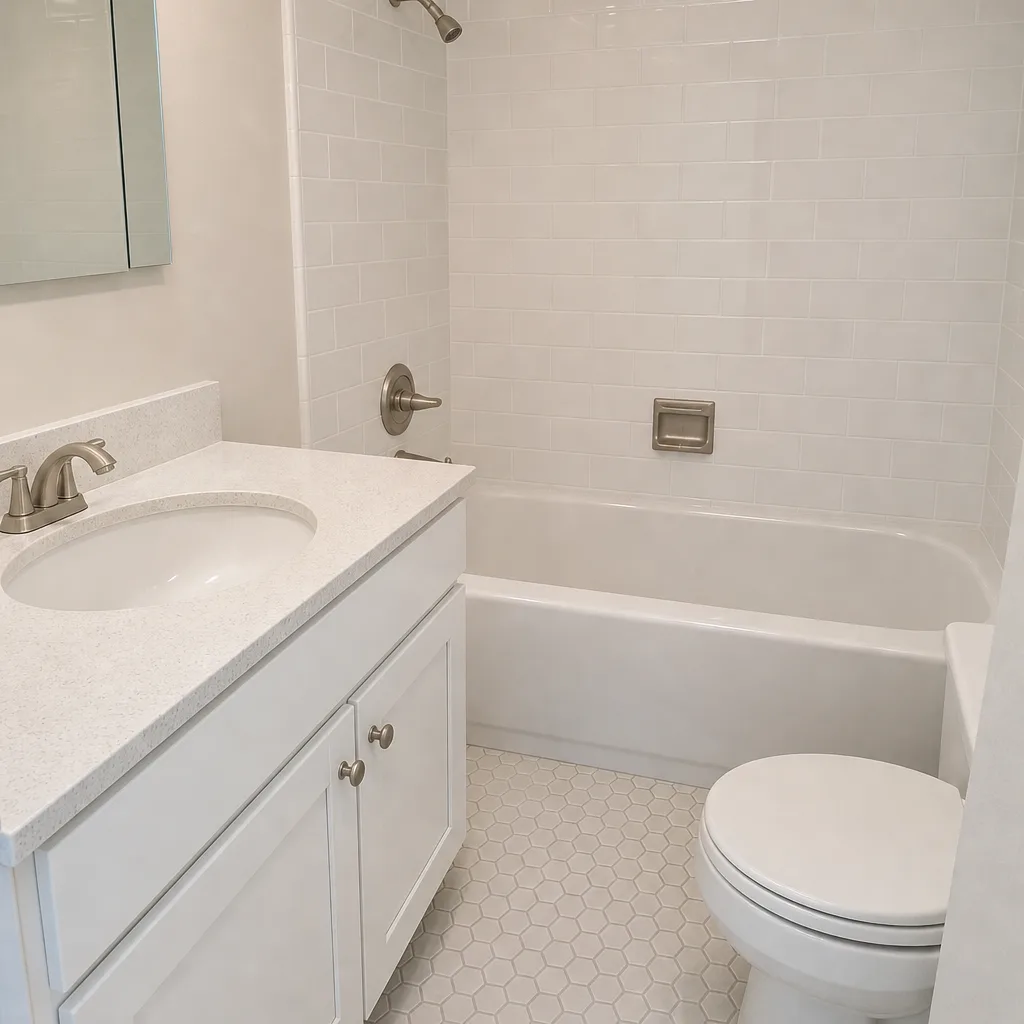 After
When to Call a Professional
Some maintenance tasks are homeowner work – caulk, filter cleaning, aerator soak, hardware tightening. Some are not. Call a professional when you see a soft cabinet floor, a dark ring on wood under the sink, a caulk line that has failed more than once in the same spot, a stained ceiling below the kitchen, or a stone surface that has developed visible etching or a crack. Also call if a gas appliance has any smell, if a GFCI outlet won’t reset, or if a hardwood floor near the sink has cupped. Those signs indicate damage behind the visible surface, and the cost of ignoring them runs into the thousands. Bradford Remodeling Boulder City offers free estimates in Boulder City – call (844) 797-9259 to schedule an inspection. Our technicians have up to 22 years of experience and every project comes with a written price before work begins.
Frequently Asked Questions

Quartz countertops like Cambria and Caesarstone never need sealing. Natural stone such as granite or marble should be tested annually with a water drip – if the water soaks in rather than beads, reseal within the week. In Boulder City’s dry climate, natural stone typically needs resealing every 1 – 2 years. Call (844) 797-9259 for a free estimate if you’re unsure what surface you have.
Three to five years in Boulder City’s low-humidity climate, on the shorter end of that range. Inspect it every spring; replace it as soon as you see a crack or gap. A failed caulk joint channels water into the substrate behind the tile. Call (844) 797-9259 if you see a dark line or a soft spot – estimates are free.
Yes. The 365-Day Done Right Promise covers installation defects for a full year; after that, manufacturer warranties cover the materials, and those warranties require documented maintenance. Keep a dated log of your annual walkthrough, caulk replacements, and appliance filter changes. Call (844) 797-9259 if a defect appears inside the first year – we return at no charge.
Every three months. Boulder City’s hard water scales aerators faster than the manufacturer’s national recommendation of once per year. A visible white scale line means it needed cleaning a month ago. If flow is still low after cleaning, call (844) 797-9259 for a free estimate on the faucet.
Yes, every 2 – 3 years. Grout is porous even when it looks sealed, and a penetrating sealer is what keeps moisture out. Apply with a small brush on a clean, dry surface and wipe off excess within 10 minutes. If your grout is cracked through in multiple places, call (844) 797-9259 – that’s likely a substrate issue, not a sealant issue.
Most of it, yes – caulk, aerator soaking, appliance filters, hardware tightening, and the annual walkthrough are homeowner work. Gas appliance checks, GFCI replacement, and cabinet or subfloor repairs are not. Call (844) 797-9259 for a free estimate before opening a wall or cabinet base; the fix is often more contained than it looks.
The Bottom Line
A remodeled kitchen is a layered system, and every layer ages on its own timeline – caulk in 3 – 5 years, grout sealer in 2 – 3, natural stone sealer in 1 – 2, faucet cartridges in 3 – 4 under Boulder City’s hard water, cabinets and appliances in the ten-to-twenty-year range with consistent care. The homeowners who get twenty years out of a remodel are the ones who run the annual 90-minute walkthrough, keep a dated log, and call when a symptom shows up rather than after the damage spreads. The written scope and guarantee from a disciplined remodeler give you a baseline; the maintenance schedule is what protects it. That’s the standard we hold every Boulder City project to at Bradford Remodeling Boulder City.
For a free estimate on a kitchen remodeling project, a maintenance walkthrough, or a repair on work that isn’t holding up, call (844) 797-9259. A live person answers, 24 hours a day. Every project gets a written price before work begins, background-checked, uniformed technicians on every visit, and the 365-Day Done Right Promise on all completed work. Estimates are free, the price is in writing, and the guarantee is in your hand at close.
Written by the team at Bradford Remodeling Boulder City.