Last updated November 17, 2026





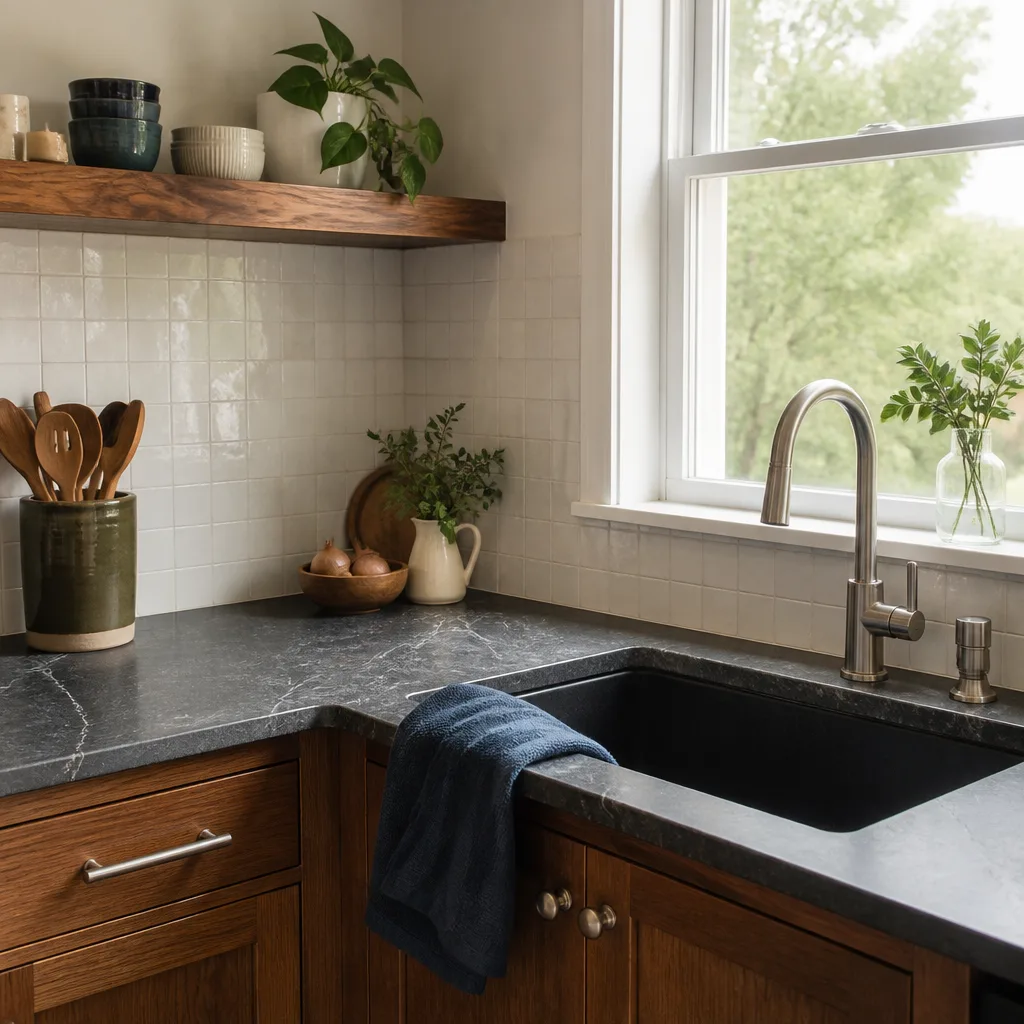

Free written scope consultation - allowances, timeline, and change-order rules on paper before a single trade is scheduled
How Long Does Home Remodeling Take? Timelines and What to Expect
A 2023 Houzz survey found that 52% of remodels ran longer than the original estimate. That number gets quoted a lot, but it hides the real story. It lumps together contractors who put a schedule in writing and contractors who quoted a finish date verbally over the kitchen table, and the gap between those two groups is not small. We’ve watched it from the inside. A remodel’s timeline is mostly decided before a single tool comes out, in how the contract handles completion dates, change orders, and material lead times. This guide lays out real phase-by-phase schedules for Boulder City projects and shows you how to read a timeline document for delay risk before you sign it.
Quick Answer
Most home remodels take 6 to 16 weeks from signed contract to final walkthrough. A bathroom runs 3 to 6 weeks, a kitchen 6 to 10 weeks, and a room addition 12 to 20 weeks. Add Clark County permit review time and material lead times on top of that, and a realistic whole-home project in Boulder City lands closer to 4 to 7 months. The single biggest predictor of whether a schedule holds is whether the completion date was written into the contract or just spoken aloud.
Styles & brands we work with
- Kitchen remodeling
- Bathroom remodeling
- Home additions & ADU
- Roofing
- Windows & doors
- Driveway & pavers
- Fence
Table of Contents
- Phase-by-Phase Timelines for Common Boulder City Projects
- Permit Review Time in Clark County
- The Three Contract Clauses That Decide Your Timeline
- Why Summer in Boulder City Adds 10-15% to Exterior Timelines
- Material Lead Times in 2025-2026 and How to Build Them In
- Written Schedule Guarantee vs. a Verbal Estimate
- How to Read a Project Timeline Document Before You Sign
- Common Mistakes to Avoid
Phase-by-Phase Timelines for Common Boulder City Projects
These are working timelines for the three most common projects we quote in Boulder City. They assume permits are approved and materials are on site at the start of construction. Permit time and lead time are separate line items, addressed below.
Kitchen Gut-and-Rebuild: 6 to 10 Weeks
- Demolition and rough-in (week 1-2): Tear-out, then electrical and plumbing rough-in behind the walls. This is the inspection checkpoint that stops everything until it passes.
- Insulation and drywall (week 2-3): Walls closed up, drywall hung and finished. Nothing visible moves fast here, and homeowners often mistake this for a stall.
- Cabinetry installation (week 4-5): KraftMaid and Wellborn cabinets go in once the substrate is straight and level. This is the longest single block in the whole job.
- Countertops (week 5-6): Template first, then fabrication, then install. Cambria and Caesarstone surfaces are templated after cabinets are set, not before.
- Fixtures, tile, paint (week 6-9): Kohler and Moen fixtures, backsplash, flooring, paint.
- Punch list and final inspection (week 9-10): The last 10% takes disproportionate time. It’s where the difference between a finished job and a rushed one shows.
Bathroom Remodel: 3 to 6 Weeks
A single full bath runs faster than a kitchen because there’s less cabinetry and fewer trades stacking. Waterproofing and the shower pan are the critical path, and they can’t be rushed without risking a failure you’ll be tearing out in two years. See our Bathroom Remodeling in Boulder City page for scope options.
Room Addition: 12 to 20 Weeks
An addition is foundation-up construction, so it runs longer than either interior project. Site prep, foundation, framing, roofing, mechanical rough-in, then finishing. Summer scheduling and concrete cure time both matter here (more below).
Permit Review Time in Clark County
Permit review is the single most-misunderstood delay source, and it happens before anyone swings a hammer. In Clark County, a straightforward residential remodel permit can clear in a few weeks. Anything touching structural, electrical service, or an addition typically takes longer because more than one discipline reviews it. Boulder City projects follow the same review path, and a plan set that comes back with corrections restarts the clock.
The discipline that cuts review time is simple: submit a complete, accurate plan set the first time. Incomplete drawings are the number one cause of a permit bounce, and a bounce adds weeks that most homeowners never budgeted. When we quote a Boulder City project, permit review time is a line item in the written schedule, not an assumption. Bradford Remodeling is a by-the-book contractor, which means permits get pulled and inspections get passed rather than worked around.
How to Sequence Permit Time Into Your Schedule
- Ask for the permit review estimate in writing, as a separate line from construction time.
- Confirm who pulls the permit. If the homeowner pulls it, delays land on the homeowner.
- Ask what happens if review comes back with corrections – which party eats that time.
- Order long-lead materials concurrently with permit review, not after it.
The Three Contract Clauses That Decide Your Timeline
Timeline overruns aren’t random. They follow patterns rooted in how the contract was written. Three clauses do most of the work.
- The substantial completion date. A real date, tied to a defined scope. “Roughly late spring” is not a date. “Substantially complete 84 calendar days from permit issuance, weather and owner-caused delays excluded” is. The second one can be held to.
- The change order timeline freeze. Good contracts state that owner-requested changes reset the completion date by a defined number of days, and non-owner changes don’t. Without this clause, a contractor can blame every delay on a change order, even one you didn’t request.
- The material lead-time disclosure. Cabinetry, windows, and specific tile formats carry weeks of lead time. A schedule that ignores this treats lead time as a post-signing surprise. A schedule that lists it upfront treats it as a known quantity.
If a contract has all three clauses, the schedule is enforceable. Without them, the schedule is a suggestion, and you’ll be the one chasing it.
Why Summer in Boulder City Adds 10-15% to Exterior Timelines
Boulder City summers are brutal in a way that gets priced and scheduled differently than inland metros. Concrete doesn’t cure the way it does in cooler months – pouring and finishing have to happen in the early morning window to avoid flash-setting and surface cracking. Exterior work that involves stucco, concrete, roofing, or masonry gets shifted to heat-of-day-safe hours, and that adds 10-15% to the calendar for exterior projects scheduled between roughly May and September. This isn’t an excuse for lost time; it’s a known condition of building here that any honest Boulder City schedule should carry in the line items.
If your project is a room addition or anything exterior, ask specifically how the summer heat window is handled. If the schedule doesn’t mention it, the person writing it either doesn’t know the local market or is planning to work through the heat at your expense. A General Contractor in Boulder City should be able to answer that without checking.
Material Lead Times in 2025-2026 and How to Build Them In
Lead times have settled from the worst of the pandemic, but they’re still real and still variable. The rule in 2025-2026: any material with a lead time longer than two weeks belongs in the signed schedule, not in a “we’ll see” bucket after signing.
- Cabinetry (KraftMaid, Wellborn): multiple weeks from order to delivery; order is placed after cabinet layout is finalized, which is post-templating and pre-installation.
- Windows and doors (Therma-Tru, James Hardie exterior): lead times depend on size, finish, and configuration; custom sizes run longer than standard.
- Tile formats: large-format and custom-ordered tile can run several weeks; in-stock tile runs days.
- Countertop fabrication (Cambria, Caesarstone): the template date drives this; the material itself is usually on hand while fabrication runs a week or so.
- Hardscaping and pavers (Cambridge Pavers, Oldcastle): driveway and patio materials generally available with short notice, but quantities for large Boulder City lots can require an early order to secure the batch.
Ask for the lead-time schedule in writing. If a contractor says “we’ll order it when we need it,” that’s a shortcut that becomes your delay.
Written Schedule Guarantee vs. a Verbal Estimate
A verbal “we should be done by fall” estimate carries zero commitment. A written schedule guarantee is a defined completion date, in writing, with defined consequences if it slips. You can tell the difference by three marks.
- It’s a date, not a season. “Substantially complete by October 15, 2026” is a schedule. “Done by fall” is a wish.
- It defines “substantially complete.” Not “finished” – substantially complete, with the punch list scoped and the exceptions listed.
- It states consequences. The strongest contracts carry a defined remedy if the schedule slips for reasons within the contractor’s control. That’s what a real guarantee looks like.
The 365-Day Done Right Promise at Bradford Remodeling is a different guarantee – it covers the quality of the work, not the calendar – but it belongs in the same conversation. Both should be in writing. Both should be in your hand before a single tool comes out.
How to Read a Project Timeline Document Before You Sign
A project timeline document should read like a schedule, not a sales brochure. Here’s how to tell which one you have.
- Count the line items. A real schedule has at least 15 to 20 phases with dates. A brochure has 4 to 6.
- Check for permit review as its own line. If permit time is buried inside “construction,” the schedule is optimistic.
- Check for material lead-time line items. Cabinetry, windows, and countertops should each carry an entry. If they don’t, the schedule is missing its longest variable.
- Look for the change order rule. Every schedule should state that owner changes reset the date and non-owner changes don’t.
- Verify the completion date is a specific date. Not “week of”, not “roughly”, and not a season.
- Confirm the schedule is signed and attached to the contract. A schedule that isn’t attached isn’t enforceable.
When you’re reviewing a schedule for a Kitchen Remodeling in Boulder City project, the same rules apply. The kitchen schedule should read as a sequence of concrete phases, not a list of moods.
Common Mistakes to Avoid
- Accepting a verbal completion date. Verbal “we should be done by” estimates are unenforceable, and they’re the most common pattern in overrun complaints. Insist on a specific written date attached to the contract.
- Skipping permit review time. Homeowners who forget to budget Clark County permit review are the ones who lose weeks before construction even starts. Permit time should be a separate line, in writing.
- Treating material lead time as a post-signing variable. Cabinetry and window lead times should be itemized in the schedule. If they aren’t, you’re carrying the delta.
- Not freezing change order dates. Without a written rule that owner changes reset the date, every delay can get blamed on you, even ones you didn’t cause.
- Assuming summer exterior work runs at full speed. Boulder City heat pushes concrete and stucco into early-morning windows; factor 10-15% into any exterior project scheduled May through September.
- Choosing the cheapest bid without reading the schedule. The cheapest bid is often the one with the fewest line items. A short schedule is a short guarantee.
- Skipping the punch list conversation. Ask upfront how the punch list is scoped and what “substantially complete” means in writing. That conversation prevents the final two weeks blowing into six.
Every one of these mistakes traces back to the same root: omitting the schedule from the written contract. The Garrison Standard exists to close that loop. Bradford Remodeling puts every price and every guarantee in writing before a single tool comes out, and the schedule is part of the written package, not a footnote.
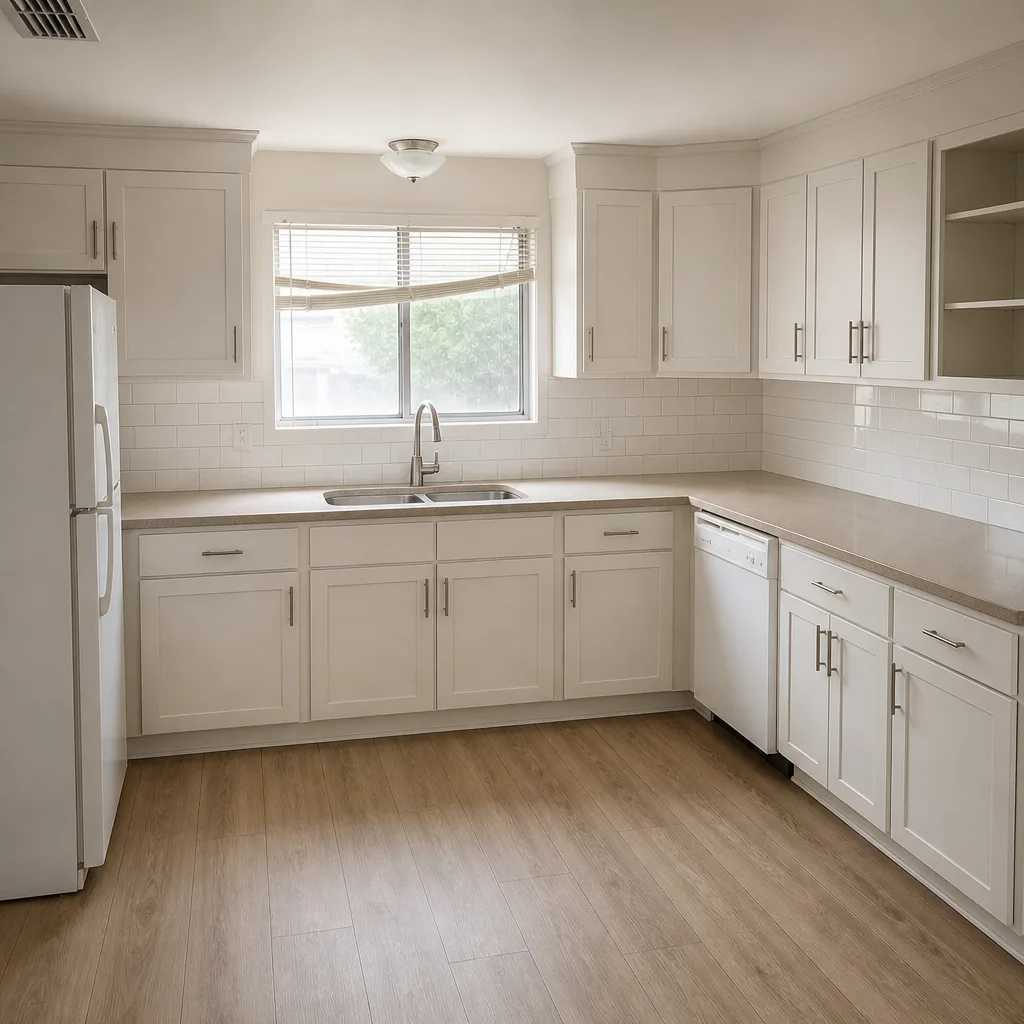
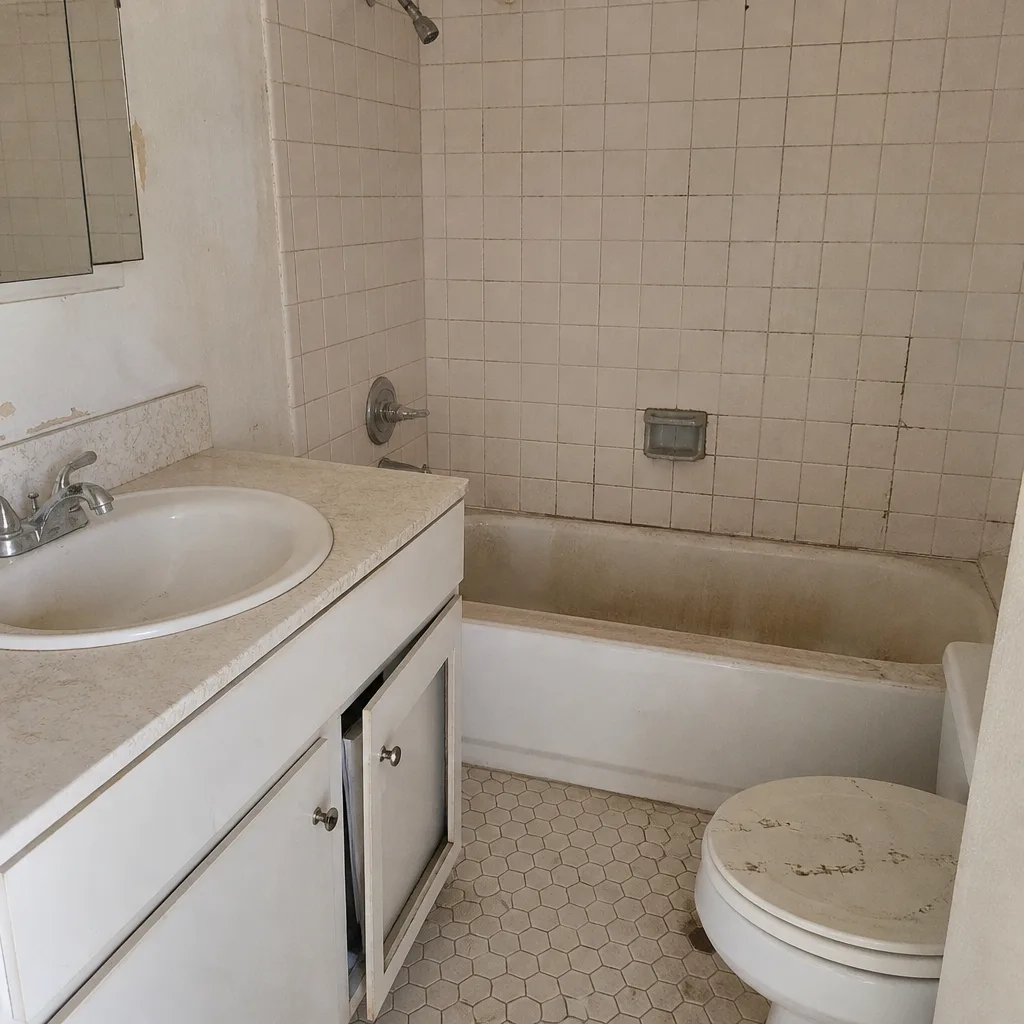
See the difference
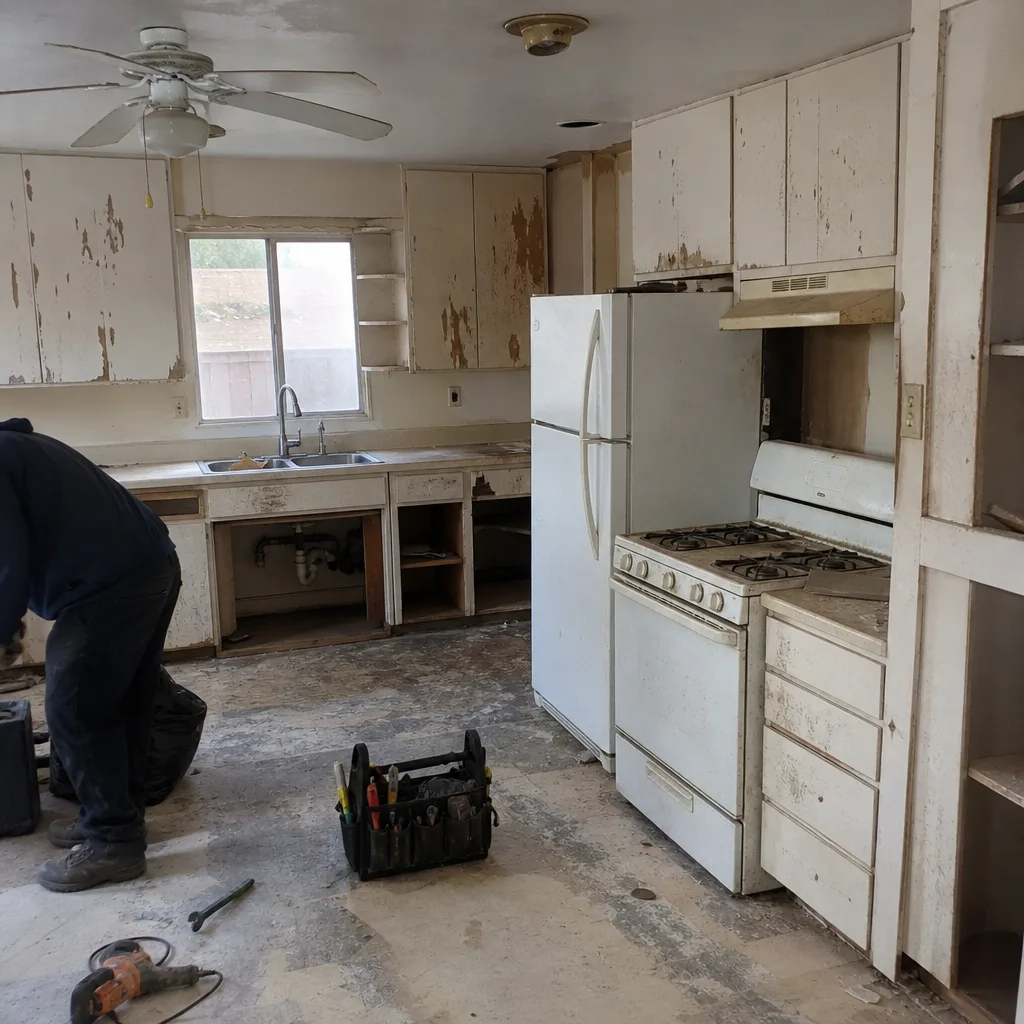 Before
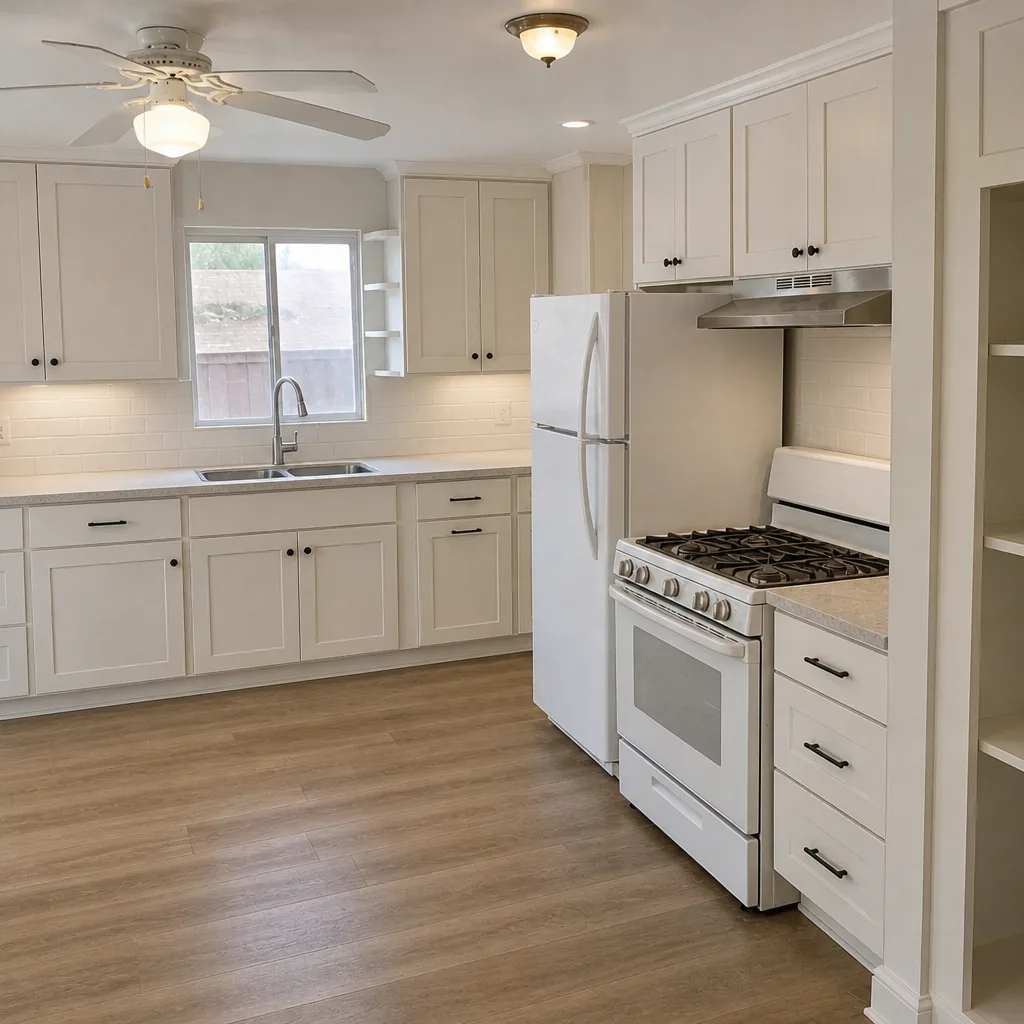 After
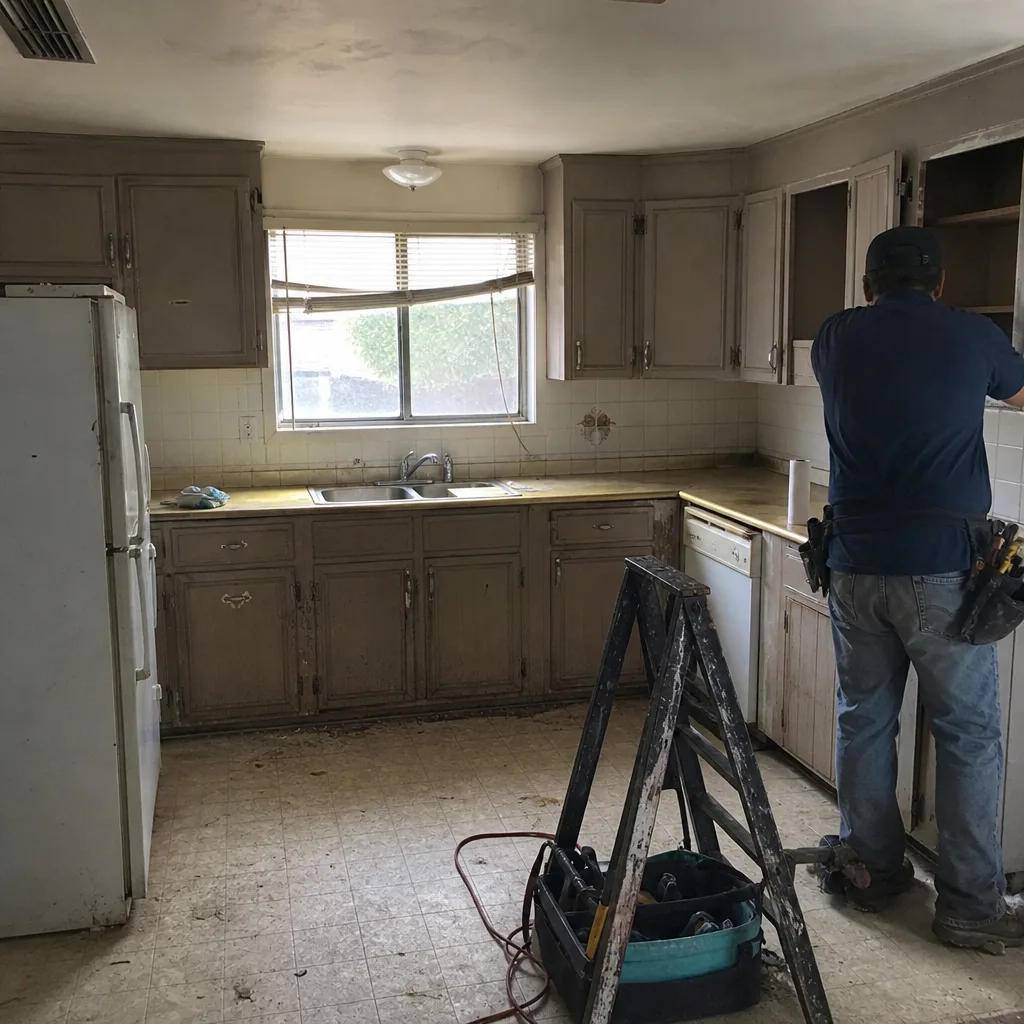 Before
 After
 Before
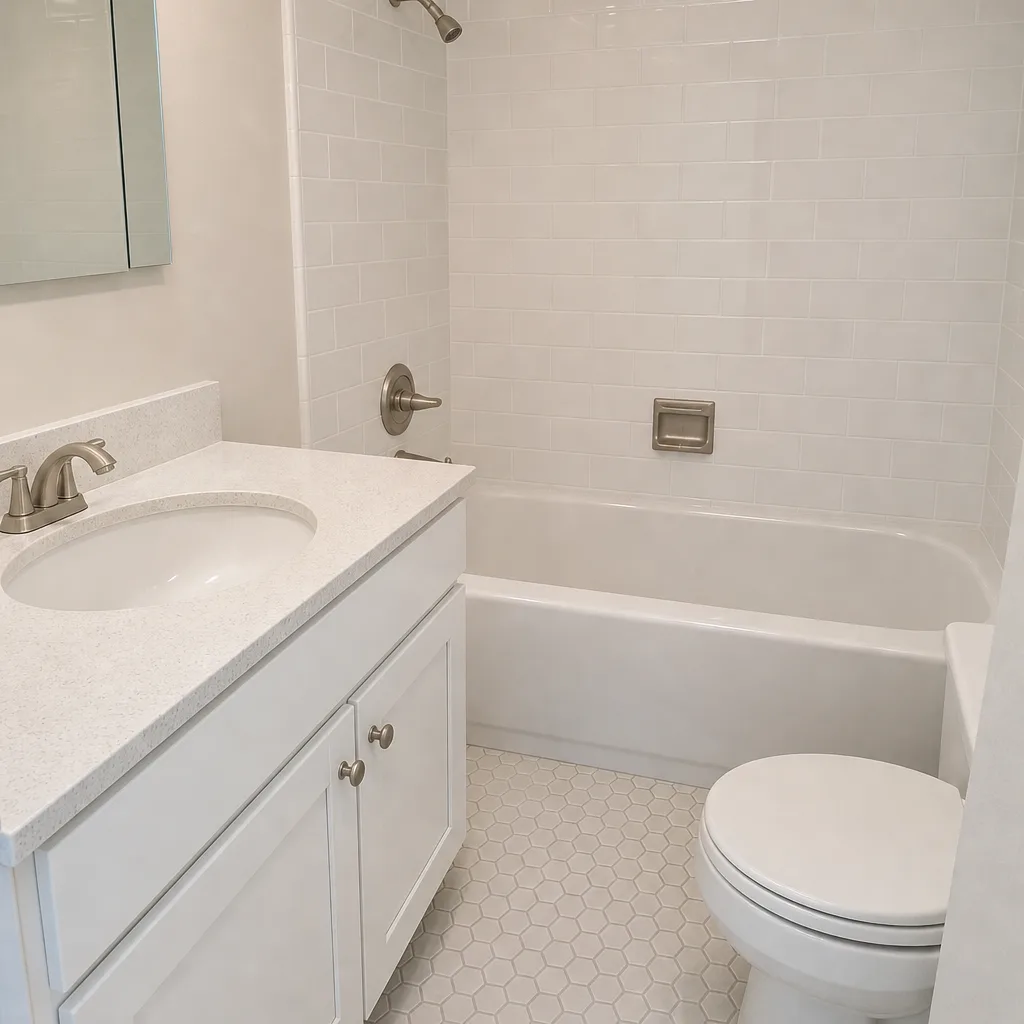 After
When to Call a Professional
Some projects are genuinely DIY-able. But structural changes, any electrical or plumbing rough-in behind the walls, permit-required work, and anything touching a load-bearing wall are outside the DIY lane. So is any project where a written schedule and a written guarantee matter to you – which, if you’ve been burned by a no-show contractor, is most projects. A room addition, a whole-home remodel, or a kitchen gut-and-rebuild that involves moving a wall or a utility line should be walked by a professional before you decide anything. Bradford Remodeling Boulder City offers free estimates in Boulder City – call (844) 797-9259. We’ll bring the written price and the written schedule to the first conversation.
Frequently Asked Questions
A kitchen gut-and-rebuild in Boulder City typically takes 6 to 10 weeks from permit approval to final walkthrough. Add Clark County permit review time and cabinet lead time on top of that, and the calendar from contract to hold-the-keys runs closer to 3 to 4 months. Call (844) 797-9259 for a written schedule with your exact scope.
Exterior projects specifically add 10-15% to the calendar between May and September because concrete, stucco, and some roofing work have to run in the early-morning windows to avoid heat damage. Interior remodels generally don’t see that same summer bump. A written schedule should carry the heat window as a line item on any exterior Boulder City project.
A real schedule has at least 15 to 20 phase line items with specific dates, plus separate lines for permit review and material lead time. A sales pitch reads more like a brochure. Ask to see the schedule as part of the written contract – if it’s not attached and signed, it’s not enforceable. Bradford Remodeling puts the schedule in writing alongside the price, every time.
The most common cause of a late remodel in our experience is a contract that never had a schedule in the first place. Permit review time ignored, change order dates unfrozen, and material lead time treated as a post-signing variable will sink a project before the first hammer swings. Call (844) 797-9259 for a free estimate with a written schedule attached.
A single full bathroom remodel typically takes 3 to 6 weeks. Waterproofing and the shower pan are the critical path – they can’t be rushed without risking a failure that has to come out later. See our Bathroom Remodeling in Boulder City page for scope and options.
A room addition typically runs 12 to 20 weeks from permit approval to final walkthrough, longer if it’s scheduled across the summer heat window. Foundation, framing, roofing, mechanical rough-in, and finishing all happen in sequence. Call (844) 797-9259 for a written estimate and schedule for your specific addition.
The Bottom Line
Timeline overruns aren’t random. They follow patterns set in the contract before work starts: a written completion date versus a verbal guess, permit review time itemized versus assumed, material lead time scheduled versus discovered late, and change order rules defined versus left to chance. A 6-to-16-week project becomes a 4-to-7-month project the moment the schedule is informational rather than enforceable. The fix is unglamorous but effective – ask for the schedule in writing, attached to the contract, with the line items that matter. That’s what squared away looks like. Bradford Remodeling Boulder City puts the schedule in the same written package as the price, backed by the 365-Day Done Right Promise and background-checked, uniformed technicians on every job.
Ready to see a real schedule for your project? Call (844) 797-9259 for a free estimate. Calls are answered by a live person, and the written price and written schedule come to the first conversation. Start from the Bradford Remodeling Boulder City home page to see how we work.
Written by the team at Bradford Remodeling Boulder City.