Last updated November 17, 2026
Free written scope consultation - allowances, timeline, and change-order rules on paper before a single trade is scheduled
The Complete Bathroom Remodeling Guide for Boulder City Homeowners
Boulder City’s housing stock includes a significant number of homes built between the 1950s and 1970s, and many of them still hide galvanized supply lines and cast-iron drain stacks behind the tile. Those pipes look sound until a wall opens up. That mid-project discovery is exactly what turns a $12,000 bathroom into a $19,000 bathroom, and it’s why the scope, the price, and the “what if we find it” line item need to be in writing before anyone swings a hammer. This guide covers what a Boulder City bathroom remodel actually involves: the permits the city requires, how the desert climate changes material choices, how to check for aging plumbing before demo day, and the full checklist to walk through with any contractor before you sign.
Quick Answer
A bathroom remodel in Boulder City typically runs $12,000 to $28,000 for a full gut and rebuild, with most homeowners landing between $16,000 and $22,000 depending on layout changes and whether old plumbing needs replacement. The two things that most often push a Boulder City project over budget are undiscovered galvanized or cast-iron plumbing and permit scope creep in the historic district overlay. Get a written, line-item scope with a conditional plumbing allowance before work starts, and those surprises stop being surprises.
Styles & brands we work with
- Kitchen remodeling
- Bathroom remodeling
- Home additions & ADU
- Roofing
- Windows & doors
- Driveway & pavers
- Fence
Table of Contents
- Boulder City Permits: What Triggers a Full Building Permit vs. a Trade Permit
- The Historic District Overlay and What It Means for Your Scope
- Materials Built for the Mojave: Grout, Caulk, and Waterproofing in Our Climate
- Galvanized and Cast-Iron Plumbing: How to Check Before Demo
- Water Efficiency, SNWA Rebates, and What Specs Qualify
- The Pre-Signing Scope Checklist for Boulder City Homeowners
- What a Real Boulder City Bathroom Budget Looks Like
- How Long a Boulder City Bathroom Remodel Takes
Boulder City Permits: What Triggers a Full Building Permit vs. a Trade Permit
Boulder City issues permits through its own building department, separate from Clark County, which surprises homeowners who’ve looked at guides written for the Las Vegas valley. That distinction matters because the review timelines and the documentation differ. Knowing which permit your project triggers is the difference between a two-week review and a two-month one.
A full building permit is triggered when you move or remove walls, change the footprint of the bathroom, relocate plumbing fixtures to a new wall, add or expand a window or door, or change the electrical panel or add circuits to serve the bathroom. A trade permit covers work that stays within the existing layout: replacing a tub in the same spot, swapping a vanity, replacing a toilet, or upgrading an exhaust fan where the ductwork already exists.
Here’s how to think about it in practice:
- Cosmetic-only work (paint, tile over existing substrate, fixture swaps in the same locations) usually needs no permit at all.
- Trade permits (plumbing, electrical, mechanical individually) apply to fixture replacements that stay in place and to fan replacements routed through existing ducting.
- Full building permits apply to anything structural, anything that moves a drain or supply line, and anything that changes the room’s footprint or window/door openings.
- Water heater and venting work always pulls a trade permit, even in a small bathroom.
Any licensed general contractor in Boulder City will confirm which permit your project triggers and will pull it under their license. Ask for the permit number before demo begins. The scope shouldn’t require you to chase it down after the fact.
The Historic District Overlay and What It Means for Your Scope
Parts of Boulder City fall within a historic district overlay, and properties in that area face a different review process for exterior changes. That’s the sentence most homeowners skim past, and it’s the one that quietly reshapes the project.
The overlay primarily governs what’s visible from the street: window styles, exterior door profiles, trim materials, and any change that alters the facade. Interior work is generally not restricted by the overlay, so a bathroom remodel inside the four walls is usually straightforward. The trouble starts when a homeowner decides mid-project that the small bathroom window should be expanded, or the exterior door to the patio should be swapped. Those changes trigger historic review, which adds weeks to the schedule and, in some cases, requires a style that matches the neighborhood’s mid-century character rather than the current window you had in mind.
Two practical rules for Boulder City homeowners in the overlay area:
- Decide on window and exterior door changes before the scope is finalized, not after. A Therma-Tru or similar fiberglass entry door has a profile that’s usually compatible with historic review, but that’s a conversation for the front end of the project, not the middle of it.
- If your project scope includes any exterior change at all, get the review requirement stated in writing in the proposal so you’re not the one discovering it three weeks in.
For whole-home projects that touch the envelope, historic review can run in parallel with the interior work if the scope is planned that way. For a bathroom-only project that stays inside, this is usually a non-issue. Either way, confirm your address sits in or out of the overlay before you commit to a window or door swap.
Materials Built for the Mojave: Grout, Caulk, and Waterproofing in Our Climate
Standard building materials intended for high-humidity climates are speced for a problem Boulder City doesn’t have. We have low ambient humidity and extreme heat, with a swing of thirty to forty degrees between day and night through much of the year. That combination does different things to bathroom materials than the coastal and humid-climate assumptions those products were designed around.
What actually fails here: cementitious grout with a standard sealer dries fast on the surface but keeps pulling moisture from the substrate underneath, and the sealer film cracks within a season or two as the temperature swings. Latex caulk along the tub and shower perimeter shrinks at the seams as the bathroom heats and cools through the day, opening a gap that lets water behind the tile. Standard sheet or liquid waterproofing membranes rated for humid climates can lose adhesion at the edges over a few summers in a Mojave bathroom because the substrate itself expands and contracts more than the coastal spec assumes.
Ask for these specifications instead:
- Waterproofing membrane: a bonded sheet membrane or a liquid membrane rated explicitly for high thermal movement, applied over a cement backer board, with a written note on the manufacturer in the scope. This is the substrate layer, meaning the material between your studs and your tile, and it’s what keeps water out of the wall cavity.
- Grout: epoxy grout or a high-performance cementitious grout with an impregnating sealer specified by brand, not just “sealed.” Epoxy grout doesn’t need a sealer and holds up far better to the temperature cycling.
- Caulk: 100% silicone in wet zones (tub perimeter, shower corners), not latex or siliconized acrylic. This is the single most common material substitution we see corrected on callbacks.
- Exhaust fan: rated at 80 CFM minimum for a standard bathroom, 110 CFM for larger ones, ducted to the exterior, not into the attic. CFM is cubic feet per minute, the fan’s air-moving rating, and it’s the difference between a bathroom that dries out and one that grows mold between the tile and the substrate.
These specs cost more than the default builder-grade options. They also outlast them by years in Boulder City.
Galvanized and Cast-Iron Plumbing: How to Check Before Demo
This is the section that saves Boulder City homeowners the most money, and it’s the one that generic guides skip entirely. A home built in the 1950s or 1960s in Boulder City may still have galvanized steel supply lines, which corrode from the inside and lose pressure over decades, and cast-iron drain stacks, which scale up and eventually crack or collapse at the joints. Neither problem is visible from the bathroom.
Before demo, ask the contractor to do these three checks:
- Water pressure test at the bathroom fixture. A gauge at the shower arm or tub spout reads the static pressure. Sub-40 psi on a system that should read 60 to 80 usually indicates galvanized restriction somewhere in the line.
- Visual inspection of the visible supply lines. Any galvanized pipe visible under the sink or behind the toilet should be noted, with a photo, in the proposal.
- Drain camera inspection on the stack if the fixture is on an original cast-iron line. A plumber’s camera run down the stack reveals the condition of the pipe interior in a way no visual inspection can.
If replacement is needed, the added cost in this market usually runs $2,500 to $5,500 for the bathroom’s branch supply lines and $2,000 to $4,000 for a cast-iron drain section replacement, depending on access. That’s the number that needs to be a conditional line item in the scope, not a verbal “we’ll see.”
The right way to write it into the proposal is explicit: a stated allowance amount, a stated trigger (“if the supply lines are galvanized and test below 40 psi, replacement per attached line item”), and the homeowner’s sign-off before the work happens. A contractor who won’t put a conditional line item in writing is asking you to trust that nothing ugly is behind the wall. In homes of this age in Boulder City, that’s a bet you don’t want to take.
The team at our Bathroom Remodeling in Boulder City practice has seen this pattern across dozens of projects in these older homes, and the pattern is consistent: the projects that go smoothly are the ones where this assessment happened before demo started.
Water Efficiency, SNWA Rebates, and What Specs Qualify
The Southern Nevada Water Authority runs a rebate program that can meaningfully offset the cost of low-flow fixtures, and Boulder City homeowners are eligible. The program has changed specs over the years, and what qualified a decade ago may not qualify today, so verify current specs against the SNWA program page before you buy. What’s consistent in the program is the specification categories.
Qualifying specifications typically include:
- Toilets: 1.28 gallons per flush (gpf) or less, WaterSense labeled. Some ultra-high-efficiency models at 0.8 gpf qualify for a higher rebate tier.
- Showerheads: 1.5 gallons per minute (gpm) or less, WaterSense labeled.
- Faucets: 1.2 gpm or less in the bathroom.
Asking for a 1.28 gpf Kohler or Moen toilet in a Boulder City remodel does three things at once: it meets code, it qualifies for SNWA rebates where the program is funded, and it lowers the water bill. In our experience, homeowners who specify WaterSense fixtures get their rebate check in the mail within the program’s stated processing window, but that requires the spec to be in the written scope and the receipt to be filed correctly.
A note on the toilet itself: a 1.28 gpf toilet from a name brand performs at that flush volume. A cheap 1.28 gpf toilet from an unknown manufacturer tends to need a second flush, which defeats the rebate and the water savings. Ask for the brand and model in the proposal, not “WaterSense toilet.”
The Pre-Signing Scope Checklist for Boulder City Homeowners
This is the walk-through we ask every Boulder City homeowner to do with any contractor before signing, including us. If a proposal doesn’t answer these, it isn’t yet a proposal.
- Waterproofing membrane brand and method, named on the proposal. Bonded sheet or liquid, applied over backer board, with the manufacturer written in.
- Exhaust fan CFM rating and duct destination. 80 CFM minimum for a standard bath, ducted to the exterior wall or roof, not into the attic.
- Grout manufacturer and sealer brand, or a written statement that epoxy grout is being used. “Sealed grout” alone is not a specification.
- Caulk type in wet zones. Should be 100% silicone. Latex and siliconized acrylic are not acceptable.
- Conditional line item for plumbing. A stated dollar allowance and a stated trigger condition, signed off before the work happens.
- Permit responsibility. Who pulls the permit, and what the permit number is before demo begins.
- Written price and no-change-order clause. The price on the proposal is the price, except for homeowner-approved change orders. Anything else is an invitation to a surprise invoice.
- Guarantee in writing. What’s covered, for how long, and what the return-visit process is if something fails.
- Clean-up and final walk-through. Debris removal is included, and the job isn’t “done” until a signed final walk-through has happened.
- Fixture brands for compliance. If you’re claiming SNWA rebates, the model numbers need to be on the proposal.
Every Bradford proposal answers each of these on the page, with our written price and the 365-Day Done Right Promise spelled out in the same document. That’s the standard. If a competing proposal doesn’t hit all ten, ask why not.
What a Real Boulder City Bathroom Budget Looks Like
Here’s a line-item breakdown of what a Boulder City bathroom remodel typically costs in the current market. These are ranges drawn from what we see quoted and approved for work in this town. They are not a quote for your specific bathroom, but they’re the order of magnitude you should be planning around.
- Full gut and rebuild, same layout, mid-grade materials: $12,000 to $18,000
- Full gut and rebuild, layout change (moved fixtures, new wall): $18,000 to $28,000
- Cosmetic refresh, no layout change, tile replacement and fixtures: $6,000 to $11,000
- Plumbing replacement, branch supply lines, if needed: $2,500 to $5,500
- Cast-iron drain section replacement, if needed: $2,000 to $4,000
- Historic overlay review (exterior change), added time and paperwork: $500 to $2,000
- Waterproofing membrane upgrade, bonded sheet vs. default: $400 to $900
- Epoxy grout upgrade, over standard cementitious: $600 to $1,400
Fixture costs swing widely based on brand and finish, so a Kohler or Moen fixture package can run $1,500 to $4,500 for a full bathroom, while builder-grade fixtures come in well under $1,000. That’s a decision you make with your eyes open, not one the contractor makes at the supply house on your behalf.
How Long a Boulder City Bathroom Remodel Takes
A typical Boulder City bathroom remodel runs three to five weeks from demo to final walk-through. That timeline is for a project that pulled the right permits, had no plumbing surprises, and had materials on hand when the crew started. Each of those can add time if it wasn’t planned for.
Here’s the rough sequence:
- Week 1: demo, rough-in inspection if plumbing or electrical is being moved, and inspection sign-off before walls close.
- Weeks 2 to 3: waterproofing, tile, and grout. This is the phase where substrate prep matters most and where shortcuts cause failures two years later.
- Week 3 to 4: fixture set, vanity and cabinet installation, exhaust fan hook-up.
- Week 4 to 5: paint, trim, final inspection, and the walk-through where you sign off on the scope.
Materials ordered late are the single biggest source of delay in this market. Cabinets, tile, and fixtures ordered before demo starts are what hold the timeline. If the cabinet lead time is eight weeks, the project is eight weeks old before it starts.
See the difference
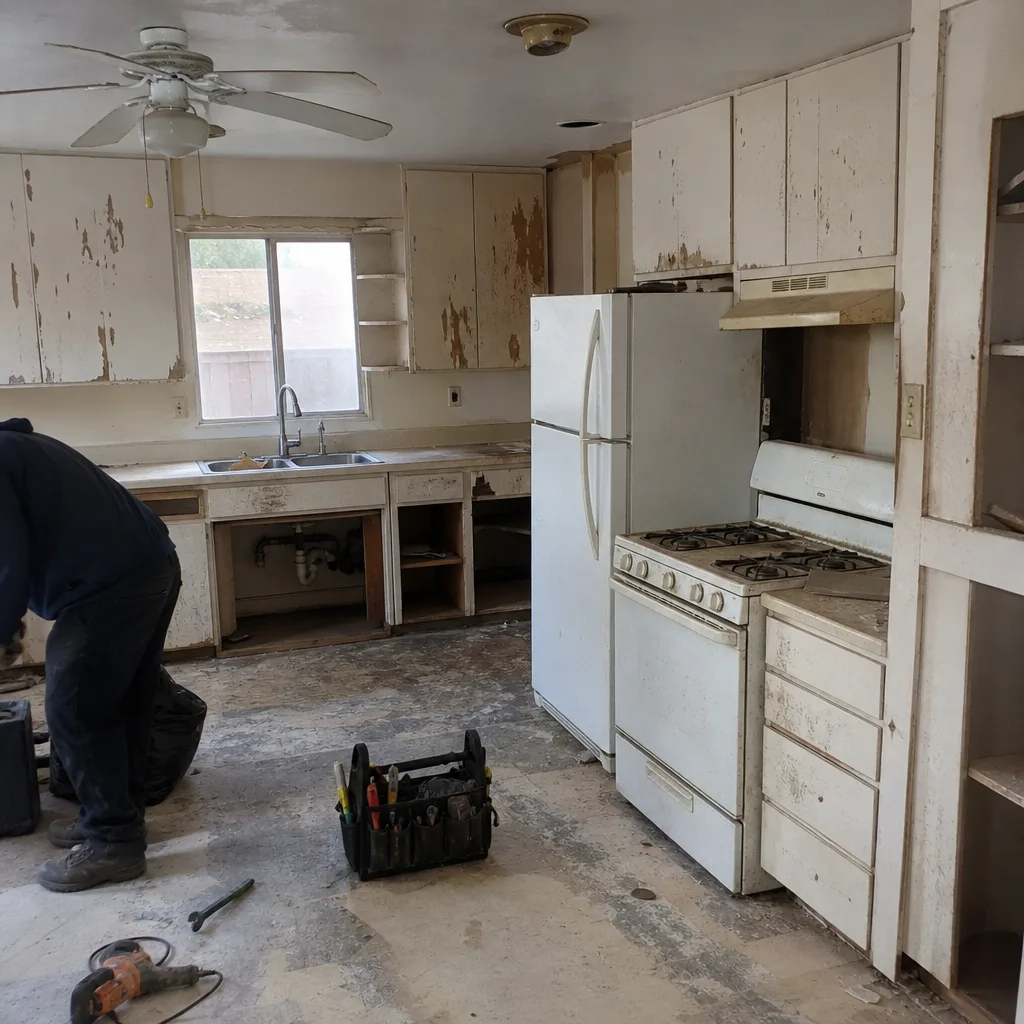 Before
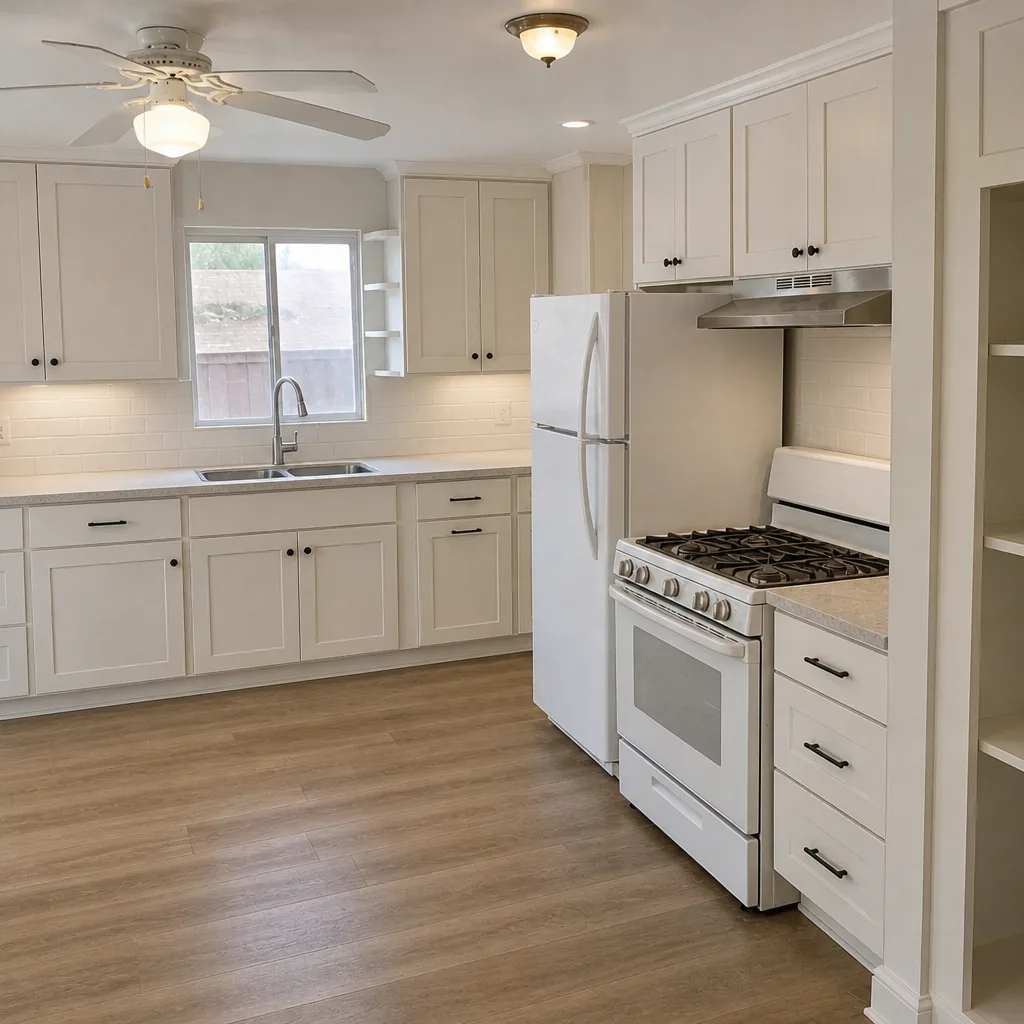 After
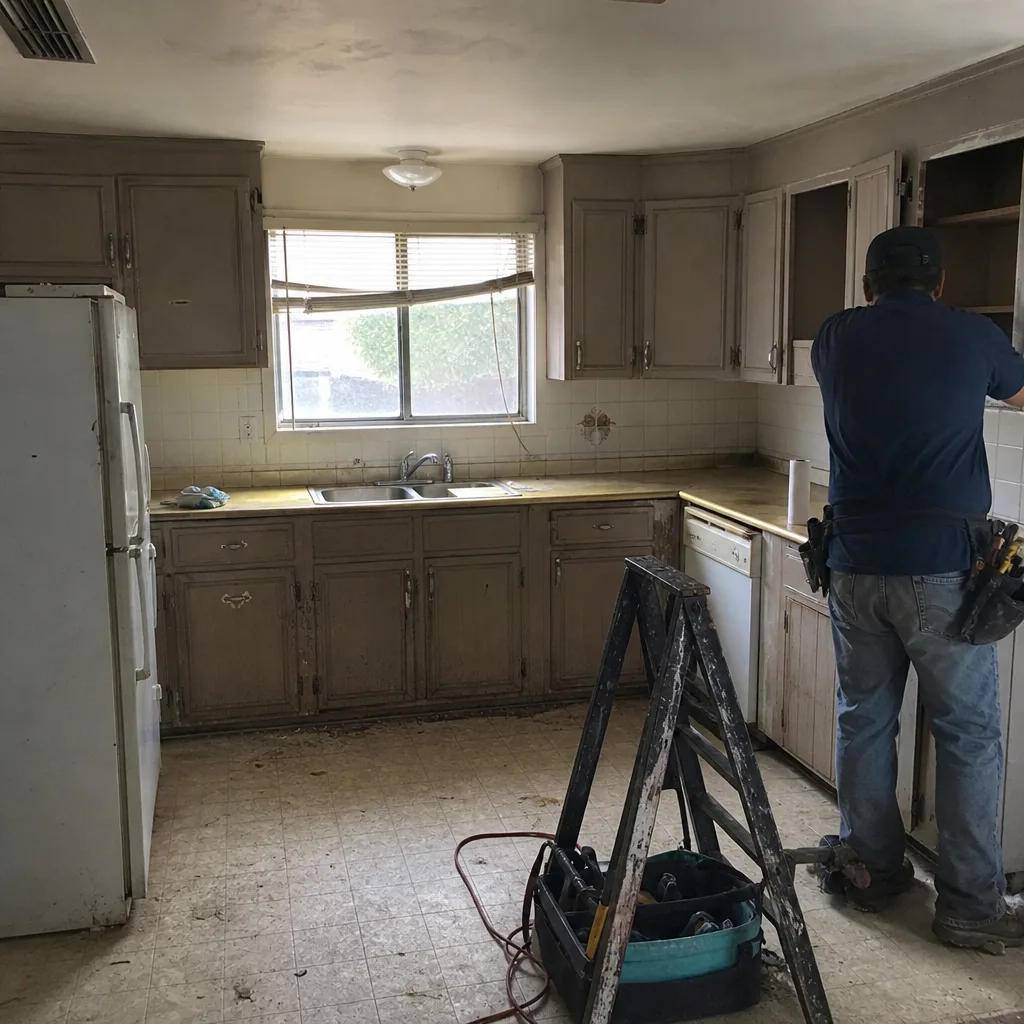 Before
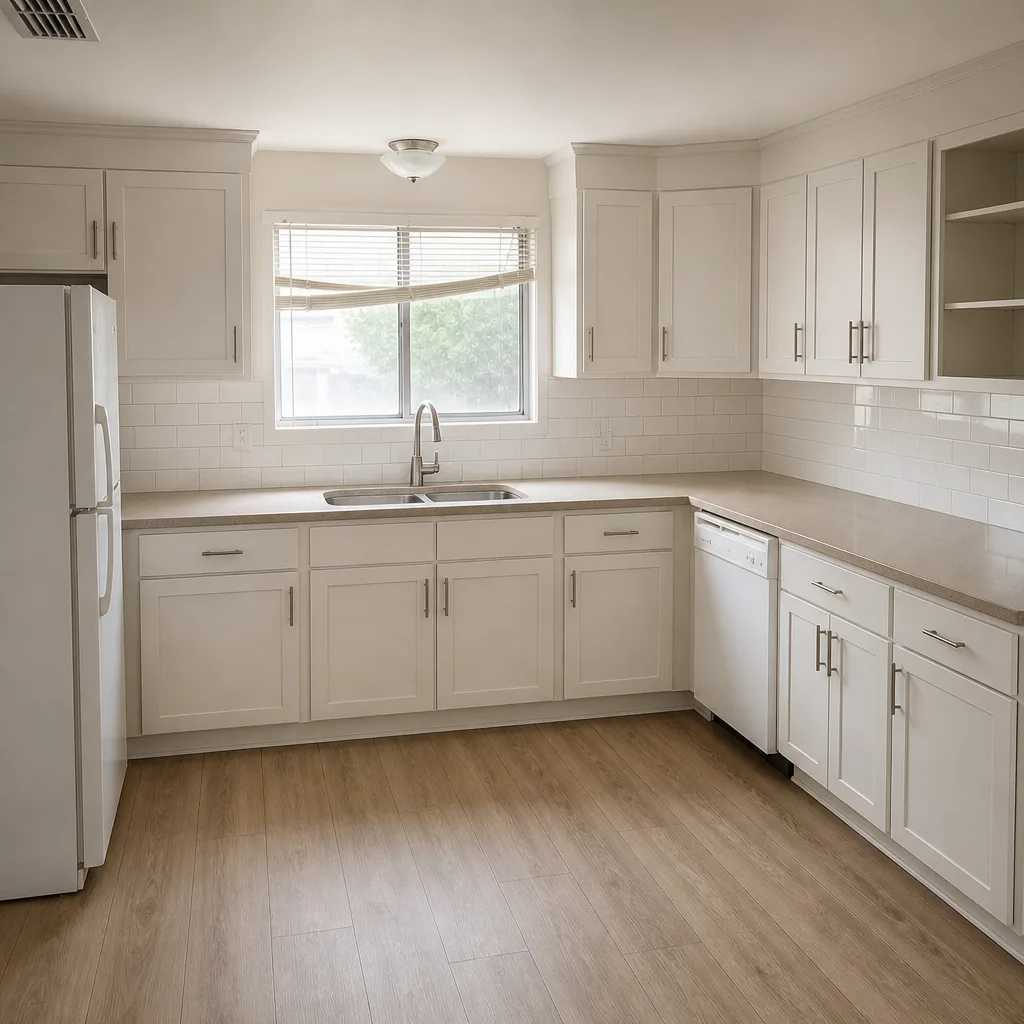 After
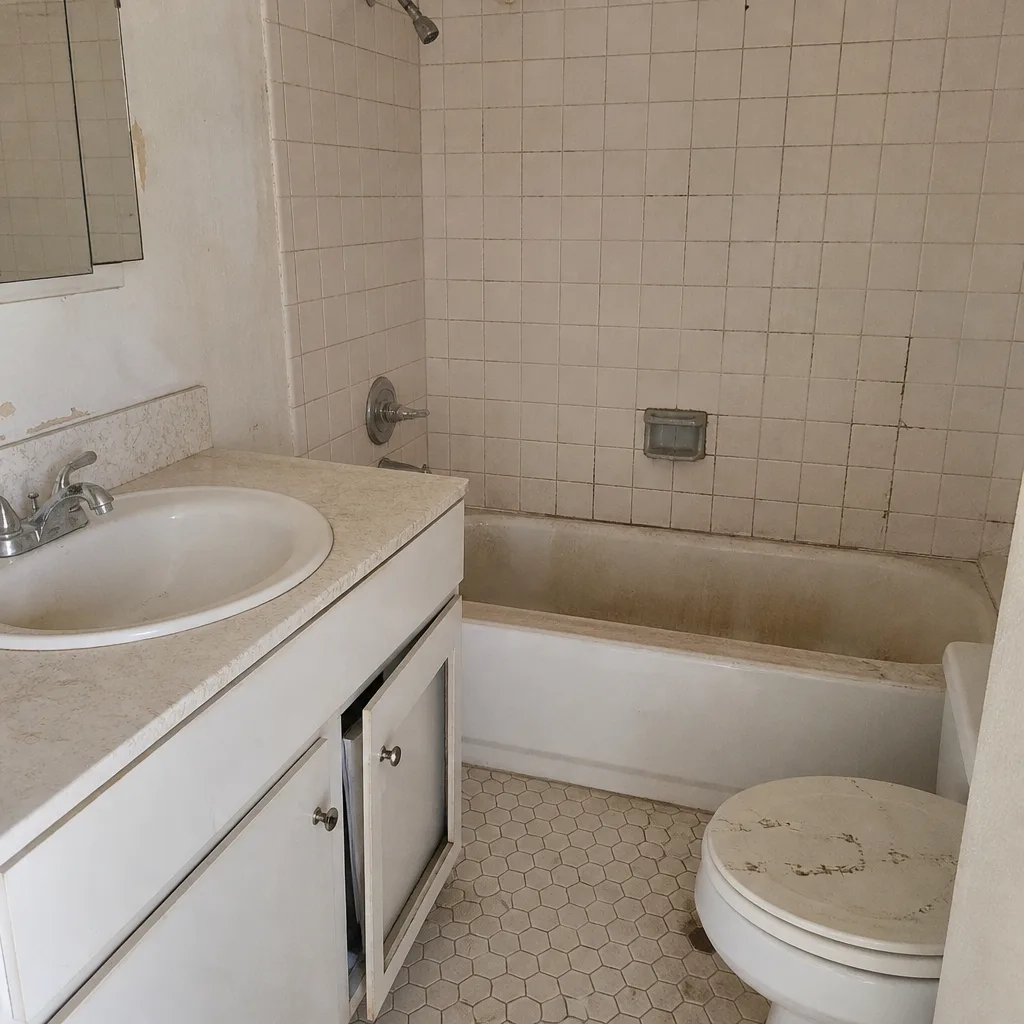 Before
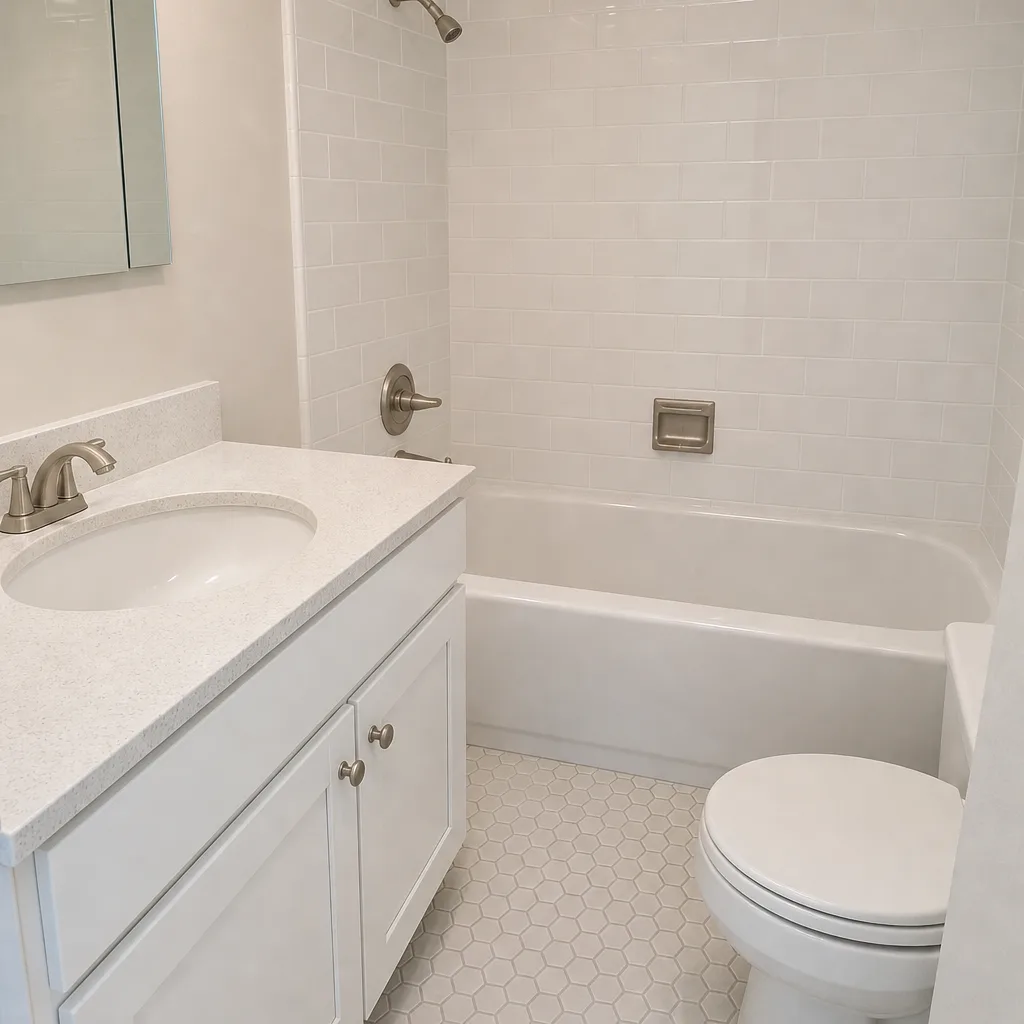 After
Common Mistakes to Avoid
- Assuming the prices and permit process are the same as Las Vegas. Boulder City runs its own building department and its own historic overlay, and neither matches the Clark County process. A contractor quoting against the Vegas valley rules will miss steps and timelines.
- Skipping a drain camera inspection on older homes. A cast-iron drain stack can be one inspection away from a $4,000 line item you’re paying for mid-project without a conditional allowance in the scope.
- Specing “sealed grout” and calling it done. The sealer brand matters, and epoxy grout is often the better answer in this climate. Get the spec in writing.
- Latex or siliconized acrylic caulk in wet zones. 100% silicone, every time. This is the most common callback cause and the cheapest one to prevent.
- Not confirming the exhaust fan ducts to the exterior. A fan vented into the attic moves moisture from the bathroom to the attic, which is the definition of a deferred problem.
- Starting demo before the materials are in hand. In this town, lead times on cabinets and specialty tile run longer than the construction itself. Order first, demo second.
- Signing a proposal that doesn’t have a written price or a conditional plumbing line. That proposal is not a contract, it’s a starting point for negotiations at the worst possible time. Our kitchen remodeling in Boulder City clients who’ve been through this once already know the drill.
When to Call a Professional
Call a professional when the work touches anything behind the finished surface: moving a drain or supply line, changing electrical or adding a circuit, removing or adding a wall, or expanding a window or door. Those are permit-triggering items, and getting them wrong is expensive enough that the savings from doing it yourself disappear fast. Call us when you’re ready to price the whole scope with a written number that doesn’t move at the door, or when you’ve been burned by a no-show contractor and want a crew that answers the phone on the first ring and shows you the price in writing before any tool comes out.
Bradford Remodeling Boulder City offers free estimates in Boulder City. Call (844) 797-9259 to schedule.
Frequently Asked Questions
A full bathroom remodel in Boulder City typically costs $12,000 to $28,000, with most projects landing between $16,000 and $22,000 depending on whether the layout changes and whether old plumbing needs replacing. Cosmetic refreshes without layout changes run $6,000 to $11,000. Call (844) 797-9259 for an exact written quote for your bathroom, at no charge.
Yes, if the work moves plumbing, electrical, walls, or exterior openings, and possibly no if it’s purely cosmetic in the same locations. Boulder City issues permits through its own building department, separate from Clark County, and a full building permit is triggered by anything structural or any change to the room’s footprint. Trade permits cover fixture replacements that stay in place. Call (844) 797-9259 and we’ll confirm which permit your project triggers at no charge.
No, not without a signed homeowner change order. Bradford’s written price is fixed before work begins, with no numbers that move at the door. The one exception is the conditional plumbing line item, which is stated in writing in the proposal and signed off before any additional work happens. Call (844) 797-9259 for a fixed written estimate.
Typically three to five weeks from demo to final walk-through for a project with no plumbing surprises and materials in hand at the start. Historic overlay review, if your address is in the overlay and the scope touches the exterior, can add two to six weeks on its own. Call (844) 797-9259 to talk through the timeline for your specific project.
Every completed Bradford project carries a full-year written guarantee: if the work fails within the guarantee period, Bradford returns and corrects it at no charge. That’s a written commitment in your hand at close, not a verbal assurance. Call (844) 797-9259 to see the guarantee terms on paper before you sign anything.
Yes. Bradford pulls the permits and schedules the inspections as part of the scope, and the permit number is on your proposal before demo starts. The final inspection and signed walk-through are part of the close-out checklist. Call (844) 797-9259 to schedule your free estimate.
Boulder City bathroom work is a particular kind of project: an older house, a tight permit process, a climate that punishes the wrong materials, and a plumbing stack behind the wall that could cost four figures or nothing at all. Nothing about that list rewards guessing. The homeowner who walks away happy is the one who priced the whole scope in writing, confirmed the permit path, checked the plumbing before demo, and signed a written guarantee at the close. That’s the shape of the work we do here, for every Bradford Remodeling Boulder City home we quote. Call (844) 797-9259 for a free estimate and the written price on paper before anything starts.
Written by the team at Bradford Remodeling Boulder City.