Last updated November 17, 2026








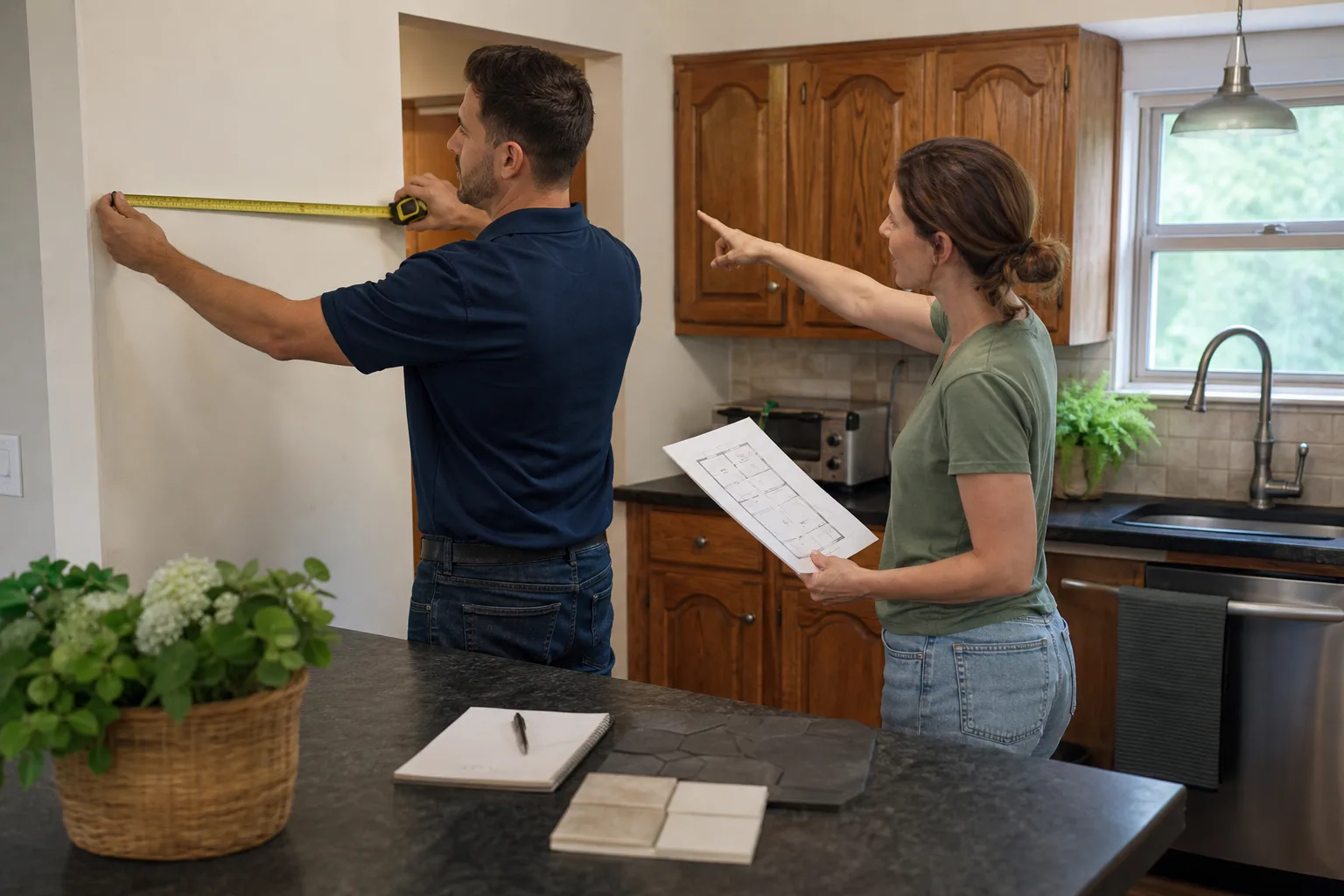
Free written scope consultation - allowances, timeline, and change-order rules on paper before a single trade is scheduled
General Contractor Warning Signs Every Homeowner Should Know
A contractor who pushes you to sign fast, pulls permits late (or not at all), pays for one job’s materials out of your deposit, and communicates only by text has already checked most of the boxes on what complaint records show again and again. None of those are the “obvious” red flags. They’re contract and communication patterns, and they show up before a single tool comes out. This guide covers the pre-contract signals most homeowners never think to look for, why they matter, and how to verify a Nevada contractor’s license before you hand over a deposit. We’ve watched these patterns play out on job sites across Boulder City, and the tells are almost always there early.
Quick Answer
The biggest contractor warning signs are not missing licenses or insurance (important, but easy to check). They’re subtler contract and communication patterns: vague scope language, a schedule that has you paying materials costs before permits are pulled, resistance to a second bid, missing lien-release terms, and “we’ll figure it out as we go” pricing. Any one of these deserves a second look. Several together means walk away, no matter how good the price sounds.
Styles & brands we work with
- Kitchen remodeling
- Bathroom remodeling
- Home additions & ADU
- Roofing
- Windows & doors
- Driveway & pavers
- Fence
Table of Contents
- Contract Language That Signals Trouble
- How Your Deposit Funds Someone Else’s Job
- Why Discouraging a Second Bid Is a Structural Red Flag
- How to Verify a Nevada Contractor’s License
- The Lien Release Schedule That Protects You
- What “We’ll Figure Out the Details as We Go” Actually Costs
- Communication Patterns That Predict a Disappearing Contractor
- What Boulder City Homeowners Should Watch For Specifically
Contract Language That Signals Trouble
The contract is where a contractor tells you the truth, whether or not they mean to. Read the scope section twice. Pay attention to what’s not in it.
Watch for these phrases:
- “Materials and labor included, subject to final measurements.” That “subject to” phrasing lets a contractor reprice once the walls are open. Legitimate contractors measure before they quote.
- No line-item breakdown. A single lump-sum number with no categories (demo, framing, rough-in, finishes, cleanup) means you have no way to compare bids or dispute a charge mid-job.
- Payment schedule weighted to the front. If 40% or more is due at signing and 30% more on “materials delivery,” the contractor is financing the job with your money, not theirs.
- “Allowances” with no dollar caps. An allowance is a placeholder for a selection (tile, fixtures, cabinetry). Without a stated ceiling it becomes a lever to raise the price later.
- No completion date, only a start date. Start dates are easy to promise. A written completion window with a remedy clause is what holds a job on schedule.
We put every price in writing before any work starts, down to the allowance ceilings. That’s The Garrison Standard: no number that moves at the door. When you’re comparing bids in Boulder City, ask each contractor for the same line-item format so you can read them side by side. If one bid can’t be broken down the same way, that’s an answer in itself. You can see how we structure a full-scope quote on our General Contractor in Boulder City page.
How Your Deposit Funds Someone Else’s Job
Here’s the pattern most homeowners don’t recognize until it’s too late. A contractor takes your deposit, uses it to buy materials for a different job, and yours becomes the job that stalls when the next customer’s check doesn’t clear.
The clues show up in the first two weeks:
- They ask for a large deposit before pulling permits. Permits are pulled before demo on any permitted scope. A contractor who wants money first and permits “later this week” is buying material, not scheduling your job.
- Materials arrive before the permit is posted. Dumpster drop and material delivery ahead of the posted permit card is a scheduling tell. The job was started to lock in your cash.
- They move crews to another site “for a few days.” A few days stretches. Job sequencing that leaves your site empty for a week while another site gets attention is the clearest sign your deposit is funding work elsewhere.
- They ask for a mid-job “supplement” for a line already agreed. That’s not a change order. A change order is a documented scope change signed before the work. A supplement for something already in scope is a cash-flow problem surfacing.
In a remodel, we pull permits before demo and buy materials against a written schedule. Your deposit covers your job and goes into the schedule first. That sequencing is worth asking about explicitly in any interview: “Will permits be pulled before my deposit is spent?” A straight contractor has a straight answer.
Why Discouraging a Second Bid Is a Structural Red Flag
Every homeowner expects the sales pressure of “we can’t hold this price past Friday.” That’s annoyance. Resistance to a second bid is something different, and it’s a structural red flag.
Why it matters: a legitimate contractor knows their number is built from measurements, brand lines, and labor rates. A second bid doesn’t threaten that number. Comparing bids is how a homeowner learns the market. If a contractor tells you a second bid will “confuse things” or that they “don’t want to be in a bidding war,” they’re telling you they don’t trust their own price to survive comparison. That is a contractor who quotes to win the signature and adjusts on the back end.
The reverse is also a signal. A contractor who says “get a second bid, here’s what to ask them” is showing you their pricing holds up under scrutiny. We encourage comparison because it’s the fastest way to see whose quote has real line items and whose is a wish.
Asking one Boulder City contractor to quote the same scope as another gives you a real list to sort: what’s included, what’s an allowance, what’s the permit line, what’s the completion window. That list is worth more than any three discount offers.
How to Verify a Nevada Contractor’s License
The phone number and the card matter less than what the state database says. In Nevada, contractors are licensed and regulated, and the public record is where you catch the problems before they become your problem.
Here’s the verification sequence:
- Search the state’s contractor database by name and license number. Confirm the name on the license matches the name signing your contract. If the company name doesn’t match, ask why in writing.
- Check that the license is current and active, not just “licensed at one time.” A lapsed license is easy to miss if you only look at the number on a business card.
- Confirm the classification covers your project type. A license relevant to one scope does not necessarily cover another. Kitchen and bath work, structural work, and exterior work can fall under different classifications. Ask the contractor to state their classification in writing and match it to your scope.
- Ask for the certificate of insurance. The license is not the insurance. Request a current certificate naming you as the property owner for the address of your project, and call the insurer to confirm it’s live.
- Confirm the bond. A contractor’s bond and the license status are linked. Confirm the bond is active before signing anything with a deposit.
The reason this checklist matters more than a business card is simple: an unbonded, expired, or misclassified license is what leaves a homeowner on the hook when something goes wrong. It also explains why a contractor who’s cagey about “the license stuff” shouldn’t get your deposit. If they can’t produce a current license, a certificate of insurance, and a bond in one phone call, that’s your answer.
The Lien Release Schedule That Protects You
This is the most overlooked clause in a residential remodeling contract, and it’s what separates a legitimate contractor from one who leaves you exposed.
Here’s the mechanic: subcontractors and material suppliers who don’t get paid can file a lien against the property they worked on. Your contractor might pay their subs perfectly and still leave you exposed if the paperwork isn’t structured. A lien release schedule closes that gap.
What a working schedule looks like:
- At progress payments: a conditional lien waiver from the contractor and, where applicable, the subs covered by that payment, before the next check. “Conditional” means it’s only binding once the payment clears, so it protects both sides.
- At final payment: an unconditional final lien waiver from the contractor and every sub who touched the job, signed and dated, before the final check leaves your hand.
- On file: a roster of the subs and suppliers used, so you know who’s on your property and who can file.
In our experience, the “we’ll handle that” answer on lien releases means it won’t be handled. Every settled job we close includes the final waivers in the homeowner’s file, alongside the written guarantee. No signed waivers, no final check. That’s the sequence.
What “We’ll Figure Out the Details as We Go” Actually Costs
This is the phrase that shows up in the complaint record over and over. Vague scoping feels flexible at the handshake. It’s not. It’s a change-order machine.
Here’s the pattern complaint files show:
- Bid day: a number based on a walkthrough and a guess. It’s 15-25% under the neighbors because the scope skipped the framing, the electrical, or the tile prep.
- Week two: “The wall behind the cabinets is out of square, we have to address it.” A legitimate scope addresses what’s likely behind the wall. A vague scope uses it as a change order.
- Week four: “We didn’t include countertop install in that number.” You now have a partially built kitchen and no negotiating room, because the deposit is spent and the crew is on site.
- Week six: the crew isn’t on site. The contractor is quoting the next job to fund the remainder of yours.
- Week ten: the last 15% of the job (trim, punch list, the cabinets that need a return visit, the fixture that came in wrong) doesn’t get finished, because finishing doesn’t pay as well as starting.
The real dollar cost of “we’ll figure it out” is that last 15%, which in a mid-size kitchen is thousands. In our experience it’s not worth a cheap quote. It’s worth a written scope and an allowance ceiling per line. Both are standard in a Garrison Standard bid.
Communication Patterns That Predict a Disappearing Contractor
A contractor who manages the job communicates before you chase them. A contractor who disappears mid-job gives you the same silence in reverse. The pattern shows in the first two weeks.
- They answer by text but not on the phone. Text is fine for updates. It’s a problem when it’s the only channel and the delays get longer every day.
- They don’t confirm scheduled appointments. A missed walkthrough before the contract becomes a missed start date after the deposit.
- They can’t tell you who will be on site. Homeowners should know who’s on their property before the crew shows up. On our jobs, technicians are background-checked and uniformed, so the names and faces are set before the first day.
- They don’t put updates in writing. Scope changes are documented, signed, and agreed before the work. A contractor who wants verbal scope changes is budgeting for expensive surprises.
- They don’t take calls outside “business hours.” Real projects have real urgency. We answer with a live person 24/7, not a voicemail, so a mid-job question doesn’t sit until Monday.
That last point sounds small until a pipe leaks under your new island on a Saturday. A contractor who answers is a contractor who shows up.
What Boulder City Homeowners Should Watch For Specifically
Every market has tells, and Boulder City has its own set.
Older housing stock and unpermitted prior work. A lot of the housing in town predates current codes, and some of it carries past improvements that were never permitted. A contractor who doesn’t flag “we’re going to find out what’s inside this wall” at bid time is guessing. A written scope should include realistic allowances for what’s actually behind the cabinets.
Desert heat and material scheduling. Exterior work in Boulder City runs on a season. Cabinetry and countertop installs need to be sequenced around temperature and cure windows on exterior scopes. A contractor who quotes exterior work without addressing seasonal timing is quoting a schedule that can’t hold. We schedule around it, and we flag it in writing.
A tight local trade market. With a limited pool of licensed trades in the area, a contractor who stacks multiple Boulder City jobs in the same window without a written schedule is a contractor who will stall yours. Ask who else is on the calendar and how your job is sequenced. The answer should be specific. If it’s “we’ll fit you in,” it’s not a schedule.
For a full-scope remodel, the sequencing question matters most: kitchen and whole-home scopes route through the same trades, so a contractor who can hold a timeline on a kitchen is usually the one who can hold it on a whole home. Our Kitchen Remodeling in Boulder City page lays out that sequence in detail. Bathroom scopes have their own tells around waterproofing and rough-in; see our Bathroom Remodeling in Boulder City page for how a written scope should handle them.
Common Mistakes to Avoid
- Falling for the cheapest bid. The cheapest bid is usually the least complete scope. It gets repriced through change orders, and you end up paying more than the mid-range quote after the first wall opens. Compare line items, not totals.
- Handing over a deposit before permits are pulled. Permits document the scope. A deposit before permits is the tell in the first section of this guide.
- Not verifying the license classification for your project type. A license that covers one scope may not cover yours. Confirm the classification in writing and match it to what you’re having done.
- Skipping the certificate of insurance. Ask for it to be issued for your address, then call the insurer to confirm it’s current. Skip this and you own the consequences.
- Accepting “allowances” with no dollar cap. An allowance is a placeholder. Without a ceiling, it becomes the tool that moves your price mid-job.
- Not asking for the lien release schedule. The question “how do you handle final lien waivers?” gets a clear answer from a contractor who closes jobs clean. It gets a shrug from one who doesn’t.
- Signing a contract with no completion window. A start date without a finish date means no leverage if the job stalls. Get both in writing, plus the remedy for missing the window.
See the difference
 Before
 After
 Before
 After
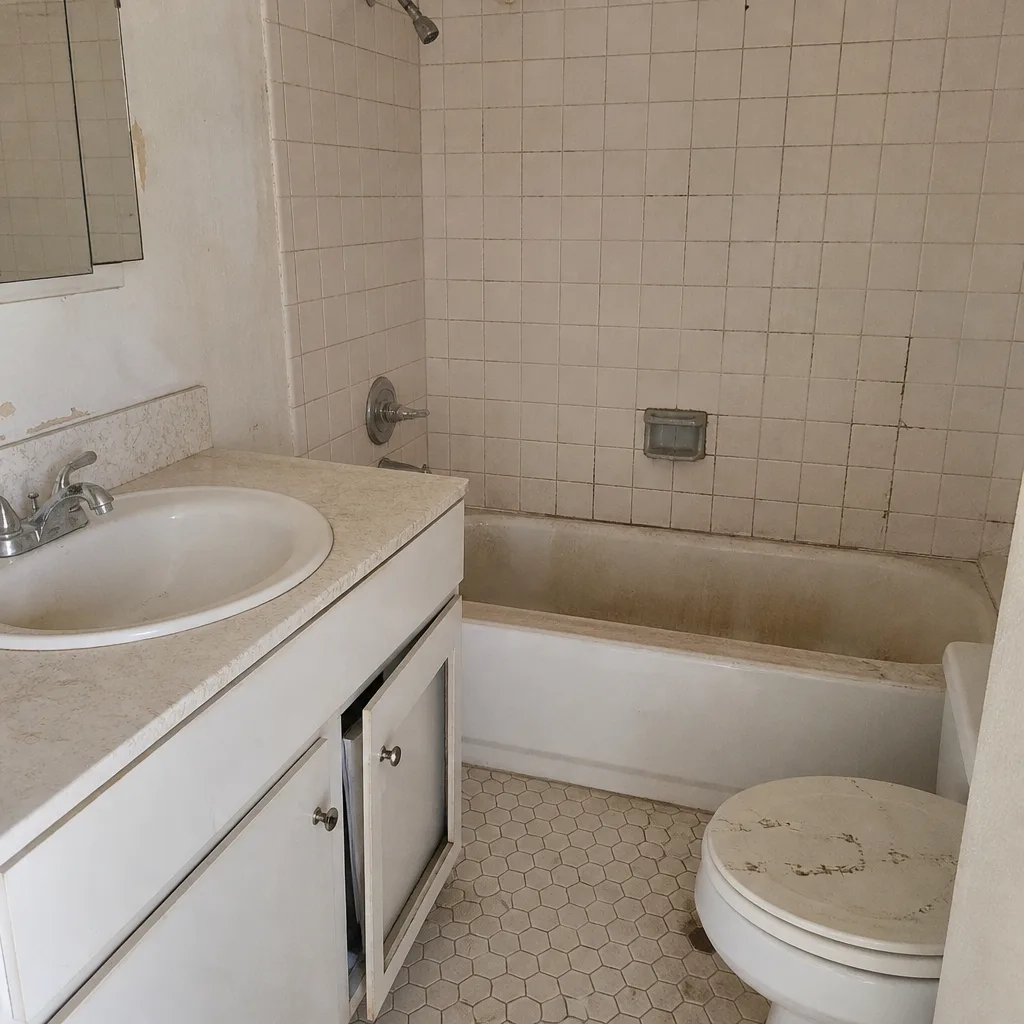 Before
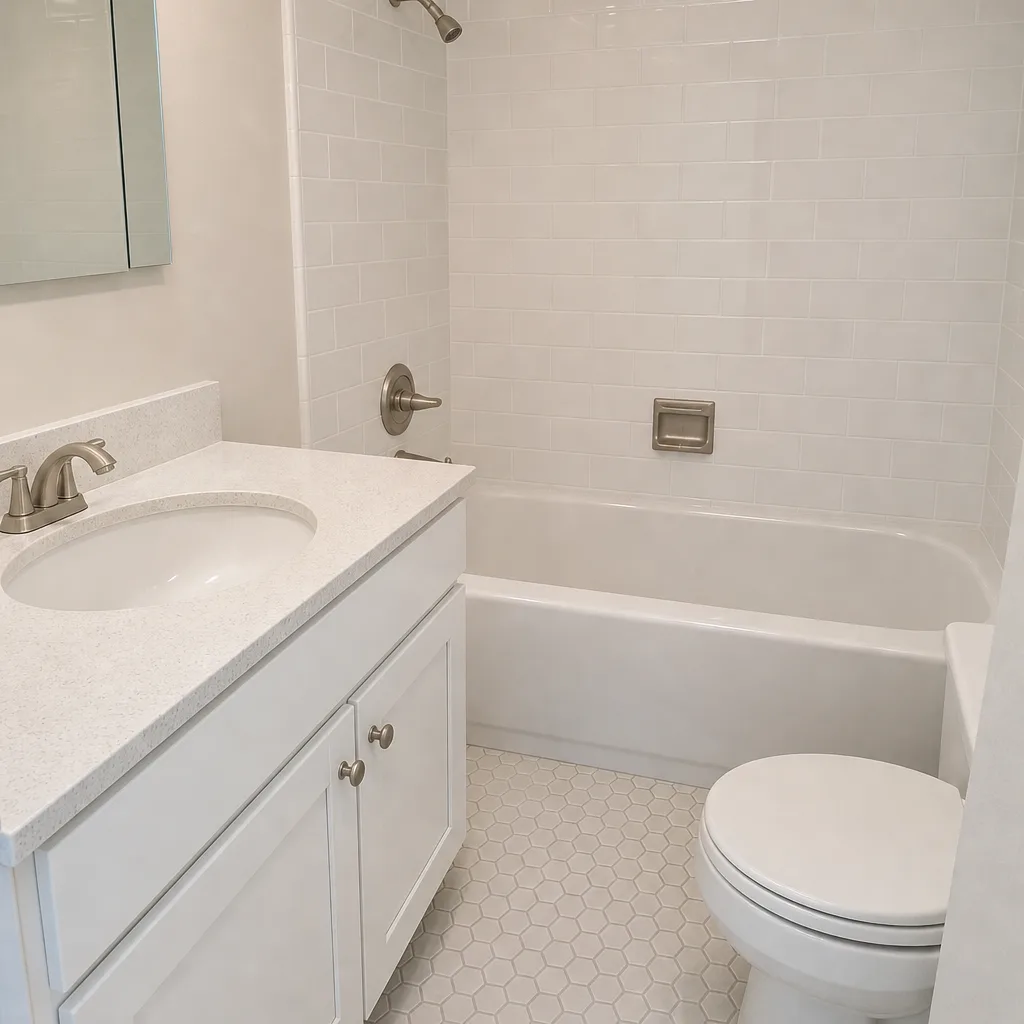 After
When to Call a Professional
If your project touches permits, structural work, electrical, plumbing, or gas, call a licensed professional. Installing a kitchen or opening up a wall to fix a rough-in is not a weekend scope, and a botched rough-in in an older Boulder City home is expensive to correct. If you’re already mid-job with a contractor who has left a scope unfinished, a licensed professional can document what’s done and what’s missing before you sort the contract out. Bradford Remodeling Boulder City offers free estimates in Boulder City, with a written price before any work starts and a 365-Day Done Right Promise on completed projects. Call (844) 797-9259 to schedule yours. If you want the wider picture on how a full-scope job should be run, start at our Bradford Remodeling Boulder City home page, or read more on how we structure finished work.
Frequently Asked Questions

The contract and schedule pattern where your deposit goes to materials before permits are pulled. That sequencing is the tell for a contractor who is funding one job with another job’s money. It’s more telling than a missing business card, because it’s a cash-flow pattern, not a paperwork slip. Check it explicitly: ask “will permits be pulled before my deposit is spent?” Call (844) 797-9259 for a free estimate with a written line-item price and a stated permit sequence.
Search the state’s contractor database by name and license number, confirm it’s current and active, and check that the classification covers your project type. Then ask for the certificate of insurance issued for your address and confirm the bond is live. Match every name on the license to the name on the contract. Call (844) 797-9259 and we’ll walk you through what to request from any Nevada contractor, whether or not they’re us.
Progress payments tied to completed, inspected stages, with the largest payments coming later in the job, not at signing. A schedule weighted 40% or more at signing is a cash-flow tell. In our experience, the right schedule is documented in the contract before any deposit changes hands, with a written completion window. Call (844) 797-9259 for a free estimate on your kitchen and a written price before work starts.
In our experience, the last 15% of the job (trim, punch list, returns, fixture reorders) is where “we’ll figure it out” turns into money. That phase is where the contractor stops starting and never finishes, because finishing doesn’t bill as well as starting. A written scope with allowance ceilings closes that gap before the job opens. Call (844) 797-9259 for a free estimate with a full line-item scope.
No. A legitimate contractor wants you to compare line items, because it’s the fastest way to see whose quote has a real scope. Pressure against a second bid is a red flag for a number that won’t survive comparison. Call (844) 797-9259 for a second bid on your project, with line items on the same format. We encourage the comparison.
Ask for the written procedure: conditional lien waivers for progress payments and unconditional final waivers from the contractor and every sub before the final check. No signed waivers, no final check. In Boulder City the answer should be specific, not “we’ll handle that.” We include final waivers in the homeowner’s file alongside the 365-Day Done Right Promise, so the job closes squared away. Call (844) 797-9259 to schedule a free estimate.
The Bottom Line
The obvious red flags (missing license, no insurance) are the easy ones. The patterns that actually predict a contractor who finishes 80% and disappears live in the contract and the schedule: a front-loaded deposit before permits, vague scope with uncapped allowances, no second bid, no lien release plan, and communication that moves to text and slows each week. Anchor every job in a written price, a permit sequence, and a completion window. That’s how we run a job, and it’s why every project closes with a signed written guarantee in the homeowner’s hand. For a free estimate in Boulder City, call (844) 797-9259. A live person answers 24/7, and the price is in writing before any tool comes out.
Written by the team at Bradford Remodeling Boulder City.