Last updated November 17, 2026






Free written scope consultation - allowances, timeline, and change-order rules on paper before a single trade is scheduled
How Long Does Bathroom Remodeling Take? Timelines and What to Expect
Here’s the part most contractors skip until demo day: a “standard” full bathroom remodel runs anywhere from 1.5 weeks to 6 weeks, and the difference is almost never the tile or the vanity. It’s whether your plumbing rough-in stays where it is or has to move. Most Boulder City homeowners don’t find out which situation they’re in until the walls are already open. This guide maps the real calendar by scope tier, names the three variables that actually push dates – fixture lead times, inspection scheduling, and rough-in location – and shows what a schedule you can hold a contractor to looks like in writing.
Quick Answer
A bathroom remodel takes 5 to 8 days for a cosmetic refresh, 2 to 3 weeks for a full gut with plumbing staying in place, and 4 to 6 weeks for a full gut with the plumbing or electrical relocated. In Boulder City, add 2 to 5 days to any project touching plumbing or electrical, because the rough-in inspection has to clear the county queue before any wall can close. Fixture and tile lead times can add another 1 to 4 weeks if materials aren’t ordered before demo.
Styles & brands we work with
- Kitchen remodeling
- Bathroom remodeling
- Home additions & ADU
- Roofing
- Windows & doors
- Driveway & pavers
- Fence
Table of Contents
- The Three Scope Tiers and Their Real Calendars
- The Inspection Hold Day: Why Wall-Closing Waits
- Fixture Lead Times and Why Pre-Ordering Wins
- The One-Bathroom Household Problem
- What a Real Project Schedule Looks Like
- Boulder City Specifics: Code, Climate, and Older Plumbing
- The Decision Points That Compress or Extend Your Timeline
- Common Mistakes to Avoid
The Three Scope Tiers and Their Real Calendars
Every bathroom remodel in Boulder City lands in one of three buckets, and the bucket determines the calendar more than the square footage does. We’ve seen a tiny hall bath take longer than a large primary suite because the hall bath needed the drain relocated and the suite didn’t. Scope, not size, is the driver.
Tier 1: Cosmetic Refresh (5 to 8 working days)
This is the tier where nothing behind the wall moves. You’re replacing the vanity, faucet, toilet, showerhead, and lighting at the existing locations, retiling the floor or the tub surround (or a shower wall), and repainting. No permits required in most cases because the plumbing and electrical rough-in don’t change. Five to eight days is realistic if materials are on site on day one and the substrate under the old tile is sound. If the substrate (the backer board beneath the tile) is water-damaged, the calendar shifts into Tier 2 territory because you’re now rebuilding structure, not just covering it.
Tier 2: Full Gut, Plumbing Stays (2 to 3 weeks)
Strip the room to studs, replace the tub and shower valve, reset the toilet and sink in their existing locations, new substrate, new tile, new vanity, new paint. This tier requires a plumbing permit and a rough-in inspection, which is where the calendar has slack you can’t fully control. Two to three weeks is honest if the inspection queue is short and materials arrive before demo. That last word matters, and we’ll get to why in the lead-times section.
Tier 3: Full Gut, Plumbing or Electrical Relocated (4 to 6 weeks)
Moving the toilet, shifting the shower from one wall to another, adding a second sink, or running a new circuit for a heated floor. This is the tier most often underestimated. Relocation means new drain lines that have to meet slope requirements, a relocated supply stack, and often a re-framed wall to make it all fit. On top of that, the rough-in inspection covers more, and the finish trades (tile, glass, cabinetry) all re-sequence. Four to six weeks is the real number. Anyone who tells you three weeks with relocation is either cutting the inspection or has a crew that doesn’t sleep, and you don’t want either.
The Inspection Hold Day: Why Wall-Closing Waits
The rough-in inspection is the checkpoint where a building inspector verifies that the plumbing and electrical work behind the wall meets code before anyone is allowed to cover it with drywall. It exists so a homeowner never has a leaking shower valve sealed inside a wall. It’s not optional, and it’s not something a contractor can compress by working faster.
Here’s the sequence in Boulder City, which sits under Clark County’s inspection scheduling:
- Rough-in complete. Plumbing stub-outs and drain lines in place, electrical boxes wired, subfloor and framing ready.
- Callback request. The contractor schedules the inspection through the county’s queue. In a busy season, the window between request and arrival is 2 to 5 days.
- Inspection day. The inspector walks the rough-in, checks drain slope, valve clearances, venting, and electrical box placement. Pass or fail.
- Wall-close. Only after a pass can the wall close with drywall or backer board. Tile cannot start until the board is up.
If the first inspection fails, the calendar adds another 2 to 5 days for the correction and re-inspection. That’s why a disciplined contractor builds a hold window into the schedule rather than promising a date that assumes a first-pass. The 2 to 5 days isn’t padding. It’s the calendar reality of Clark County’s queue, and one of the reasons Boulder City projects sometimes run a few days longer than an identical job in a jurisdiction with a shorter inspection window. Ask your contractor where they’ve scheduled the inspection hold, and if they can’t point to it on paper, that’s a red flag. Our General Contractor in Boulder City team builds the hold into every written schedule as a named line item, not an afterthought.
Fixture Lead Times and Why Pre-Ordering Wins
The single most common cause of a stalled bathroom remodel isn’t a bad crew. It’s a tile order that hasn’t arrived. The demo gets done, the walls are open, the rough-in passes inspection, and then the job sits because the shower tile is a special order with a four-week lead time. Nobody can lay tile that hasn’t shown up.
Standard-tier fixtures – a common Kohler or Moen faucet, a stock toilet, a mass-market vanity – are usually in a warehouse and ship in a few days. But the moment you choose:
- Special-order or hand-made tile (a four-week lead is not unusual)
- A custom or semi-custom vanity (KraftMaid and Wellborn cabinetry lead times typically run several weeks depending on the door style)
- A natural-stone or quartz top cut to a specific sink layout (Cambria and Caesarstone are fabricated per piece, so the top can’t be templated until the sink and cabinet are set, and the piece can’t be installed until it’s cut)
- A specialty shower valve or a Schluter shower system kit ordered from a specific supplier
…you’ve introduced a lead-time dependency that has to be solved before demo, not after. The only reliable way to avoid the warehouse wait gap is to pre-order the long-lead items and confirm they’re physically on site (or at a confirmed arrival date) before the first tile comes off the wall. In a Boulder City bathroom, that discipline matters because the supply chain here routes product from Las Vegas warehouses, and a missed truck can cost a week.
A well-run project makes the material delivery dates part of the schedule document. Not “order the tile soon,” but “tile delivered May 6, confirmed by vendor.” Read more about how we handle that planning on our Bathroom Remodeling in Boulder City page.
The One-Bathroom Household Problem
If you have one bathroom and you’re remodeling it, you need a compressed sequencing plan in writing before the project starts. A household that loses its only toilet and shower cannot improvise for two weeks, and the difference between a manageable 9-day disruption and a miserable 16-day one is almost always the plan.
A workable one-bathroom plan for a Boulder City home should include:
- A defined “worst day” range. The specific dates when the toilet is removed and when a working toilet returns. Everything else in the project serves that window.
- Demo timing. Demo should happen first thing on a Monday so the toilet-out window lands inside the shortest possible span.
- An off-site plan for the gaps. A shower at a neighbor’s, a gym, or a family member’s house, planned ahead and not discovered on the morning the toilet comes out.
- Tile and material readiness before demo. A one-bathroom project that stalls on tile is the worst-case scenario. Materials must be on site or confirmed-in-transit before the first day.
- Compressed trade sequence. Plumbing rough-in and inspection day scheduled back-to-back, then tile, then trim, with no dead calendar days. The rough-in inspection should not land on a Friday if it can land on a Tuesday.
We’ve run these on plenty of Boulder City homes where the garage or a laundry-room sink became the temporary hand-wash station and the shower situation was solved by a portable. It works. What doesn’t work is a contractor who says “it’ll only be a week without a toilet” and then discovers the vanity is backordered.
What a Real Project Schedule Looks Like
A schedule isn’t a start-and-end date. It’s a document a homeowner can hold a contractor to, and it should have five things on it: phase names, start dates, end dates, inspection hold windows, and material delivery dates, each initialed by the contractor who signed it. If any of those is missing, you don’t have a schedule. You have a handshake.
Here’s what the good version contains, in order:
- Pre-construction phase. Material ordering, permit filing, inspection request logged. Dates for each.
- Demo phase. Start and end. The day the toilet goes out and the day the temporary hand-wash is set up should be on the line.
- Rough-in phase. Plumbing and electrical work, with the inspection request date and the hold window (the 2 to 5 days it takes Clark County to get an inspector on site) written in.
- Inspection day. Marked with the expectation of pass, plus a backup hold window if a re-inspection is needed.
- Wall-close and tile phase. Substrate, tile, grout, with material delivery dates locked in beforehand.
- Finish phase. Fixtures, vanity, paint, glass, final walk-through.
- Signed written guarantee. The 365-Day Done Right Promise signed and handed to the homeowner at close.
This is where we earn our keep as a Boulder City contractor who works to The Garrison Standard, the framework that requires every price and every guarantee to be in writing before a single tool comes out. A schedule with the inspection hold window and the tile delivery date on the same page is the difference between a plan and a promise. Our Kitchen Remodeling in Boulder City team runs the same discipline, because the timeline logic doesn’t change across rooms.
Boulder City Specifics: Code, Climate, and Older Plumbing
Boulder City has its own quirks that affect bathroom timelines, and they’re worth knowing before a project starts.
Older plumbing in the historic core. Homes in the older parts of town often have original galvanized supply lines or cast-iron drains that look fine until they don’t. When a project opens a wall and finds galvanized pipe that has been quietly corroding for decades, the scope shifts from cosmetic to a supply-line replacement, which moves the project into Tier 3. A good pre-demo inspection helps anticipate this, but nothing is certain until the wall opens. Planning for a probable scope shift is more honest than pretending it won’t happen.
Hard water. Boulder City water runs hard, which shortens the life of shower valves, cartridge faucets, and water heaters. It’s a real reason to consider a pre-filter or a whole-house softener during a remodel, and it’s worth mentioning to the plumber while the rough-in is open (you’re not paying for access later). Grohe and Kohler fixture lines hold up to hard water as well as anything, and the cartridge replacement is the maintenance item to know about.
Desert heat and drywall. Drywall compounds, grout, and sealants all cure differently in low humidity and 105-degree summers. A crew that schedules tile grouting on an exterior wall during July at noon is asking for a rough cure and cracks later. The calendar doesn’t just track trades; it tracks ambient conditions for the cure windows.
County inspection queue. As above, the Clark County queue adds 2 to 5 days to any project touching plumbing or electrical. That’s a Boulder City reality, and it’s baked into every honest schedule we write. Learn more about the broader scope of how we work across projects on our Bradford Remodeling Boulder City home page.
The Decision Points That Compress or Extend Your Timeline
Here’s the part where a homeowner has actual leverage. Several decisions are entirely in your hands, and each one can move the calendar by a week or more in either direction.
Compress the timeline
- Pre-order everything. Fixtures, tile, and vanity confirmed on site before demo. This alone saves 1 to 4 weeks on a special-order project.
- Keep the plumbing where it is. Staying in Tier 2 instead of Tier 3 saves 2 to 3 weeks. If the current layout works, don’t move the toilet for aesthetics.
- Pick materials that are in stock. Mass-market tile from a warehouse beats a special order you have to wait for, and a stock vanity beats a custom one.
- Approve decisions on the spot. Every day a change order sits unsigned is a day the schedule doesn’t move. Decide before demo, not during.
Extend the timeline
- Material changes mid-project. Changing the tile after demo forces the order to restart. This is the single most expensive timeline move a homeowner can make.
- Relocating the toilet or shower. Worth it in the right bathroom, but plan an extra 2 to 3 weeks and a bigger inspection scope.
- Using a custom-glass shower enclosure. Glass is templated after the tile goes in, then fabricated and installed, adding 1 to 2 weeks at the end of the project.
- Blaming the last crew. If the current bathroom was finished badly by a previous contractor, we often have to undo their work to do ours. That’s real time, and it’s worth mentioning during the estimate.
Common Mistakes to Avoid
- Ordering tile after demo starts. This is the number one cause of stalled projects. A four-week special-order lead can stretch a Tier 2 project into a six-week one. Boulder City tile often routes through Las Vegas warehouses, so a missed delivery is a lost week.
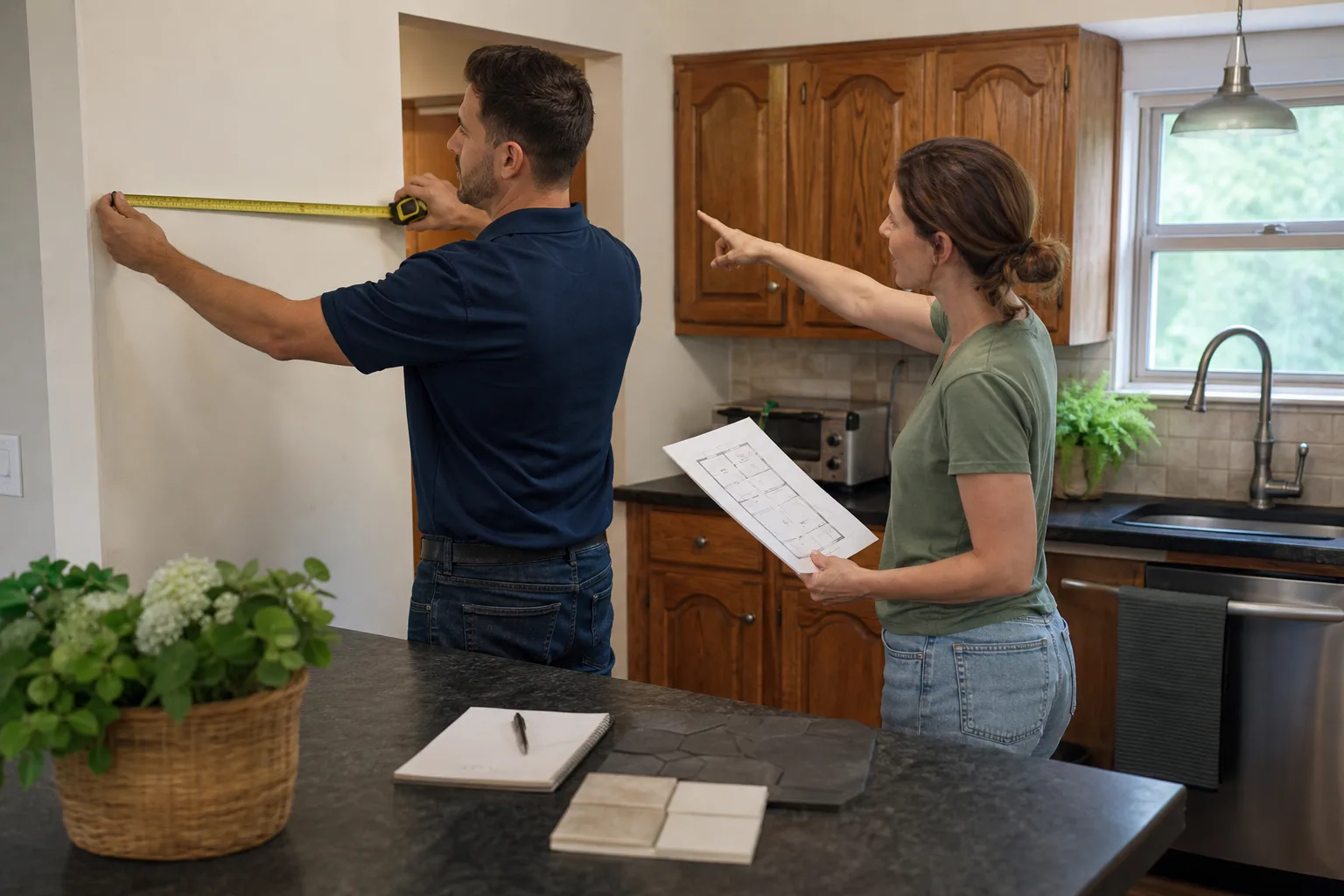
- Assuming the plumbing can stay without a pre-demo check. The rough-in situation isn’t visible until walls are open, but a competent contractor will scope it during the estimate and flag probable relocation before signing, not after.
- Not asking about the inspection hold window. A contractor who doesn’t mention the Clark County inspection queue either hasn’t done many permitted jobs or is hoping you won’t ask. Either answer is a reason to keep looking.
- Skipping the written schedule on a one-bathroom project. If you have one bathroom, “we’ll be quick” is not a plan. The toilet-out window should be defined in writing before demo day.
- Changing the design after demo. Every change triggers a re-order, a re-inspection, or both. Lock the plan and the materials before the first tile comes off.
- Accepting a “rough estimate” without line items. A single number with no scope is a placeholder, not a price. The written price has to show every line the job will actually touch.
- Skipping the written guarantee at close. A handshake isn’t a warranty. Ask what the guarantee covers, what it requires of the homeowner, and how long it lasts. If a contractor won’t put it on paper, that tells you what holding them to it would cost you.
See the difference
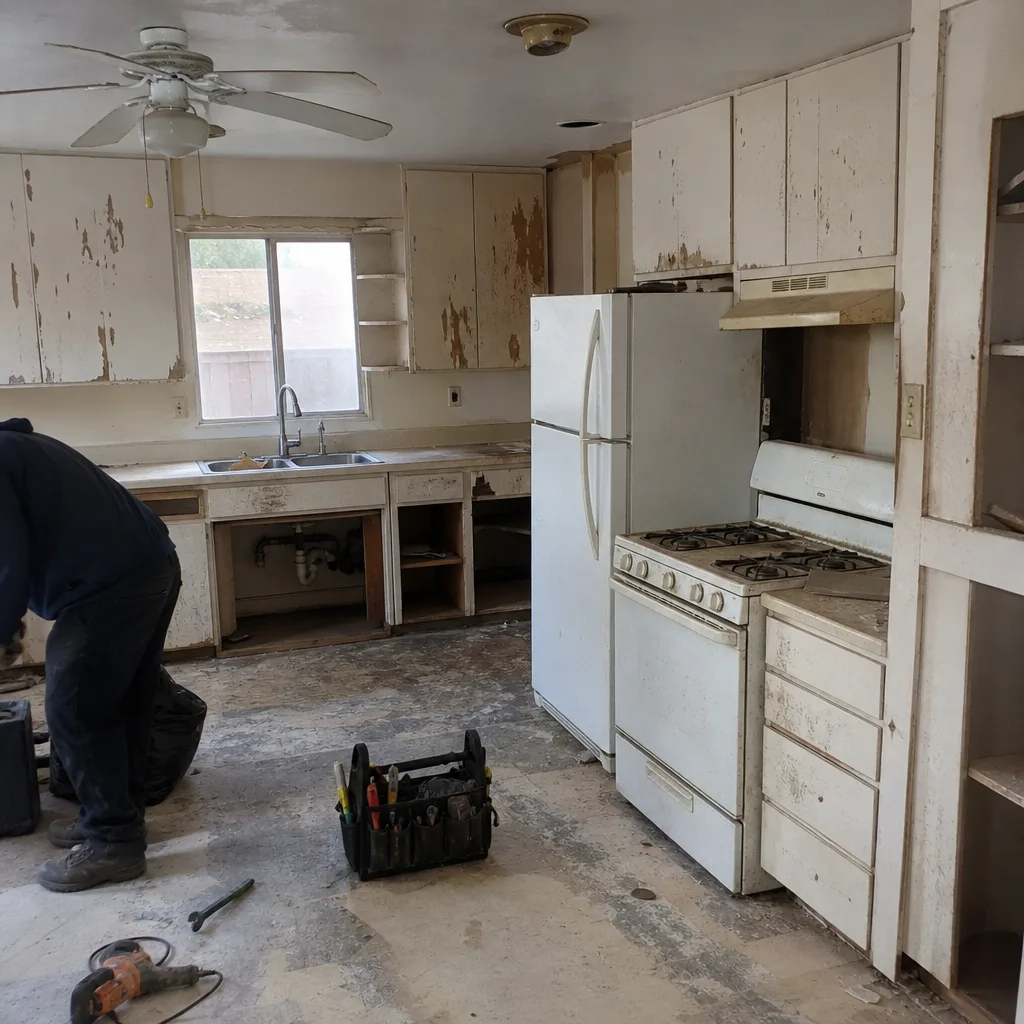 Before
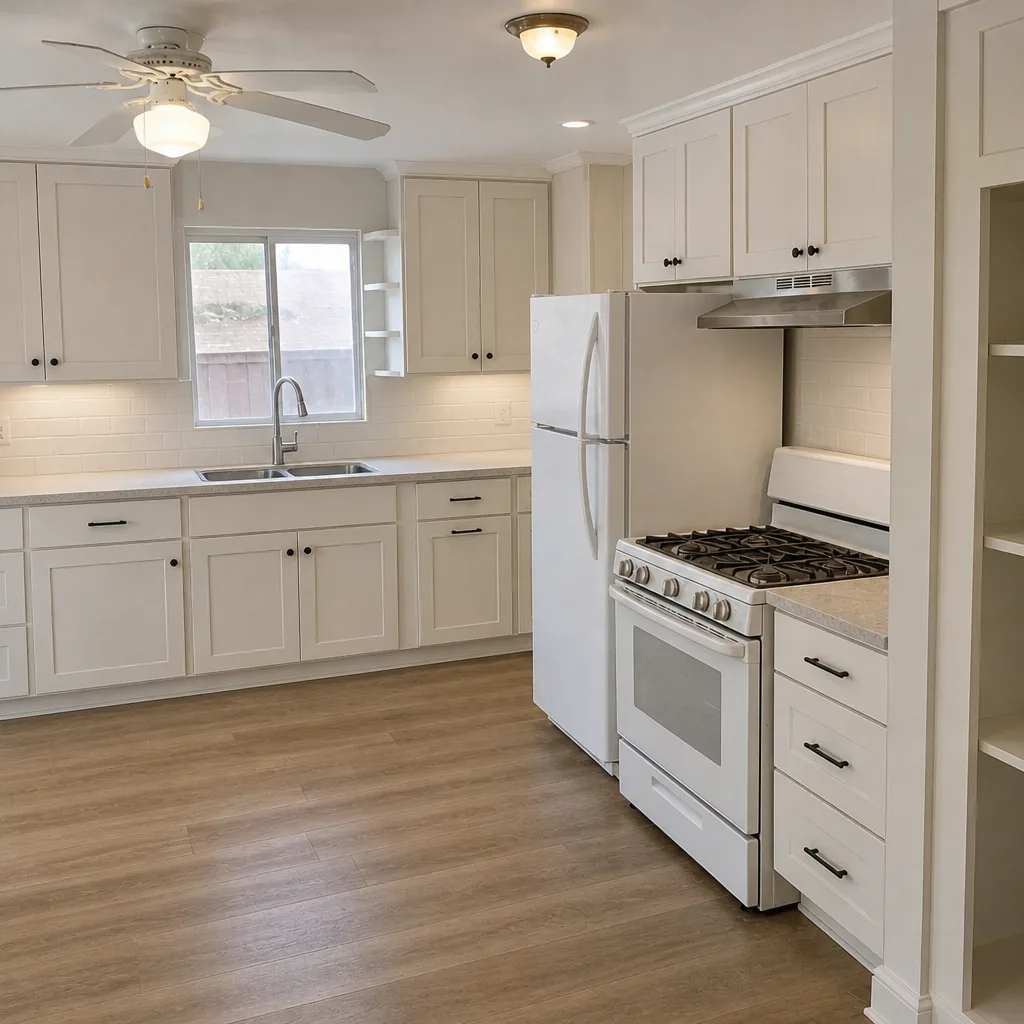 After
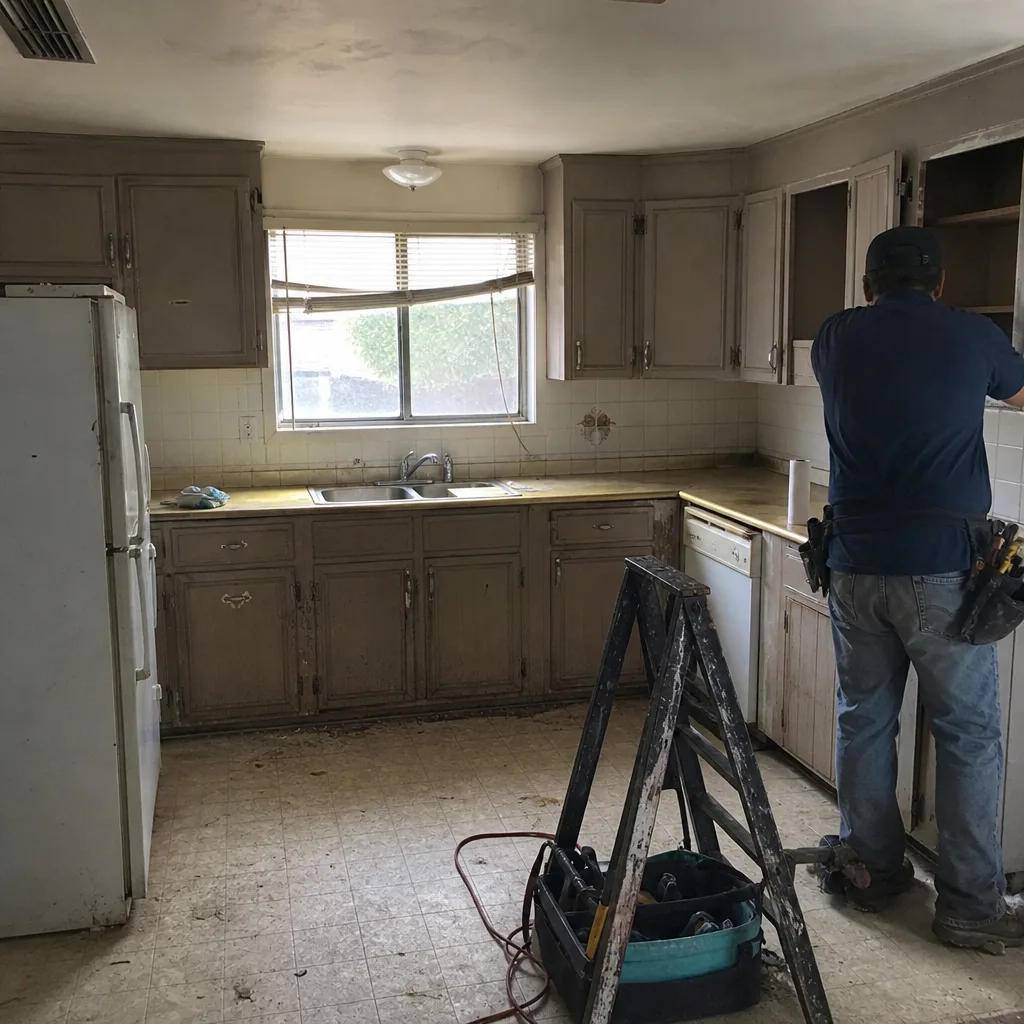 Before
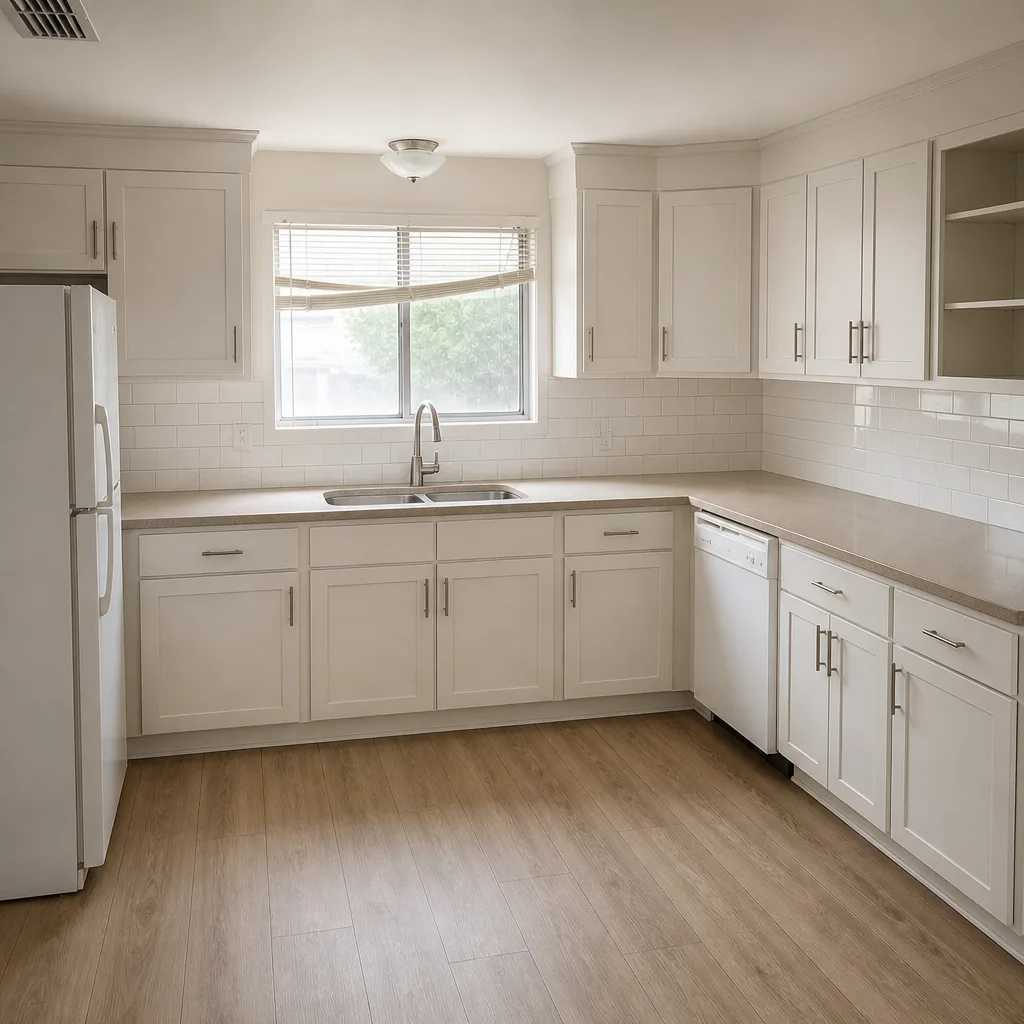 After
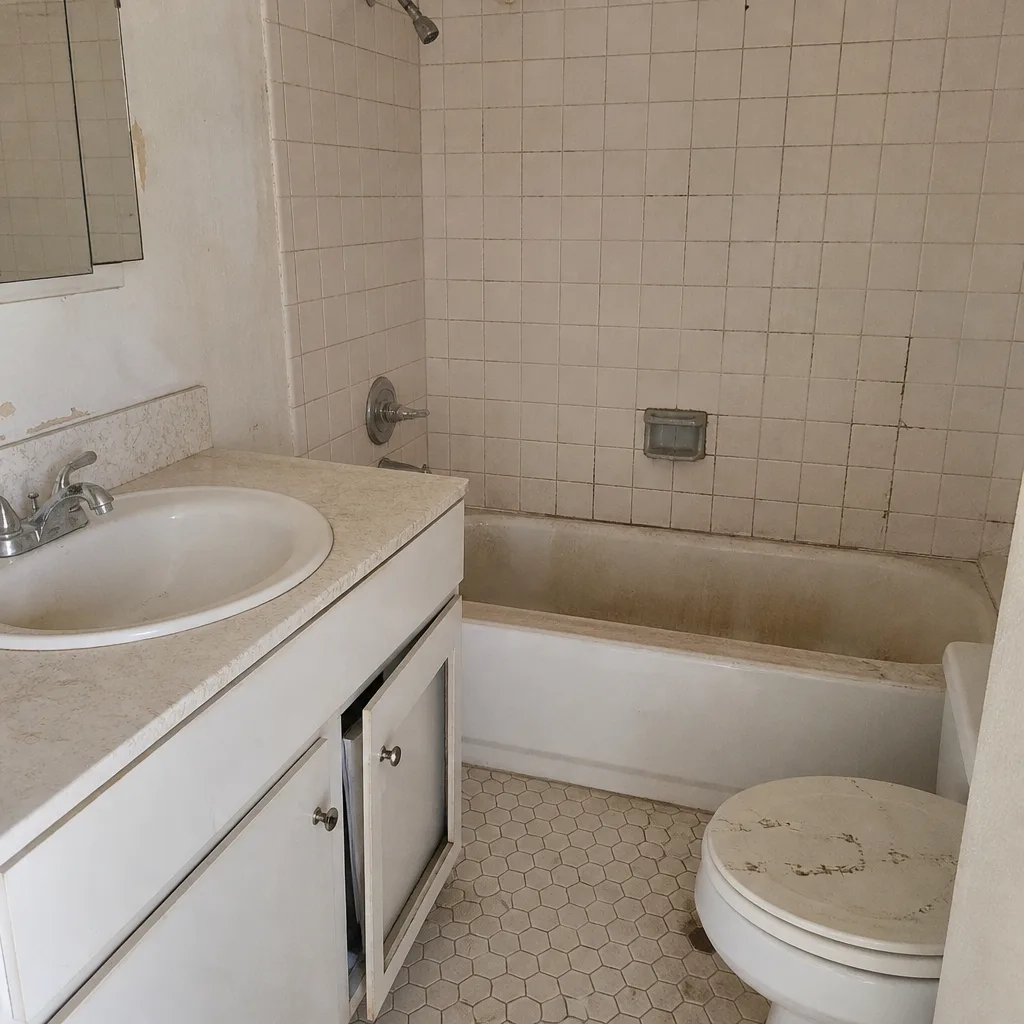 Before
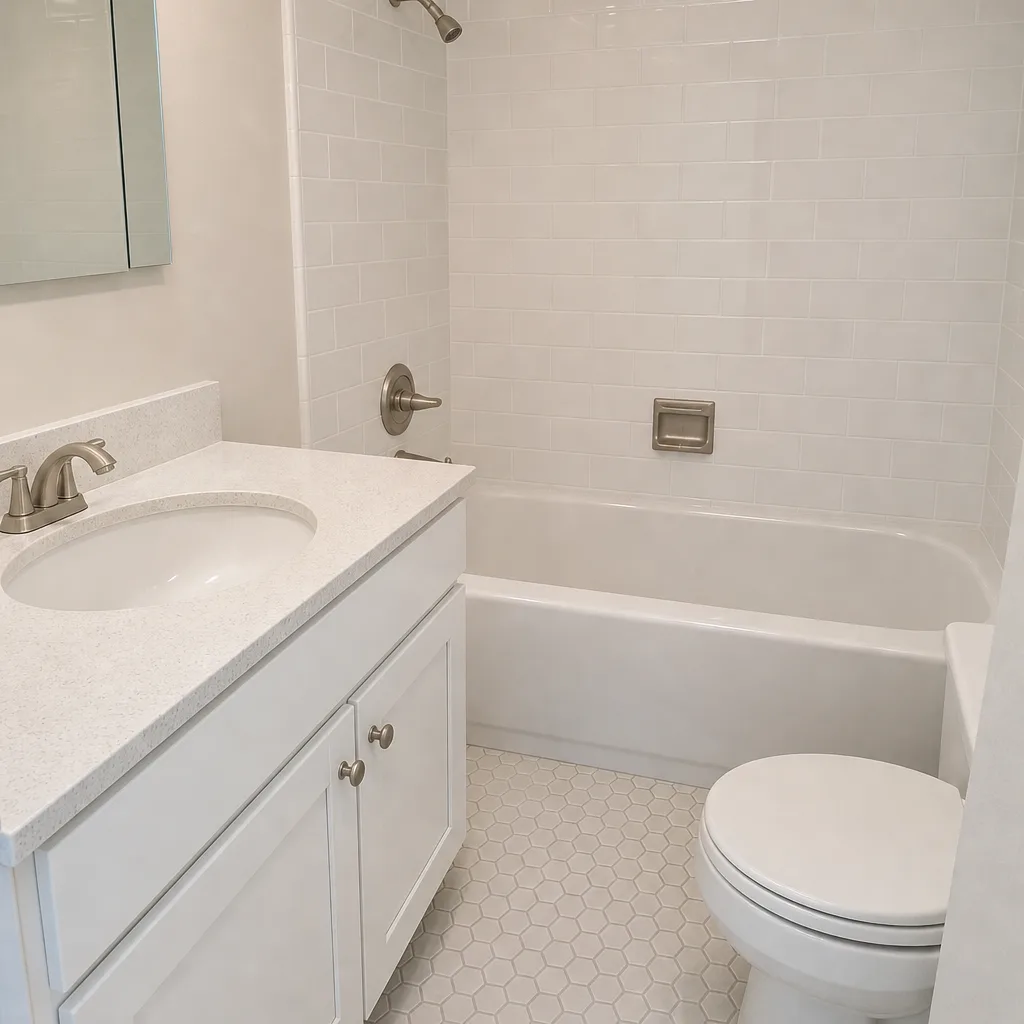 After
When to Call a Professional
Some bathroom work is genuinely a homeowner job: swapping a faucet cartridge, replacing a showerhead, caulking the tub. But several scenarios are past the DIY line, and they’re worth calling a professional for before the problem compounds. If your existing plumbing rough-in needs relocation, if the drain is slow enough to suggest a collapsed line, if the electrical panel needs a new circuit for a heated floor or a spa tub, or if the tile substrate is water-damaged to the point where the wall has to open, you’re into permit territory and a job that has to be inspected. Springs, gas, and electrical work are not places for a first attempt, and neither is a rough-in that a Clark County inspector is going to crawl under with a flashlight. Bradford Remodeling Boulder City offers free estimates in Boulder City. Call (844) 797-9259 to schedule yours, and we’ll walk the scope, name the probable tier, and hand you a written price before a single tool comes out.
Frequently Asked Questions
A cosmetic refresh takes 5 to 8 working days, a full gut with plumbing staying in place takes 2 to 3 weeks, and a full gut with plumbing recorded takes 4 to 6 weeks. In Boulder City, add 2 to 5 days for the Clark County rough-in inspection hold window on any project touching plumbing or electrical. For an exact timeline on your bathroom, call (844) 797-9259 – estimates are free.
Sometimes, by a few days, because the rough-in inspection queue is what it is. Boulder City sits inside Clark County’s scheduling system, and the 2 to 5 day inspection window applies here the same as anywhere else in the county. The honest answer is that the calendar difference between Boulder City and Las Vegas is mostly inspection scheduling, not finish work.
Yes, in most cases, if you have a second bathroom. For a single-bathroom household, staying in the house is possible but requires a written plan for the toilet-out window – typically 7 to 10 days – and a backup plan for showers. Either way, the contractor should define that window in the schedule before demo starts. Call (844) 797-9259 for a project plan that accounts for it.
Yes. Any project touching plumbing or electrical needs a permit and a rough-in inspection before walls close. We file the permit as part of pre-construction and schedule the inspection inside the project calendar, so the hold window is part of the plan, not a surprise. If your current quote doesn’t show a permit line, ask the contractor why. For a written, line-item estimate that includes the permit and inspection, call (844) 797-9259.
Not on a written, line-item price, unless you add scope. A wall that opens to reveal a hidden problem – corroded galvanized supply lines are common in older Boulder City homes – is a legitimate scope change and gets priced in writing before the work proceeds. What should never happen is a number that moves at the door with no documentation. Line-item price, in writing, before the first tool comes out is the standard we hold every job to.
That’s the reason a schedule document matters. If the crew doesn’t show, you have a document with phase names, dates, and a signature to hold them to, not a verbal promise. The 365-Day Done Right Promise also covers the work after the project closes: if the work fails inside that year, we come back and correct it at no charge. Call (844) 797-9259 to schedule a free estimate and see a sample schedule document before you sign anything.
The Bottom Line
The calendar on a bathroom remodel is driven by three variables, and only one of them is under a contractor’s control. Fixture and tile lead times are solved by ordering before demo. The rough-in inspection hold window is solved by building it into the schedule rather than pretending it can be compressed. Whether your plumbing moves is a scope decision you make before signing. Cosmetic refresh: 5 to 8 days. Full gut, plumbing stays: 2 to 3 weeks. Plumbing relocation: 4 to 6 weeks. In Boulder City, add 2 to 5 days for the county inspection queue and plan for older galvanized lines in the historic core. Ask for the schedule document. Ask for the tile delivery date in writing. And ask for the signed guarantee before the first tool comes out.
Bradford Remodeling Boulder City works to The Garrison Standard – a written price before work starts, background-checked and uniformed technicians on every job, and the 365-Day Done Right Promise in writing on every completed project. A live person answers the phone 24 hours a day, 7 days a week. Call (844) 797-9259 for a free estimate on your Boulder City bathroom remodel.
Written by the team at Bradford Remodeling Boulder City.