
Free written scope consultation - allowances, timeline, and change-order rules on paper before a single trade is scheduled
Cambria Home Additions & ADU: The Boulder City Owner’s Guide
We build and install Cambria-spec home additions and ADUs for Boulder City homeowners, and a typical finished addition runs $45,000 – $130,000 while a full ADU runs $90,000 – $220,000. We’re an independent service provider operating in Boulder City, not affiliated with Cambria. Most owners start calling us for a different reason than they expect: the addition that was supposed to be the guest suite has a crack running down the interior drywall one summer after it went up, or the ADU they finished for a parent is showing a leak at the ceiling line after a monsoon. Those aren’t cosmetic problems. They’re usually symptoms of a structure that was built without matching the substrate, the drainage plane, or the foundation to Cambria’s actual specs for a Boulder City address.
Which Cambria Models This Applies To
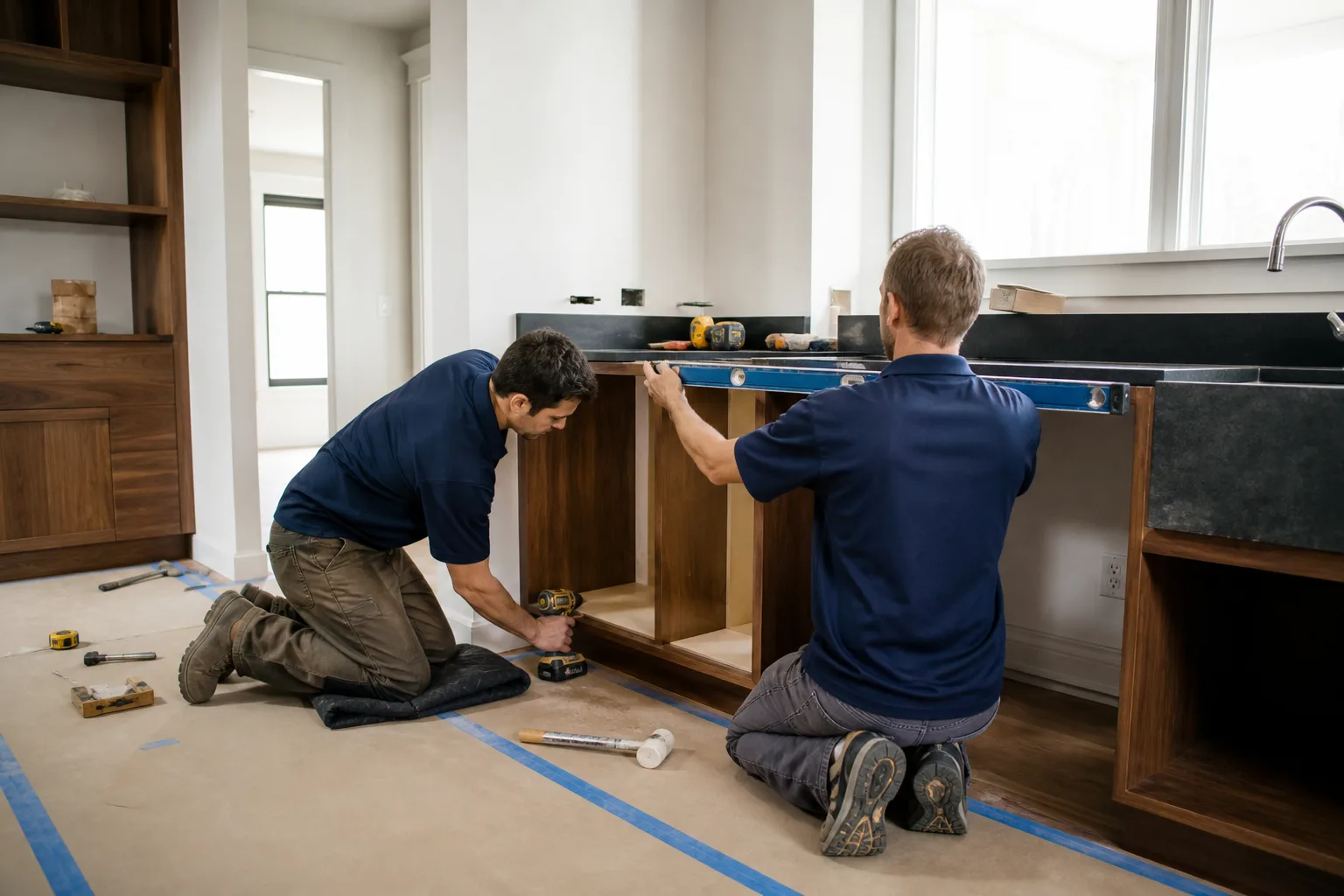
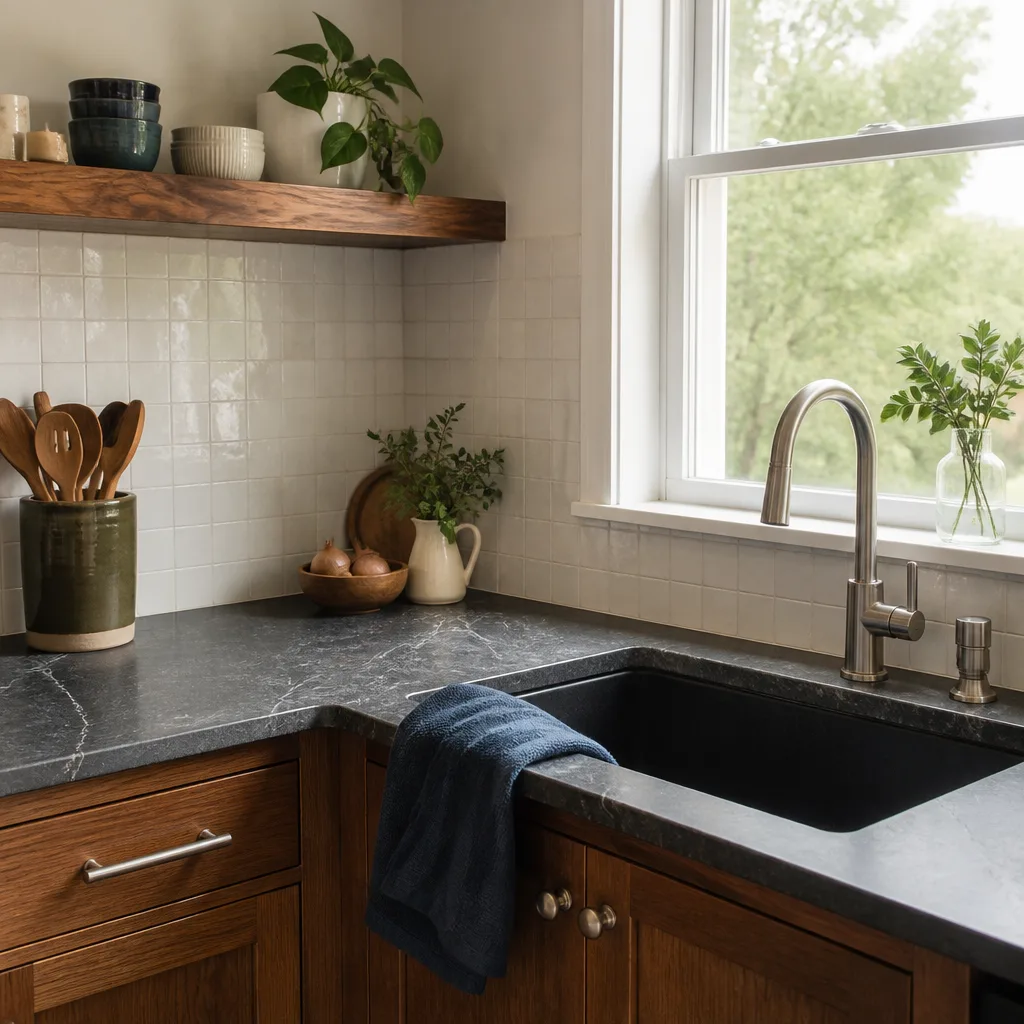
“Cambria” is a surface brand, and in an addition or ADU it almost always shows up on kitchen counters, bathroom vanities, and sometimes a wet bar or laundry. The model matters because the slab thickness and edge profile determine how the counter meets the cabinetry and how the seams fall across a 12-foot island in a new build. When owners tell us a Cambria part failed, it’s usually the counter delaminating from its substrate, a seam opening, or the edge chipping at a corner that was cut wrong for the cabinetry depth.
Identify what you have before anything else. Look for the Cambria marking engraved on the underside of the slab, not the top. Measure the slab thickness with a tape: Cambria standard is 3cm and 2cm, and an addition built to take 2cm won’t accept 3cm without reworking the cabinetry and the rough-in behind it. Check the sink cutout dimensions against Cambria’s published spec for your model.
The OEM-versus-aftermarket call is different here than for, say, a garage door spring. Cambria is a manufacturer of quartz surfaces, not an aftermarket parts supplier for additions. There’s no “Cambria replacement part number” you can order for a counter. What you’re actually sourcing is either a Cambria slab (through a Cambria fabricator) or a compatible quartz from a documented line. We work with Cambria and Caesarstone surfaces, so the specification stays traceable from the fabricator to the install. Compatible cabinetry in the same addition typically comes from KraftMaid or Wellborn.
Styles & brands we work with
- Kitchen remodeling
- Bathroom remodeling
- Home additions & ADU
- Roofing
- Windows & doors
- Driveway & pavers
- Fence
Signs Your Cambria Home Additions & ADU Is Failing
These are the symptoms that actually bring Boulder City owners to the phone. Each one points to a different root cause, and none of them fix themselves.
- Cracks along the drywall-to-ceiling joint. Boulder City’s summer swing from 100°F days to 70°F nights moves the frame more than most additions are built to absorb. When the framing or the substrate wasn’t detailed for that range, the joint opens and keeps opening. This isn’t settled by another coat of spackle.
- A Cambria counter seam that opens at the dishwasher or sink. This usually means the slab was set on a substrate that flexed, or the seam was placed over a cabinet gap. The counter looks fine until you run the dishwasher, and then the seam opens a hairline that catches a fingernail.
- Water staining on an interior ceiling near a plumbing wall. In an ADU, this almost always traces to a rough-in that changed after the framing was inspected, or a shower valve that wasn’t flashed correctly to the substrate. Boulder City’s water is hard, so mineral staining shows up fast and looks worse than the leak itself.
- A floor that slopes toward an exterior door. Additions over a slab-on-grade foundation in this climate can settle if the subgrade wasn’t compacted for the soil. A 1/8-inch slope over a 10-foot span is a footing question, not a flooring question.
- An exterior wall that shows efflorescence, the white chalky bloom. That’s water wicking through, not through the paint. It points to a missing or incorrectly overlapped drainage plane behind the siding
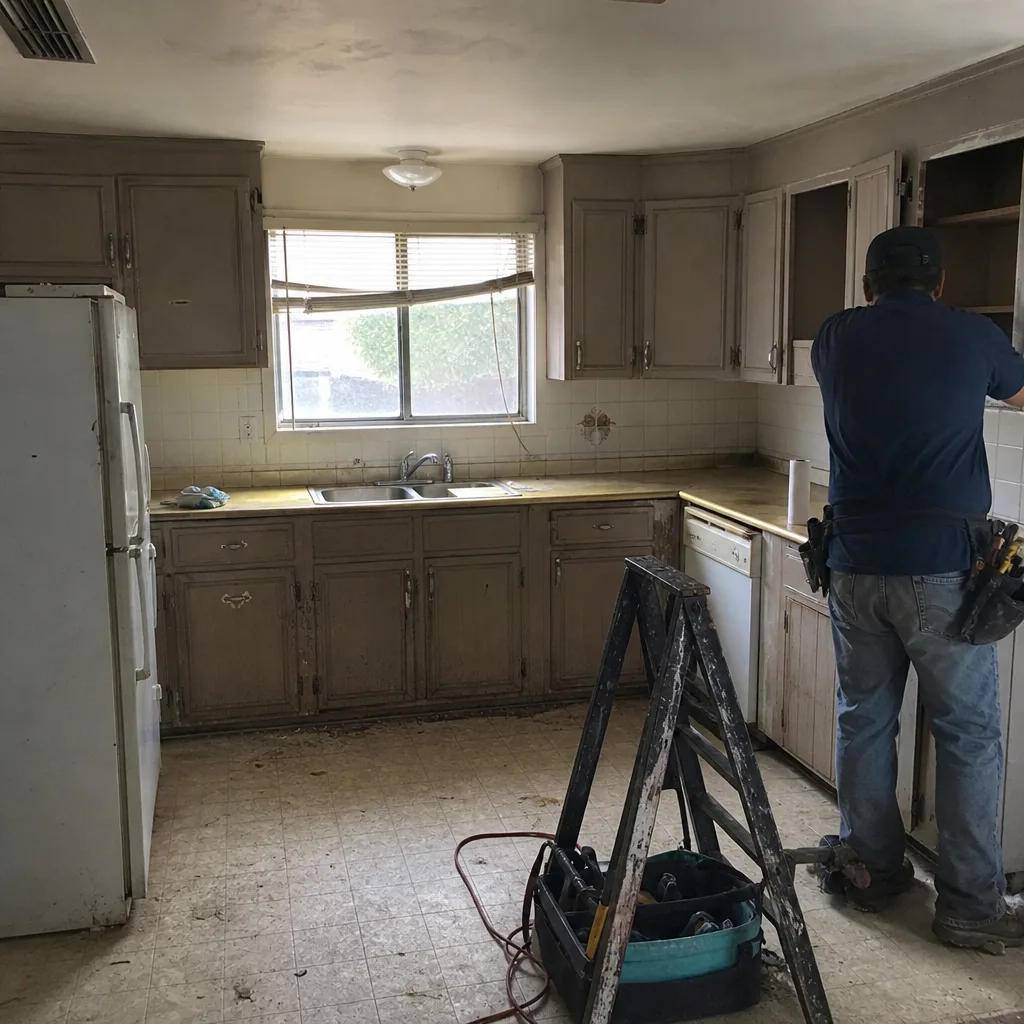
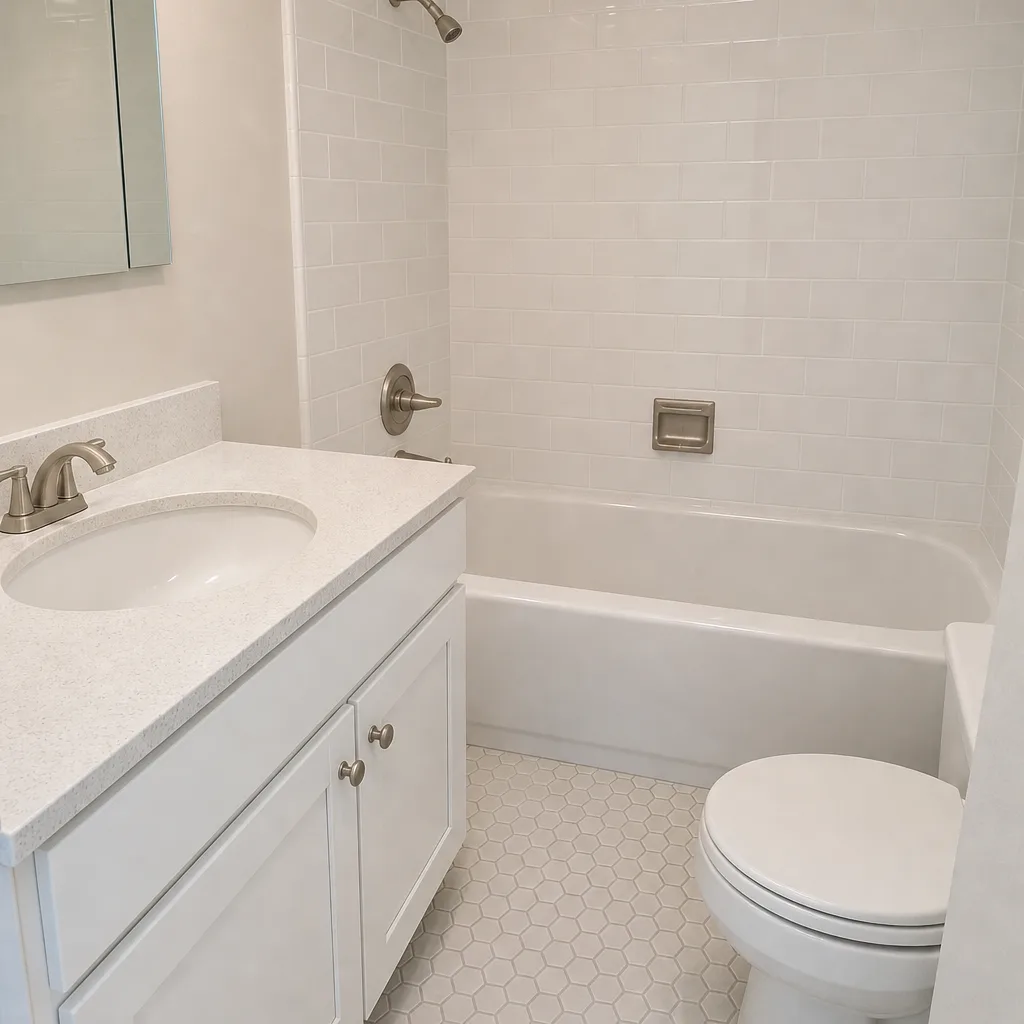
See the difference
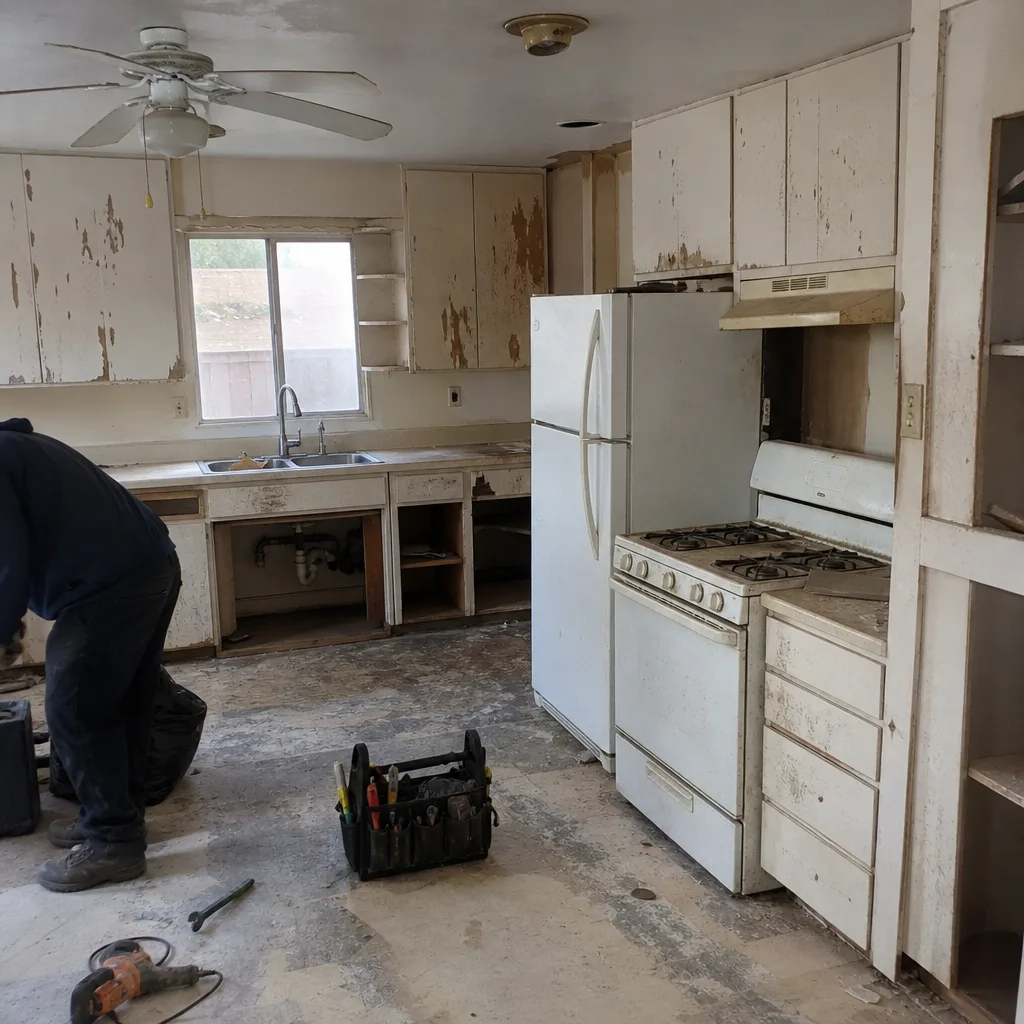 Before
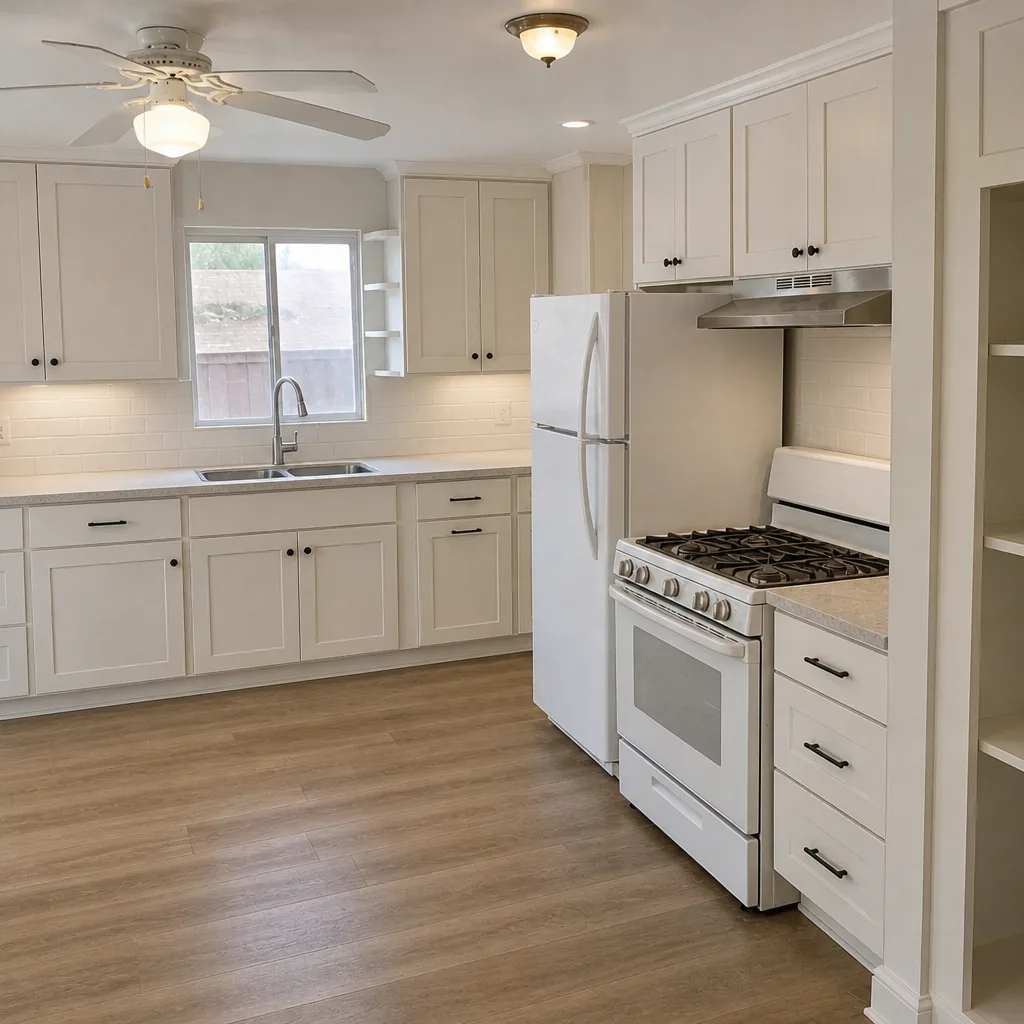 After
 Before
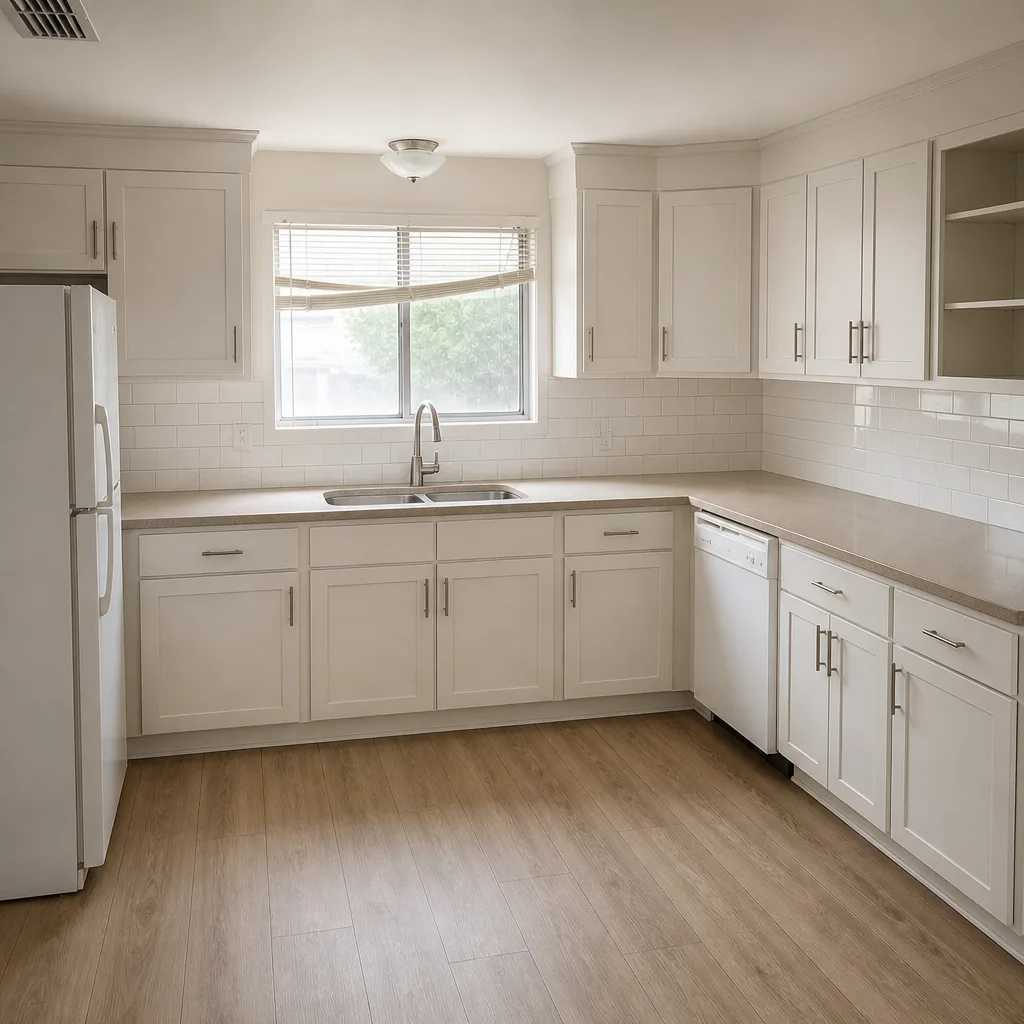 After
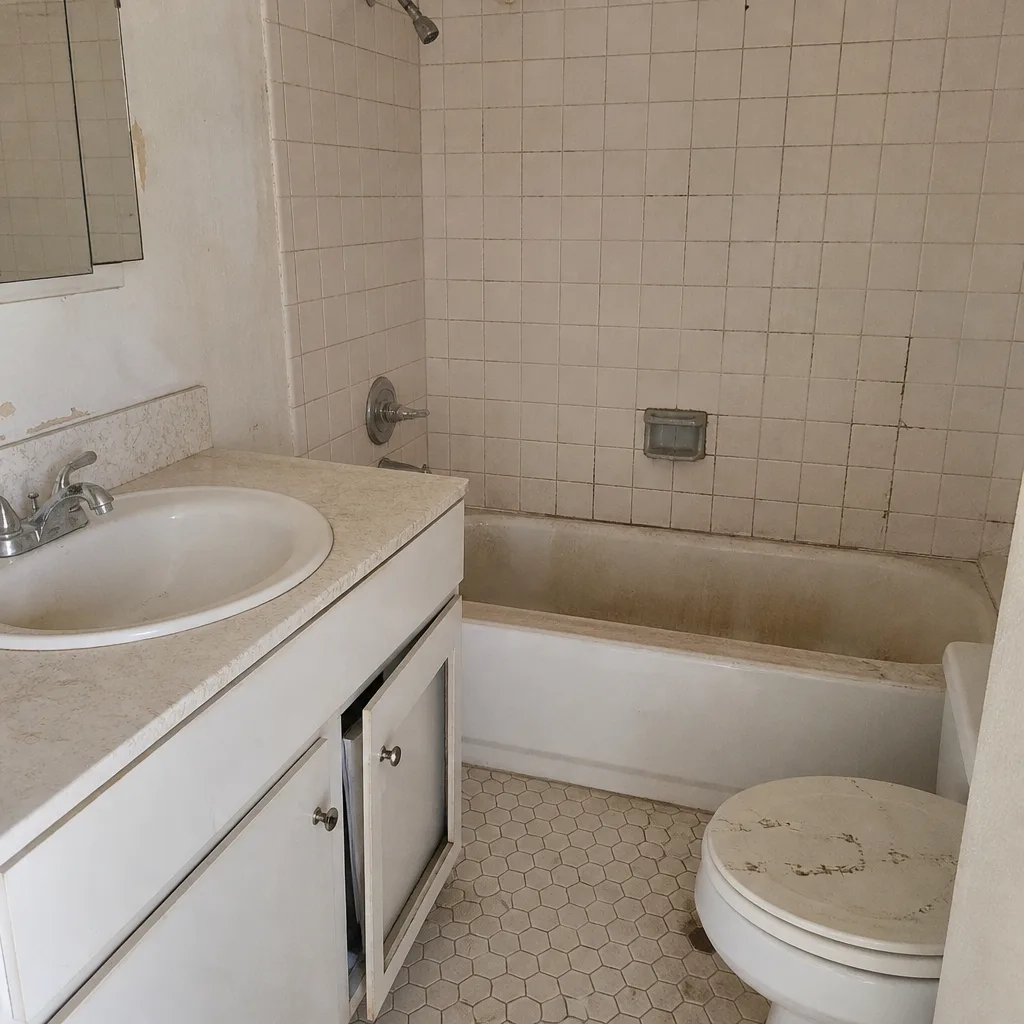 Before
 After
Replacement Cost & What’s Included
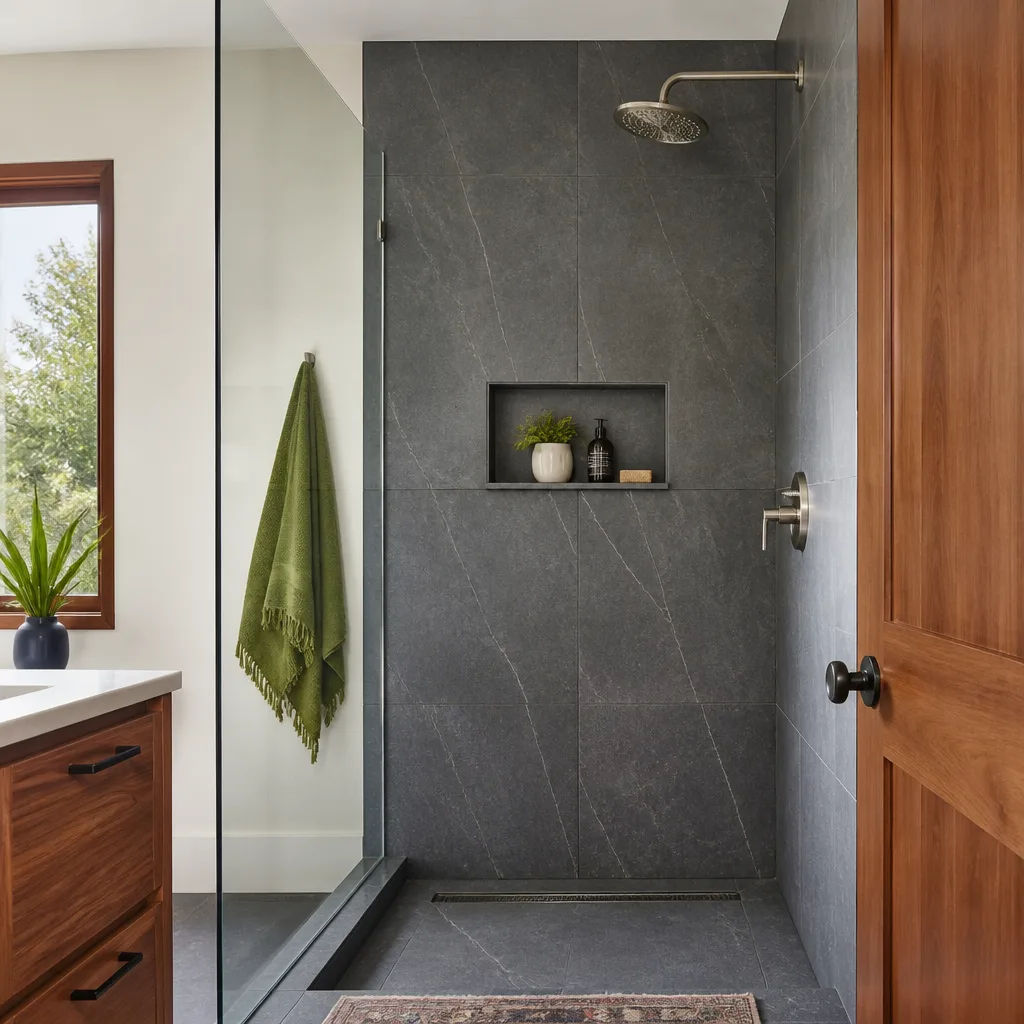
Here’s what our Boulder City numbers actually look like for a Cambria-surface addition or ADU, written down before any work starts. These are installed prices, not parts quotes:
| Scope | Installed price range |
|---|---|
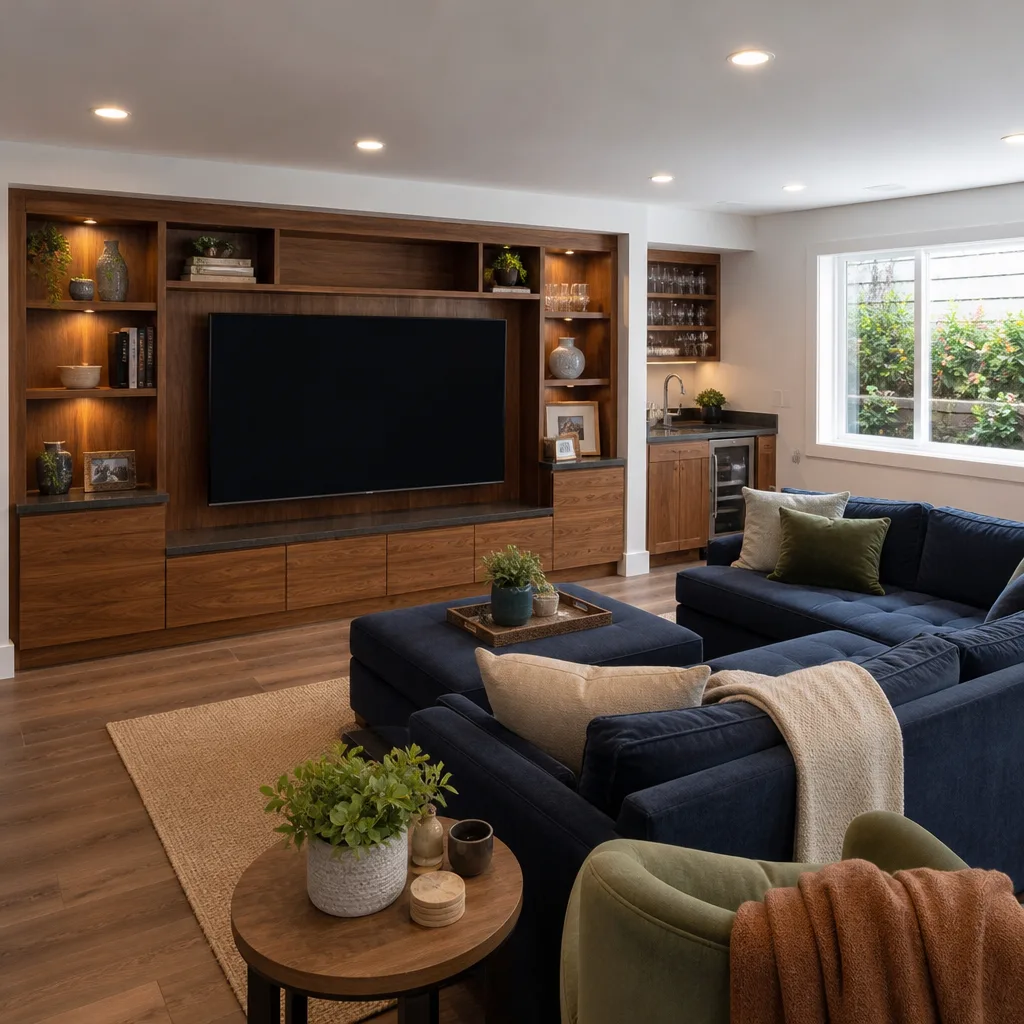
| Home addition (room, suite, expansion) | $45,000 – $130,000 |
| ADU (full build-out) | $90,000 – $220,000 |
| Garage conversion to living space | $30,000 – $80,000 |
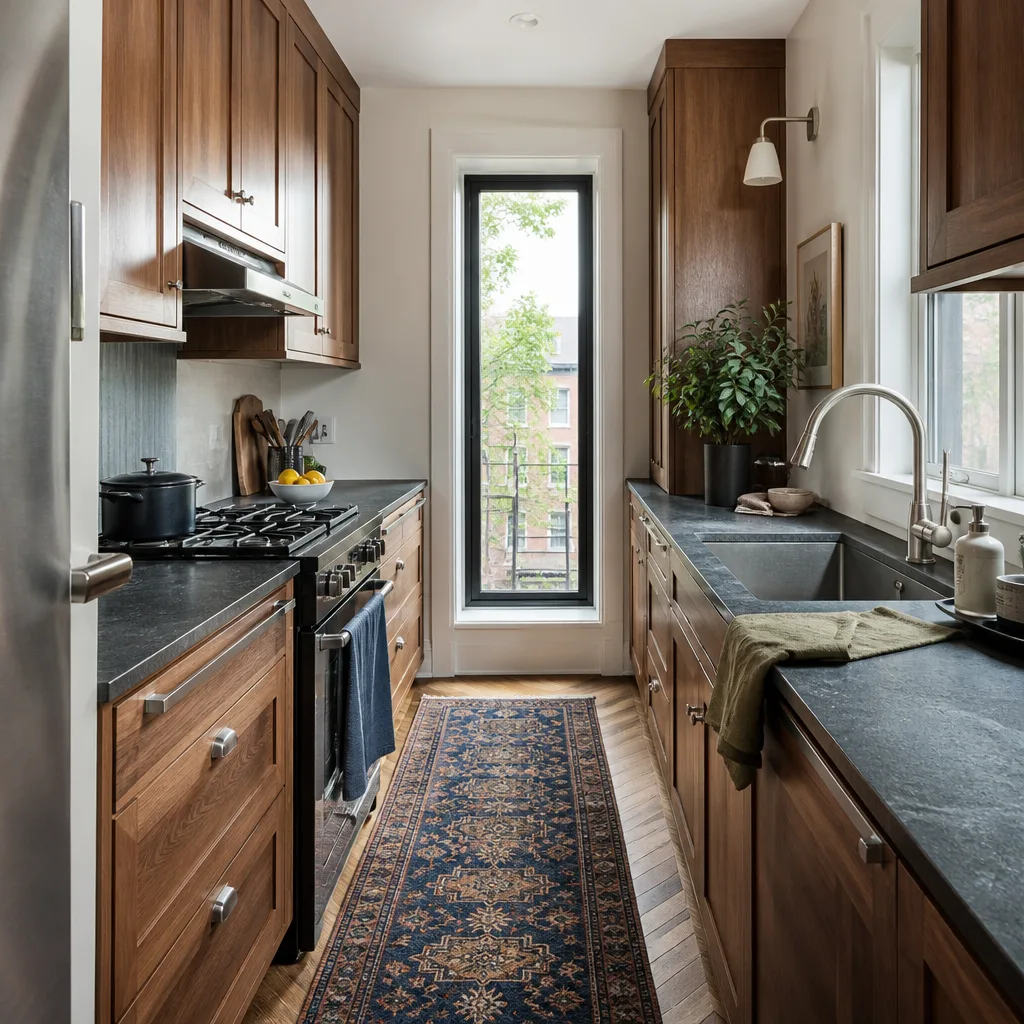
| Cambria countertop install within an addition or ADU | $2,000 – $6,500 |
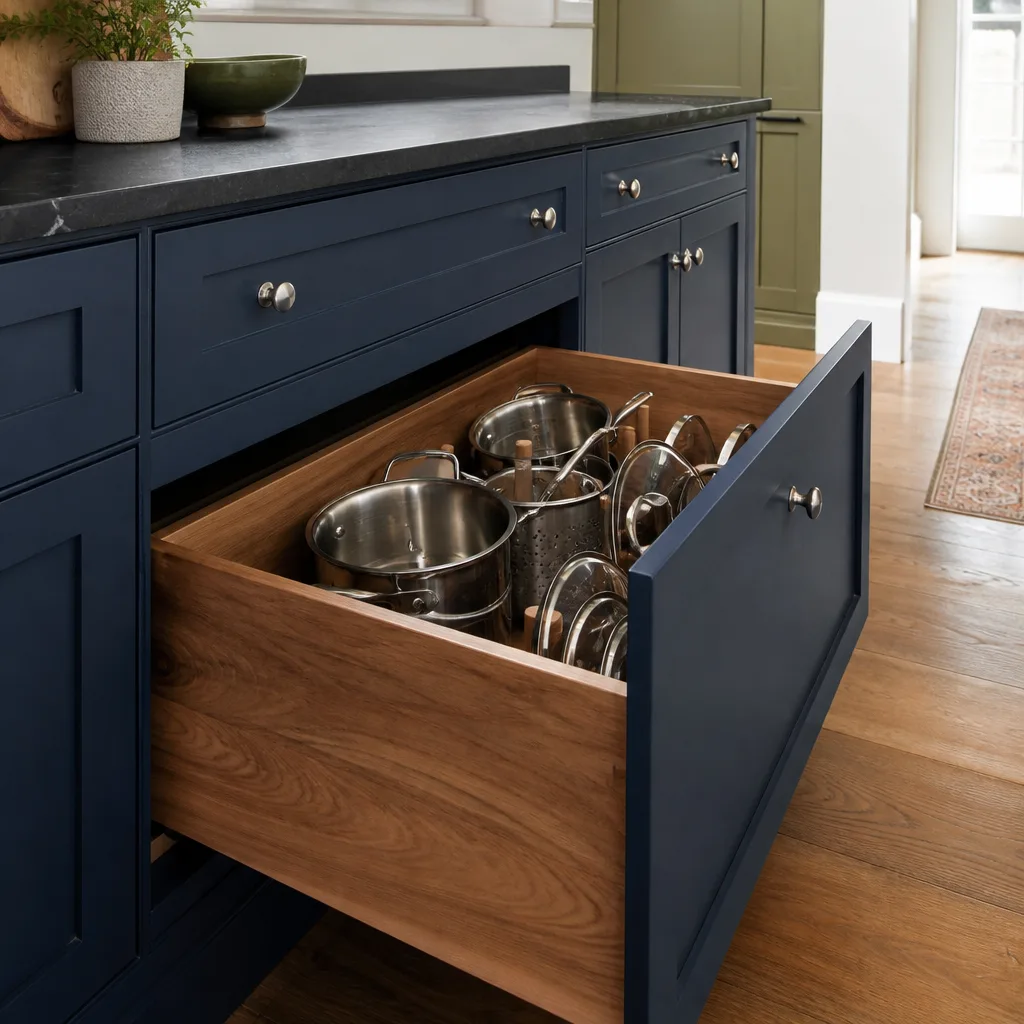
| Cabinet installation within an addition or ADU | $4,000 – $13,000 |
What moves the range: foundation work if the subgrade needs correction, plumbing relocations that change the rough-in, whether the ADU needs its own electrical service upgrade, and the slab size and edge profile on the Cambria.
Every project gets a written price before a single tool comes out. We don’t reprice at the door. Every completed project carries the 365-Day Done Right Promise: a written guarantee that if the work fails within a year, we come back and correct it at no charge. That’s the whole guarantee, spelled out on paper in your hand at close.
DIY or Call Us?
Here’s the honest split. Check the symptoms. Run your hand along a seam, photograph the crack, put a level on the floor if you suspect slope. If you see water where it shouldn’t be, turn off the supply to that fixture and call a plumber or us.
Don’t open a wall to inspect framing yourself. Don’t re-flash a plumbing rough-in. Don’t guess at a substrate to save a few hundred dollars on a Cambria reinstall. The failure that gets expensive is always the one that started as a small DIY repair on a structural or drainage issue.
If you’re unsure where you sit, call (844) 797-9259. A live person answers the phone 24/7. No voicemail, no callback queue.
FAQs
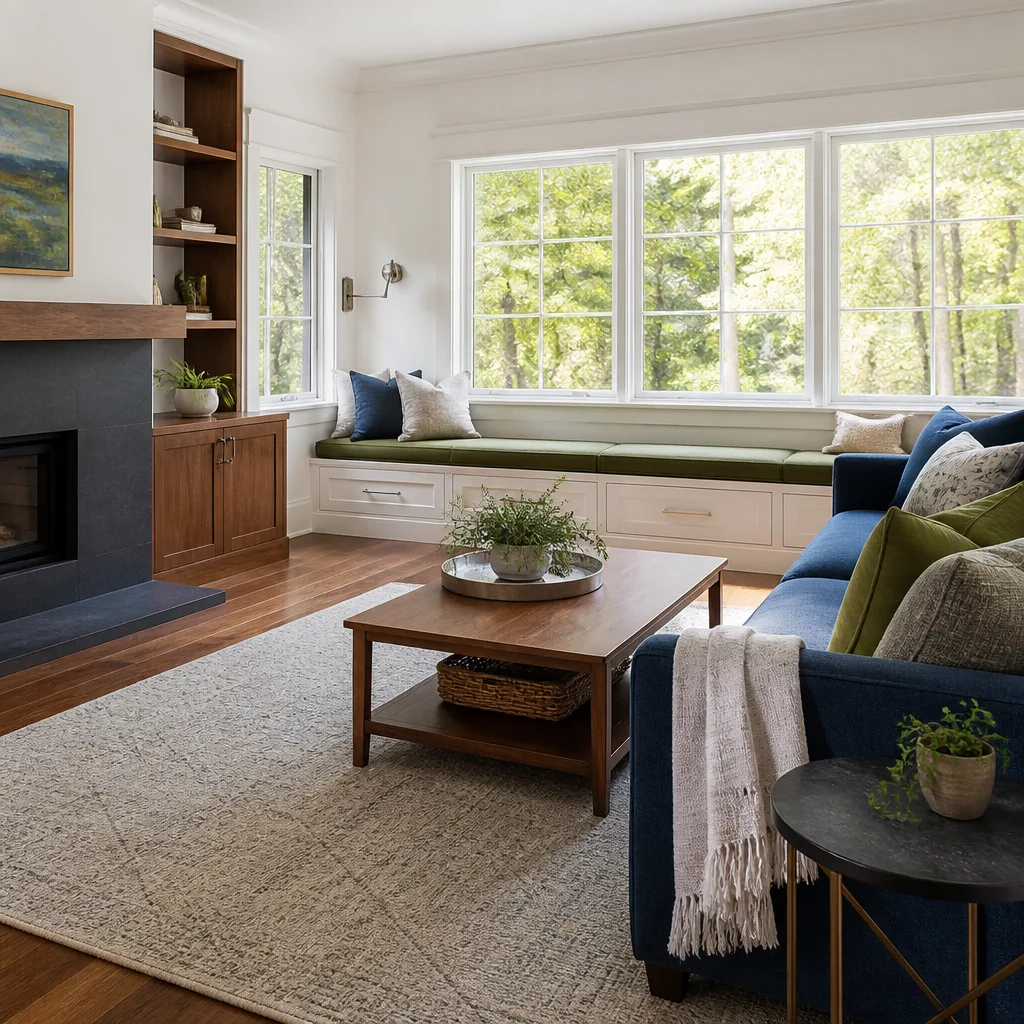
How long does a Cambria home addition or ADU actually last? A properly built addition should hold for decades, but the range in Boulder City depends on the substrate and drainage detail. Build it right and it outlives the house’s original framing. Our technicians have up to 22 years of experience and we’ll tell you honestly whether a five-year-old addition is fixable or needs rework. Call (844) 797-9259.
Can the addition be repaired instead of rebuilt? Often yes, and we’ll tell you which. A cracked drywall joint, an opening seam, or efflorescence on the siding is a repair, not a rebuild. A settled foundation or a compromised rough-in is not. We give you a written scope either way before we start, so you know which you’re buying.
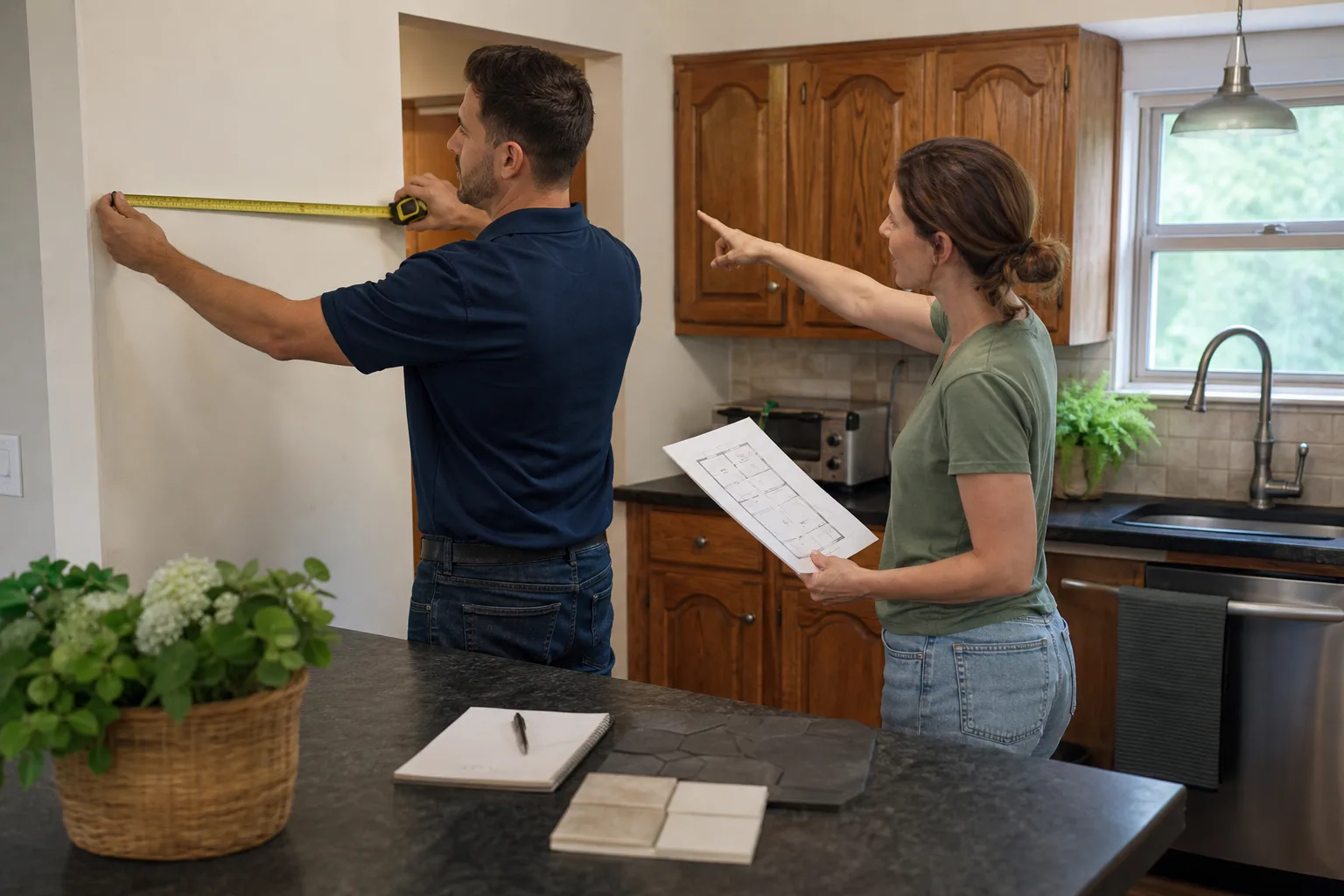
How long does it take to install a Cambria countertop in an existing addition? A counter swap in an existing addition is typically a one-day fabrication and install, plus a day for templating. Larger scopes and full ADUs run weeks, not days, and we’ll put the timeline in the written scope. Call (844) 797-9259 for a free estimate.
How do you source the Cambria part? Through Cambria’s fabricator network, so the slab, the thickness, and the edge profile match what the addition was built to take. We don’t carry parts on a truck, and we don’t stock Cambria locally. We verify the fabricator’s spec sheet against the cabinetry and rough-in before the slab is cut. Same for compatible cabinetry: KraftMaid and Wellborn, along with Caesarstone and Kohler fixtures where they belong in the same scope.
Written by the team at Bradford Remodeling Boulder City, serving Boulder City and nearby areas.