Last updated November 17, 2026








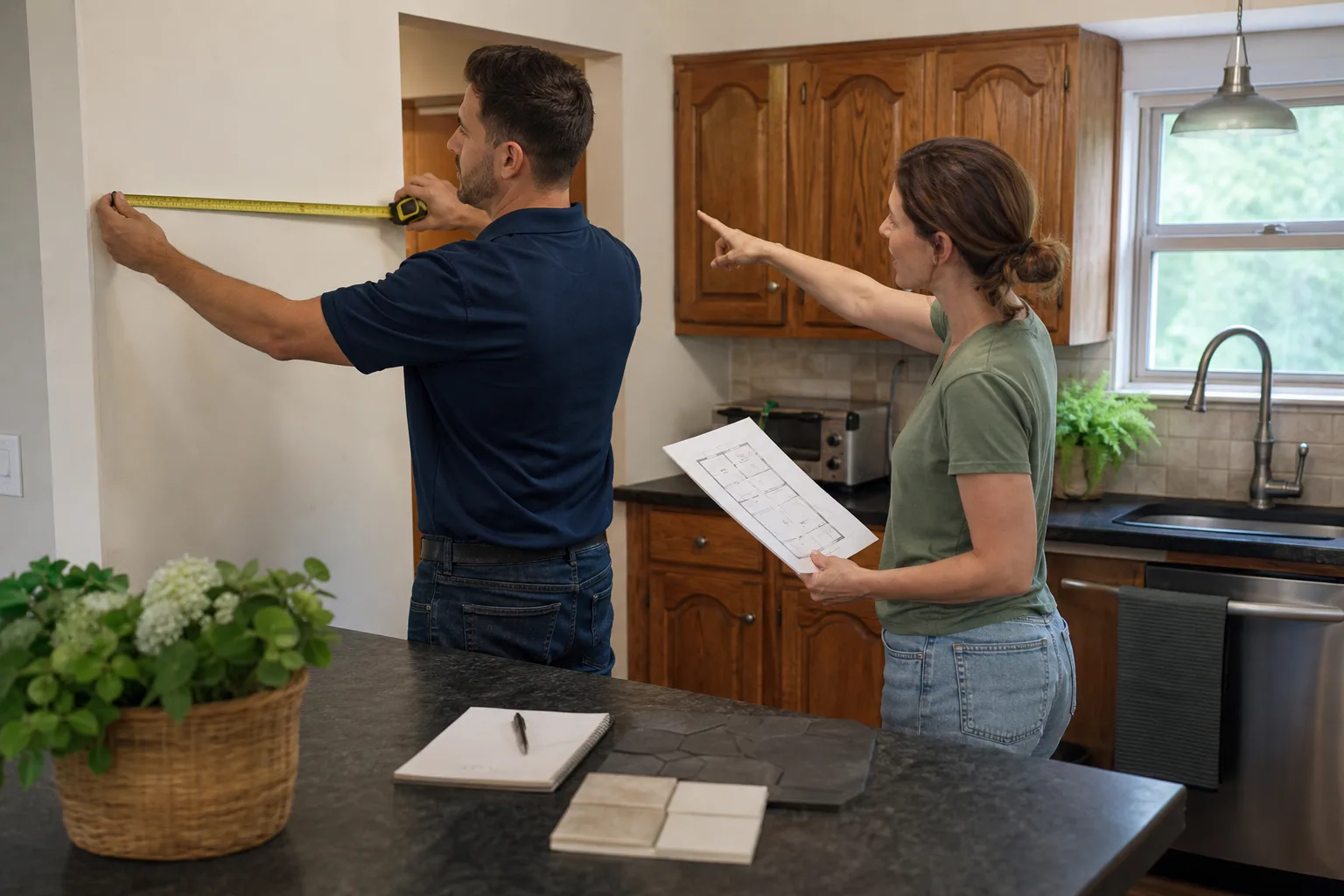
Free written scope consultation - allowances, timeline, and change-order rules on paper before a single trade is scheduled
Choosing the Right Construction Brand: A Buyer’s Guide for Boulder City
Boulder City has fewer licensed general contractors per capita than nearly any comparably sized city in Nevada. That changes how you shop. “Getting three bids” often means calling the same two or three crews operating under different names, and the logo on the side of the truck tells you almost nothing about which one will finish the job on the written price. What separates an accountable contractor from a well-photographed one is the paperwork: the written price, the scope, and the workmanship warranty with terms you can actually enforce. This guide covers how to compare Boulder City contractors on the things that hold up after the invoice is signed.
Quick Answer
The right remodeling contractor in Boulder City is the one who hands you a written, itemized price and a written workmanship guarantee before any work starts, and whose Nevada State Contractors Board license record backs that up. Marketing, portfolio photos, and review counts are secondary; contract structure and license history are primary. Verify the license, read the warranty terms, and confirm the price doesn’t move once the job begins.
Styles & brands we work with
- Kitchen remodeling
- Bathroom remodeling
- Home additions & ADU
- Roofing
- Windows & doors
- Driveway & pavers
- Fence
Table of Contents
- Why Fewer Contractors in Boulder City Changes How You Shop
- How to Use the Nevada State Contractors Board Lookup
- Why the Contract Structure Beats the Portfolio
- What Written Pricing and Guarantees Look Like in Practice
- What “We Stand Behind Our Work” Actually Means in Nevada
- Evaluating Subcontractor Relationships in a Small Market
- Climate, Materials, and the Boulder City Spec Sheet
- Common Mistakes to Avoid
Why Fewer Contractors in Boulder City Changes How You Shop
In Las Vegas or Henderson, a homeowner can reasonably expect a dozen qualified bidders on a kitchen remodel. Boulder City isn’t that. The licensed contractor base here is small, and several of the firms that show up in a web search are the same operation under a trade name or a subcontract arrangement. That matters because price comparisons get distorted fast. When the “three bids” you collect are really one crew, the middle number is meaningless.
The practical response is to stop shopping by brand and start vetting by documentation. Ask every Boulder City contractor you talk to for the same four things, in writing:
- The state license number, with the classification that covers the scope you’re hiring for.
- An itemized, line-by-line price with materials and labor broken out, not a lump sum.
- What the warranty covers, for how long, and what triggers a return visit.
- The names and license status of any specialty subcontractors who will be on site.
That four-item packet is the closest thing to an apples-to-apples comparison you’ll get. It also tells you something the portfolio can’t: whether the contractor treats documentation as part of the job or as an afterthought. In a small market where reputations travel by word of mouth, the paperwork is the one element that doesn’t depend on someone else’s opinion of the crew.
How to Use the Nevada State Contractors Board Lookup
The Nevada State Contractors Board (NSCB) keeps a public database every homeowner can search before signing anything. Pull up the contractor, enter the license number they supplied, and read what’s actually there. Most people glance at the “active” status and stop. The useful information is in the fields below that.
- License status. Confirm “active” and the expiration date. An expired or suspended license means the contractor isn’t legally authorized to work in Nevada, no matter what the website says.
- Classification and limit. The classification tells you what type of work the contractor is licensed to perform. The monetary limit is the maximum single project value the license covers. If your whole-home remodel exceeds that limit, the contractor is working outside their authorization.
- Qualifying individual. Every license is tied to a named qualifying party. If that person has moved to a different company, the license history may not reflect the crew actually doing your job.
- Complaint history. Complaint records are the part most homeowners skip. A pattern of closed complaints for workmanship or non-payment issues is worth a direct question; a single dated complaint from years ago is often just one bad subcontractor job.
- Bond and insurance on file. The board record shows whether the contractor meets the state’s bonding and insurance requirements. That’s your leverage if a dispute escalates.
Run this lookup on every Boulder City contractor you consider, including the one we’d send if you hire a general contractor in Boulder City through us. The lookup takes ten minutes. It’s the single highest-value step in the whole process.
Why the Contract Structure Beats the Portfolio
A portfolio shows what a contractor can do with good lighting and a wide lens. It doesn’t show what happens when a cabinet arrives damaged, when the electrical rough-in doesn’t match the drawings, or when the homeowner and contractor disagree about whether a change order was authorized. Those moments are where remodeling projects actually go sideways, and they’re governed by the contract, not the gallery.
When you review a proposal, look at the following before anything else:
- Is the scope line-itemed? “Kitchen remodel, $42,000” is not a scope. Look for tear-out, framing, electrical, plumbing rough-in, drywall, finish carpentry, countertops, and cleanup as separate lines with quantities.
- Are materials named by brand and model? Vague terms like “premium cabinets” get filled in later. A specific brand and door style is traceable, and the manufacturer’s spec sheet gives you something to hold the contractor to.
- Is there a change-order process? Any addition to scope should require a written, signed change order before the work proceeds. That clause protects both sides.
- Is the payment schedule tied to milestones? Front-loading the deposit is a warning sign. Progress payments tied to completion of defined stages are the trade standard.
A strong contract with a plain portfolio is a better sign than a stunning portfolio and a one-page proposal. The first you can hold a contractor to. The second you’re trusting to memory.
What Written Pricing and Guarantees Look Like in Practice
Most remodelers ask you to trust them. The alternative is to hand you the trust in writing. At Bradford Remodeling Boulder City, we work from The Garrison Standard, which does two things before a tool comes out: it puts a written, itemized price in your hands, and it defines exactly what the 365-Day Done Right Promise covers. If the work fails within that one-year window, we come back and correct it at no charge.
Here’s the model in practice. You can demand the same documentation from any contractor you’re evaluating, whether or not it’s us:
- A written price before work starts. Not a range, not a “starting at.” A number by line, with the materials specified. If a scope item is uncertain, it should be identified as such and priced as an allowance.
- No numbers that move at the door. If a contractor adds a fee at the start of the job that wasn’t in the written proposal, that’s a contractual red flag, not an honest adjustment.
- A guarantee with defined terms. “We stand behind our work” is not a guarantee. “If the installation fails within 12 months, we repair it at no cost” is. Ask which one you’re getting.
- A clean close-out package. When we finish a kitchen remodel in Boulder City, the homeowner receives a documented scope, a signed written guarantee, and a site that’s been cleaned and swept. No loose ends to chase later.
This standard isn’t an upsell. It’s the baseline you should expect from anyone bidding a five-figure job in Boulder City.
What “We Stand Behind Our Work” Actually Means in Nevada
In Nevada, a verbal claim that a contractor “stands behind their work” is essentially unenforceable without paperwork. The state’s implied warranty of workmanlike quality gives you some protection, but it’s narrow and expensive to pursue. A written workmanship warranty with defined terms is what actually obligates the contractor, and it’s worth reading line by line.
When you’re comparing Boulder City contractors, ask these questions about the warranty:
- How long is the coverage period? Manufacturer warranties on materials are separate. A workmanship warranty covers the installation: a leaking shower pan, a failing tile adhesion, a cabinet door that doesn’t close square.
- What’s the trigger for a return visit? The warranty should state clearly when the contractor is obligated to come back and what qualifies as a covered failure.
- Who pays for the fix? The warranty should be explicit that covered failures are corrected at no charge to the homeowner.
- Does it transfer? If you sell the home within the coverage period, does the warranty follow the house or stay with you?
The manufacturer’s warranty on the products is a different layer. When your GAF roofing shingles or James Hardie siding fail, that’s a materials claim. The workmanship warranty is what covers the installation. You want both in your file, in writing.
Evaluating Subcontractor Relationships in a Small Market
Boulder City is small enough that the same specialty subs, the ones who do the finish plumbing, the electrical rough-in, the countertop templating, work for multiple general contractors. That’s not a problem in itself; it’s how a small market operates. It becomes a problem when the GC treats the sub as the responsible party and stops taking accountability themselves.
The right question isn’t “who are your subs?” It’s “who is legally accountable for the sub’s work?” The answer should be the general contractor, on paper. When a sub’s installation fails 14 months after the project closes and the GC says “that’s the plumber’s issue, call them,” that’s a sign the accountability wasn’t documented. With our model, if a specialty sub’s work fails within the 365-Day Done Right Promise period, that call comes to us, not to you.
Practical steps for evaluating subcontractor relationships:
- Ask whether the GC directly employs the finish crews or hires them per job.
- Ask for the state license information on the specialty subs performing electrical and plumbing. Nevada requires those trades to be licensed separately.
- Confirm the GC’s workmanship guarantee explicitly covers subcontracted work, not just the GC’s own labor.
- Ask whether the GC has a documented roster of approved subs, or hires whoever’s available on a given week.
On a bathroom remodel in Boulder City, this matters for the tile setter and the plumber specifically. Those are the two trades that most often produce warranty calls, and their work is the hardest to chase down after the job.
Climate, Materials, and the Boulder City Spec Sheet
Boulder City sits in the Mojave at roughly 2,300 feet, which gives it slightly cooler winters than Las Vegas but the same intense summer UV load and the same low humidity. That environment changes what materials hold up and what materials don’t. Cabinet finishes that look great in a showroom can chalk or fade within a decade on a south-facing kitchen wall. Roofing shingles that perform in humid climates age faster under sustained UV exposure.
When you evaluate a contractor’s material specifications, ask how the product was selected for the climate, not just the style. Some specifics:
- Cabinetry finish. Catalyzed conversion varnish or thermofoil holds up better in sustained UV than a standard lacquer. On a kitchen with west-facing windows, this isn’t a preference; it’s a specification.
- Roofing. Class 4 impact-rated asphalt shingles from GAF or Atlas are appropriate for the region’s hail exposure. The spec sheet should list the specific product line, not just the manufacturer.
- Exterior. James Hardie fiber cement siding is dimensionally stable in the desert’s humidity swings; wood siding isn’t, and it will cup and split in Boulder City’s summer.
- Doors. Therma-Tru fiberglass entry doors hold their finish under UV better than wood, and they don’t need the annual refinishing a wood door will require here.
We work from a documented roster of name-brand materials, which means each spec is traceable to a manufacturer’s data sheet. When a Boulder City homeowner has a warranty question on a KraftMaid cabinet finish or a Cambria quartz surface three years in, we can pull the exact product information from the project file. That’s what “documented” means when you take it past the label.
Common Mistakes to Avoid
- Treating the portfolio as the primary filter. Photos don’t tell you whether the proposal is itemized or the warranty is enforceable. Read the paperwork first.
- Skipping the NSCB lookup. Ten minutes on the state database surfaces license classifications, limits, and complaint history that no website will show you.
- Accepting “we stand behind our work” as a warranty. Without a defined coverage period and a clear trigger for a return visit, the claim doesn’t obligate the contractor to anything.
- Hiring on the lowest bid without comparing scope. In a market with a narrow contractor base, the lowest bid usually means a smaller scope or fewer named materials, not a better price.
- Letting materials go unnamed in the proposal. “Premium cabinets” and “quality shingles” are placeholders. Every material should be specified by brand and product line before you sign.
- Overlooking the subcontractor license status. Electrical and plumbing specialty work in Nevada requires specific licensing. Confirm the subs are covered.
- Trusting a verbal change-order process. Any scope addition or adjustment should be in a written, signed change order before the work proceeds. Verbal changes are how surprise invoices happen.
See the difference
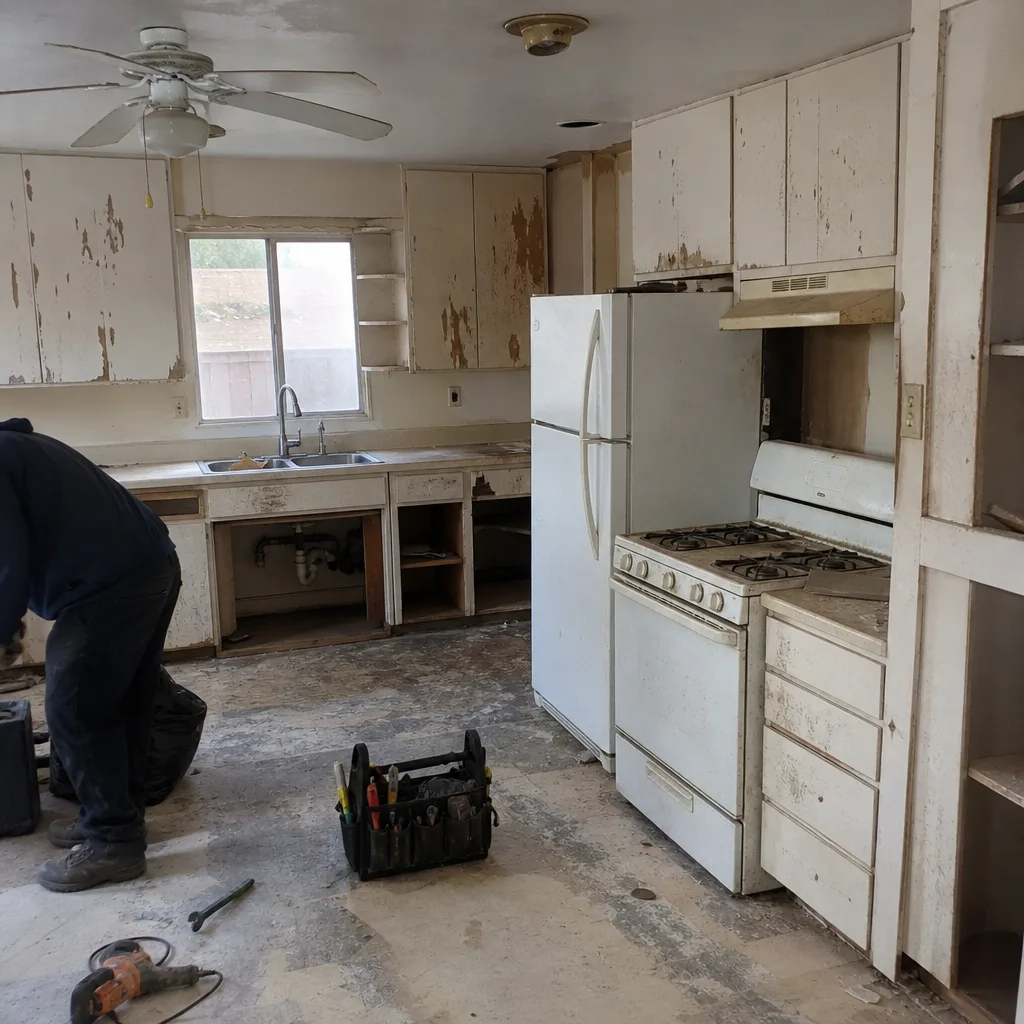 Before
 After
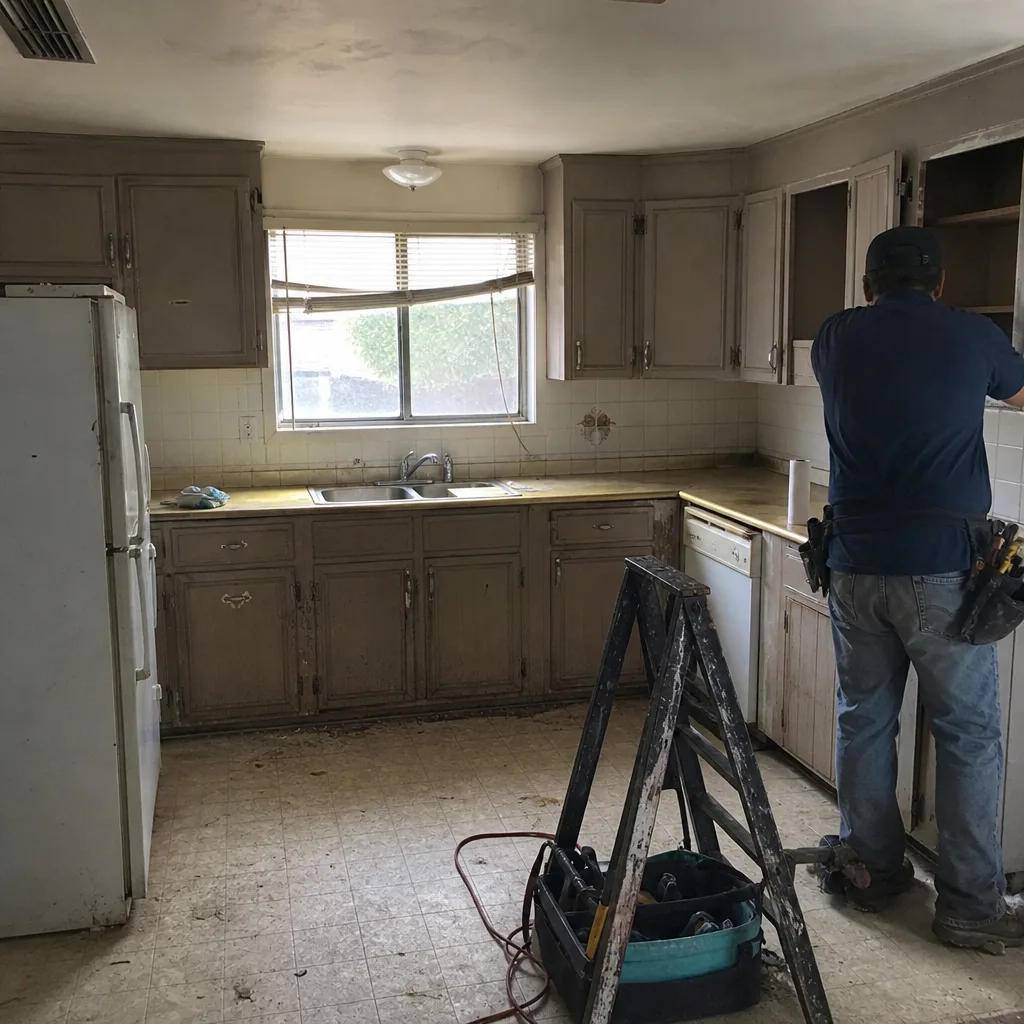 Before
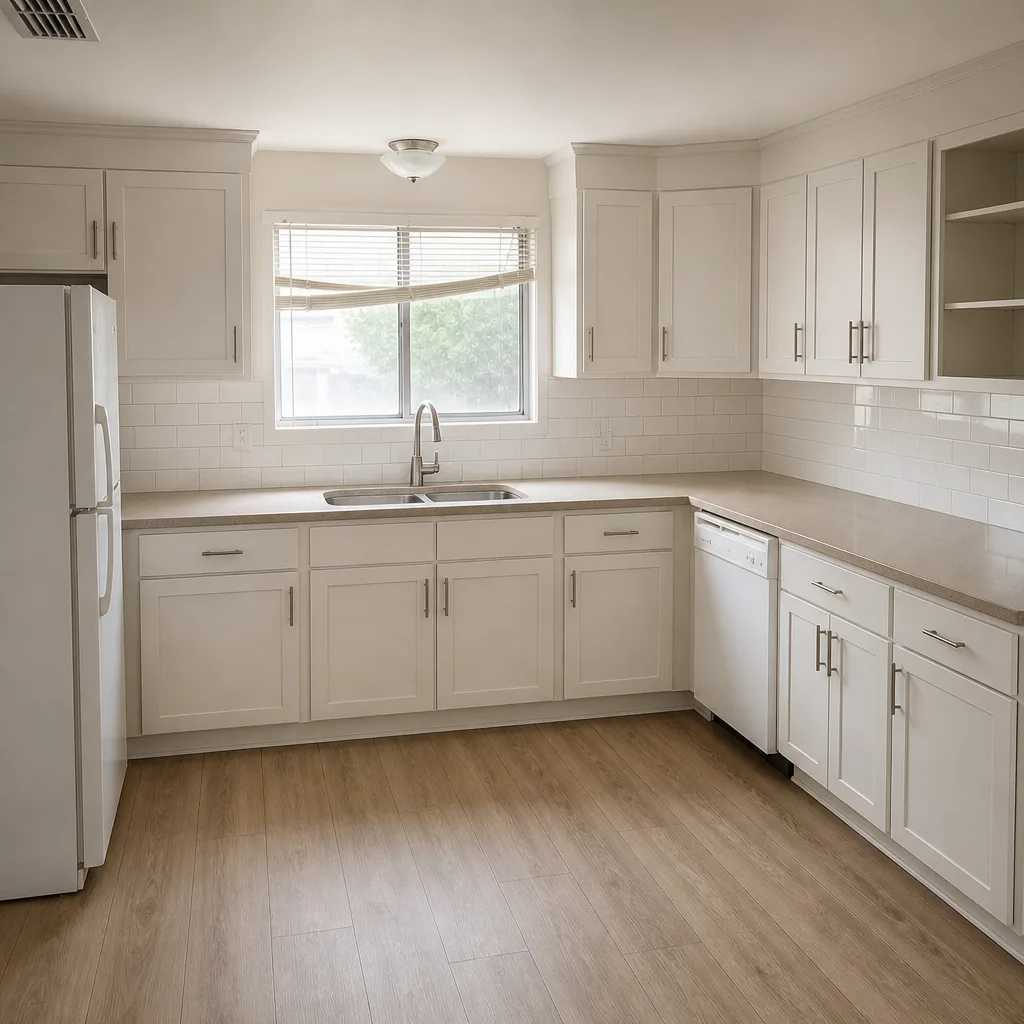 After
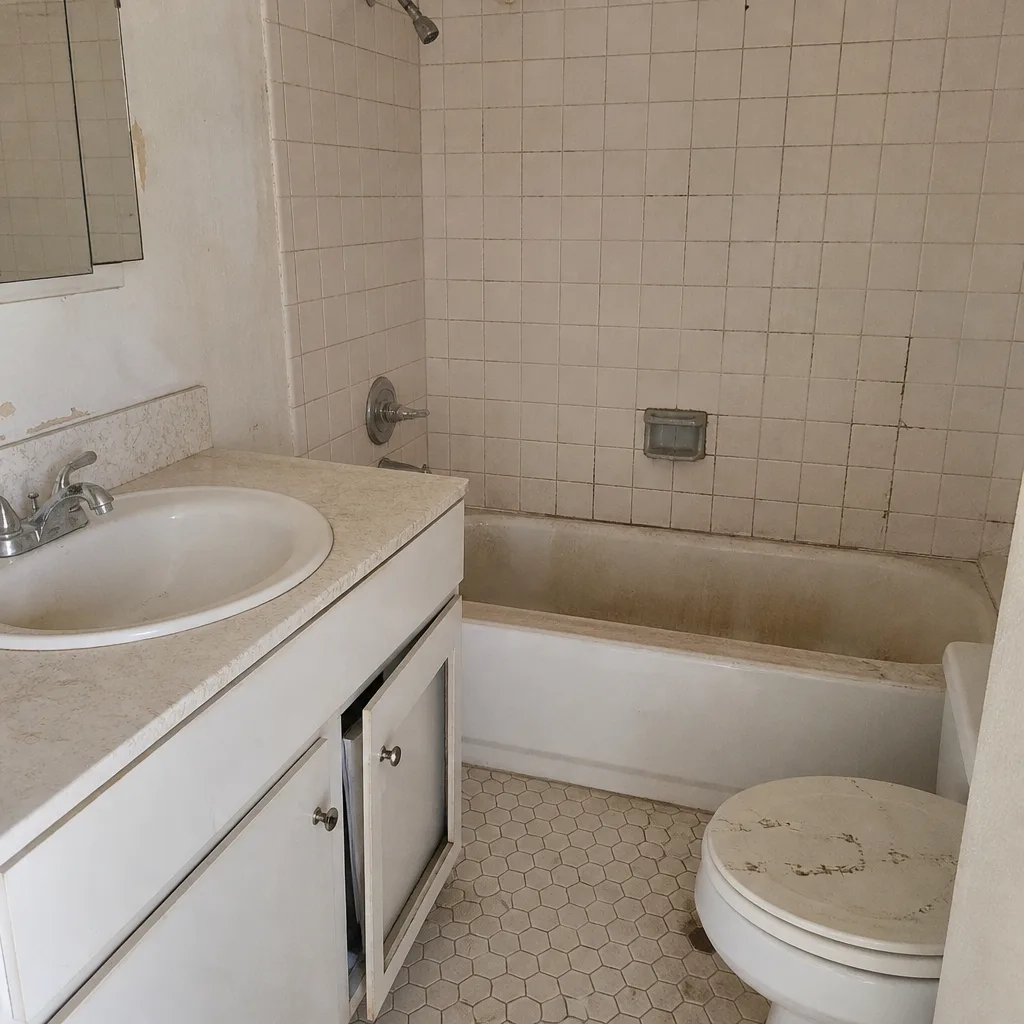 Before
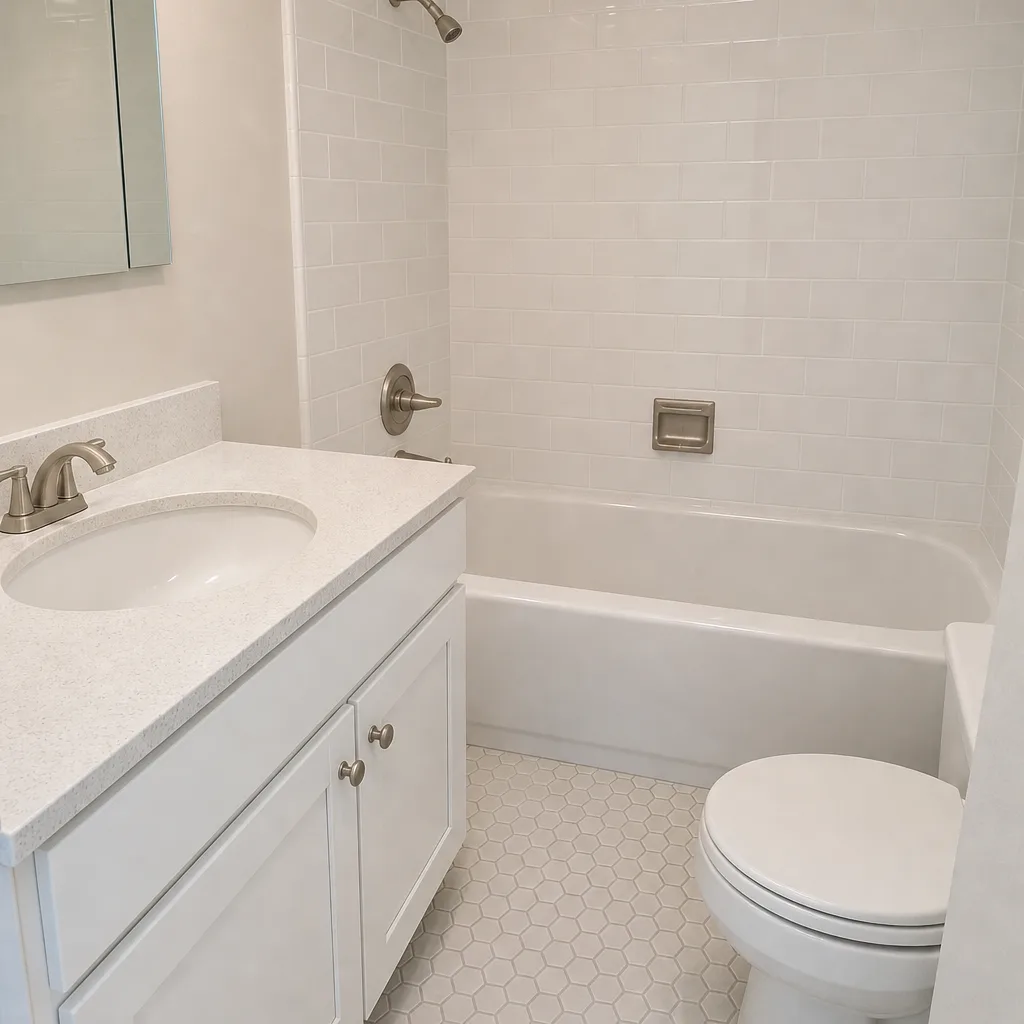 After
When to Call a Professional
Some projects shouldn’t be owner-led. Replacing a kitchen’s load-bearing wall, converting a shower pan (the sloped substrate the tile sits on), running a new electrical circuit for a range hood, re-piping plumbing to relocate a sink: these cross into licensed trades and permit requirements. In Boulder City, permits are issued through the city’s building department, and unpermitted work can complicate a future sale even if the work itself was done correctly. If you’re planning a whole-home remodel or a project that touches structure, electrical, or plumbing, you need a licensed contractor with the documentation to match. Bradford Remodeling Boulder City offers free estimates in Boulder City – call (844) 797-9259 to schedule yours and we’ll put the written price in your hands before any work begins.
Frequently Asked Questions
Search the contractor on the Nevada State Contractors Board’s public lookup using the license number they provide. Confirm “active” status, check the classification covers your scope, note the monetary limit against your project value, and read any complaint history. Do this for every contractor you’re considering.
A written estimate should include an itemized, line-by-line price with materials named by brand and product line, labor broken out by trade, the change-order process, and the payment schedule tied to milestones. A lump sum with unnamed materials isn’t a written price; it’s a placeholder.
It’s a written one-year workmanship guarantee on every completed project. If the installation fails within 12 months, we return and correct it at no charge. It covers workmanship, not normal wear or damage caused by other trades. Call (844) 797-9259 if you have questions about a specific scope and we’ll walk through the coverage before you commit.
Boulder City’s smaller population means a smaller licensed contractor base per capita compared to Las Vegas or Henderson. Several firms in a web search are the same operation under different trade names. That makes documentation-based comparison more important, not less: the license record and the written estimate are what actually distinguish one contractor from another.
Yes, in most cases. Structural, electrical, plumbing, and mechanical work require permits through the City of Boulder City’s building department. Cosmetic updates like cabinet refacing or countertop replacement may not, but the line depends on whether the scope touches permitted systems. Confirm with the building department before work begins.
The general contractor should be legally accountable for subcontractor work under their written workmanship warranty. Ask directly whether the warranty covers subcontracted labor, and confirm the specialty subs are licensed with the state. If the GC’s answer is “call the sub if it fails,” the accountability isn’t documented. Call (844) 797-9259 to see how our written warranty handles subcontractor scope.
The Bottom Line

Picking a remodeling contractor in Boulder City isn’t a brand-selection problem. It’s a due-diligence problem. The variable that separates accountable contractors from well-marketed ones is the written price, the itemized scope, the license record, and the workmanship guarantee with terms you can enforce. Do the state lookup. Ask for the warranty in writing. Confirm the materials by brand. Compare those documents across every bid, and the choice gets a lot clearer than the portfolio gallery can make it. Start with our Bradford Remodeling Boulder City home page for the full scope of what we do, or call directly to schedule a free estimate.
Call (844) 797-9259 for a free estimate. A live person answers the phone around the clock, and the written price lands in your hands before any work begins.
Written by the team at Bradford Remodeling Boulder City.