Last updated November 17, 2026








Free written scope consultation - allowances, timeline, and change-order rules on paper before a single trade is scheduled
Bathroom Remodeling Troubleshooting: Common Problems and How to Fix Them
Grout cracking within six months of a tile installation isn’t a grout problem. It’s almost always a substrate deflection problem that the tile setter either missed or ignored, and no grout brand on the shelf will fix it. The same pattern holds across most of the complaints we hear in Boulder City after a remodel: the symptom shows up at the surface, but the cause lives behind the wall or under the floor. This guide sorts the eight most common post-remodel problems by root cause, so you know whether you’re looking at an installation error your contractor owes you a fix for, or a material failure that runs through a manufacturer instead.
Quick Answer
Most bathroom remodeling problems that surface after the job is done are installation errors, not material failures. Cracking grout, loose tile, lingering moisture, and vanity doors that won’t close usually trace back to movement, ventilation, or framing issues that were visible or predictable during the work. Knowing which category your problem falls into determines whether your contractor’s workmanship warranty applies and whether your claim has anywhere to go.
Styles & brands we work with
- Kitchen remodeling
- Bathroom remodeling
- Home additions & ADU
- Roofing
- Windows & doors
- Driveway & pavers
- Fence
Table of Contents
- Why Post-Remodel Bathroom Problems Happen: Installation Error vs. Material Failure
- Grout Cracking and Tile Lippage: Substrate, Setting Bed, and Deflection
- Exhaust Fan Condensation and Mold: Sizing, Circuit Timers, and Humidity Sensing
- Shower Pan Leaks vs. Drain Leaks: The Flood Test
- Vanity Cabinet Doors That Won’t Close: Humidity and Framing Movement
- What a Workmanship Warranty Covers and What It Doesn’t
- How to Document a Defect for a Warranty Claim
- Common Mistakes to Avoid
Why Post-Remodel Bathroom Problems Happen: Installation Error vs. Material Failure
When a bathroom problem shows up a few months after the punch list is signed off, the first question isn’t “which product failed” but “which layer of the assembly is moving.” Tile, grout, cabinets, and fixtures all sit on top of a structure that has to stay stable. In Boulder City, that structure deals with something most of the country doesn’t: an arid climate with big temperature swings between summer afternoons and desert nights, and a housing stock that includes plenty of older homes whose floor joists were never engineered for the weight of a modern tile-and-mortar bathroom floor.
The distinction matters because it decides who pays:
- Installation error – the tile was set on a floor that deflects, the fan was undersized for the room, the drain collar wasn’t seated. This is workmanship. Your contractor’s written guarantee is the path to a fix.
- Material failure – a valve cartridge seizes, a fan motor burns out, a cabinet hinge breaks. This is usually a manufacturer warranty item, and it typically means a replacement part, not a rebuild.
- Design or scope gap – nobody specified a moisture barrier, nobody calculated the fan CFM, nobody accounted for the joist span. This is the one homeowners miss most, and it’s why a written scope is worth more than any verbal promise.
Everything below assumes you need to sort your specific symptom into one of those three buckets. In our experience, the material failures are the minority. If you’re still planning the project rather than troubleshooting it, our Bathroom Remodeling in Boulder City page covers how the scope gets built before work starts.
Grout Cracking and Tile Lippage: Substrate, Setting Bed, and Deflection
Grout cracks because the tile beneath it moved. Tile lippage – one tile edge sitting higher than its neighbor – is the same problem showing its face. The fix is never a different grout or a grout additive; it’s correcting the assembly that let the tile move in the first place.
What “deflection” means
Deflection is how much a floor assembly bends under load, expressed as a ratio. A floor that deflects L/360 sags one unit for every 360 units of span; the tile industry’s standard for ceramic tile over a wood subframe is generally stricter, around L/360 for ceramic and tighter for natural stone. When a floor is over-spanned or under-built for tile, every footstep flexes the setting bed a hair. Grout can’t stretch. It cracks along the weakest line, and the tile above it starts to rock.
How to check the likely cause
- Look at the crack pattern. Cracks that follow the tile grid or run in long straight lines across the room point to substrate movement. Cracks confined to one corner can be a single loose tile.
- Tap the tile. A hollow sound over a wide area means the setting bed has debonded – the thin-set let go of the substrate. That’s an installation issue, full stop.
- Measure the joist span and the subfloor. From the basement or crawl space, measure the joist size, spacing, and unsupported span, and note how thick the subfloor layer is. In older Boulder City homes, we’ve seen 2×8 joists on 16-inch centers under a full tile-and-mud floor, which is well past what that assembly wants to carry.
- Check the setting bed thickness. Thin-set under tile is a few millimeters, not a leveling course. If the installer used thin-set to build up low spots, it will crack.
None of this is a grout problem. Repointing the joints will fail again within a season. The honest repair is to remove the affected tile, correct the substrate, and reset – and if the whole floor is over-deflected, that’s a conversation about the joist structure, not the grout.
Exhaust Fan Condensation and Mold: Sizing, Circuit Timers, and Humidity Sensing
A bathroom fan that runs but doesn’t clear the mirror is undersized for the room, wired wrong, or both. Mold on the ceiling and condensation that lingers for an hour after a shower usually mean the fan moves less air per minute than the room requires.
Sizing the fan: the CFM formula
Exhaust fans are rated in cubic feet per minute (CFM). A common rule of thumb is 1 CFM per square foot of bathroom floor area, with a minimum of 50 CFM for any bathroom. A 10-by-12-foot bathroom needs roughly 120 CFM. A bathroom with a jetted tub or multiple shower heads should be sized up further, since the moisture load is higher than the floor area alone suggests.
Why a correctly sized fan still fails
- The fan is on the wrong circuit. A fan tied to the same switch as the vanity light only runs while the light is on. Moisture lingers after you leave. A dedicated timer that runs 20 to 30 minutes past the shower is what actually clears the room.
- The duct is too long, too small, or has too many elbows. A 120 CFM fan pushing through a 15-foot run of 3-inch flex duct might move half its rated volume. Duct sizing often gets decided after the fan is chosen, and it should be the other way around.
- No makeup air. A tight bathroom with no door undercut starves the fan. It runs, moves almost nothing, and the moisture stays.
- Ducted into the attic, not outdoors. This is one of the most common findings we make on older installs. A fan exhausting into attic air dumps moisture exactly where you don’t want it.
A well-specified humidity-sensing fan solves most of this because it runs on sensor threshold rather than a switch. Combined with a properly sized and routed duct, it’s the spec we’d want in any Boulder City bathroom where the summer heat already pushes interior humidity up.
Shower Pan Leaks vs. Drain Leaks: The Flood Test
Water showing up on the ceiling below or staining the wall next to a shower is either a shower pan leak (the waterproofing membrane under the tile has failed) or a drain leak (the drain collar or its seal to the membrane has failed). The flood test tells you which one before you tear out tile.
How to isolate the source
- Plug the drain at the level of the shower floor – a test plug or a rubber ball pushed into the drain opening, below the strainer.
- Fill the pan with water to a depth of about an inch, marked against the wall or with a piece of tape so you can measure the level.
- Wait several hours, ideally overnight. Do not run any other water in the house during the test.
- Re-mark the level. If the water dropped, the pan is leaking. If the level held but you still see moisture below, the collapse is coming from the drain connection, not the pan membrane.
- Inspect the drain gasket separately if the pan test passed – the leak may be at the drain collar where it bonds to the waterproofing.
This is diagnosis, not repair. Cut into a leaking shower pan and you’re rebuilding the slope, membrane, and tile up to the curb – a job for a trained tile setter, not a weekend caulking project. The flood test’s real value is documenting the defect in writing for a warranty claim, which we’ll get to.
Vanity Cabinet Doors That Won’t Close: Humidity and Framing Movement
Vanity doors that swung clean during install but won’t close six months later are almost never a cabinet defect. They’re a symptom of the house moving around the cabinet. Older homes in Boulder City – and this shows up in plenty of renovated mid-century bathrooms – settle, move with the seasonal moisture cycle, and flex the wall a vanity is anchored to. A cabinet is rigid; when the opening it fills shifts, the doors rack.
The likely causes, in order of frequency
- Humidity-driven framing movement. The vanity was installed in spring, the door frame swelled in summer, the door now pins against the jamb or the neighbor door.
- Out-of-plumb wall. If the wall is racked and the cabinet was shimmed at the back but not at the face, the carcass twists. Doors don’t line up.
- Hinges adjusted wrong. Modern concealed hinges have three adjustment screws. A careful installer dials them in; a rushed one leaves them at factory settings.
- Cabinet not anchored to structure. Cabinets should screw into studs or into blocking, not just drywall. A vanity that moves when you lean on it will fight its own doors.
What a written scope should say about it
The scope should call out cabinet brand and model (we specify KraftMaid and Wellborn as our documented cabinet lines), hinge type, shim and anchor method, and how the installer will verify the wall is square before setting the cabinet. If the wall isn’t square, the scope should say how that gets handled. A written scope that names these things makes the post-install conversation much shorter.
What a Workmanship Warranty Covers and What It Doesn’t
This is where most warranty claims die. A workmanship warranty covers the labor and installation, not the products, and not the effects of the building moving. Read the language before you need it.
Covered: what the installer did
- Tile that debonds from a setting bed the installer prepared
- Grout that cracks because the substrate was left out of tolerance
- A fan that was installed on the wrong circuit or ducted into the attic
- A shower drain collar that wasn’t seated or sealed correctly
- A vanity that was shimmed wrong or anchored to drywall instead of studs
Not covered: product failures and building movement
- Cartridge failures in faucets (manufacturer warranty)
- Cracked tile from something dropped on it
- Framing settlement unrelated to the work
- Mold from a plumbing leak elsewhere in the house
- Damage from neglected maintenance, like a clogged fan or a failed caulk joint the homeowner never re-caulked
The Bradford Remodeling Boulder City 365-Day Done Right Promise is a workmanship guarantee: if the work we performed fails within a full year, we come back and correct it at no charge. It is written into the agreement before work starts, so there’s no ambiguity about which side of the line a defect falls on. If your current contractor’s warranty is a verbal promise, ask for it in writing before you sign anything.
How to Document a Defect for a Warranty Claim
Warranty claims get denied for undocumented reasons far more often than for legitimate ones. Photographs taken in daylight with a tape measure in frame are worth more than a phone call. Here’s the sequence that works:
- Photograph the defect with scale. Tape measure or a coin in frame for tile and grout cracks. Date-stamp the files.
- Log dates and observations. When did you first notice it? Has it grown? Does it change with weather? Write it down in a running note.
- Do the flood test or the humidity check if the problem is water or condensation. Write down the numbers.
- Compare to the original scope. Pull out the written scope and see what was specified. If the fan CFM isn’t noted, that’s a gap you can name.
- Send it in writing. Email or written letter, not a voicemail, with photos and the date log attached. Keep a copy.
- Ask for a written response with a timeline. A professional will confirm the visit window and put it in writing.
Most of the disputes we hear about in Boulder City would have resolved faster with steps 1 and 5 done on day one.
Common Mistakes to Avoid
- Caulking over a moving joint to hide a crack. Caulk over a deflection problem buys you a few months, not a fix. The underlying floor still moves and the crack returns.
- Accepting a warranty you didn’t read. “Workmanship guaranteed” without terms and a duration is not a warranty. Ask for it spelled out in writing before you sign the contract.
- Skipping the flood test before demolition. Tearing out a shower to find a drain leak is expensive, and it’s avoidable. Test first, demo second.
- Replacing an exhaust fan with the same CFM. If the old fan was undersized for the room, the new one will be too. Calculate the rooms’ floor area and re-size.
- Letting a contractor drop a tile floor without confirming joist deflection. We’ve seen tile set on 2×8 joists on 16-inch centers in older Boulder City homes with no deflection check. That’s a crack waiting to happen, and it should be caught before the first bag of thin-set opens.
- Treating humidity-driven vanity door gaps as a cabinet defect. Look at the wall before the cabinet. Plumb, square, and anchor matter more than the hinge brand.
- Not keeping a scope document. Every problem in this guide is easier to resolve with a written scope in hand. If yours was verbal, ask for a written copy now.
See the difference
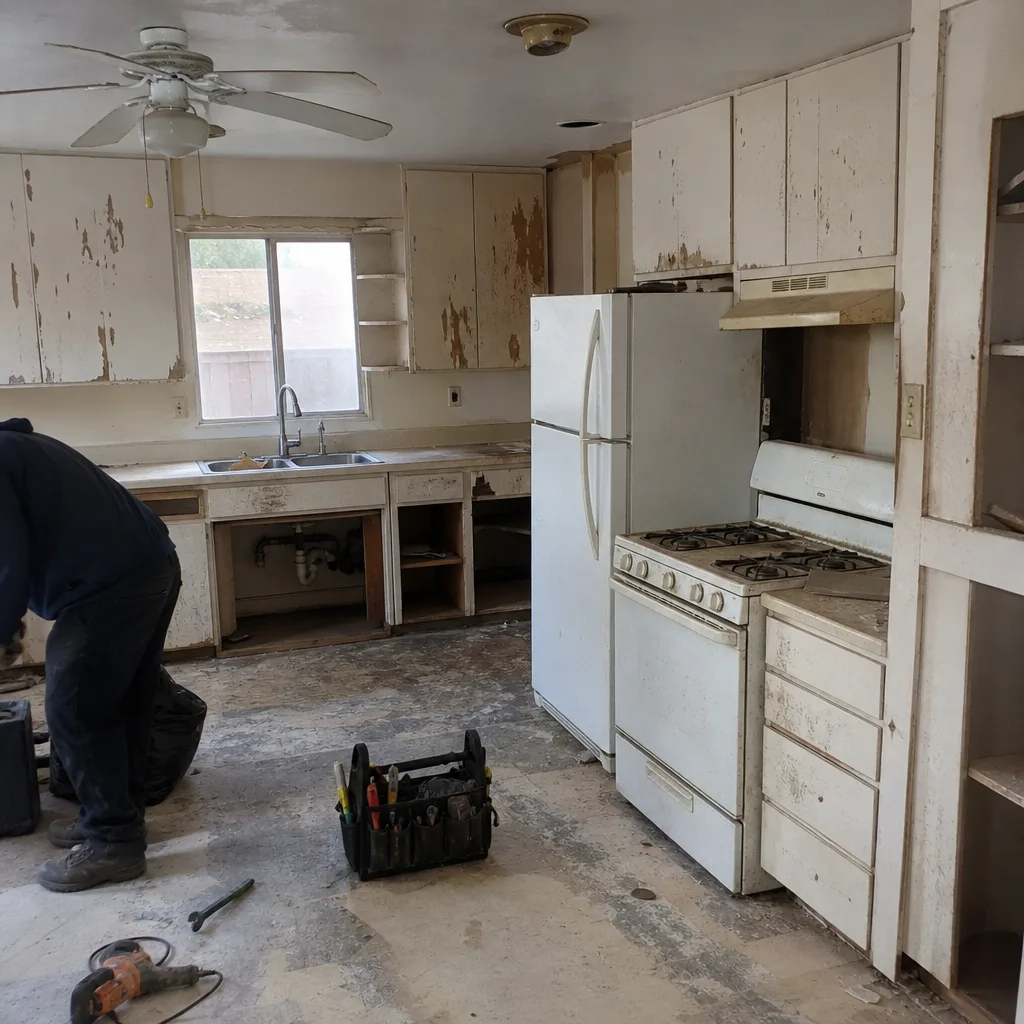 Before
 After
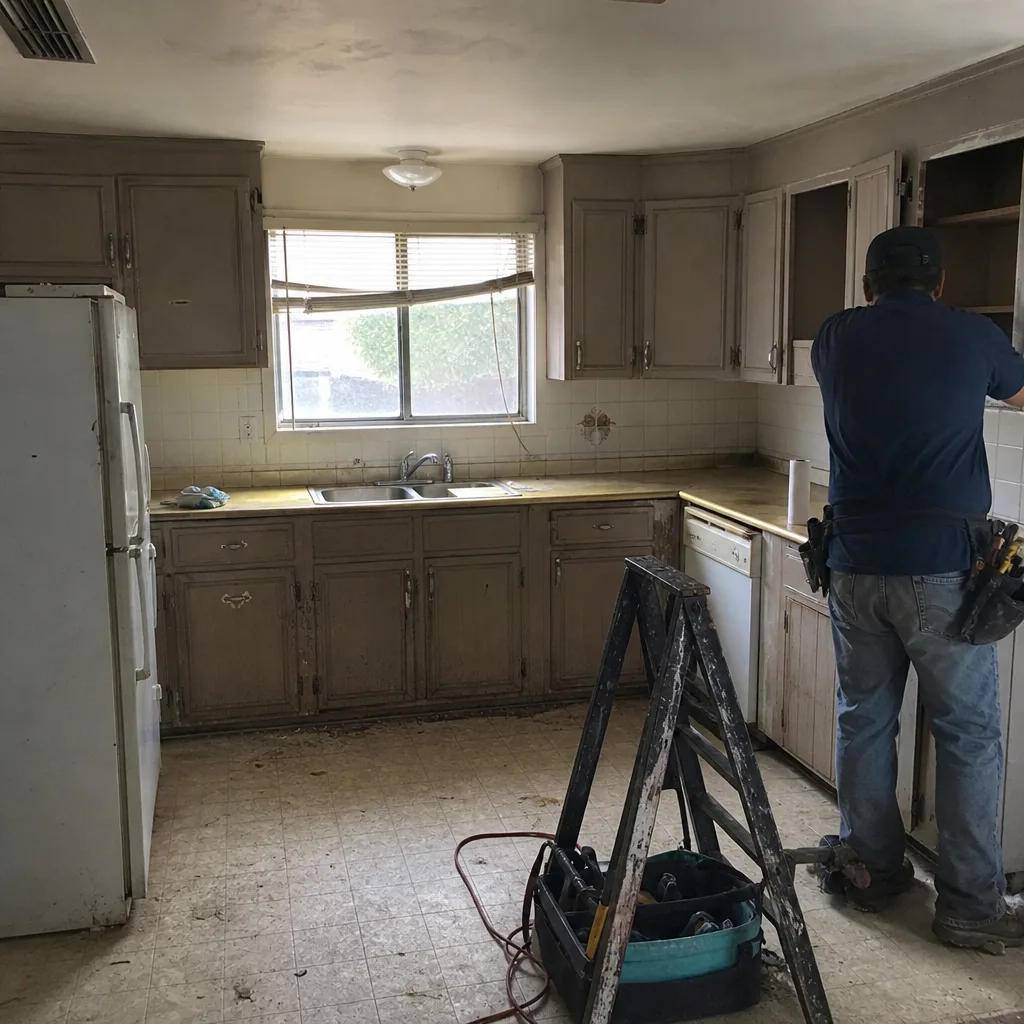 Before
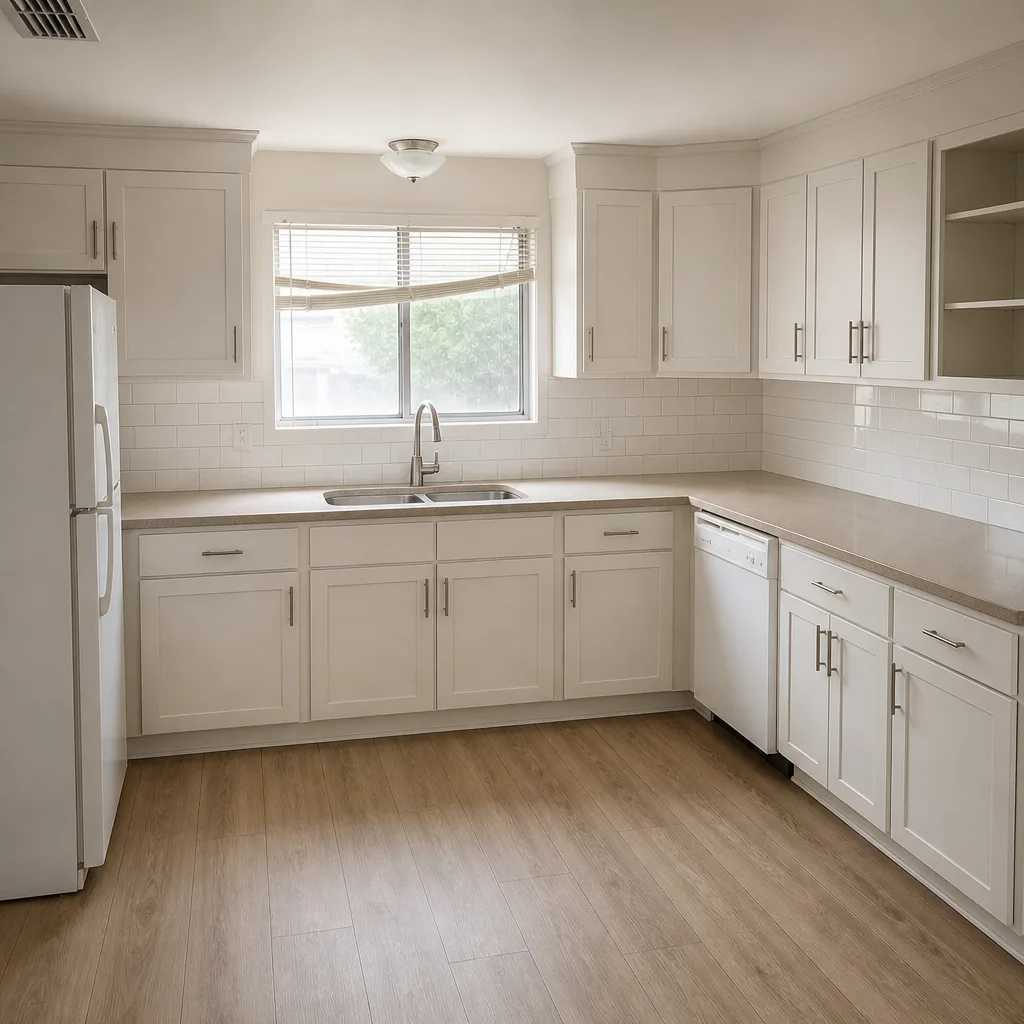 After
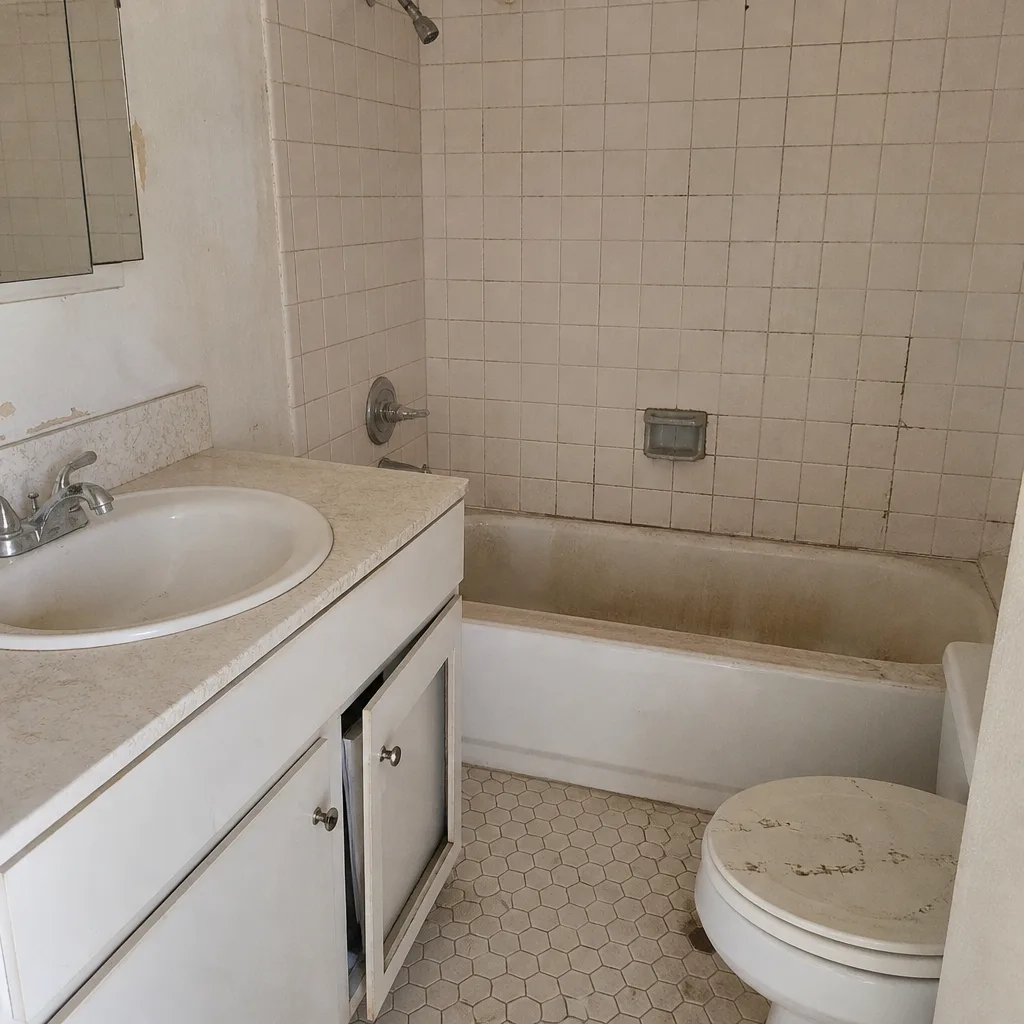 Before
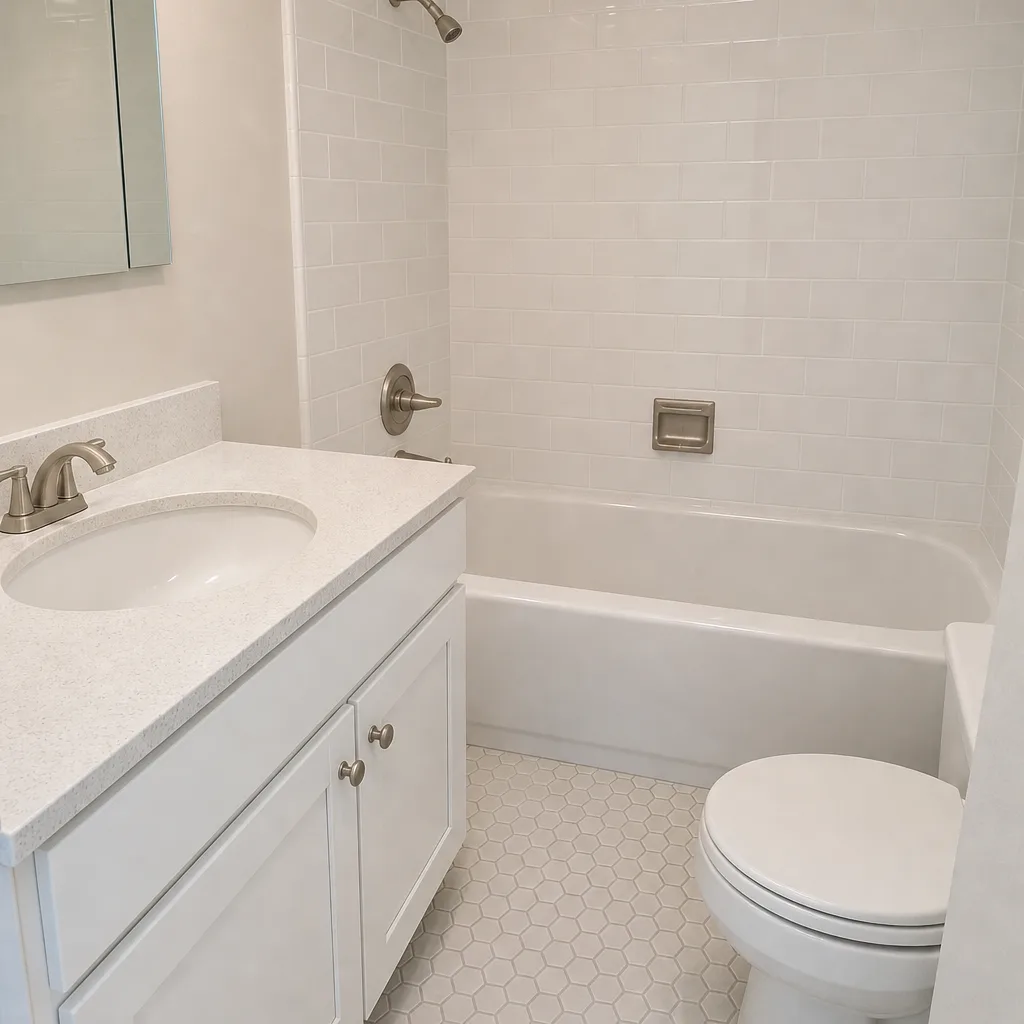 After
When to Call a Professional
Some of this you can diagnose yourself with a plug and a tape measure. The rest needs a trained hand: any leak inside a shower pan or at the drain collar, any tile floor over an over-deflected subframe, any exhaust fan that requires re-running duct through an attic or wall cavity, and any defect that’s heading into a warranty claim. Caulk won’t fix a deflection problem, and a homeowner-level patch on a shower pan will fail within a season and cost more than a proper repair. If you’re not sure whether you’re looking at a material failure or a workmanship failure, that’s a five-minute conversation with someone who reads the assemblies for a living. Bradford Remodeling Boulder City offers free estimates in Boulder City – call (844) 797-9259 and we’ll walk you through what we’re seeing and what the repair involves.
Frequently Asked Questions
Your grout is cracking because the floor assembly under it is moving, not because the grout is defective. Deflection – flex in the joists or subfloor – is the usual cause, followed by thin-set that was used as a leveling course rather than a bonding layer. Repointing the joints will fail again; the fix is correcting the substrate. Call (844) 797-9259 if you’d like us to look at it.
Multiply your bathroom’s floor area in square feet by 1 to get the minimum CFM, with a floor of 50 CFM for any bathroom. A 10-by-12 bathroom needs about 120 CFM. If your mirror fogs and stays fogged for an hour, your fan is undersized, on the wrong circuit timer, or ducted incorrectly. Call (844) 797-9259 for a free assessment.
Usually yes, if the shower pan was installed as part of the remodel and failed within the warranty period. A pan leak from a poorly sloped or improperly sealed assembly is a workmanship failure. A drain collar failure is also installation work. Contact the original contractor in writing with photos and the flood-test results. Call (844) 797-9259 if you need a second opinion.
Because the wall or the house around the cabinet moved, and the door geometry no longer matches. That’s humidity-driven framing movement, not a cabinet defect. Look for out-of-plumb walls, missing shims at the face frame, and anchors into drywall rather than studs. A professional can usually resolve it by re-shimming and adjusting hinge screws. Call (844) 797-9259 for an estimate.
Yes – most bathroom remodels that move plumbing, electrical, or structural elements require permits, and pulling them is part of the scope on any job we run. Skipping permits can invalidate a warranty claim later. Always confirm the permit line on the written scope before work begins. Call (844) 797-9259 with questions.
If a bathroom was built correctly, most of it should hold for a decade or more. Grout should last years, not months. Fan motors and cartridges are the exceptions – those are wear items. If you’re seeing cracks, leaks, or door issues within a year, that’s a sign the assembly underneath needs a closer look. Call (844) 797-9259 to schedule a free estimate.
The Bottom Line
Nine out of ten post-remodel bathroom problems are installation errors wearing a material failure’s clothing. Grout cracks because the floor deflects, fans fail because they’re undersized or wired wrong, vanity doors stop closing because the house moved, and shower leaks show up because the pan or drain assembly wasn’t built correctly. The difference between a warranty claim that lands and one that goes nowhere is the written scope and the written warranty you held at signing. Our General Contractor in Boulder City page goes deeper on how we run scope and warranty on every project, and if you’re tackling something adjacent like a Kitchen Remodeling in Boulder City project, the same rules apply. For a broader view of how we handle a job start to finish, see our Bradford Remodeling Boulder City home page.
Bradford Remodeling Boulder City offers free estimates in Boulder City with a written price before any work starts and the 365-Day Done Right Promise behind every completed project. Every visit involves background-checked, uniformed technicians, and our phone is answered by a live person, 24 hours a day, 7 days a week. Call (844) 797-9259 today to schedule your free estimate.
Written by the team at Bradford Remodeling Boulder City.