Last updated November 17, 2026








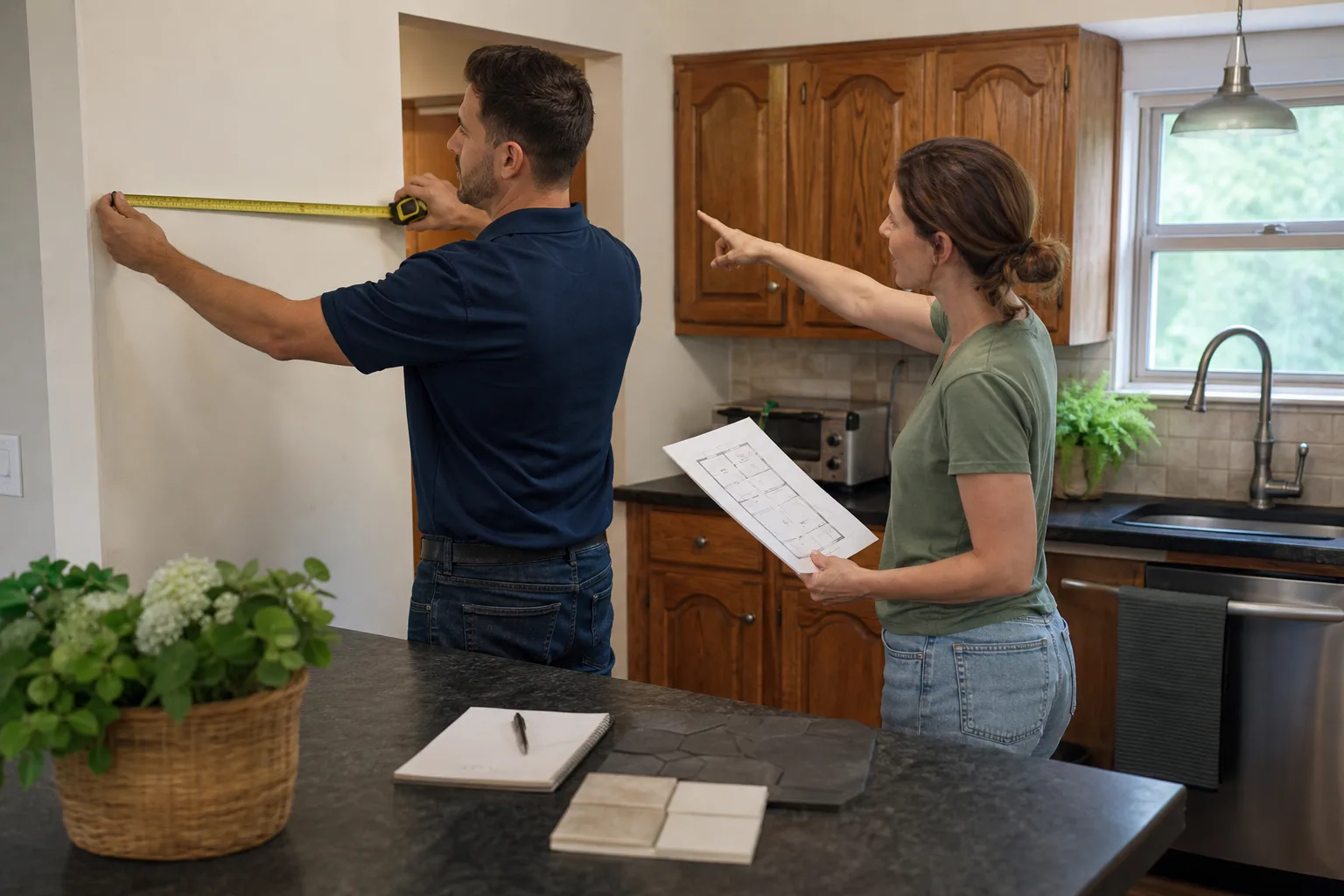
Free written scope consultation - allowances, timeline, and change-order rules on paper before a single trade is scheduled
Home Remodeling Maintenance Schedule: What to Do and When
Boulder City averages roughly 294 sunny days a year, and summer afternoons here push past 110°F with regularity. That combination – relentless UV, single-digit humidity, and violent day-to-night temperature swings – ages caulk, grout, exterior paint, and sealers at roughly twice the rate the national maintenance checklists were written for. A schedule built for a Portland or Columbus home will leave a Boulder City house falling behind by year three. What follows is the actual season-by-season calendar for high-desert conditions: what to inspect, when to inspect it, and what failure looks like before it turns structural.
Quick Answer
In Boulder City, home maintenance runs on a four-season desert cycle: inspect and reseal exterior caulk, grout, and roof flashing in April before the heat locks in; check expansion joints, stem walls, and irrigation quarterly because thermal cycling and alkali soil move concrete year-round; clean gutters and touch up exterior coatings in October after monsoon season; and handle interior systems – HVAC filters, attic insulation, shutoff valves – in the cooler months when work is comfortable. The single most important habit is keeping a written record of every inspection so any contractor can bid accurately instead of guessing at deferred work.
Styles & brands we work with
- Kitchen remodeling
- Bathroom remodeling
- Home additions & ADU
- Roofing
- Windows & doors
- Driveway & pavers
- Fence
Table of Contents
- Why Thermal Cycling Sets Your Calendar in Boulder City
- The Quarterly Walkthrough: Expansion Joints and Stem Walls
- Alkali Soil and What It Does to Slabs and Foundations
- The April Pre-Summer Inspection Window
- Desert-Specific Materials and Their Inspection Intervals
- October: The Post-Monsoon Reset
- Tracking Maintenance History With a Written Scope
- Common Mistakes to Avoid
Why Thermal Cycling Sets Your Calendar in Boulder City
Boulder City sits at about 2,500 feet in the Mojave, and that elevation delivers a swing most homeowners underestimate: a July afternoon at 112°F can drop to the low 80s by 3 a.m. Every material in your home’s envelope expands on that afternoon and contracts that night. Do that 120 days a year and you get what the trades call thermal cycling – and it’s the reason a maintenance schedule written for a mild four-season climate misses the real problem.
What thermal cycling actually does:
- Opens caulk joints at window perimeters, door frames, and siding seams faster than the caulk’s rated service life.
- Cracks tile grout in bathrooms and kitchens where the substrate and tile move at different rates.
- Works expansion joints in driveways, patios, and slab-on-grade floors until the joint sealant fails.
- Stresses stucco at corners and around penetrations where the lath and scratch coat have less give.
In our experience across Boulder City remodels, the expansion joints are the tell. A joint that was sealed two years ago in a mild climate still looks tight. Here, we routinely find joint sealant pulled away from the concrete within a single summer. That’s why expansion joint inspection belongs on a quarterly schedule, not the annual line item most national guides use.
The Quarterly Walkthrough: Expansion Joints and Stem Walls
Set four calendar reminders – January, April, July, October – and run the same 20-minute walkthrough each time. This is the habit that catches small failures before they become five-figure repairs.
- Walk every expansion joint on the driveway, patio, and any slab floor. Look for sealant that’s pulled loose, cracked, or missing entirely. A failed joint lets water in, and in the desert that water finds the subgrade.
- Inspect the stem wall – the visible concrete foundation wall between grade and the first floor. Check for new hairline cracks wider than 1/16 inch, efflorescence (the white chalky staining that signals moisture moving through concrete), or soil that’s pulled away from the wall.
- Check exterior caulk at every window and door. Press a fingernail into it; if it’s hard or cracked instead of slightly pliable, it’s due.
- Look at tile grout in the bathrooms, kitchen backsplash, and any tiled floor. Run a finger along the floor grout lines – if grout dust comes off on your finger, it’s eroding.
- Note everything in writing, with dates and photos. This log is your maintenance history, and it’s what makes a contractor’s bid accurate later.
- Clear the roof and gutters of debris and check flashing at every penetration – vents, chimney, skylights – for lifted or cracked sealant.
Twenty minutes, four times a year. That’s the whole discipline. Homes in Boulder City that skip it are the ones where a $200 caulk job turns into a $9,000 stucco and framing repair three summers later.
Alkali Soil and What It Does to Slabs and Foundations
The soils around Boulder City run alkaline and often expansive – meaning they swell when they take on water and shrink as they dry. Combine that with the desert’s wet-dry cycle (a monsoon soaking in August, then months of nothing) and you get soil movement that pushes and pulls on slabs and foundations all year.
What to check at the stem wall, annually and after any heavy rain:
- Soil contact line. Soil should slope away from the foundation at roughly a 6-inch drop over the first 10 feet. If it’s flat or sloping back toward the house, water pools at the stem wall – fix the grade before anything else.
- New cracks. Hairline cracks are normal in desert concrete. Cracks that are widening, stair-stepping at corners, or letting daylight through are not.
- Doors and windows that suddenly stick. If a door that closed cleanly in spring drags by late summer, the frame has moved, and that’s a foundation conversation.
- Efflorescence at the base of walls. White staining on the stem wall or the first course of block means moisture is wicking up through the concrete.
If you see any of these, get a professional out to look. Alkali soil movement is slow and mostly manageable when caught early, and expensive when ignored. This is also the reason we pull permits and get inspections on any foundation-adjacent remodel work – the paper trail matters when a future buyer’s inspector comes through.
The April Pre-Summer Inspection Window
April is the month that decides how your home handles the next five months. Once daily highs lock in above 100°F, exterior work gets harder, cure times stretch, and crews can’t safely spend long hours in an attic. Get the critical items done in April.
The April checklist:
- HVAC penetrations. Where the refrigerant lines and ductwork pass through the exterior wall, check the seal. Gaps there let 110°F attic air into the conditioned space all summer.
- Attic insulation. Go up early in the morning with a flashlight. Look for settled, compressed, or displaced insulation, and check that the attic hatch is weatherstripped. In Boulder City attics, insulation settles and shifts faster than you’d expect.
- Roof flashing. Every penetration – plumbing vents, furnace flue, skylights – gets a look. Lifted or cracked flashing sealant is the most common source of monsoon-season leaks.
- Exterior caulk and paint. Re-caulk every failed joint and touch up any paint that’s chalked, peeling, or blistered. UV in Boulder City breaks down paint film fast; a two-square-foot touch-up in April saves a whole-wall repaint in two years.
- Seal exterior expansion joints with a rated joint sealant before the full heat arrives.
This is also the right month to schedule any exterior remodel work – a new patio, siding, or window replacement – so the schedule lands before the worst of the heat. Materials like James Hardie siding and Therma-Tru doors have manufacturer specs that hold up here, but installation timing still matters.
Desert-Specific Materials and Their Inspection Intervals
Not every material ages the same way in the high desert. Here’s what to watch, and how often.
- Stucco (3-coat, typical in this region): Inspect twice a year, in April and October. Failure shows as hairline cracks at corners and penetrations, and soft spots that sound hollow when tapped. Left alone, cracks let monsoon water into the framing.
- Tile grout (bathrooms, kitchens, floors): Inspect quarterly, reseal annually. Desert humidity is low enough that grout dries out and becomes brittle – a sealed grout line lasts longer and stays cleaner. Failure looks like crumbling grout lines, dark staining at the floor-to-wall joint, or loose tiles that sound hollow.
- Foam-backed siding: Inspect annually, in October. The foam backing can compress or shift with thermal cycling, and seams work loose. Look for gaps at seams and any softness at the bottom edge.
- Exterior paint and stain: Inspect each April. In Boulder City, a good exterior coating lasts noticeably less than the 7-10 years national guides assume; plan on re-coating sooner.
- Concrete flatwork and pavers: Inspect quarterly along the joints. If you have Unilock or Techo-Bloc pavers on a patio or walkway, check the polymeric sand or joint sand each season – it washes and blows out over time.
When a material reaches the end of its service life, replacing with a documented brand matters. It gives you manufacturer specs and a warranty behind your contractor’s own guarantee, and it makes the record traceable if you ever sell.
October: The Post-Monsoon Reset
Boulder City’s monsoon window runs roughly July through September, and it’s the one stretch of the year when water is actually a threat. October is when you find out what it did.
The October reset:
- Clear gutters and downspouts of debris and check that water actually flows to the discharge points, not down the wall.
- Re-check the roof for lifted shingles, cracked flashing sealant, and any water staining at the attic sheathing.
- Look at the foundation perimeter after the last storm – new cracks, soil pulled away, or efflorescence are all monsoon aftermath to catch now.
- Touch up exterior paint and caulk while temperatures are still mild enough for proper adhesion and cure.
- Service the HVAC and replace the filter before the heat cycle stops. Coils and condensate lines are the usual culprits after a heavy-use summer.
- Update your maintenance log so the October findings are recorded before you forget the details.
October is also the ideal time to plan a winter interior remodel – a kitchen remodeling in Boulder City project runs smoothly in the cooler months, and the material selections can be locked in with a written price before any work starts.
Tracking Maintenance History With a Written Scope
Here’s the practical reason this schedule matters: every maintenance note you write down makes the next contractor’s bid more accurate. A professional walking into a home with a written log of what was inspected, when, and what was found can give you a real number. A professional walking into an unlogged home is guessing.
What belongs in your log:
- Date and description of each inspection
- Photos of anything flagged – the crack, the lifted flashing, the failed caulk joint
- What was repaired, who did it, and the cost
- Manufacturer, model, and install date for every replaced component (hardware, doors, fixtures, roofing, appliances)
- A copy of any warranty or guarantee paperwork for work done
Our own practice is built around this. We give every homeowner a written price before any work starts – no numbers that move at the door – and back the completed work with the 365-Day Done Right Promise: a full-year written guarantee, and if the work fails inside that window, we return and correct it at no charge. Every project is also documented against a fixed material roster – KraftMaid and Wellborn cabinetry, Cambria and Caesarstone surfaces, Kohler and Moen fixtures, GAF and James Hardie exterior products, Therma-Tru doors, Belgard hardscaping – so the spec sheet is traceable years later. That record is what makes your maintenance log useful to the next contractor.
Common Mistakes to Avoid
- Following a national maintenance checklist. The annual expansion joint and caulk intervals those guides use are too slow for Boulder City’s thermal cycling. Inspect quarterly instead.
- Waiting until summer to do exterior work. Crews can’t safely work long hours at 110°F, and sealants and paint don’t cure properly. Move critical work to April and October.
- Ignoring hairline cracks that are widening. A stable hairline crack is normal desert concrete. A crack that’s grown stair-stepped at a corner is a foundation question – get it looked at.
- Skipping the written record. Homeowners who don’t log their inspections end up paying contractors to rediscover problems during bidding, and bids run vague and high.
- Hiring on price alone and skipping the written quote. A verbal price that moves at the door is the most expensive kind. Ask for every price in writing before anyone lifts a tool.
- Replacing desert-worn materials with the same cheap product. Replace with a documented brand that carries manufacturer specs and a warranty behind your contractor’s guarantee.
- Forgetting the attic and the HVAC penetrations in April. Gaps there leak hot attic air into the house all summer and are cheap to seal in spring.
See the difference
 Before
 After
 Before
 After
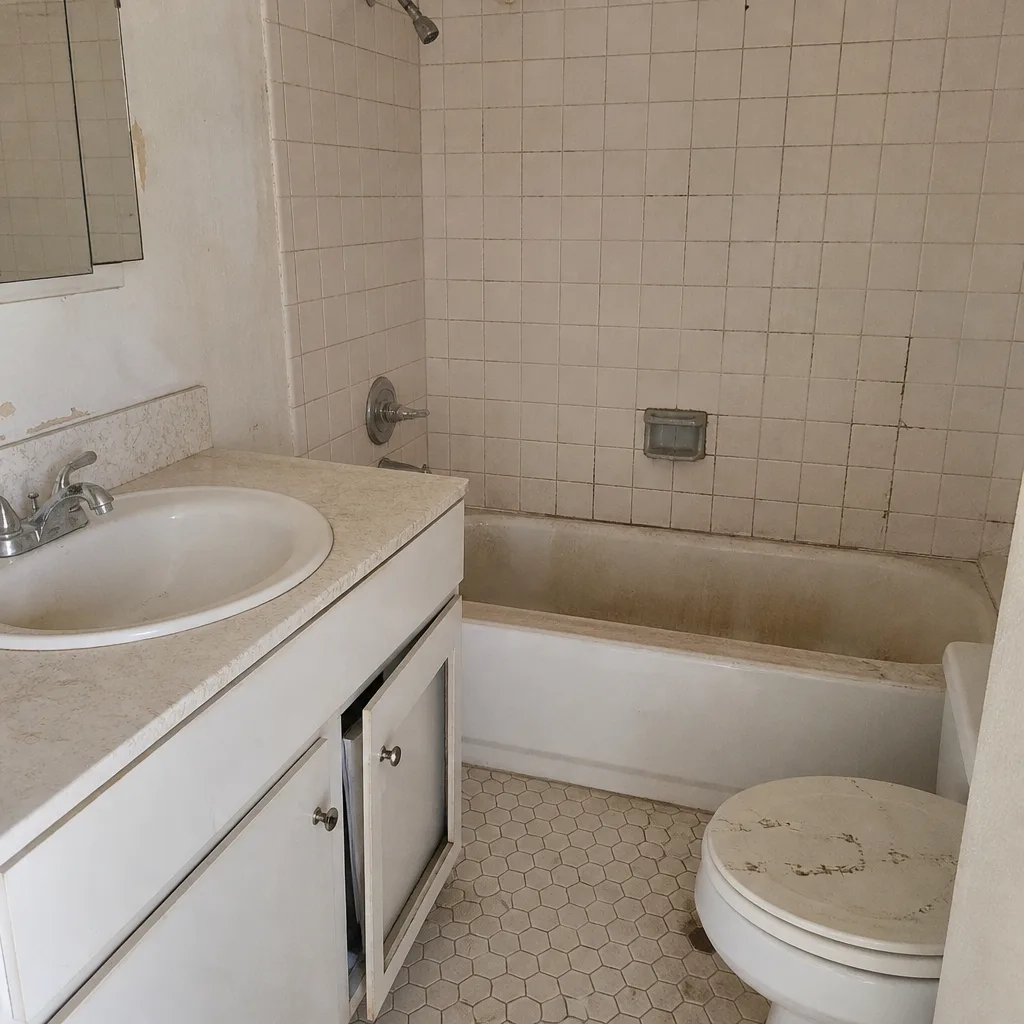 Before
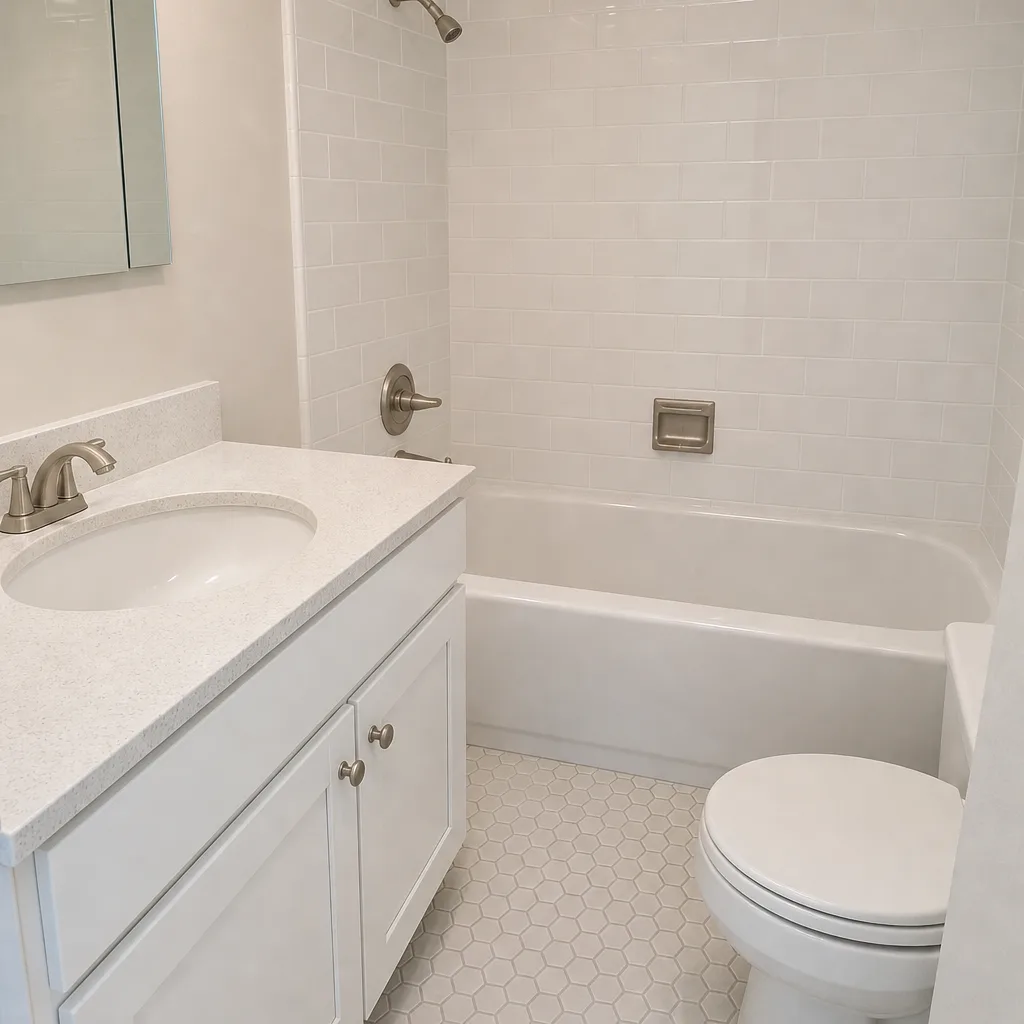 After
When to Call a Professional
Most of the walkthrough above is a homeowner’s job – you’re inspecting, not repairing. Call a professional when:
- You find a foundation crack that’s widening, stair-stepping, or letting daylight through at the stem wall.
- Any exterior stucco softness, water staining at the sheathing, or repeated roof leaks after a storm.
- HVAC or electrical penetrations that need to be opened, re-sealed, or rerouted – panels and wiring are not a homeowner job.
- Grout or caulk failures that have spread past a handful of joints, or tile that’s loosening.
- Any remodel that touches the building envelope, framing, or plumbing rough-in.
If you’re not sure whether what you’re seeing is normal wear or something worse, call (844) 797-9259. A live person answers 24 hours a day, seven days a week – no voicemail queue. Bradford Remodeling Boulder City offers free estimates, and every one comes with a written price before any work starts. Start with general contractor in Boulder City services.
Frequently Asked Questions

Quarterly. Thermal cycling in Boulder City works expansion joint sealant harder than in mild climates, and sealant commonly pulls loose within a single summer. Check every joint in January, April, July, and October, and reseal any joint that’s failed or missing. Call (844) 797-9259 for a free estimate if you’d rather have a professional look.
Because of the desert climate. Roughly 294 sunny days a year, summer temps above 110°F, and large day-to-night temperature swings age caulk, grout, paint, and sealers about twice as fast as the national average those checklists assume. That’s why this guide uses quarterly and twice-a-year intervals instead of annual.
Annually, plus after any heavy rain. Look for new cracks wider than 1/16 inch, cracks that stair-step at corners, efflorescence (white chalky staining), and soil that’s pulled away from the wall. Alkali soil in the Boulder City area moves with wet-dry cycles, and catching movement early is far cheaper than foundation repair. Call (844) 797-9259 for a free estimate if you see any of these.
April and October. These are the windows before and after the worst heat and monsoon, when sealants and coatings cure properly and crews can work safely through the day. April handles pre-summer caulk, paint, and flashing work; October handles post-monsoon roof, gutter, and foundation checks. Any project touching the roof, siding, or envelope is best scheduled in one of those two windows.
Yes, whenever the work requires it. We pull the permits and pass the inspections on any project that touches structure, the envelope, or systems – the paper trail protects you at resale. Every quoted price is written before work starts, and the completed work carries the 365-Day Done Right Promise. For a full bathroom update, see bathroom remodeling in Boulder City. Call (844) 797-9259 for a free estimate.
No. Bradford Remodeling Boulder City writes the full price before any work begins – every line item, in writing, with no numbers that move at the door. If something undiscovered comes up during the job, we stop and re-scope it with you in writing before continuing. Call (844) 797-9259 for a free, written estimate.
The Bottom Line
Boulder City isn’t a mild-climate town, and your maintenance schedule shouldn’t pretend it is. Run a quarterly expansion joint and stem wall inspection, hit the critical exterior items in April before the heat locks in, reset after monsoon in October, and keep every note in writing. Do that and deferred maintenance never gets the chance to compound. Skip it and the desert will find the weakest joint – usually a $200 caulk line that became a framing repair. If you’d rather put a trained eye on it, our team at Bradford Remodeling Boulder City is one call away at (844) 797-9259, and estimates are free and written.
Written by the team at Bradford Remodeling Boulder City.