Last updated November 17, 2026







Free written scope consultation - allowances, timeline, and change-order rules on paper before a single trade is scheduled
DIY vs Professional Home Remodeling: What’s Safe to Do Yourself
Nevada Revised Statutes 624 makes it a misdemeanor to perform work over $1,000 in combined labor and materials without a contractor’s license. That threshold is lower than most people think. A bathroom tile job clears it before the demo is finished, and a kitchen cabinet swap clears it before the boxes are open. The DIY-versus-pro question gets argued about skill, but skill isn’t the real dividing line. Liability is. This guide draws the line by what Nevada actually requires a license for, what the permit trail protects you from at resale, and where doing it yourself in Boulder City is genuinely low-risk versus where it can cost you a sale or an insurance claim years down the road.
Quick Answer
In Nevada, cosmetic work like painting, swapping cabinet hardware, and replacing a like-for-like fixture under the $1,000 combined labor-and-materials threshold is safe to do yourself. Anything that touches the permit trail, meaning electrical, plumbing, structural, gas, or a project whose materials alone cross $1,000, requires a licensed contractor under NRS 624, and unpermitted work can void your homeowner’s insurance and surface as a problem at title search when you sell. When in doubt, the permit office is the tiebreaker, not a video tutorial.
Styles & brands we work with
- Kitchen remodeling
- Bathroom remodeling
- Home additions & ADU
- Roofing
- Windows & doors
- Driveway & pavers
- Fence
Table of Contents
- What Nevada Revised Statutes 624 Actually Requires
- Where DIY Is Genuinely Low-Risk in Nevada
- The Trades Where the Permit Trail Protects You
- How Unpermitted Work Surfaces at Resale in Clark County
- What Owner-Builder Status Allows and What It Costs You
- How to Read a Contractor’s Scope for Permit Responsibility
- Fifteen-Minute Walkthrough: What to Check Before You Decide
- Common Mistakes to Avoid
What Nevada Revised Statutes 624 Actually Requires
NRS 624 is the state’s contractor licensing law, and the number that matters is $1,000. Any project where combined labor and materials exceed that figure requires a licensed contractor, whether you’re in Boulder City or anywhere else in Nevada. The statute doesn’t care how confident you are or how many weekend tutorials you’ve watched. It cares about the dollar figure and whether the work falls under a licensed trade.
Three details homeowners routinely miss:
- The $1,000 is combined, not separate. A $600 tile set plus $500 in setting materials already crosses it. So does a mid-grade vanity and faucet in a small powder room.
- It’s a misdemeanor, not a paperwork slip. Performing work as an unlicensed contractor carries real legal exposure, and if something fails, your homeowner’s policy may investigate whether licensed work was involved.
- Subcontractors count. If you hire a handyman to coordinate three trades on a $4,200 project, the handyman is operating as an unlicensed contractor. Every trade on that job needs to be licensed for its scope.
The Nevada State Contractors Board is the body that enforces this. Their license lookup is public and takes about two minutes to run against any contractor’s name. Run it before you sign anything. A general contractor operating in Boulder City should show up cleanly with an active license and a classification that covers the work.
Why this matters beyond the legal technicality: unpermitted work is the single most common reason a remodel becomes a problem at resale. A licensed contractor pulls the permits, the inspector signs off, and the paperwork lives in the county record forever. That paper is what closes smoothly in 2032 when you’re selling. What you don’t want is a buyer’s inspector finding a shower pan the county has no record of, because then you’re the one paying to remedy it.
Where DIY Is Genuinely Low-Risk in Nevada
Some projects genuinely don’t need a license, a permit, or a trained hand. These are cosmetic, reversible, and don’t touch the systems a home inspector or appraiser will flag:
- Interior painting. Anywhere but on exterior stucco, where the prep and product selection go wrong quickly in Boulder City’s UV load.
- Swapping cabinet hardware and pulls. Knobs and pulls, not doors, not drawer boxes.
- Replacing a like-for-like fixture under the threshold. A vanity faucet swap is fine if the supply lines and shutoffs are healthy and the total stays under $1,000. A Kohler or Delta lav faucet is a 45-minute job for most homeowners.
- Removing wallpaper and prepping walls. Preparation is the one part of a remodel where DIY effort genuinely saves real money.
- Changing light bulbs and swapping a lamp. Obvious, but worth stating: a plug-in fixture swap is different from hardwiring a new chandelier.
Two Boulder City-specific cautions on “safe” cosmetic work. First, exterior painting on Boulder City homes takes more sun and more dust than most of the metro, and a bad paint system on stucco fails inside two summers. That failure is a repaint, not a repair, but it’s still expensive. Second, “safe” is about the work, not the materials. Specialty products from Cambria or Caesarstone on a countertop or a Blanco sink cut into a slab are not a DIY install, even if the faucet swap above them is.
The test we use: if the work is reversible without opening a wall, cutting into a system, or modifying the structure, it’s usually safe. If finishing it correctly requires the permit trail to be clean, it’s not.
The Trades Where the Permit Trail Protects You
The permit trail is the paper record of who did what, when, and whether it was inspected. It protects you in three ways: it makes insurance claims payable, it makes resale smooth, and it makes warranty work possible. Here’s where the paper matters most:
- Electrical. New circuits, panel changes, additions to existing circuits, and anything involving a new outlet in a wet area. Nevada’s electrical code is enforced through the permit and inspection process, not the contractor’s word. An unpermitted circuit behind drywall is a fire risk with no paper trail if a claim comes in.
- Plumbing. Rough-in changes, moving a drain, replacing a water heater, and any work on gas lines. Gas in particular: smell it, stop, call a licensed plumber. Do not troubleshoot a gas line yourself. The safety caveat here is not boilerplate.
- Structural. Load-bearing walls, header changes, adding a beam, opening a span. Boulder City’s older housing stock occasionally has framing details that don’t match modern load calculations, and only an engineer’s stamp settles the question.
- Anything crossing the $1,000 line in aggregate. A mid-size kitchen update with KraftMaid cabinetry and Cambria counters crosses it immediately, and even a modest bathroom tile job often comes in under the threshold in labor but over it once substrate and setting material are counted.
In our experience, the permit trail matters most in Boulder City’s historic core, where older homes sometimes have undocumented additions from decades past. A pre-remodel permit search costs little and can surface a 1970s garage conversion the current owner never knew was unpermitted. Better to find that now than at title search.
Where a job is clearly permit territory, we hand the homeowner a general contractor in Boulder City scope that spells out permit-pulling responsibility on the first page. That’s not a sales pitch. It’s the thing that stops a remodel from getting held up at final inspection.
How Unpermitted Work Surfaces at Resale in Clark County
Unpermitted work usually survives the remodel and dies at resale. The timeline is predictable:
- You sell. Buyer makes an offer, the inspection happens, and the inspector writes up what they see.
- The buyer’s agent asks for the permit history. Clark County’s permit records are online. If the shower pan, the electrical subpanel, or the new bathroom exhaust fan isn’t there, the agent notices.
- The lender gets involved. Many loan products, FHA in particular, require permit compliance on structural and mechanical work. That’s when a small piece of missing paper becomes a financing problem.
- You remediate. Remediation means opening what was closed, getting an inspection, and often paying the current permit fee plus a penalty, plus the labor to make the work inspectable. On a shower that means removing tile and pan. On an electrical circuit that means opening drywall.
The remediation cost usually runs two to four times what the permit would have cost in the first place. That math is brutal on a project that felt small going in. A $250 permit on a bathroom exhaust fan versus $2,000 to open a ceiling, re-run the duct to code, and re-drywall: the difference is not close.
The other half of the equation is insurance. If unpermitted work fails, most homeowner policies will investigate whether the work was permitted and licensed. A claim denied on those grounds is worse than paying for the permit up front.
If you’re planning a bathroom project, the honest conversation about permit trail and scope belongs at the estimate stage. The team writing our bathroom remodeling in Boulder City scopes confirms permit responsibility and inspection schedule before demo day, not after.
What Owner-Builder Status Allows and What It Costs You
Owner-builder status is the provision in Nevada law that lets a homeowner pull permits on their own primary residence without holding a contractor’s license. That sounds like a loophole. It isn’t, and it’s worth understanding exactly what it does and doesn’t do.
What it allows: you pull the permit, you act as the general contractor, you hire licensed subs directly for the trades that require a license, and the inspections happen in sequence. What it doesn’t do:
- It doesn’t put a contractor’s warranty behind the work. Nobody honors a guarantee on a project that was never theirs. When something fails twelve months later, you’re the contractor and you’re the one to call.
- It doesn’t cover insurance gaps. If an electrician hired directly by you is injured on your property, your homeowner’s policy is the liability answer, not the electrician’s employer. That conversation is worth having with your insurance agent before anyone shows up.
- It doesn’t affect resale disclosure. You still have to disclose that you were the builder on record, and the buyer’s inspector still checks every line item.
- It doesn’t survive a non-primary-residence sale. Owner-builder status on a rental or an investment property is not the same thing, and pulling permits under it on a property you don’t live in is a violation.
Owner-builder status is genuinely useful for a small self-managed project with clearly licensed subs. It’s a liability decision more than a savings decision. The DIY savings have to clear the warranty gap, the insurance gap, and the coordination time.
That warranty gap is the piece Bradford Remodeling Boulder City closes with the 365-Day Done Right Promise. Every completed project carries a full-year written guarantee: if the work fails inside that window, we come back and correct it at no charge. Owner-builder work carries no such document because no contractor was ever on the hook for it.
How to Read a Contractor’s Scope for Permit Responsibility
Here’s a test that separates a real scope document from a sales document. Open the contractor’s written price and look for these specific items:
- The phrase “permits pulled by.” It should name a party explicitly, not say “permits are the responsibility of the homeowner.” If a contractor won’t pull the permit, that’s a serious signal on what else they aren’t willing to put in writing.
- The inspection schedule in the project timeline. Rough inspections come before drywall. Final inspections come before close-out and before the guarantee document is handed over. A timeline that skips inspections skipped inspections.
- Named materials with spec numbers. “Premium cabinetry” is a marketing line. KraftMaid with a specific door style and finish line is a specification. The same goes for Cambria and Caesarstone surfaces, Kohler and Moen fixtures, GAF and James Hardie on the exterior, and Therma-Tru on the door package. Documented materials mean documented manufacturer warranties, and those stack on top of the contractor’s own guarantee.
- A written price that does not move. The Garrison Standard means the number on the page is the number you pay. No numbers that change at the door. If the scope has a “subject to site conditions” clause that isn’t attached to a specific line item, that’s the door.
- The guarantee spelled out. The 365-Day Done Right Promise should be visible before you sign, not referenced vaguely in a brochure. If your contractor won’t put the guarantee in writing, that’s your answer.
- Close-out documentation. The signed written guarantee in your hand, the permit record, the material spec sheets, and a clean site. That’s squared away. Anything less is a phone call in month eight.
When you’re reviewing kitchen scope with a note to compare against our kitchen remodeling in Boulder City pricing, run the same six-item test against every bid on the table. It’s the most useful filter we know of for cutting through a competitive bid landscape.
Fifteen-Minute Walkthrough: What to Check Before You Decide
Before you decide DIY or pro, walk the project for fifteen minutes with a notepad. Answer these questions honestly:
- What’s the total combined labor and materials? If it’s over $1,000, you need a licensed contractor unless you qualify for owner-builder status. If it’s close, count carefully.
- Does the work touch electrical, plumbing, gas, or structure? Any yes means permit territory and a licensed trade on the job.
- Have you pulled the existing permit history for the address? Clark County’s records are public. Fifteen minutes there can save a project.
- What’s the ten-year cost of getting this wrong? If a failure means opening a wall, an insurance denial, or a resale hold-up, the DIY savings shrink quickly.
- Have you run the license lookup against every contractor on the bid? Nevada State Contractors Board, name by name. Not the general contractor’s word for it.
- Have you checked the scope for the six items in the prior section? If yes is the answer on most, you’re negotiating with the right kind of contractor. If no is the answer, keep reading bids.
If you’d rather not run that analysis yourself, that’s exactly what our Bradford Remodeling Boulder City home estimate process covers. Free estimates, a written price, and a scope that answers every one of the questions above in writing.
Common Mistakes to Avoid
- Underestimating the $1,000 threshold. Homeowners routinely add up the tile and mortar separately and conclude they’re under it when the combined total clears easily. Count the whole package.
- Treating “handyman” as a license category in Nevada. It isn’t. A handyman coordinating multiple trades on a project over $1,000 is operating as an unlicensed contractor.
- Skipping the permit history search. In Boulder City’s historic neighborhoods, this is where you’ll find three decades of undocumented work waiting to become your problem at resale.
- Assuming owner-builder status covers the warranty. It covers permit-pulling, not the guarantee. If the job fails, you’re the one coming back.
- Accepting a verbal scope. Permits pulled, materials specified, guarantee term, price held: if it’s not on paper, none of it is enforceable.
- Assuming a licensed electrician on a job protects the entire job. Every licensed trade on the project needs to be licensed for its own scope. A licensed electrician working outside their classification is still outside their classification.
- Painting exteriors without checking sun exposure on the substrate. Boulder City’s UV and dust load on stucco is unforgiving. Two-summer failure on exterior paint is common when the wrong product goes on.
See the difference
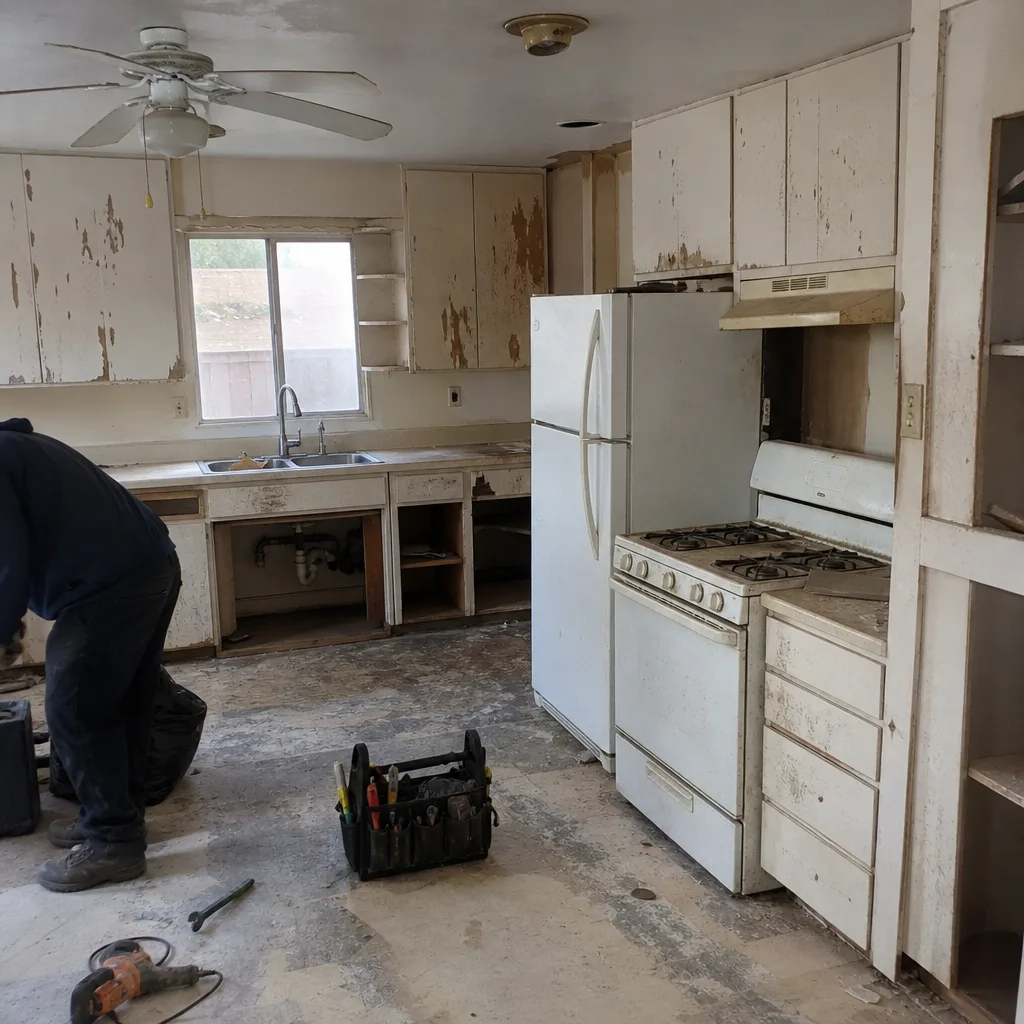 Before
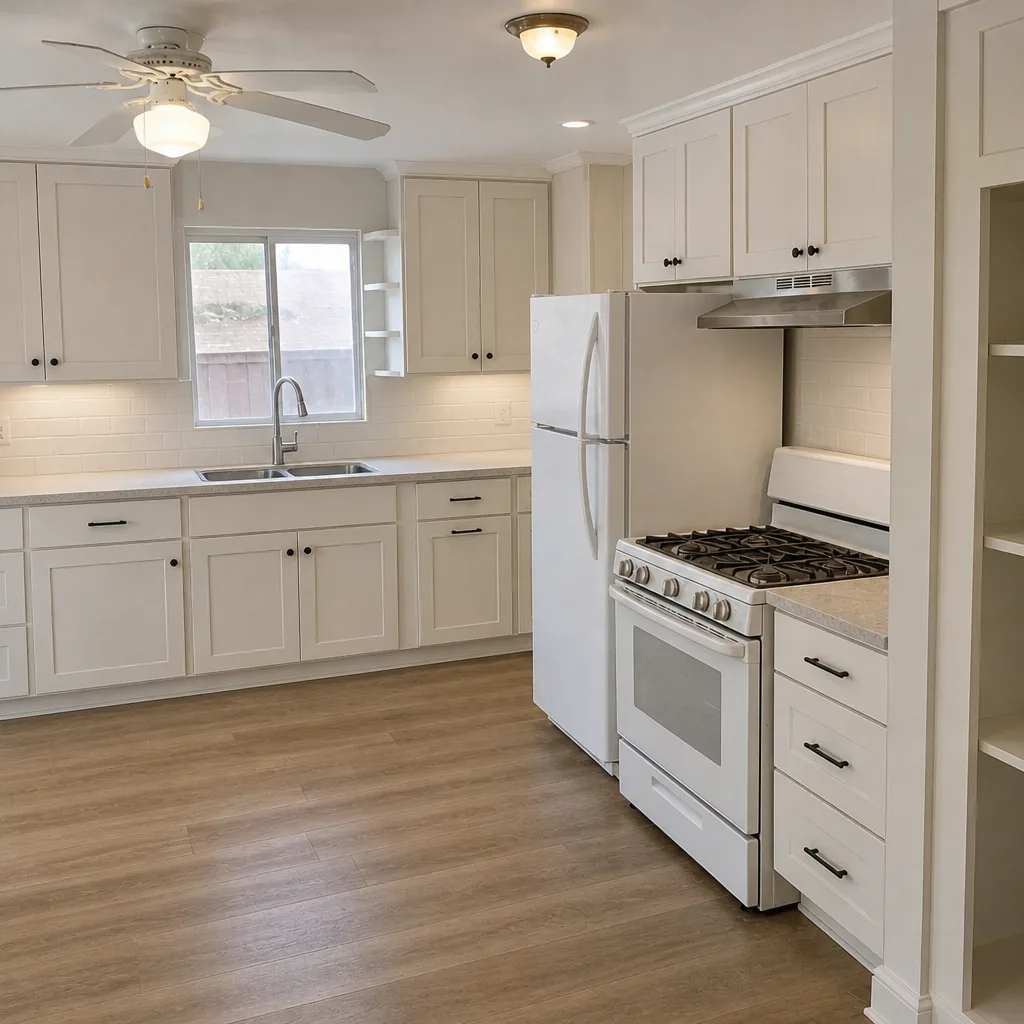 After
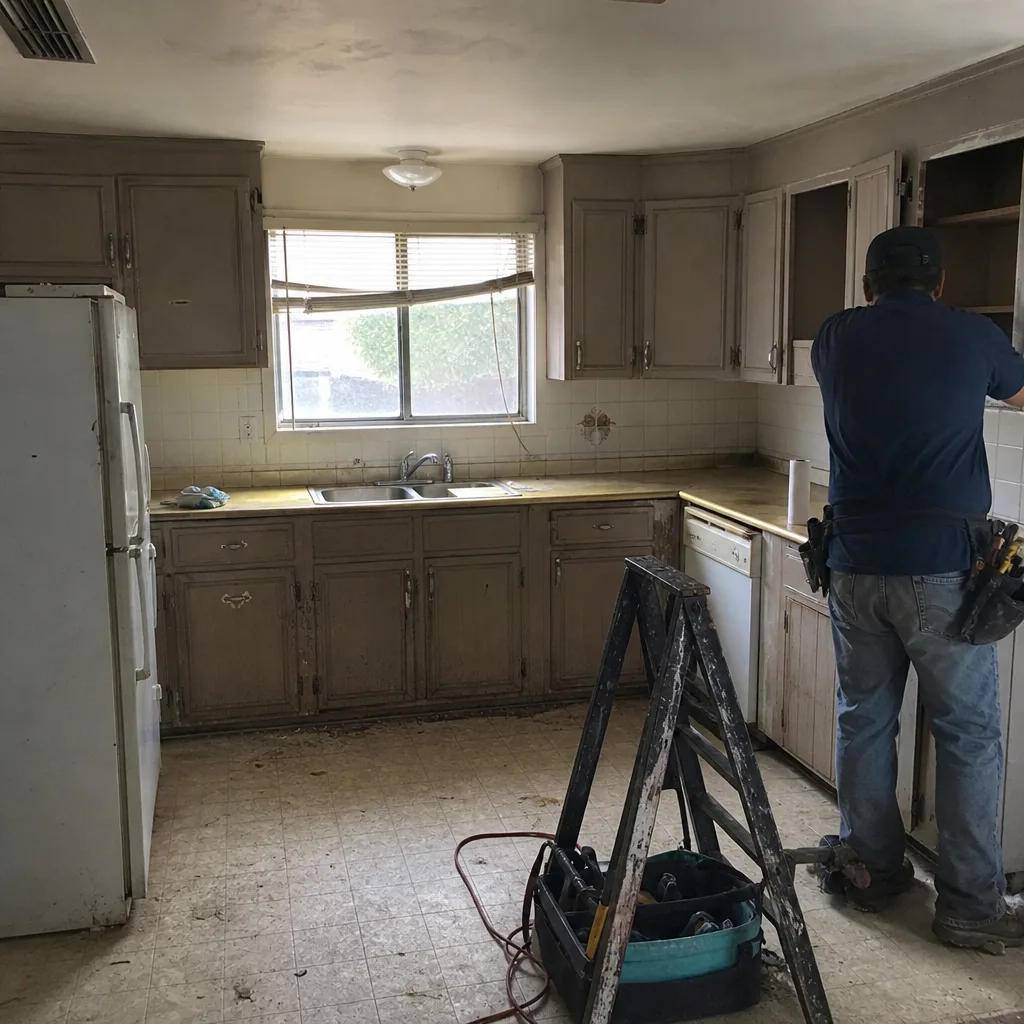 Before
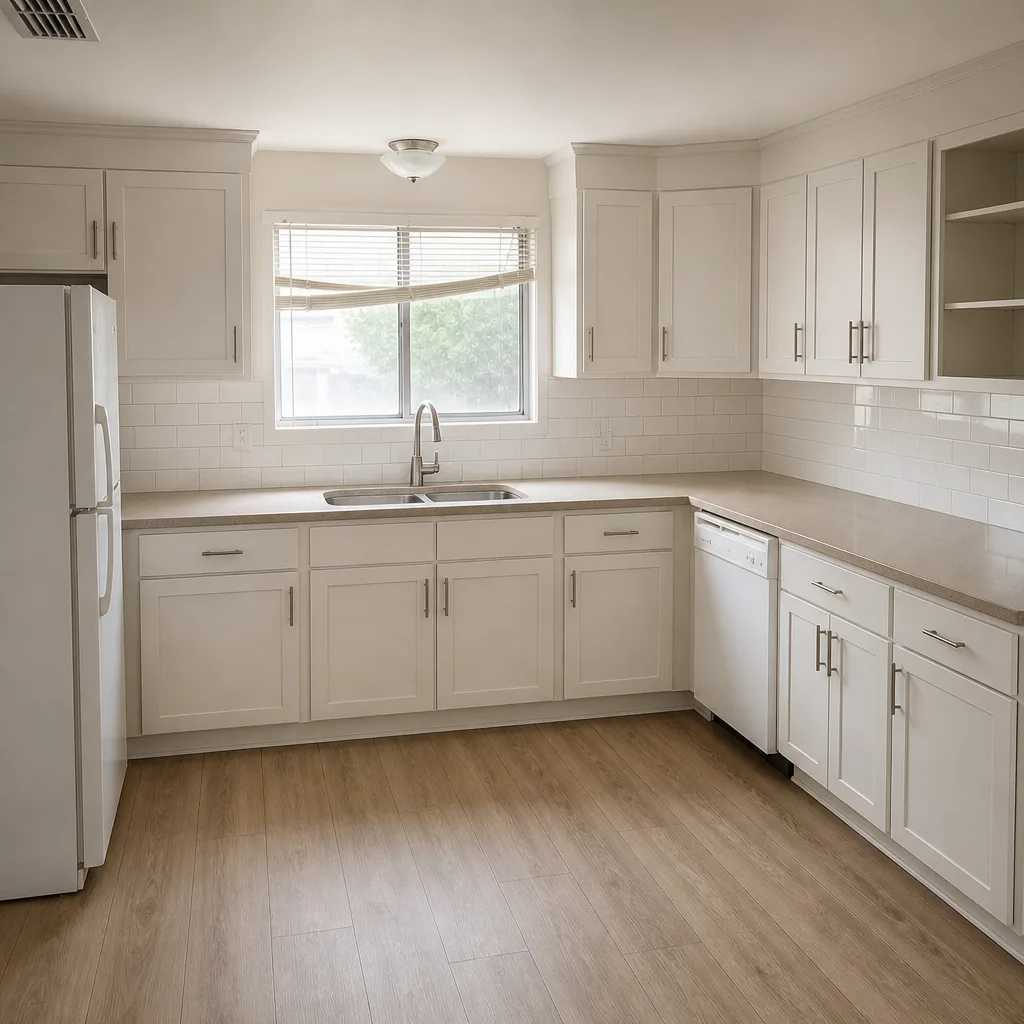 After
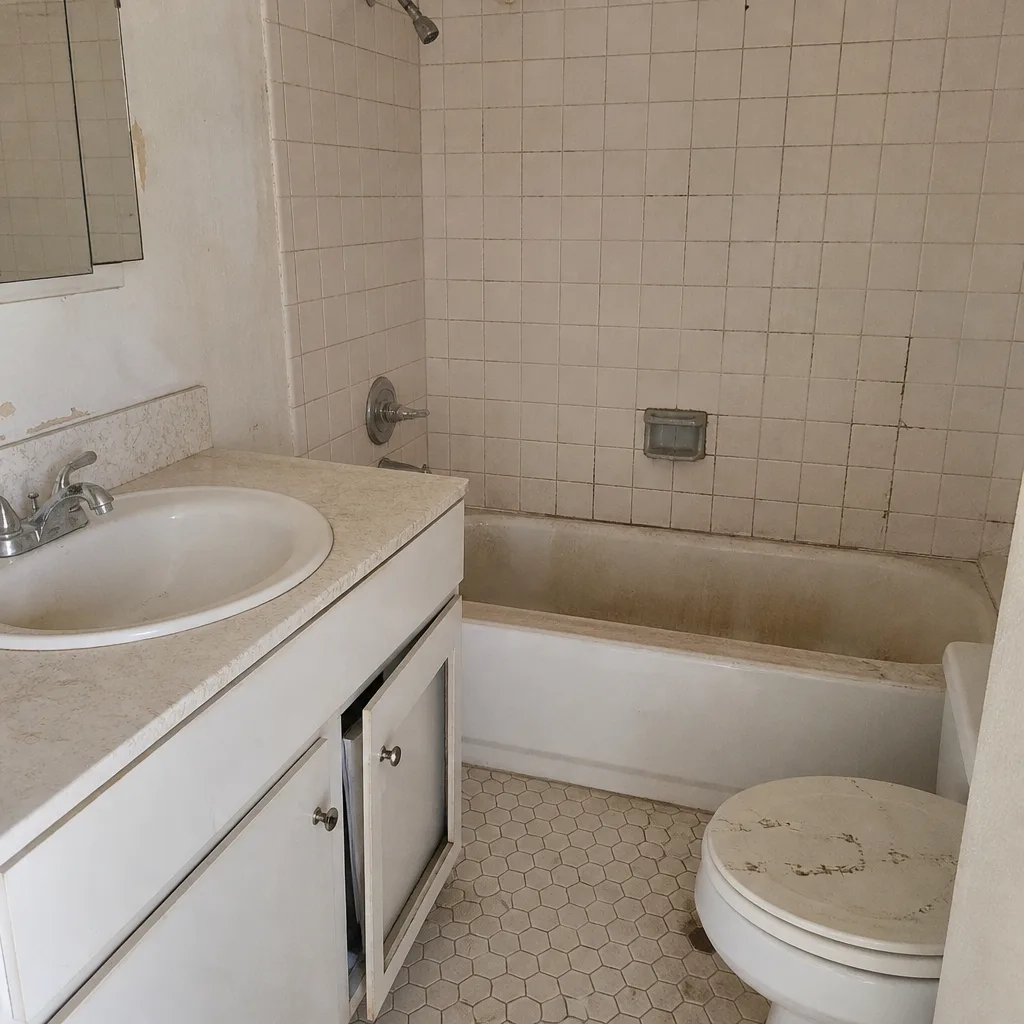 Before
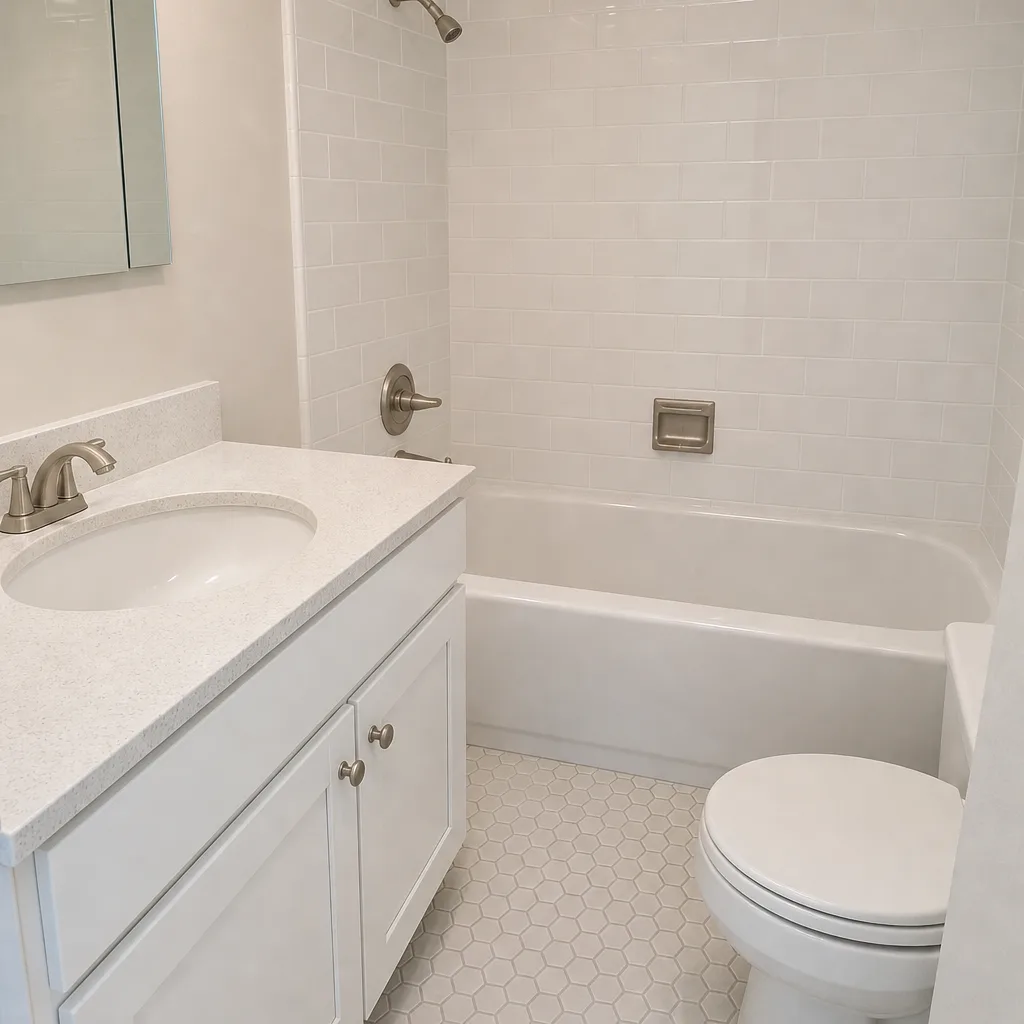 After
When to Call a Professional
The line is clear enough when you’re running the analysis, but a few scenarios should prompt an immediate call rather than a decision. Anything involving gas lines, electrical panels or new circuits, structural changes, or an aggregate project total over $1,000 in Boulder City is a call. Any project where you’ve found unpermitted work in the permit history is a call. And any project where the contractor’s written scope doesn’t answer the six questions in this guide is a call to a different contractor. Bradford Remodeling Boulder City offers free estimates in Boulder City. Call (844) 797-9259 and the price, the scope, and the permit responsibility are in writing before anything starts. Live person on the line, not a voicemail.
Frequently Asked Questions

$1,000 in combined labor and materials. NRS 624 makes unlicensed contracting work a misdemeanor above that figure, and the combined-word matters because materials alone often cross it on mid-size tile or vanity projects. If you’re anywhere near the threshold, call (844) 797-9259 for a free estimate before you buy a single bag of thinset.
Yes, if a claim is traced to unpermitted work, your insurer can investigate whether the work was properly licensed and permitted, and that investigation can end in denial. Most policies don’t advertise this, but it’s in the fine print. The cheapest insurance on a remodel is the permit record.
Owner-builder status lets you pull permits on your primary residence without holding a contractor’s license, and hire licensed subs directly. It does not put a contractor warranty behind the work, does not cover the insurance gaps on subcontractor injuries, and only applies to your primary residence. If you’re weighing this, call (844) 797-9259 for a free estimate so you have both numbers on the table.
Almost always. Clark County’s permit records are public, buyer’s agents pull them, and inspectors write up what they find. Remediation costs usually run two to four times what the original permit would have cost. A fifteen-minute search of the county records before you start is worth the time.
Yes: cosmetic painting, cabinet hardware swaps, and like-for-like fixture swaps under the $1,000 threshold where the plumbing shutoffs are healthy. Kohler and Delta lav faucet swaps are common homeowner projects. Anything touching the permit trail is not. When in doubt, call (844) 797-9259 for a free estimate and we’ll tell you honestly what’s safe to do yourself.
Nevada State Contractors Board license lookup, name by name, before you sign anything. The database shows license status, classification, and any disciplinary history. If a contractor’s name doesn’t come back cleanly, walk. It’s a two-minute check that catches the majority of problems before they start.
The Bottom Line
The DIY-versus-pro decision in Nevada comes down to permit trail and liability, not skill. Cosmetic work under $1,000 combined is safe to do yourself. Everything else touches NRS 624, and unpermitted work surfaces at resale and creates insurance gaps that dwarf the savings. Owner-builder status closes the permit question but leaves the warranty and insurance gaps wide open. The scope test in this guide, permits pulled, materials specified, price held, guarantee in writing, is what separates a real contractor from a contractor who won’t put anything on paper. In our experience, the contractors who pass that test are the ones you keep.
Bradford Remodeling Boulder City writes the price, the scope, and the guarantee before a single tool comes out. Call (844) 797-9259 for a free estimate and put the numbers in writing.
Written by the team at Bradford Remodeling Boulder City.