Last updated November 17, 2026








Free written scope consultation - allowances, timeline, and change-order rules on paper before a single trade is scheduled
DIY vs Professional Bathroom Remodeling: What’s Safe to Do Yourself
Picture a homeowner who tiled a shower themselves, skipped the waterproofing membrane because the substrate “looked fine,” and sold the house two years later. When the new owners filed a water damage claim, the insurer traced the leak to the missing membrane and denied coverage. That exclusion can run past $40,000 in a two-story home, and it follows the original installer, not the buyer. The line between what’s safe to do yourself and what needs a licensed contractor isn’t drawn by skill level. It’s drawn by permits, moisture system integrity, and what happens to insurance when work goes undocumented. This guide walks that line task by task, with the same rules we apply on Boulder City projects, so you can decide where your labor adds value and where it adds risk.
Quick Answer
You can safely handle painting, vanity hardware swaps, mirror installation, toilet seat replacement, and caulk touch-ups yourself. Anything touching plumbing supply lines, drain rough-in, electrical circuits, structural framing, or the shower’s waterproofing system requires a permit, a licensed trade, and a documented paper trail. Doing that work yourself isn’t automatically illegal, but skipping permits and disclosure creates insurance and resale problems that dwarf any savings.
Styles & brands we work with
- Kitchen remodeling
- Bathroom remodeling
- Home additions & ADU
- Roofing
- Windows & doors
- Driveway & pavers
- Fence
Table of Contents
- The Permit Line: What Nevada Requires a Licensed Tradesperson to Touch
- The Moisture System: Why Waterproofing Isn’t One Task
- Safe DIY Tasks and the Exact Point Each Crosses Into Licensed Territory
- How Unpermitted Work Shows Up on Inspections, Insurance, and Resale
- Scoping a Hybrid Project: How to Document the Handoff
- Boulder City Context: Climate, Older Housing Stock, and What We See
- What the Shortcut Actually Costs
The Permit Line: What Nevada Requires a Licensed Tradesperson to Touch
Nevada’s building code draws a clear line. Any work that touches plumbing supply lines, drain rough-in, electrical circuits or devices, or structural framing requires a building permit issued through the jurisdiction where the home sits. Boulder City issues its own permits, and the inspection sequence is not optional. A licensed trade contractor pulls the permit, and the work is inspected in stages: rough-in first, then final. That record is public and searchable, which matters later when you sell.
Here’s what that means in practice for a bathroom:
- Plumbing supply: Moving a sink, adding a second vanity, relocating a shower valve. Permit required.
- Drain rough-in: Relocating the toilet flange, adding a floor drain, changing the shower drain position. Permit required.
- Electrical: Adding a GFCI receptacle, installing a dedicated circuit for a heated floor, adding a fan or sconce on a new circuit. Permit required.
- Structural: Removing a wall between a bathroom and an adjacent closet, cutting a new window opening, sistering a joist. Permit and, in most cases, an engineer’s stamp.
What’s often misunderstood: a homeowner can legally do some of this work on their own residence in some jurisdictions. But the moment you skip the permit, you’ve created a record gap. When you sell, Nevada’s seller disclosure form asks directly whether permitted work was done. Answering “yes” when no permit exists is a real liability, and Boulder City inspectors have seen it before. Doing the work yourself doesn’t make it automatically illegal; selling the home without disclosure does.
The Moisture System: Why Waterproofing Isn’t One Task
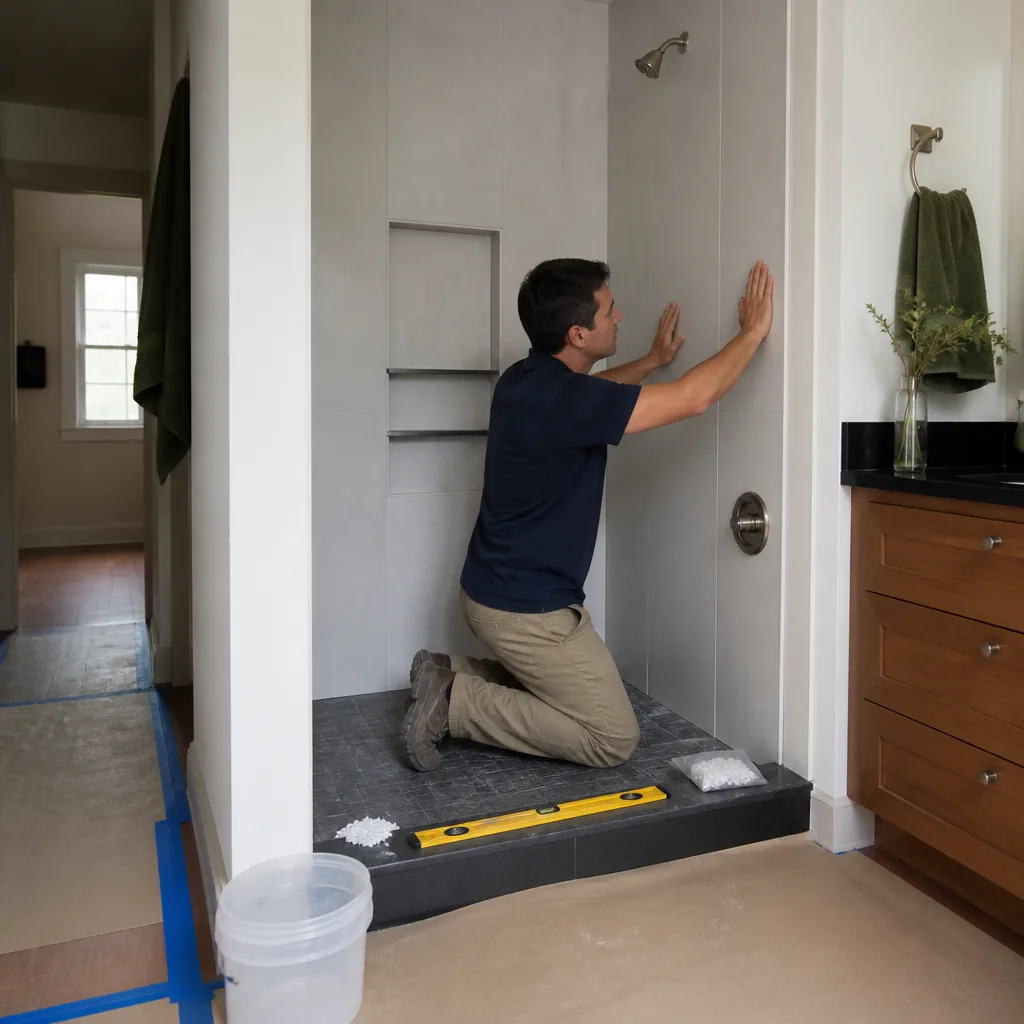
Shower waterproofing isn’t one product. It’s a system of four components that only works when all four are correct: the membrane, the corner treatment, the fastener sealing, and the curb integration. Miss any one, and the whole assembly fails. That’s why partial DIY on waterproofing is the single most expensive mistake we see in Boulder City bathrooms, and why we treat it as a licensed-trade scope even when the homeowner wants to keep the finish work.
Here’s how the system layers, in order:
- Substrate and backer board. Cement board or a foam panel system, fastened to framing with the correct fastener spacing. Fasteners must not penetrate the membrane once it’s applied.
- Membrane application. A liquid-applied or sheet membrane goes over the substrate, tied into the drain flange. Thickness and cure time are manufacturer-specific, and both matter.
- Corner and seam treatment. Inside corners, outside corners, and every seam get a bonded reinforcing fabric set into the membrane. This is where 80 percent of leaks trace back.
- Curb integration. The membrane must wrap the curb and bond to the pan liner or the pre-sloped shower pan. A curb that’s simply screwed into place with no membrane wrap is a failure waiting on the first season of use.
- Flood test. Before tile goes down, the pan holds water for a manufacturer-specified period and gets inspected. Without a permit, no inspection happens.
The membrane looks fine right up until it doesn’t. A homeowner who skips the reinforcing fabric because it “looked fine” or uses the wrong sealant on a corner has created a defect that won’t show for a year or two, when water has already traveled into framing. There’s no partial-DIY version of this. You either build the full system or you hire someone who does.
Safe DIY Tasks and the Exact Point Each Crosses Into Licensed Territory
Plenty of the bathroom is open to homeowners who want to save labor cost. Here’s where each task is genuinely safe, and where it crosses the line. These are the same benchmarks we use to scope hybrid projects in Boulder City.
Painting
Safe to do yourself, with one caveat: the correct product. Bathrooms need a mold-resistant, semi-gloss or satin finish on moisture-prone walls, and a bonding primer over any patched drywall. The line crosses when the paint is hiding water damage. If you see bubbling, soft drywall, or discoloration near the shower, stop painting and get the moisture source diagnosed.
Vanity Hardware Swaps
Knobs, pulls, and hinges are entirely safe. You need a drill, the right bit size, and a template to keep spacing consistent. The line crosses when the new hardware requires drilling into stone or quartz, or when you’re changing hinge style on a soft-close cabinet and have to adjust the door – a misaligned cabinet door that won’t close squarely is usually a sign the hinge plate needs a professional reset.
Mirror Installation
Safe when hanging on drywall with the correct anchors for the mirror’s weight. The line crosses when the mirror is over a vanity and you’re considering mounting it to the mirror frame itself or drilling into tile. Tile drilling over a shower or wet area can crack the waterproofing layer, which brings you back to the moisture system problem.
Toilet Seat Replacement
Safe. Two bolts, a plastic nut driver, five minutes. The line crosses when the seat removal exposes a leaking wax ring or a cracked flange – that’s plumbing, and it goes to a licensed plumber.
Caulk Touch-Ups
Safe when resealing the joint between the tub and the wall, or between the vanity and the wall, using a 100 percent silicone caulk rated for wet areas. The line crosses when the old caulk is failing because the substrate behind it has water damage, or when you’re re-caulking a shower and the reveal is over a quarter-inch – that’s a sign of movement that needs diagnosis.
Accessories and Trim
Safe: towel bars, robe hooks, toilet paper holders, new outlet covers (with the power off), and floor transitions. The line crosses at any accessory that needs a new electrical circuit or a new plumbing line.
If you’re planning a larger remodel and want to see how we structure the scoped work, our page on bathroom remodeling in Boulder City lays out the full project sequence from demolition through final inspection.
How Unpermitted Work Shows Up on Inspections, Insurance, and Resale
The insurance angle is the one homeowners underestimate most. Standard homeowner policies exclude damage caused by unpermitted or non-code-compliant work. If a shower pan fails and the insurer can trace the failure to missing waterproofing installed without a permit, the claim can be denied outright. In a two-story home, that’s not a $5,000 repair – it’s a $40,000-plus event that reaches the floor below and the framing between.
On the resale side, the picture shows up in three places:
- Home inspection reports. Inspectors flag visible clues: a new tile shower with no permit record, a relocated toilet with no rough-in inspection, an added GFCI with no electrical permit. Those flags go on the report and stay there.
- Buyer’s lender. If the buyer is financing, the lender’s appraiser looks at permit records. Unpermitted additions and remodels can trigger an appraisal adjustment or a requirement for the seller to permit the work retroactively before closing.
- Title and disclosure. Nevada’s seller disclosure form asks about permitted work. A buyer’s attorney who finds a permit gap has leverage to renegotiate the price or walk.
In our experience on Boulder City projects, the sale doesn’t usually fall apart at inspection. It falls apart during renegotiation, when the buyer asks for a $15,000 credit to cover the cost of permitting and re-doing the shower. That’s the real cost of the shortcut. The resale market in Boulder City is small enough that a flagged property can sit for months while comparable homes with clean permit records close in weeks.
Scoping a Hybrid Project: How to Document the Handoff
A hybrid project is the middle path, and it works well when the contract is clear. The homeowner handles finish work, the licensed contractor completes rough-in and waterproofing, and the handoff point is written down. The problem is that most hybrids fall apart at the handoff because nobody wrote it down. Here’s how to scope it properly.
- Define the rough-in scope in writing. The contractor removes old material, does framing, plumbing rough-in, electrical rough-in, and waterproofs the wet areas. That’s a completed, inspected scope, not a partial one.
- State the inspection milestone. Rough-in passes inspection before finish work begins. The permit card is signed by the inspector. No exceptions.
- Document the handoff with photographs. Both sides photograph the substrate, the membrane, and the test result before tile. Photos go with the contract.
- Write the finish scope separately. Tile, paint, hardware, and accessories. The homeowner is responsible for finish dimensions matching the rough-in dimensions, and the contract states who handles the discrepancy.
- Agree on the warranty boundary. The contractor’s warranty covers the rough-in and waterproofing. The homeowner’s finish work is the homeowner’s scope. Both sides sign the boundary.
- Keep the permit active. The permit stays open until the final inspection. Finish work can proceed under the open permit after rough-in passes, but the final inspection is still required.
A written, line-item price before work starts is standard on all of our projects, and it’s the same standard we recommend you ask for on any hybrid you scope. The Garrison Standard requires it: every contractor working under it puts the price and the guarantee in writing before a single tool comes out. That applies to hybrid scopes too, where the boundary matters most.
Boulder City Context: Climate, Older Housing Stock, and What We See
Boulder City homes are a mix of mid-century construction and newer builds, and the local climate shapes the moisture problem in specific ways. Summer temperatures push above 105°F, and the low desert humidity swings between desert-dry and monsoon-humid after storms. That cycle stresses shower membranes and caulk joints, and it’s why we see more failed shower pans in Boulder City in the late spring than any other season – the winter cure cycle followed by the first hot stretch is when the weakest joint gives.
The housing stock matters just as much. Mid-century bathrooms in Boulder City often have original cast iron drain lines and single-sink layouts, and the rough-in dimensions are different from what a modern vanity expects. A homeowner who swaps a vanity without checking the supply line position and the drain offset creates a leak behind the cabinet that won’t show for a year. We’ve seen it on Historic District properties where the walls are plaster over lathe and the access panels are missing.
The permit sequence in Boulder City runs through the city’s building department, and inspections are scheduled, not drop-in. That’s a schedule constraint that matters on hybrid projects – if the rough-in inspection slips, the finish work slips with it. Plan the timeline around the inspection, not around the tile delivery.
If the project is a full general contracting scope – framing, plumbing, electrical, and finishes – the sequence and the trade coordination are handled together. Our page on general contractor services in Boulder City lays out how that coordination runs, and it’s the page to read if the project goes beyond a cosmetic refresh.
What the Shortcut Actually Costs
The math on the shortcut is worth putting on one screen. A homeowner who skips the membrane saves maybe $800 to $1,500 on materials and labor. The failure event, when it happens, costs $12,000 to $45,000 depending on the extent of the water damage and whether the floor below is involved. The insurance claim denial adds the full cost, not the deductible. And the resale negotiation adds a second hit if the permit gap is discovered at inspection.
Set that against the cost of doing it correctly the first time. Rough-in and waterproofing on a standard Boulder City bathroom run in a range most homeowners find surprisingly reasonable once they see the line-item breakdown, and the written price doesn’t move. The 365-Day Done Right Promise covers every completed project for a full year: if the work fails, the crew returns and corrects it at no charge. That’s the guarantee term written into the contract, not implied.
The finish work – paint, tile, trim – is where a homeowner’s labor still adds real value, and it’s where the savings are real without the risk. The system work is where the risk lives, and it’s the work that doesn’t reward confidence. That’s the line, task by task.
Common Mistakes to Avoid
- Skipping the waterproofing membrane because the substrate looks dry. It always looks dry before the first failure. The membrane isn’t visible after tile goes down, and that’s exactly why it can’t be skipped.
- Doing plumbing or electrical yourself to save a permit fee. The permit fee is small next to the resale hit. In Boulder City, an unpermitted rough-in shows up on the inspection report and the buyer’s lender notices.
- Hiring an unlicensed handyman for rough-in work. Rough-in has to be inspected. An unlicensed handyman can’t pull the permit, which means the inspection never happens and the record gap is permanent.
- Using the wrong sealant on shower corners. Silicone in the wrong place peels; the wrong caulk in the right place still fails. Use the product the membrane manufacturer specifies, not the one that was on sale.
- Failing to document the handoff on a hybrid project. A verbal handoff is not a scope. The photos, the inspection card, and the warranty boundary all need to be in the contract.
- Assuming the new vanity will fit the old rough-in. Boulder City’s mid-century bathrooms rarely line up with modern dimensions. Measure the supply line and drain offset before the vanity arrives.
- Painting over water damage. A fresh coat hides the stain for exactly one season. It doesn’t stop the moisture source that caused it.
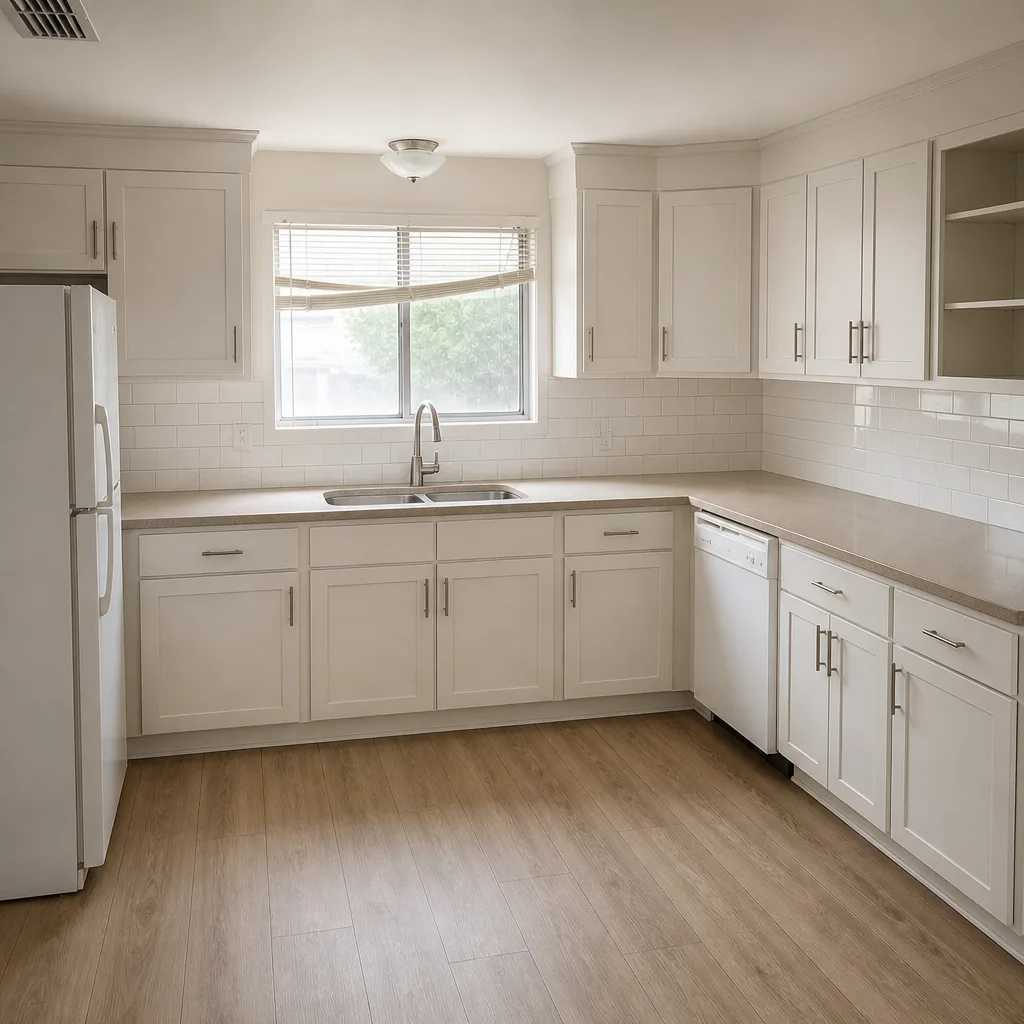
See the difference
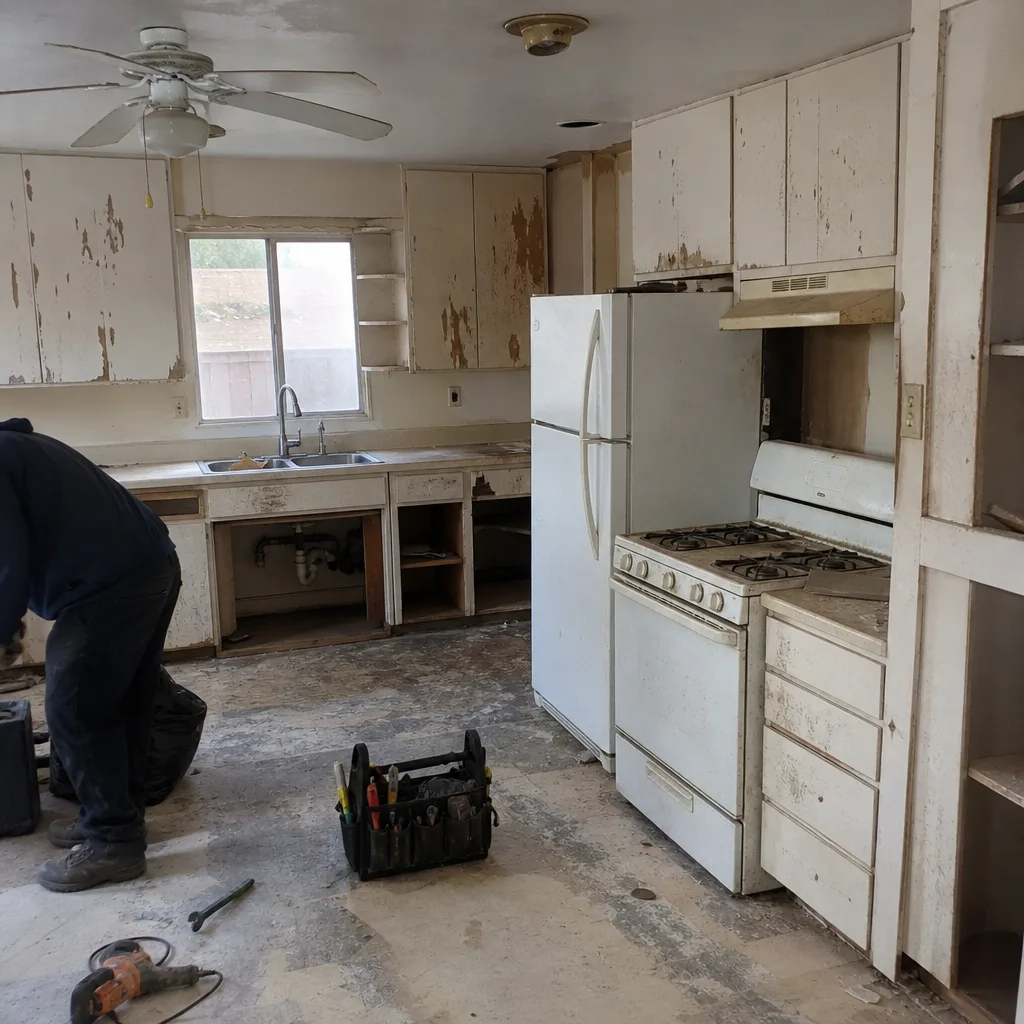 Before
 After
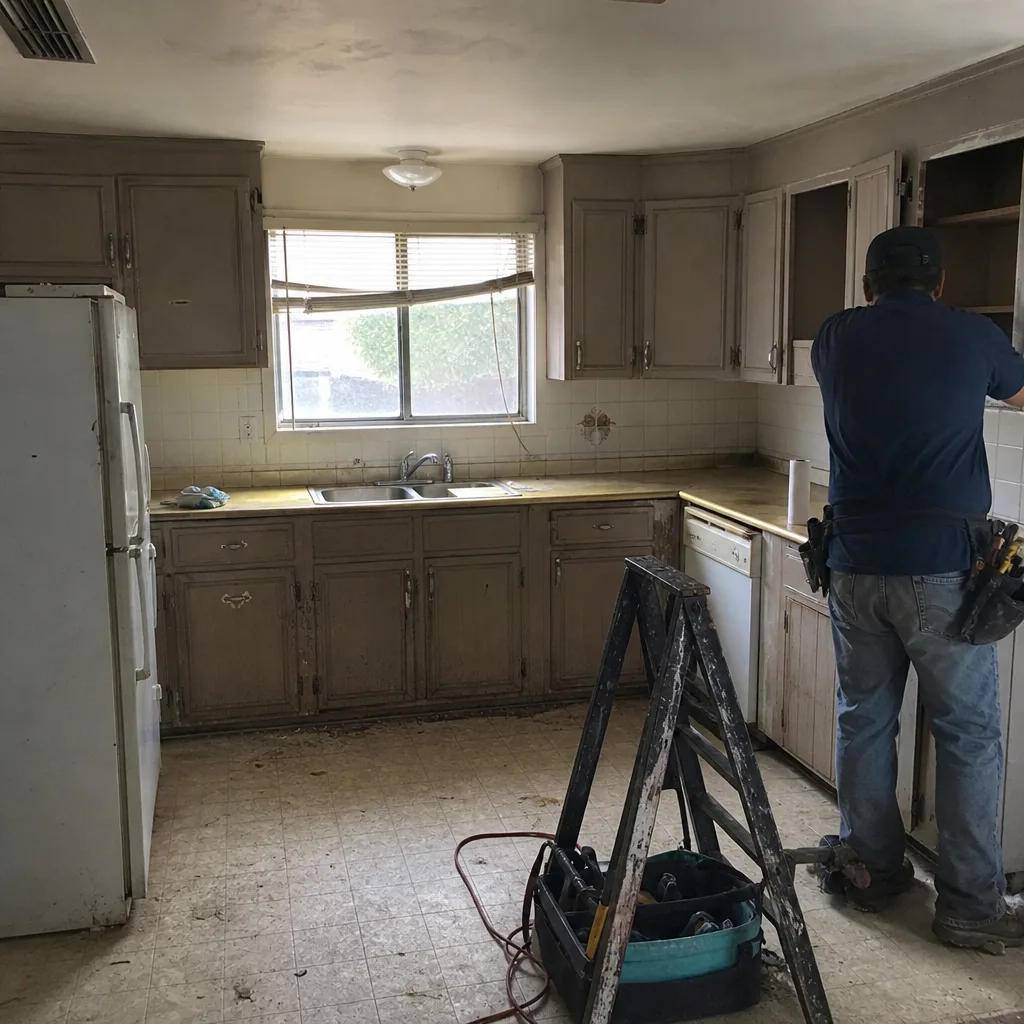 Before
 After
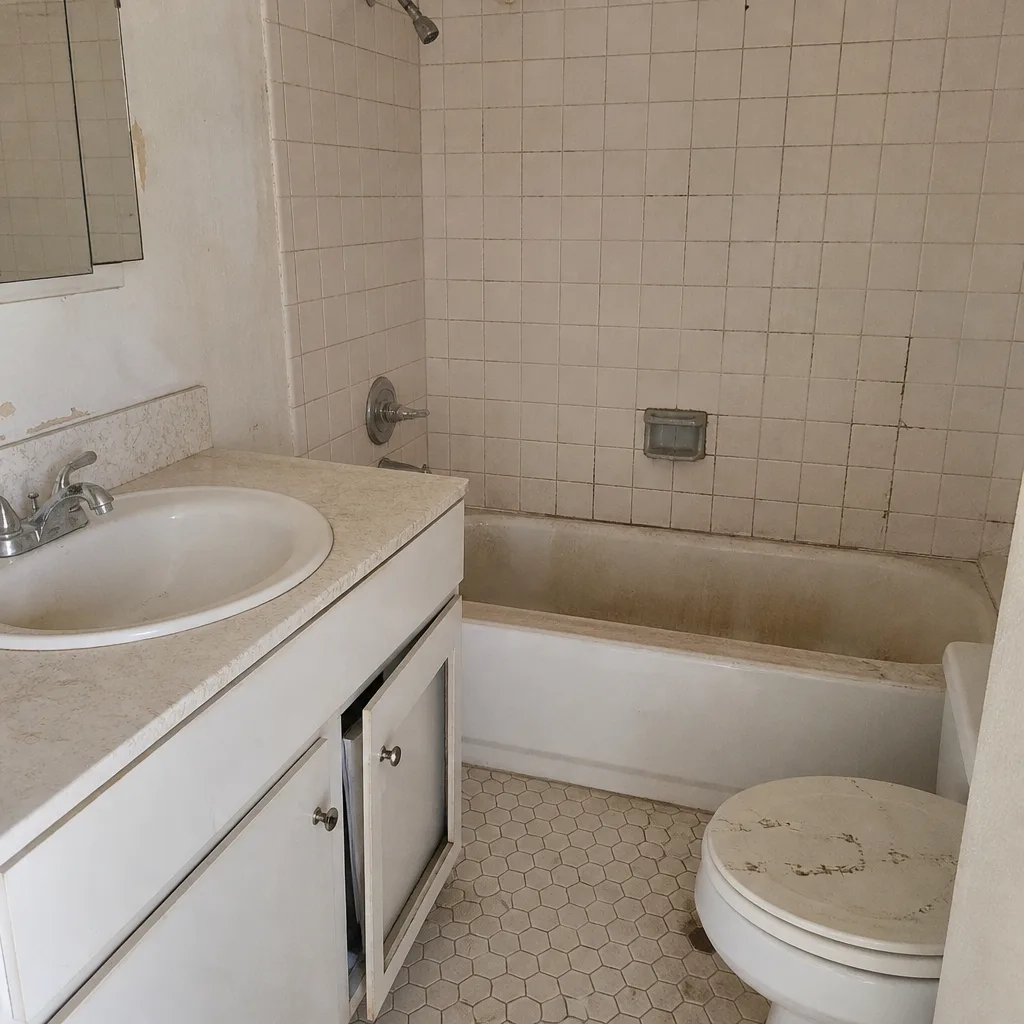 Before
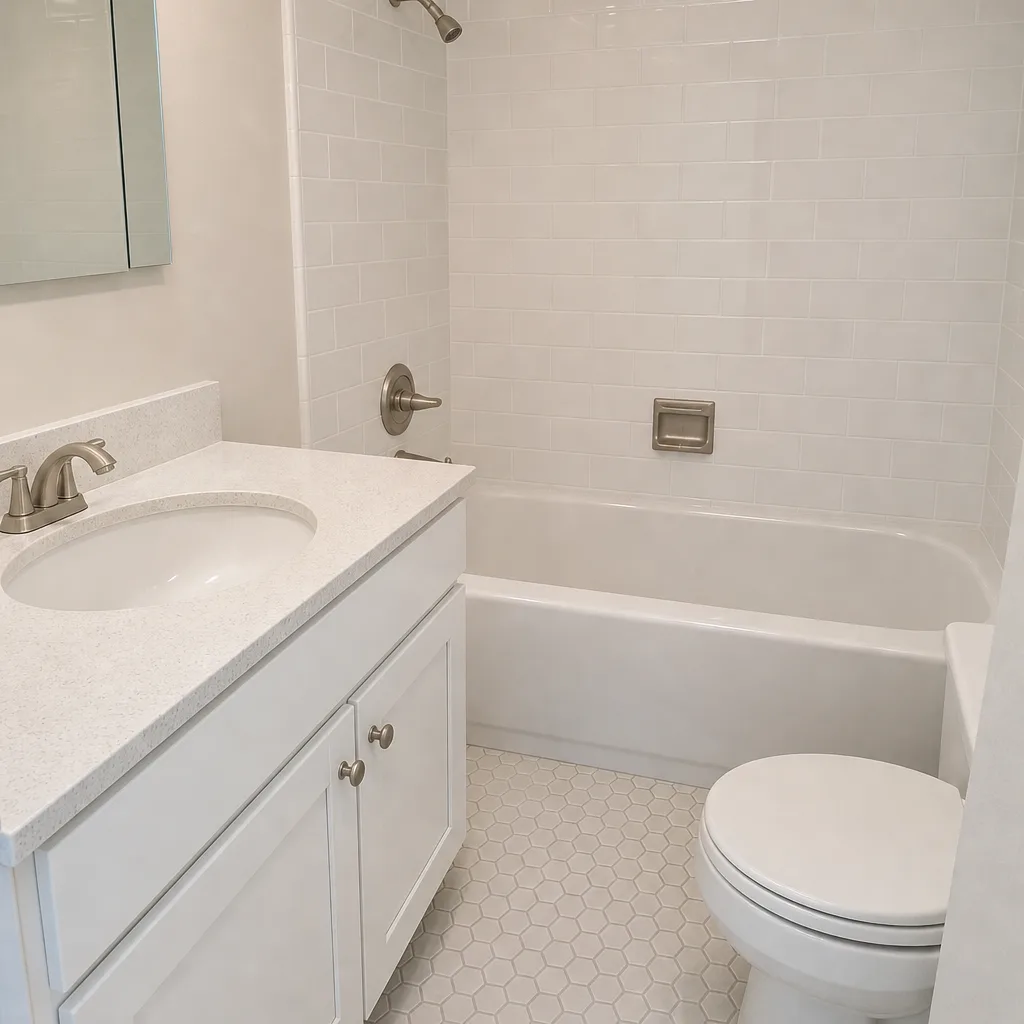 After
When to Call a Professional
Call a professional the moment the scope touches plumbing supply, drain rough-in, electrical circuits, structural framing, or the shower waterproofing system. Call when the task involves moving a fixture, not just swapping one. Call when the existing bathroom is mid-century Boulder City stock and the rough-in dimensions are unknown. Call when you’re selling within a few years and the permit record matters. And call when the plan involves any water that ends up somewhere it wasn’t designed to go.
Bradford Remodeling Boulder City offers free estimates in Boulder City and the surrounding area: call (844) 797-9259. We’ll walk the bathroom, tell you which tasks are safe for you to handle and which need a licensed trade, and put the scope and the price in writing before any work begins. That’s The Garrison Standard at work: a live person answers the phone around the clock, technicians are background-checked and uniformed, and every completed project carries the 365-Day Done Right Promise. You’ll also see the material specifications before the job starts – KraftMaid and Wellborn cabinetry, Cambria and Caesarstone surfaces, Kohler and Moen fixtures – documented so nothing about the finish is left to guesswork.
Frequently Asked Questions
Yes, if the work touches plumbing supply lines, drain rough-in, electrical circuits, or structural framing. Cosmetic work like paint, hardware, and caulk doesn’t need a permit. The permit is pulled by the licensed trade contractor, and the work is inspected in stages: rough-in first, then final. If you’re unsure whether your scope crosses the line, call (844) 797-9259 and we’ll walk through it.
You can tile the visible surface, but not the waterproofing system underneath it. The membrane, corner treatment, fastener sealing, and curb integration form a single system that requires a permit and an inspection, and a partial install compromises the whole. Tile over a properly inspected system is a finish task. Tile over a DIY membrane is a future claim denial.
The buyer’s inspector will flag the permit gap, and the buyer’s lender may require the work to be permitted retroactively before closing. Nevada’s seller disclosure form asks directly about permitted work. In most cases, the sale doesn’t collapse – it renegotiates, and the seller absorbs the cost of permitting and correcting the flagged work. Call (844) 797-9259 for a free estimate on doing it right the first time.
Often, no. Standard policies exclude damage caused by unpermitted or non-code-compliant work, and a shower pan failure traced to missing waterproofing commonly falls under that exclusion. In a two-story home, that denial can exceed $40,000. Check your policy language before you start the project, and call (844) 797-9259 if you want the scope reviewed first.
Write the rough-in and waterproofing scope as a completed, inspected scope, not a partial one. State the inspection milestone, photograph the substrate and membrane before tile, write the finish scope separately, and agree on the warranty boundary in writing. Both sides sign the handoff. The written price covers the rough-in; the finish work is your scope and your responsibility for dimensional fit.
The permit sequence adds time at two points: the rough-in inspection and the final inspection. Boulder City schedules inspections, so the timeline depends on the schedule, not the tile delivery. A hybrid project typically runs longer than a full contractor scope because the handoff has to be sequenced. Call (844) 797-9259 for a written scope and timeline before any work starts.
The Bottom Line
The DIY-versus-hire decision in a bathroom isn’t about whether you’re handy. It’s about which tasks create a permit record, which tasks build the moisture system, and which tasks carry the insurance and resale liability if they fail. Paint, hardware, mirrors, toilet seats, and caulk are yours to handle. Plumbing supply, drain rough-in, electrical, framing, and waterproofing go to a licensed trade, and the permit and inspection record protect you when you sell. The shortcut saves a few hundred dollars up front and risks tens of thousands on the back end. When the scope crosses the line, call Bradford Remodeling Boulder City at (844) 797-9259 for a free estimate and a written price before any work begins.
If you’re comparing the full scope of a kitchen and bathroom refresh at the same time, our page on kitchen remodeling in Boulder City covers the trade coordination that applies to both. For a broader view of how we structure projects from first walkthrough to final inspection, start at the Bradford Remodeling Boulder City home page. And our page on bathroom remodeling in Boulder City walks the full sequence step by step.
Written by the team at Bradford Remodeling Boulder City.