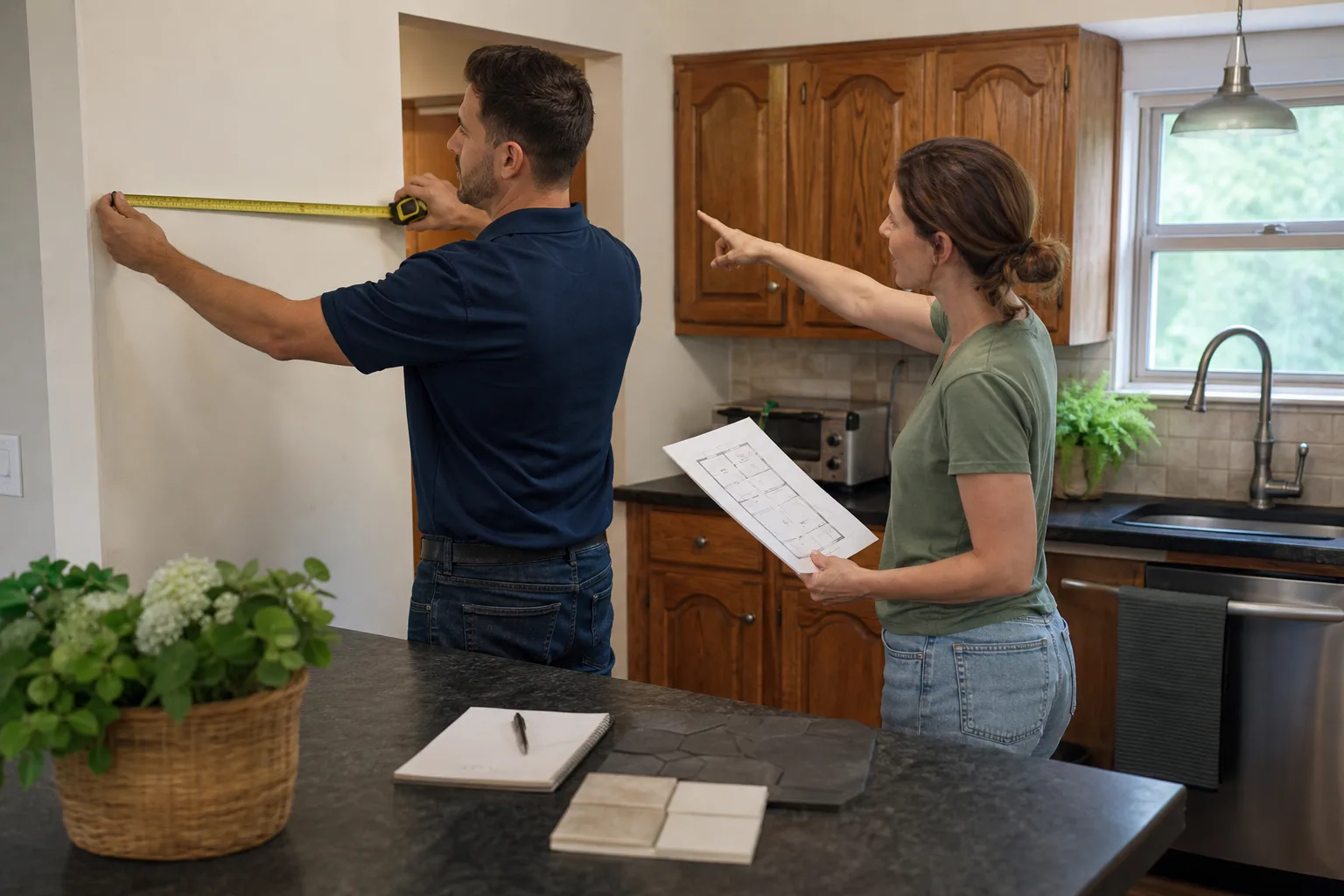
Last updated November 17, 2026








Free written scope consultation - allowances, timeline, and change-order rules on paper before a single trade is scheduled
DIY vs Professional General Contractor: What’s Safe to Do Yourself
Most homeowners think the DIY-versus-hire question is about skill. It isn’t. It’s about exposure. In Boulder City, we’ve watched a homeowner save $400 painting a living room and then lose a fire-insurance claim because the outlet he added himself was never permitted or inspected. The line that matters is not “can I do this?” but “what happens if I get it wrong?” That line is set by Nevada law, by your insurance policy, and by what shows up in a title search at resale. This guide draws it clearly: what you can legally do yourself, what requires a licensed contractor, and the exact points where a mistake stops being fixable.
Quick Answer
In Nevada, homeowners can legally handle cosmetic and non-structural work themselves – painting, flooring, tile, cabinetry swaps, landscaping, and minor repairs – without a permit or contractor. Anything touching electrical, plumbing, gas, structural framing, or the building envelope above a low threshold requires a licensed contractor and a pulled permit, and the owner-builder exemption that lets you work on your own home does not cover work done on a property you’re flipping or renting out. When in doubt, the safe answer is: if it needs inspection, you need a licensed professional.
Styles & brands we work with
- Kitchen remodeling
- Bathroom remodeling
- Home additions & ADU
- Roofing
- Windows & doors
- Driveway & pavers
- Fence
Table of Contents
- Nevada’s Owner-Builder Permit: What It Actually Allows
- Three Projects Where DIY Saves Real Money
- Three Projects Where DIY Creates Four-Figure Corrections
- The Policy Language Most Homeowners Have Never Read
- How Unpermitted Work Hits Resale and Title in Clark County
- What “General Contracting Your Own Project” Really Means
- Boulder City Code and Desert Climate: Local Factors
- When to Call a Professional
Nevada’s Owner-Builder Permit: What It Actually Allows
Nevada’s owner-builder rule is the single most misunderstood piece of paperwork in home improvement. The state allows a homeowner to act as their own general contractor on a home they own and will occupy – meaning you can pull permits in your own name, hire subcontractors directly, and oversee the project without holding a contractor’s license. What it does not allow is nearly as important.
The owner-builder exemption applies only to a residence you own and intend to live in. It does not cover rental properties, second homes, flips, or any property you’re building to sell. It also does not exempt you from building codes, inspections, or the requirement that certain trades – electrical, plumbing, and gas in particular – be performed by licensed tradespeople. Boulder City permits for residential work generally run through the city’s building department, and the inspection sequence is the same whether the permit is held by an owner-builder or a licensed contractor.
To apply correctly, the process runs roughly like this:
- Confirm your property qualifies as your primary residence, not a rental or investment.
- Submit the owner-builder disclosure form to the local building authority along with your permit application.
- Identify the licensed subcontractors who will perform regulated trades, with their license numbers attached.
- Schedule inspections at the required milestones (rough-in, framing, final) even if you’re managing the project.
- Keep every inspection card and sign-off – they’re the proof of permitted work at resale.
The trap is the “I’ll just do it without a permit” shortcut. That’s not owner-building. That’s unpermitted work, and it carries consequences that reach further than a failed inspection. If your project is large enough to need real coordination, our General Contractor in Boulder City page explains how a full-scope project gets sequenced, permitted, and inspected.
Three Projects Where DIY Saves Real Money
These are the jobs where a homeowner with patience and decent tools can genuinely save money without stepping into legal or structural exposure. In our experience across Boulder City remodels, these are the categories where the DIY result holds up and the savings are real.
- Interior painting. No permit, no inspection, no structural question. The only requirement is surface prep – and prep is where 80% of a paint job’s quality lives. A homeowner who sands, primes, and tapes carefully gets a result that matches a pro’s on a flat wall.
- Flooring and tile. Floating floors, luxury vinyl plank, and floor tile over a stable substrate are homeowner-friendly. The failure point is almost always the substrate – a floor that isn’t flat or a subfloor that flexes will crack tile no matter who installed it. Check the flatness with a straightedge before you start.
- Landscaping and hardscape touch-ups. Planting, mulching, drip-line repair, and resetting a settled paver are all reasonable DIY. For anything larger, quality hardscape products like Unilock or Techo-Bloc go down best with a crew that owns a plate compactor and knows the base-prep depth for desert soil.
Two smaller categories also fit the low-risk tier: swapping a vanity faucet (shut the water off first, and know that a leaking supply line is a slow-drip disaster), and cabinet hardware or a cabinet-refacing kit if you’re staying away from the plumbing and electrical lines behind the wall. On a larger kitchen scope, the trade-off starts to shift – our Kitchen Remodeling in Boulder City page covers where that line lands in practice.
Three Projects Where DIY Creates Four-Figure Corrections
These are the categories where a homeowner’s mistake is rarely a small fix. It’s a redo. The correction cost is often three to five times what a licensed contractor would have charged for the original work – and that’s before inspection fees or insurance consequences.
- Electrical panel work and new circuits. Panel upgrades, new dedicated circuits, and any work inside the service panel are licensed-electrician territory. A miswired panel can fail inspection, arc, or worse. Boulder City homes built before the 1990s frequently carry panels short on capacity for a modern kitchen or an EV charger – the answer is a licensed electrician and a permit, not a homeowner and a YouTube video.
- Plumbing rough-in and gas lines. Moving a drain, adding a bathroom supply line, or running gas to a new range or outdoor kitchen requires licensed plumbing and a permit. Gas is the sharpest line of all – the code requires pressure testing and inspection, and a homeowner cannot self-certify a gas line.
- Structural work and the building envelope. Removing a load-bearing wall, cutting a header, adding a window, or opening a wall to the exterior hits structural and envelope codes. A missing or undersized header is invisible until the ceiling sags or an inspector catches it at resale – and then the correction is a rebuild.
Two more that homeowners often underestimate: moving a bathroom’s plumbing for a “simple” remodel (the drain slope math alone is unforgiving, and a wrong slope is a repeated clog or a leak behind the tile), and roofing above a small repair. A steep-pitch roof repair is genuinely dangerous work, and we recommend a trained professional for anything beyond a flat, low-slope, ground-adjacent patch. On a full bath scope, the trade coordination involved is a real cost saving only when it’s done right – our Bathroom Remodeling in Boulder City page covers what that coordination actually looks like.
The Policy Language Most Homeowners Have Never Read
Here’s the language that turns a DIY decision into a financial one. Most standard homeowners policies contain an exclusion, or a coverage-limiting clause, tied to work performed without required permits or by unlicensed persons. The exact wording varies by carrier, and it’s buried in the exclusions section – which is precisely why most people never read it. The clause typically states that the insurer will not pay for loss or damage arising from work that did not comply with code requirements or was performed by someone not licensed for the trade.
Where this bites in practice: a fire originates at a junction box in a room you wired yourself. The adjuster’s investigation finds no permit on record for the electrical work. The insurer cites the exclusion. Coverage for that loss can be reduced or denied entirely, and it happens for a repair the homeowner considered minor.
Ask three direct questions of your own policy before you pick up a tool:
- Does my policy exclude or limit coverage for damage from unpermitted work?
- Does it require that certain trades be performed by licensed professionals for coverage to apply?
- If work is added to my home, do I need to disclose it to the insurer to keep it covered?
This is not a scare tactic. It’s a claim-time fact. The reason we push the point in Boulder City is that a lot of the housing stock is older, and older homes have often accumulated a decade or two of small unpermitted additions – a converted garage outlet here, a relocated water heater there. Each one is a potential claim-time snag.
How Unpermitted Work Hits Resale and Title in Clark County
Nevada’s seller disclosure requirements mean that when you sell, you’re obligated to disclose known material defects and, in most cases, known unpermitted work. That’s not a technicality. Buyers’ agents in Clark County routinely pull permit history on any property before an offer, and a discrepancy between what’s on record and what’s visible on the property becomes a negotiating problem – or a deal-killer.
Title insurance is a separate matter, and homeowners often confuse the two. Title insurance protects against defects in the ownership of the property, not against physical or structural issues with the house. It typically won’t rescue you from an unpermitted addition, a non-conforming fence, or a garage conversion that never got a permit. What it will do is flag an open permit or a recorded code violation as an exception, which can delay or derail a closing.
What to keep on file, in one folder, from the moment a project begins:
- Every permit application and the stamped permit card.
- Every inspection sign-off, including the final.
- Contractor invoices with license numbers attached.
- Manufacturer warranty documentation – relevant when a product like a GAF or James Hardie system is installed and the warranty transfers with the home.
That folder is what you hand a buyer’s agent. Without it, a Boulder City listing with a finished basement or a converted garage space becomes a disclosure negotiation, and the seller usually pays for it in price.
What “General Contracting Your Own Project” Really Means
Acting as your own general contractor doesn’t mean doing the work. It means coordinating the licensed trades who do. That’s a job with a real shape, and it’s worth understanding before you take it on.
The scope of what a GC actually does on a mid-size project:
- Scheduling the trades in the right order. Framing before rough-in, rough-in before drywall, drywall before finishes. A single sequencing mistake – drywall up before the plumbing inspection – means tearing out finished work.
- Holding the subcontractors to their dates. Roofers, electricians, plumbers, and tile setters don’t coordinate themselves. If any one is late, the whole project stacks up behind them.
- Owning the inspection sequence. Each trade’s rough-in needs an inspection before the wall closes. A homeowner-GC has to schedule and pass every one.
- Carrying the liability. This is the part nobody mentions. When you’re the GC, you’re the one the subcontractors invoice and the one the homeowner-side responsibility sits with if something is done wrong, not built to spec, or goes unfinished. A subcontractor who walks off the job mid-project leaves you without a general contractor’s weight behind the complaint.
In our experience, the homeowner-GC model works for small scopes with two or three trades and a patient schedule. It breaks down fast on kitchen and whole-home projects where a dozen trades stack onto a tight six-week sequence. The scheduling math usually turns a homeowner into a part-time project manager for three months.
Boulder City Code and Desert Climate: Local Factors
Boulder City’s climate makes a few of these decisions more important than they’d be elsewhere. The desert swing – long, hot summers with common day-to-night temperature changes of 30 degrees or more – puts real stress on exterior substrates, roof attachments, and window seals. A DIY window install that skips proper flashing and sealant detail often fails within two summers, and the leak it causes shows up as rot in a wall cavity that wasn’t visible until it was.
Two climate-specific points matter for anyone drawing the DIY line in Boulder City:
- Exterior paint and coating failures show up fast here. UV intensity accelerates chalking and peeling, and a substrate that wasn’t prepped and primed correctly fails well inside a typical manufacturer’s warranty window. That’s a DIY job where the product and prep matter more than the labor.
- Hardscape base depth is different in desert soil. Boulder City’s caliche and rocky ground changes the base prep for pavers and retaining walls, and a shallow base leads to settling and heaving. If you’re laying a paver path, this is a real cost-saving job; if you’re building a retaining wall or a large patio, the base work is where the professional crew earns its fee.
On the code side, one more local point: Boulder City is a small municipality with a genuinely responsive building department. If you’re unsure whether a project needs a permit, a call to the city’s building department costs nothing and settles the question immediately. It’s the single best-kept secret on this whole list – ask before you start, not after.
For context on how we handle spec and material choices across projects, our Bradford Remodeling Boulder City home page covers the documented brand roster and the written-price commitment that goes with every job.
Common Mistakes to Avoid
- Assuming the owner-builder permit covers a rental. It doesn’t. If the property isn’t your primary residence, the exemption is void and the work is unpermitted.
- Skipping a permit because “it’s just a small change.” Moving a drain or adding a circuit is never too small to permit in Boulder City – and inspectors catch it at resale.
- Taking a subcontractor’s word for their license. Verify the license number with the state before a single tool comes out. Bank on it, not on a business card.
- Paying a subcontractor in full before the trade signs off. Hold the final payment until the inspection passes and the work is confirmed done.
- Removing a wall before confirming it’s not load-bearing. In older Boulder City homes, the wall that looks like a partition often isn’t. This is the most expensive single mistake on the list.
- Keeping the permit folder nowhere. Without the stamped card and inspection sign-offs, a permitted project looks unpermitted at resale.
- Relying on “I’ll disclose it and it’ll be fine.” Disclosure protects you from a lawsuit over a known defect; it doesn’t make unpermitted work pass a title exception.
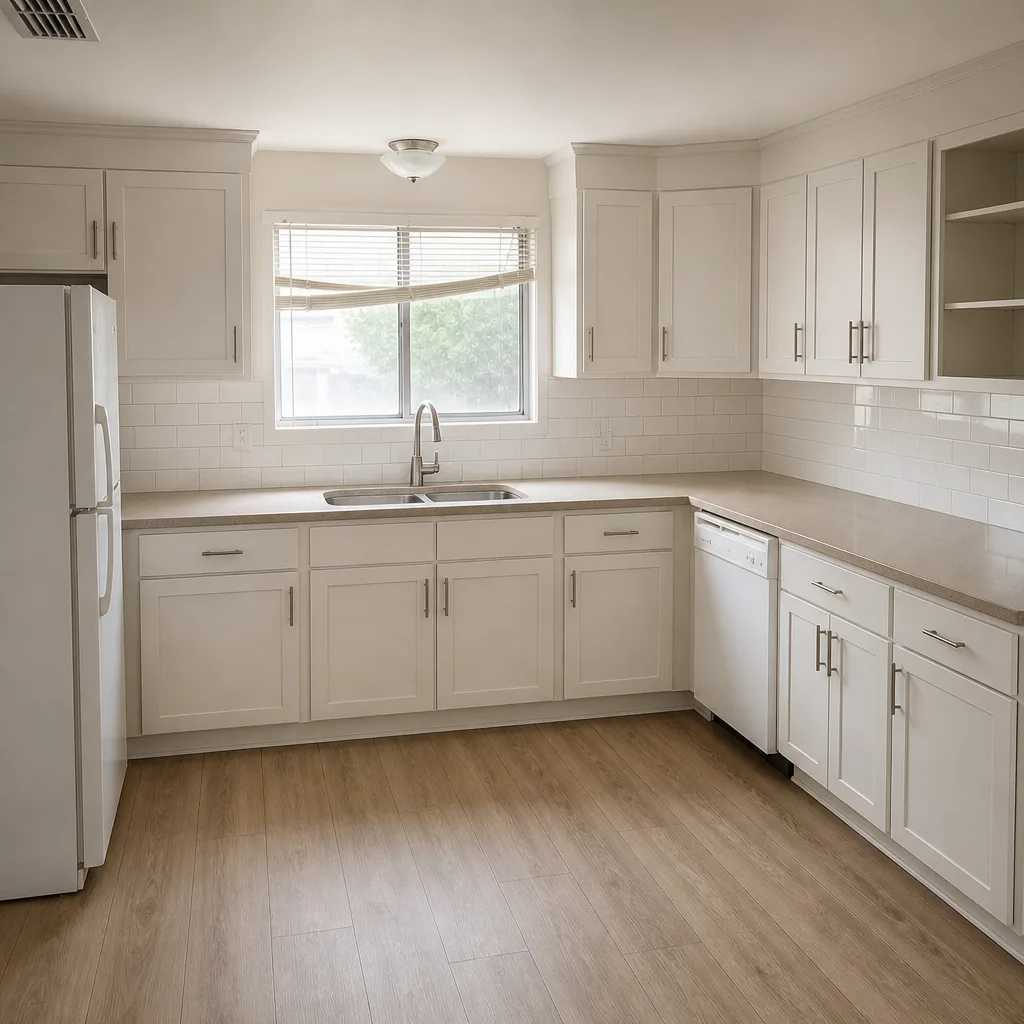
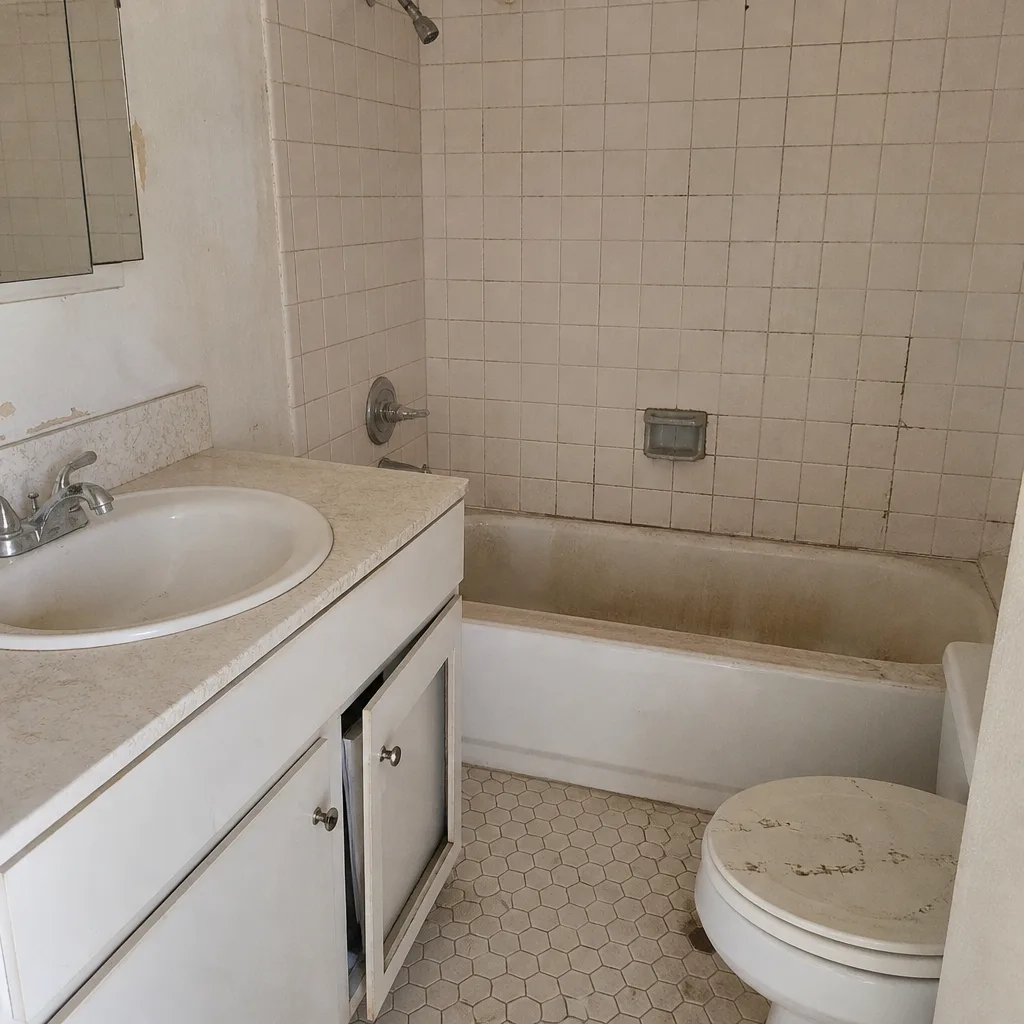
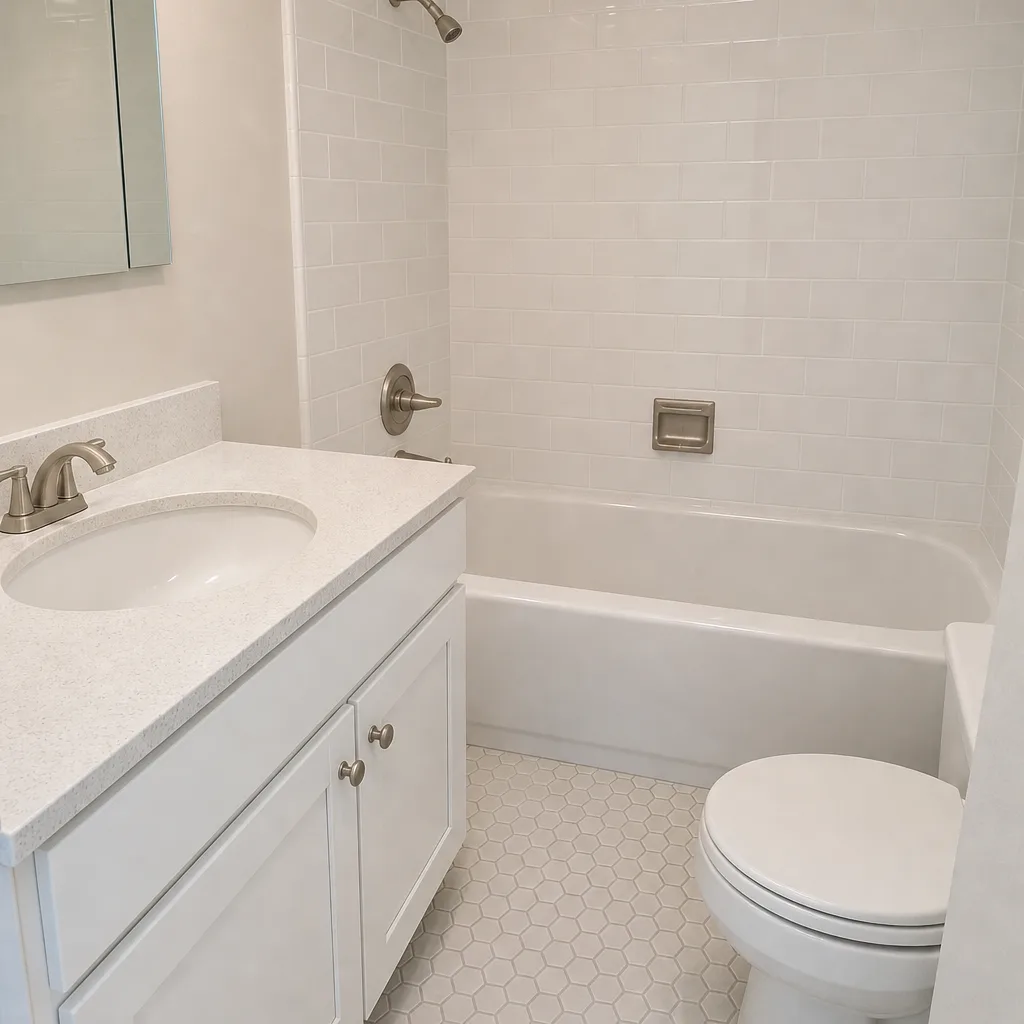
See the difference
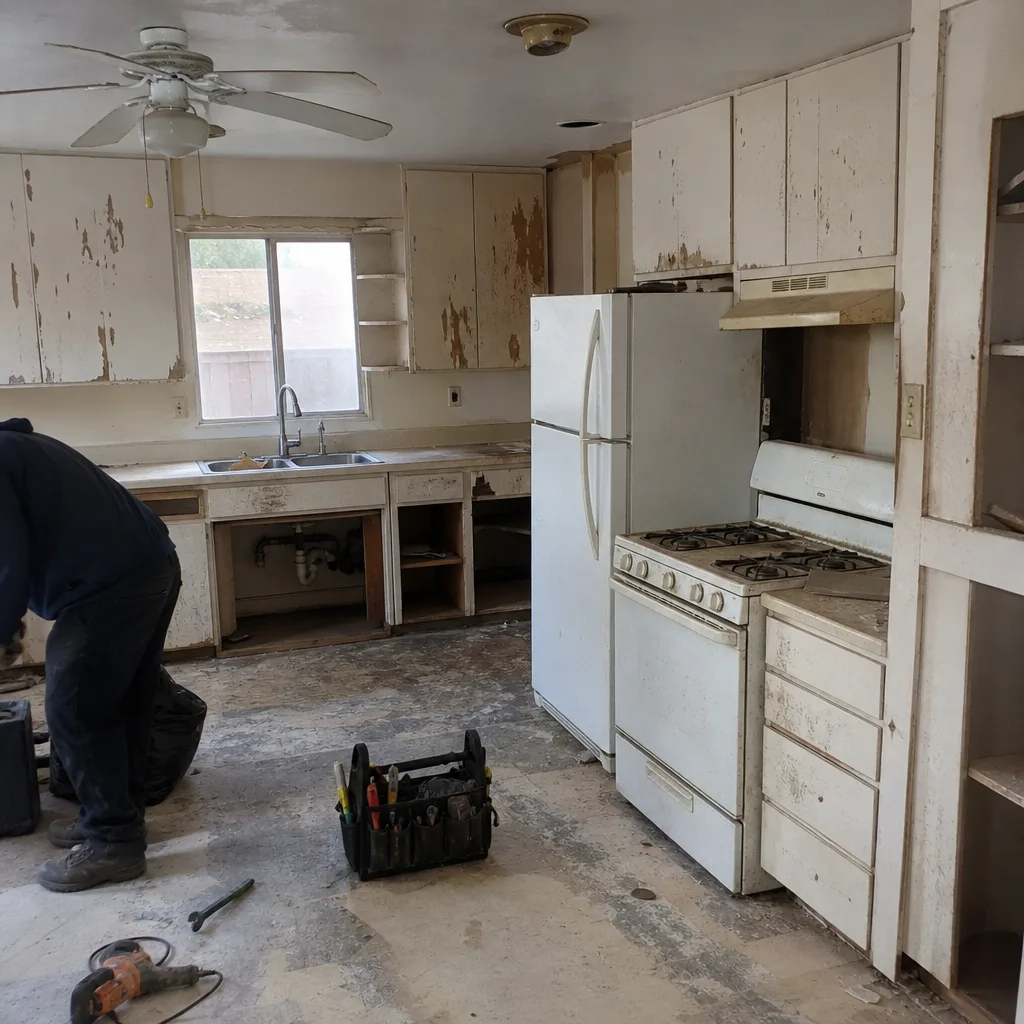 Before
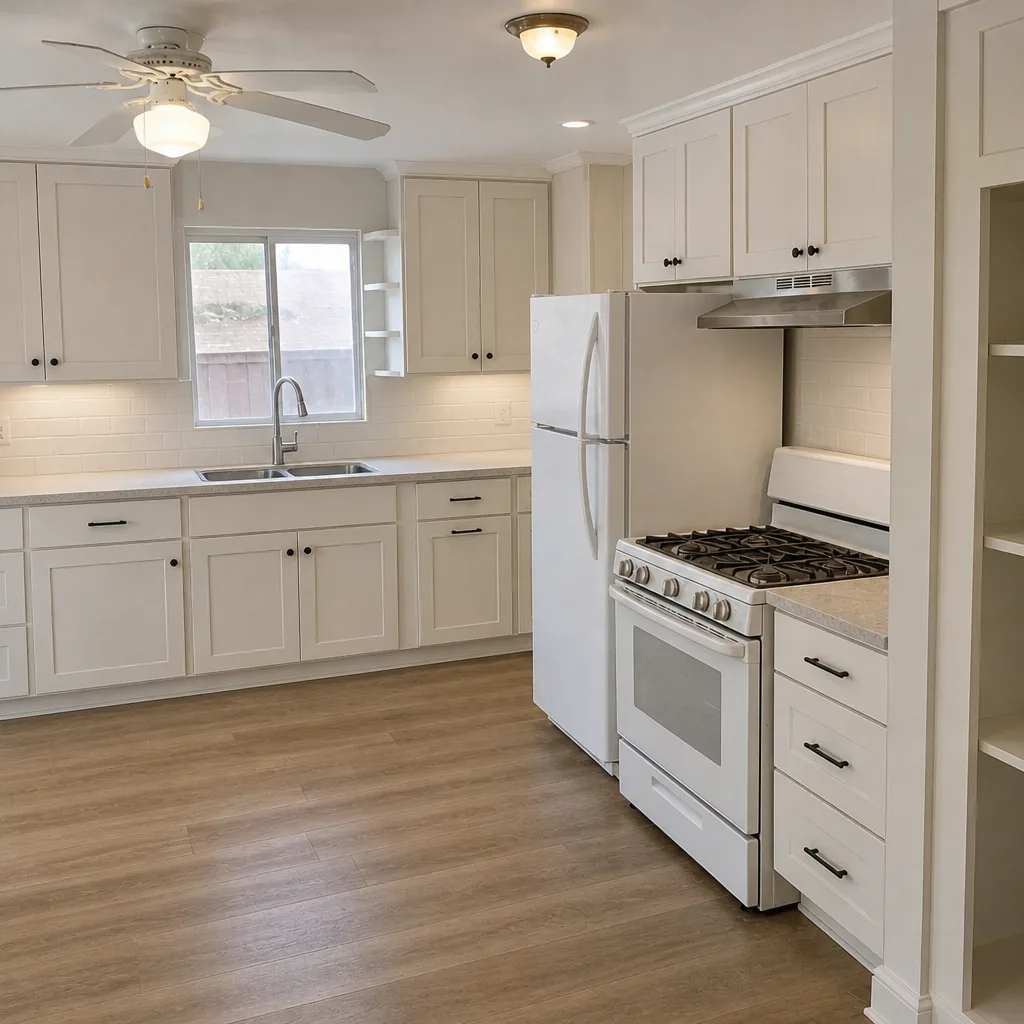 After
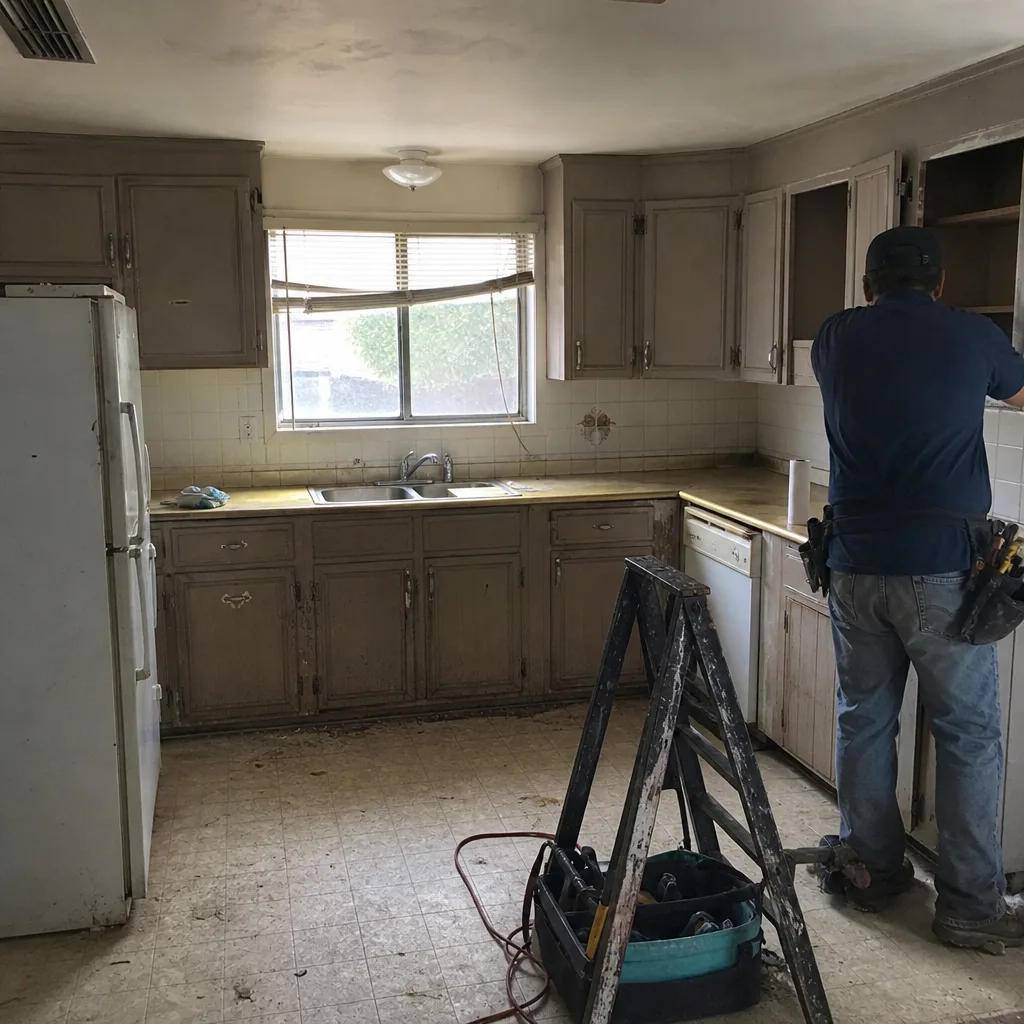 Before
 After
 Before
 After
When to Call a Professional
Our rule of thumb in Boulder City: call a licensed professional when the work touches electrical, plumbing, gas, structural framing, the building envelope, or the roof – and when the job requires two or more trades plus an inspection. That covers panel upgrades, bathroom and kitchen rough-ins, any wall move that could be structural, window and door replacement, and anything above a small, low-slope roof patch. Also call when the scheduling itself becomes the risk: if you’re managing four subcontractors and a tight inspection sequence, the project has outgrown homeowner-GC territory.
Bradford Remodeling Boulder City offers free estimates in Boulder City – call (844) 797-9259. We write the price before any work starts, no change orders at the door, and every completed project carries the 365-Day Done Right Promise – if it’s not done right within a full year, we return and correct it at no charge. That includes a documented material roster (KraftMaid, Wellborn, Cambria, Kohler, GAF, James Hardie, Therma-Tru, among others) so specifications stay traceable.
Frequently Asked Questions

Homeowners in Nevada can legally do non-structural, cosmetic work without a contractor or permit: painting, flooring and tile, cabinet hardware, landscaping, mulching, and minor repairs. Anything touching electrical, plumbing, gas, structural framing, or the building envelope requires a licensed professional and a pulled permit, and regulated trades (electrical, plumbing, gas) must be performed by licensed tradespeople even when the homeowner holds an owner-builder permit. Call (844) 797-9259 for a free estimate if you’re unsure where a project lands.
Yes – any kitchen remodel that involves moving plumbing, adding or relocating electrical circuits, or changing structural framing needs a permit in Boulder City, and the work must be inspected. A cosmetic-only refresh (paint, cabinet refacing, new countertop over existing base cabinets) typically does not require a permit. If you’re moving a sink, adding an outlet, or opening a wall, permit it. Bradford Remodeling Boulder City handles permitting as part of every kitchen scope – call (844) 797-9259 for a free estimate.
It can. Most homeowners policies contain language excluding or limiting coverage for loss tied to work that didn’t comply with code or was performed by someone not licensed for the trade. If a fire or water loss is traced to unpermitted work, the insurer can reduce or deny that portion of the claim. Read your policy’s exclusions section before starting any regulated work, and keep every permit and inspection record on file.
An owner-builder is a homeowner who pulls permits in their own name and coordinates subcontractors directly instead of hiring a licensed general contractor. Nevada allows it for a home you own and will occupy, but it doesn’t cover rentals, second homes, or properties being built to sell, and it doesn’t exempt you from inspections or from hiring licensed trades for electrical, plumbing, and gas work. The permit disclosure form goes to the local building authority with the application.
Correction costs typically run $1,500 to $4,500 for a single failed circuit run plus the permit and re-inspection, and they climb to four or five figures if a panel has to be redone or drywall opened to reach the wiring. That’s against a licensed electrician’s original cost of a few hundred dollars for the same circuit – the correction is always the more expensive path. Call (844) 797-9259 for a free estimate on getting unpermitted work corrected and inspected.
Legally, yes, if the property is your primary residence and you hold an owner-builder permit. Practically, it works only on small scopes with two or three trades and a patient schedule. Whole-home remodels stack a dozen trades onto a tight sequence, and any one late subcontractor, missed inspection, or walked-off job becomes the homeowner’s liability. In our experience, that’s where the homeowner-GC model turns into a three-month, part-time job.
The Bottom Line
The DIY-versus-hire line in Boulder City isn’t about confidence. It’s about what’s legal, what’s covered, and what shows up at resale. Cosmetic, non-structural work you can do yourself and do well – paint, flooring, tile, landscaping. Regulated trades and structural work are not worth the exposure, because the real cost isn’t the labor you save; it’s a denied claim, a failed inspection, or a four-figure correction. If your project crosses that line, get the free estimate and the written price before a tool comes out. The garage door spring, the gas line, and the load-bearing wall are not places to learn by doing.
If the project is going to need a permit, a licensed contractor, or coordinated trades, that’s the point to call Bradford Remodeling Boulder City at (844) 797-9259. Our technicians have up to 22 years of experience, we answer the phone with a live person 24/7, and every estimate comes with the price written down, no numbers that move at the door, and the 365-Day Done Right Promise behind the completed work. If it’s not done right within the first year, we come back and correct it at no charge.
Explore our bathroom remodeling service in Boulder City for the trades that can’t be DIY’d.
Written by the team at Bradford Remodeling Boulder City.