Last updated November 17, 2026








Free written scope consultation - allowances, timeline, and change-order rules on paper before a single trade is scheduled
General Contractor Troubleshooting: Common Problems and How to Fix Them
The Nevada State Contractors Board receives well over a thousand complaints in a typical year, and if you sat down and read through them, you’d expect the bulk to be about cracked tile or a leaky shower pan. It isn’t. The most common root cause is a contract that never defined “completed” in the first place. By the time a homeowner in Boulder City notices the job has stalled, the money is often already out the door and the contractor is hard to reach. This guide works backward from the failures we see most often to show you exactly where the breakdown happened, what legal ground you’re standing on, and what leverage you still have.
Quick Answer
When a general contractor problem hits, your first move is to stop paying and start documenting: put every concern in writing, request a written schedule and written price reconciliation, and secure a signed lien waiver for each payment you’ve already made. From there, the path depends on the dollar amount and whether the contractor holds a valid Nevada license – most disputes under $10,000 go to small claims, larger licensed-contractor disputes go to the Nevada State Contractors Board, and unlicensed work is a separate complaint route entirely.
Styles & brands we work with
- Kitchen remodeling
- Bathroom remodeling
- Home additions & ADU
- Roofing
- Windows & doors
- Driveway & pavers
- Fence
Table of Contents
- Why Most Contractor Problems Start in the Contract
- Lien Waivers: The Most Expensive Mistake Homeowners Make
- Change Order Dispute vs. Scope Dispute: Which One Gets Adjudicated
- What “Substantial Completion” Means in Nevada
- If Your Contractor Goes Dark Mid-Project: The Paper Trail
- NSCB vs. Small Claims vs. Bonding Company: Choosing Your Path
- How to Set Up a Job So Problems Don’t Happen
Why Most Contractor Problems Start in the Contract
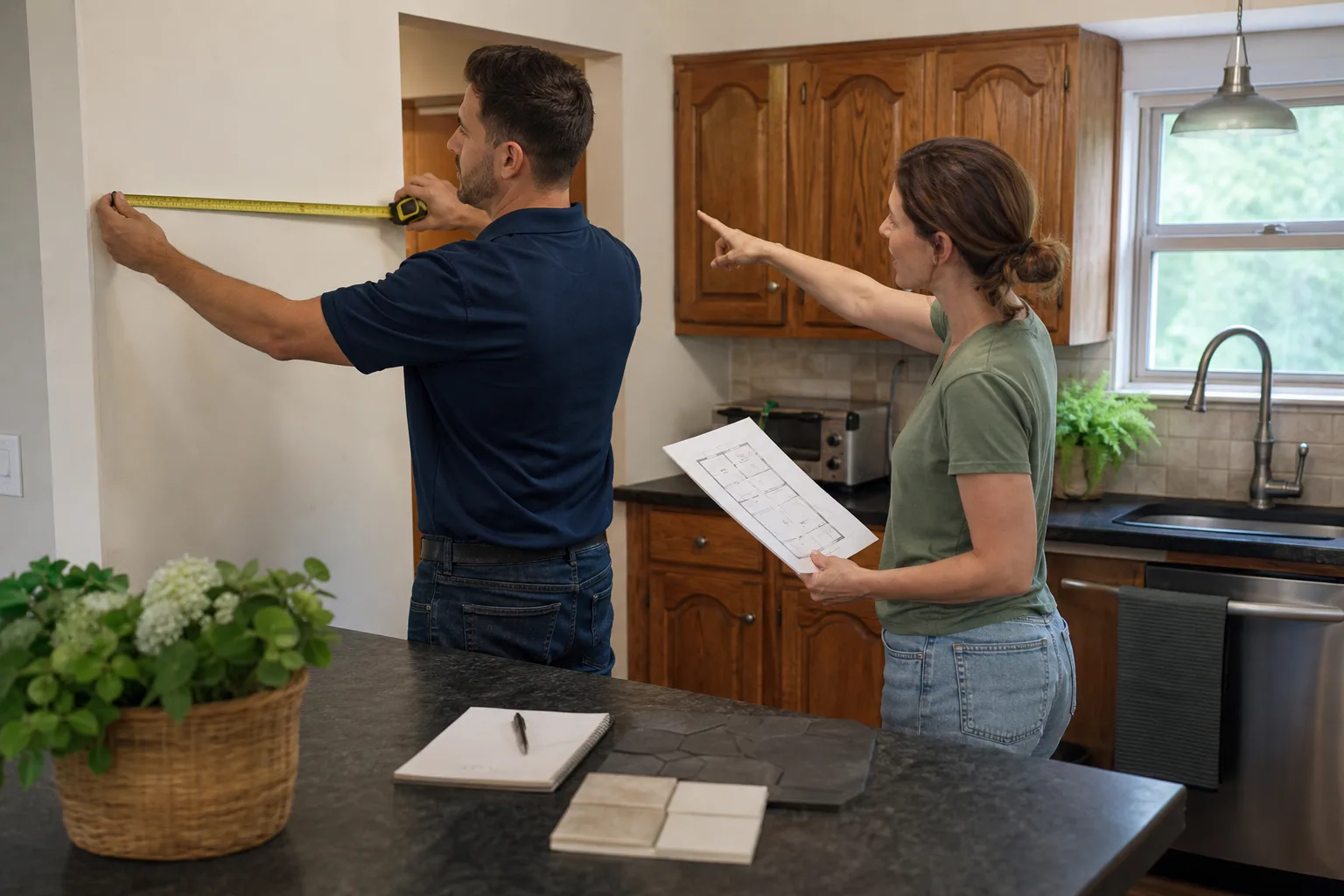
By the time a dispute reaches a hearing, the argument is rarely about whether the work looks good. It’s about whether the work matches what the contract said. A vague scope of work – “remodel kitchen, install cabinets, paint” – leaves every detail open to interpretation, and interpretation favors the party holding the money. That’s the mechanic’s lien, and it’s why the contract matters more than any single finished product.
What a well-written contract should nail down before any tool comes out:
- A line-item price breakdown, not a lump sum. Labor, materials, permits, and contingency each get a number. This is the document you’ll point to when a “small extra” appears.
- A defined completion standard – what “done” means in writing, including punch-list procedures and who signs off.
- A payment schedule tied to milestones, never to calendar dates alone. Money should move when verifiable work is finished, not when a week has passed.
- A written change-order process with a signature requirement before extra work begins.
- Lien waiver obligations for each payment phase (more on that below).
- The license number and the contract value in writing, both required on Nevada residential contracts over $1,000.
When you sit down with any contractor in Boulder City – or anywhere in Clark County – ask to see the written scope before you sign. Bradford Remodeling Boulder City builds every project on a written price before work starts: no numbers that move at the door, no verbal “we’ll figure that out on site.” If you’re comparing bids and one is a paragraph while the other is three pages, that difference is your entire safety net.
If you’re rebuilding your project plan from scratch, our guide to a general contractor in Boulder City walks through what a properly scoped contract includes, line by line.
Lien Waivers: The Most Expensive Mistake Homeowners Make
A lien waiver is a one-page document where the contractor (or subcontractor, or material supplier) confirms they’ve been paid for a specific phase and gives up the right to file a mechanic’s lien on your property for that amount. Skipping it after each payment is the single most expensive homeowner mistake we see, because the lien attaches to the property, not the contractor. You can end up paying twice for the same work.
Nevada’s lien statutes are unforgiving on this point. Subcontractors and suppliers who never got paid can file a lien against your home even if you paid the general contractor in full. Your defense is a paper trail of signed waivers showing every dollar was accounted for.
How to protect yourself, phase by phase:
- Before each payment, request a conditional lien waiver from every party who worked in that phase – the GC and each sub and supplier you know of.
- After funds clear, exchange it for an unconditional waiver covering the same amount. Conditional before, unconditional after. Never the reverse.
- Keep them in one folder, dated and matched to the payment. If a dispute ever lands in front of the Board or a judge, this folder is your case.
- Verify the named parties against the contract and any subcontractor list. A waiver from the wrong entity protects no one.
- Do a preliminary lien notice check at the start – suppliers often send one, and it tells you who’s working on your job.
Ask your contractor, in writing, to supply lien waivers as a condition of each payment. A disciplined operation treats this as routine. Bradford Remodeling Boulder City ties payments to a written schedule and documented milestones, so the waiver exchange is part of the process, not an afterthought.
Change Order Dispute vs. Scope Dispute: Which One Gets Adjudicated
The distinction matters because it determines whether the Nevada State Contractors Board will even take up your case. A change order dispute is an argument over work added after the contract was signed – who authorized it, what it should cost, whether it was ever documented. A scope dispute is narrower: was the work you paid for actually done according to the contract? The second one is squarely within the Board’s authority. The first often isn’t, because it turns on a verbal agreement that neither side can prove.
In practice, this means:
- If your complaint is “they never installed the specified cabinets,” that’s a scope dispute. You have a contract clause and a brand name to point to. Strong case.
- If your complaint is “they charged me $1,400 extra for something I thought was included,” that’s a change order dispute. Without a signed change order, it becomes your word against theirs, and the Board typically won’t resolve a contract interpretation question that a civil court would need to hear.
- If the change was authorized in writing but the price was never agreed, you may have a claim for unreasonable charges – but the paper trail has to exist.
The fix is preventative. Insist that every change – even a small one – gets a written change order with a price before the work happens. Contractors who resist “paperwork for a two-hour job” are telling you something about how the rest of the job will go. This is the core of The Garrison Standard: every price is in writing before a tool comes out, which turns potential change-order disputes into documented decisions. If your remodel scope is still being shaped, our kitchen remodeling in Boulder City page shows how a complete written scope looks for a typical project.
What “Substantial Completion” Means in Nevada
“Substantial completion” is a legal term, not a gut feeling, and it’s one of the most exploited ambiguities in residential construction. In Nevada, work is generally substantial when the project is complete enough that the owner can use it for its intended purpose – and the remaining items are minor punch-list work. That threshold triggers different obligations than finished, signed-off completion. A contractor who claims substantial completion early can start the clock on lien rights and walk away from a half-finished room.
The danger in practice:
- A contractor declares the job “substantially complete” while fixtures, trim, or a final coat are still missing, and starts asking for final payment.
- Because the contract never defined the standard, the homeowner has no written point of reference to contest it.
- Final payment releases leverage you’ll never get back.
How to close that gap before you sign:
- Define completion in writing. Add a line to the contract spelling out what “complete” means for your job: every fixture installed and functional, every punch-list item closed, final inspection passed.
- Tie final payment to signed completion, not a date and not a promise. Hold a meaningful final payment until punch-list sign-off.
- Walk the job with a checklist. Photograph each room, note each open item, and get a written punch list with a dated completion expectation.
- Keep the warranty in hand. If the contract’s workmanship guarantee starts on “substantial completion,” make sure that date is documented accurately.
This is where a written guarantee earns its keep. Bradford Remodeling Boulder City’s 365-Day Done Right Promise is a full-year written guarantee on every completed project. If the work fails inside that window, Bradford comes back and corrects it at no charge.
If Your Contractor Goes Dark Mid-Project: The Paper Trail
Going dark is a specific pattern: calls stop being returned, the crew stops showing up, and the site sits half-finished. Your leverage fades with every day that passes without a written record. Build the paper trail immediately, in this order:
- Day 1 – written notice. Send a short, factual email or letter stating that you’ve observed no work since [date], the contract requires [X], and you’re requesting a written schedule within a specific timeframe. No accusations. Just facts and a requested response date.
- Day 3-5 – certified mail. If email yields nothing, send the same notice by certified mail, return receipt requested. This creates an independent timestamp the Board will accept. Keep the receipt.
- Document the site. Date-stamped photos of every room, the payment ledger, the contract, the change orders, and any lien waivers you collected. A single folder, numbered in order.
- Follow up in writing every 10 days. Each follow-up extends your record of good-faith communication and strengthens a future claim.
- Notify the bonding company if the contractor is bonded. Nevada requires licensed residential contractors to carry a license bond, and the bonding company is a separate source of compensation for certain claims.
- File the complaint once you’ve documented multiple unanswered written attempts – typically 14-30 days from first notice.
If a contractor has gone dark on you in Boulder City, the paper trail is often the only tool that still works. Our related guide on bathroom remodeling in Boulder City flags where mid-project stalls seem to cluster, so you can watch for them.
NSCB vs. Small Claims vs. Bonding Company: Choosing Your Path
There are three main routes for a homeowner dispute in Nevada, and the dollar amount usually decides which one you take.
- Nevada State Contractors Board: appropriate for licensed contractors and disputes over workmanship, abandoned jobs, and scope failures. There is no filing fee, and the Board can order the contractor to correct work or pay restitution up to its statutory cap for residential claims (currently in the low tens of thousands of dollars per project, so confirm the current figure when you file). Best when the contractor holds a valid license and the dispute is about work not matching the written contract.
- Small claims court (Clark County): disputes up to $10,000 go here. Filing fees are modest, the process is streamlined, and you don’t need a lawyer. Best when the amount is smaller and the contractor is unlicensed or refuses to cooperate with the Board.
- Bonding company: for claims up to the amount of the contractor’s license bond, if the contractor is bonded and has caused a loss covered by the bond. Best used in combination with an NSCB complaint, not instead of one.
One practical note: the NSCB and small claims process often work in parallel. Filing with the Board doesn’t stop you from filing in small claims, and sometimes doing both puts pressure where it’s needed. Keep copies of everything in both files.
How to Set Up a Job So Problems Don’t Happen
The best general contractor troubleshooting happens before the first board is cut. Every one of the failure patterns above has a preventative counterpart, and all of them live in the contract and the payment process.
- Written price before work starts, every time. No exceptions. If a contractor won’t put it in writing, that’s your signal.
- Line-item scope, not a description. Brand names, model numbers, quantities, and installation standards.
- Milestone payments with lien waivers exchanged at each phase.
- A written change-order process that both parties sign before extra work begins.
- Defined completion, tied to final payment and punch-list sign-off.
- A written workmanship guarantee, in your hand at close.
This is the framework behind The Garrison Standard, the operating discipline every Garrison Partners location has followed since 2004. Bradford Remodeling Boulder City is independently owned and operated and held to that standard – a written price, background-checked and uniformed technicians on every job, and live-person phone coverage 24/7 so you never leave a message into a void. We install documented name-brand materials, from KraftMaid and Wellborn cabinetry to Cambria surfaces and GAF roofing, so specifications are traceable rather than improvised.
For homeowners thinking about the full picture of a project, our Bradford Remodeling Boulder City home page and our overview of whole-home remodeling show how scope and guarantees work end to end.
Common Mistakes to Avoid
- Paying in full before substantial completion. Once the final check clears, you have no leverage. Hold a meaningful final payment until the punch list is signed.
- Skipping lien waivers after each phase. We’ve seen homeowners in Boulder City pay a GC in full and still get a lien notice from a framing subcontractor three months later. Collect the waiver before each payment, every time.
- Accepting verbal change orders. A two-minute conversation can become a $3,000 dispute. Require a written, signed change order before the work begins.
- Treating the estimate as the contract. A price quote isn’t a scope, a schedule, or a completion standard. Those live in the contract, and if they’re missing, ask for them in writing.
- Letting the site stay messy. A clean site at every phase is part of the discipline, and a site that stays chaotic usually signals a crew that isn’t tracking its own work. Document the condition with photos.
- Waiting too long to document. A dispute becomes much harder to resolve once weeks of silence have passed. Start the written record the first time something looks off.
- Choosing the lowest bid with no written price. The bid that seems lowest at the door is often the one that grows, because nothing in writing stops it.
See the difference
 Before
 After
 Before
 After
 Before
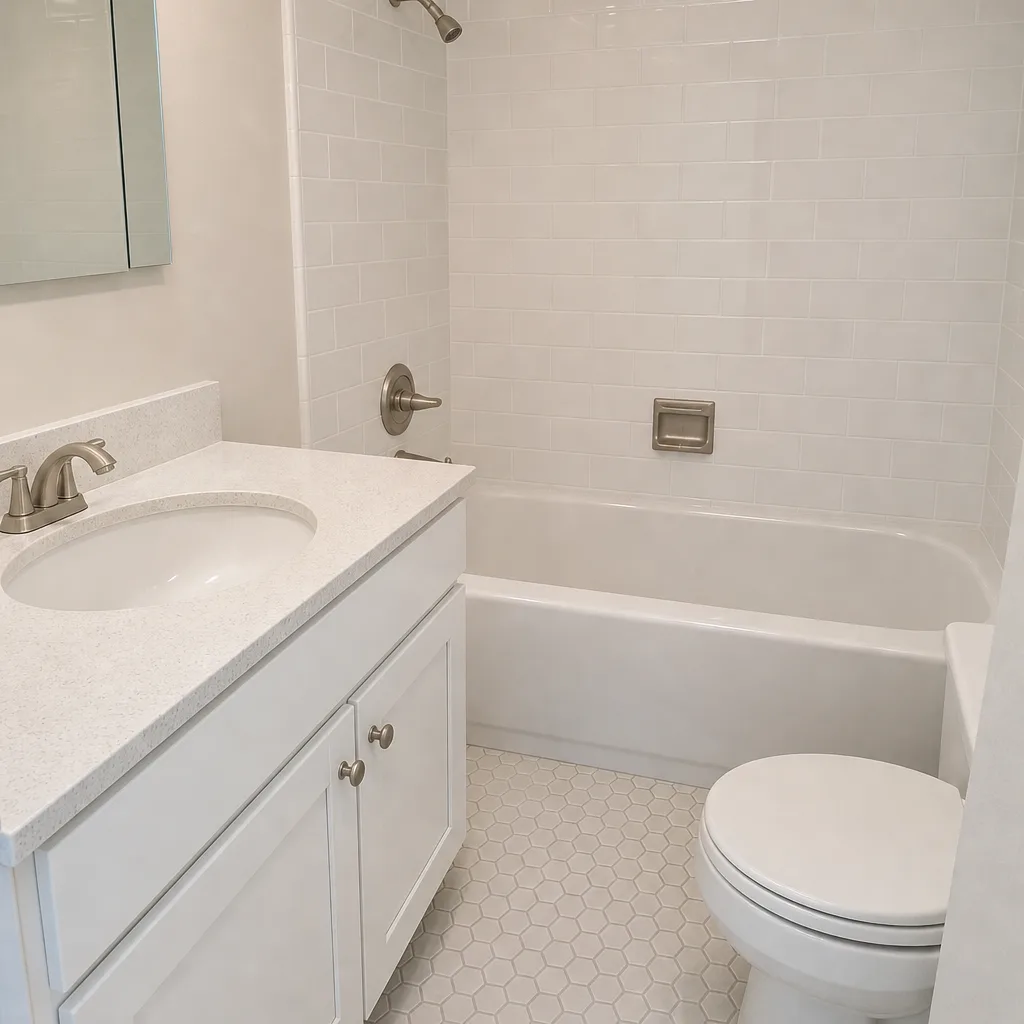 After
When to Call a Professional
Some problems you can wait out; others reward a second opinion. Call a professional immediately if your contractor has stopped communicating, if a lien notice arrives from a party you don’t recognize, if final payment is being demanded before a punch list is signed, or if the work has stalled for more than two weeks with money still on the table. Those are the moments when a clean, documented handoff to a licensed contractor protects your remaining budget – especially in Boulder City, where the wind and dry heat can damage exposed subfloor and raw drywall in a stalled room faster than homeowners expect. Bradford Remodeling Boulder City offers free estimates in Boulder City – call (844) 797-9259 to schedule yours.
Frequently Asked Questions

Put the problem in writing first, then stop paying until the issue is documented in a written response. A dated email or letter that states exactly what’s wrong, what the contract requires, and what you want done creates the record you’ll need for any formal complaint. Call (844) 797-9259 for a free estimate if you’re considering a fresh start with another contractor.
Yes, through one of three paths: a Nevada State Contractors Board complaint (for licensed contractors, up to the Board’s statutory restitution cap), small claims court (for disputes up to $10,000), or the contractor’s license bond. The right route depends on the dollar amount and whether the contractor is licensed – document the payments, the contract, and every written communication before you file.
You should request one for every payment phase, yes – a conditional waiver before the payment clears and an unconditional waiver after. Without waivers, a subcontractor or supplier who hasn’t been paid can file a lien against your home even if you’ve paid the general contractor in full. Ask for the waiver page in writing and keep it with the corresponding payment record.
Substantial completion means the project is complete enough that you can use the space for its intended purpose, and any remaining items are minor punch-list work. The trap is that it’s often used to justify asking for final payment before everything is truly finished. Define completion in writing in the contract, and tie final payment to signed punch-list sign-off.
Nevada imposes a time limit on contractor complaints, and the clock generally starts from the date of the contract or the date you first knew of the problem – so the practical rule is to file sooner rather than later. Certified mail and written follow-ups create an independent timestamp. Confirm the current limit with the Nevada State Contractors Board when you file, and call (844) 797-9259 if you’d rather move forward with a new estimate instead.
Insist on a written price before any work starts, a line-item scope of work, milestone payments with lien waivers, a written change-order process, and a written workmanship guarantee you hold at the end. Bradford Remodeling Boulder City follows The Garrison Standard on every project, which puts all of that in writing before a tool comes out – call (844) 797-9259 for a free estimate.
The Bottom Line
Most contractor problems you’ll ever face start in a contract that never defined “completed,” and by the time the problem surfaces, the leverage is in the paper trail. If you take nothing else from this guide: secure lien waivers after every payment phase, define substantial completion in writing, and treat every change order as a signed document rather than a conversation. Nevada gives you three real routes – the State Contractors Board, small claims, and the bonding company – and the dollar amount decides which one you use. Set the job up the disciplined way, with The Garrison Standard behind it, and the troubleshooting phase becomes something you never have to start. Bradford Remodeling Boulder City is here when you’re ready to build. Call (844) 797-9259 for a free estimate.
Written by the team at Bradford Remodeling Boulder City.