Last updated November 17, 2026








Free written scope consultation - allowances, timeline, and change-order rules on paper before a single trade is scheduled
General Contractor Maintenance Schedule: What to Do and When
The flashing around a roof penetration in Boulder City can fail quietly for 18 months before a single drop reaches your drywall. By the time you see the stain, you’re not calling a general contractor – you’re calling a restoration company, and the bill has a comma in it. A finished remodel isn’t a maintenance-free asset. It’s a system of materials and connections, each with its own service life, running on a clock that starts the day the crew packs up. This guide is organized by trade, not by season, because that’s how the work actually gets done. You’ll get the annual and five-year checks, the desert-specific timelines that national guides get wrong, and the paperwork moves that keep your warranties alive.
Quick Answer
After a remodel, plan on two maintenance windows per year: a light walkthrough each spring and fall covering caulk, flashing, drainage, and HVAC filters, plus a deeper trade-by-trade inspection every five years. In Boulder City’s climate, heat cycling means you should treat exterior caulk and roof flashing on a roughly two-to-three-year re-seal cycle rather than the five years national checklists assume, and every maintenance action should be logged with dates and photos so your workmanship guarantee and manufacturer warranties stay valid.
Styles & brands we work with
- Kitchen remodeling
- Bathroom remodeling
- Home additions & ADU
- Roofing
- Windows & doors
- Driveway & pavers
- Fence
Table of Contents
- Why a Remodel Needs a Maintenance Schedule at All
- How Boulder City Heat Runs the Clock Faster
- The Plumber’s Checklist: Annual and Every Five Years
- The Electrician’s Checklist: What to Check and What to Leave Alone
- HVAC and Roofing: The Two Systems That Fail Quietly
- Warranty Actions That Keep Materials Covered
- How to Document Maintenance Without Voiding Your Guarantee
- Red Flags That Signal the Original Work Was Done Out of Sequence
Why a Remodel Needs a Maintenance Schedule at All
New construction isn’t the same as permanent. The materials in a remodeled home all have a published service life, and most of them are measured in years, not decades, when they’re exposed to weather and use. Caulk joints at window and door penetrations are the first to go, typically in three to five years in a mild climate and faster here. A water heater’s anode rod needs replacing around year five or six or the tank rusts from the inside out. The grout and sealant around a new shower pan need re-sealing every year or two, or water migrates behind the tile and the substrate – the backer board the tile sits on – starts to break down.
Here’s the part that costs homeowners the most: a general contractor catches these items during a scheduled walkthrough because we know the sequence each trade needs. A failed bead of caulk behind a hose bib isn’t a caulk problem, it’s a water intrusion problem that reaches framing. A slow supply-line drip under a new vanity is a flooring problem six months later. The check itself is cheap. The repair that follows a missed check is not.
If your remodel was recent and you’re still learning the systems in your home, the team that built it is the right first call. You can reach the Bradford Remodeling Boulder City home page to see how we handle post-project questions, or talk through scheduling directly through our general contractor in Boulder City service.
Key takeaways on why the schedule matters:
- Every material in a remodel has a published service life – use it to set your check calendar.
- Most failures start small and hide behind finishes (caulk, grout, flashing) for months before they show.
- A GC walkthrough catches these at the cheap stage, before they reach framing, drywall, or flooring.
How Boulder City Heat Runs the Clock Faster
National maintenance guides are written for a climate that doesn’t exist here. Boulder City sits in the Mojave, and attic temperatures regularly climb past 140°F in July and August. That heat doesn’t just make the house uncomfortable – it accelerates the failure of every flexible material in the building envelope. Caulk loses its elasticity and pulls away from the joint. Sealant around flashing dries and cracks. Expansion joints in concrete and stucco open wider with each daily heat cycle, and the swing between a 105°F afternoon and a 70°F night runs that cycle 365 times a year.
The practical effect: any timeline in a national checklist that assumes “five years” for exterior sealant should be compressed to roughly two to three years in Boulder City. Roof flashing around penetrations – the boots on plumbing vents, the step flashing at a wall transition – deserves an annual look, not a five-year one. Same for the sealant around window and door frames on south- and west-facing walls, which take the most direct sun and fail first.
We’ve seen this pattern repeatedly in Boulder City on remodels where the caulk at a south-facing sliding door looked fine at the one-year walkthrough and was cracked through by year three. Not a workmanship problem – a climate problem. The schedule just needs to match the climate. If your home has significant exterior work, our bathroom remodeling in Boulder City page also covers how we build to these conditions, since bathrooms carry the most moisture-sensitive assemblies in the house.
One more local factor: Boulder City’s low humidity means wood framing and cabinetry dry out and shrink slightly more than in coastal markets. That’s normally fine, but it’s a reason to check cabinet door hinges, drawer glides, and trim joints at the one-year mark – small gaps and loose hardware are the most common first-year items on a remodel here.
The Plumber’s Checklist: Annual and Every Five Years
Plumbing is where small failures get expensive fastest, because water travels. The annual list is short and can be done without opening a wall. The five-year list is the one most homeowners skip, and it’s the one that prevents the big insurance claims.
Every year:
- Check under every sink for slow drips at the supply lines and the P-trap. A drip you can’t see today is a swollen cabinet floor next spring.
- Re-seal grout and caulk at shower pans and tub surrounds. In our climate that’s a yearly item, not a two-year one, because the dry air cracks thin sealant fast.
- Test the shutoff valves at every fixture. A valve that won’t close is the difference between a two-minute fix and a flooded room.
- Flush the water heater once to clear sediment. Sediment builds up in Boulder City’s hard water and shortens the tank’s life.
- Run water through any rarely used drains to keep the trap seal intact.
Every five years:
- Replace the water heater’s anode rod, or have a plumber do it. This is the single cheapest step to extend tank life.
- Have a plumber camera-inspect the main sewer line if the home is older than 20 years or has mature trees near the line.
- Check the pressure regulator. High incoming pressure stresses every supply line and fixture in the house.
- Replace washing machine supply hoses if they’re rubber; braided stainless is the standard now.
None of this requires a professional except the anode rod and the sewer camera. The rest is a homeowner’s Saturday morning twice a year. What matters is doing it on a calendar, not when something looks wrong.
The Electrician’s Checklist: What to Check and What to Leave Alone
Electrical is the one trade where the maintenance list is mostly “look, don’t touch.” The panel, the wiring inside walls, and any circuit that carries real load are not homeowner territory. What you can and should do is check the things that fail at the surface, and know the signs that mean you call an electrician now rather than later.
What a homeowner can check every year:
- Test every GFCI outlet (the ones with the test/reset buttons) – bathrooms, kitchen, garage, exterior. Press the test button; if it doesn’t click off, the device is dead and needs replacement.
- Test smoke and carbon monoxide detectors. Replace the batteries yearly even if the detector chirps only at 2 a.m.
- Look at the panel for signs of heat: discolored breakers, a burning smell, or a breaker that trips repeatedly. Any of these is a call, not a wait.
- Check that outdoor outlets and fixtures have intact covers. Sun destroys plastic covers fast here.
Safety note: do not open the electrical panel, do not tighten lugs, and do not add circuits yourself. Panel work and any wiring inside a wall carries genuine shock and fire risk and belongs to a licensed electrician. If your remodel added a circuit – a new range, a hot tub, a subpanel for a shop – note the date and the electrician’s name in your maintenance log; you’ll want it if the circuit ever acts up.
Every five years: have an electrician do a panel inspection and torque check on the main lugs. Loose connections at the panel are a common source of heat and arcing, and a five-year check catches them before they become a service call at an inconvenient hour.
HVAC and Roofing: The Two Systems That Fail Quietly
These two systems share a trait: they work perfectly until they don’t, and the failure is usually invisible until damage is done. That’s why they get their own section.
HVAC – every year:
- Replace the air filter every one to three months in a dusty desert climate. A clogged filter stresses the blower and the compressor.
- Have the system serviced annually, ideally in spring before the cooling season. The technician should check refrigerant charge, clean the condenser coil, and check the drain line.
- Clear debris from around the outdoor condenser unit. In Boulder City, dust and tumbleweeds collect against the coil and cut efficiency.
- Check the condensate drain pan for standing water. A clogged drain line in an attic can soak a ceiling.
Roofing – every year and after any major wind event:
- Have the roof inspected for lifted or cracked shingles, and for failed sealant around every penetration (vents, skylights, chimney).
- Check the flashing at wall-to-roof transitions. This is the joint most likely to leak silently.
- Clear the gutters and downspouts – in a desert they fill with grit, then a single hard rain backs water up under the roof edge.
- Look at the underside of roof sheathing in the attic for water stains. A stain means the leak has been there a while.
Safety note: roof work involves height and heat, and a fall from a one-story roof is a serious injury. Inspection and any repair belong to a trained roofer. Don’t climb up there yourself, especially in summer.
Manufacturers of roofing and exterior products publish their own maintenance requirements as a condition of the warranty. If your remodel used James Hardie siding or a GAF roofing system, the warranty language typically requires periodic inspection and prompt repair of any damage – so keeping the annual inspection on a calendar isn’t just good practice, it’s a warranty term.
Warranty Actions That Keep Materials Covered
Every material in your remodel carries two warranties stacked on top of each other: the manufacturer’s product warranty and the contractor’s workmanship guarantee. Both have conditions. Miss the conditions and you can lose coverage on a failure that would otherwise be a free fix.
Here’s the short version of what manufacturers typically require, using the brands we install most:
- James Hardie siding: the warranty calls for installation per their published spec and prompt repair of any damage or water intrusion. Keep the product literature and your installation date.
- GAF roofing systems: the system warranty depends on components being installed as a matched system; keep the documentation that shows the whole system was used, not mixed parts.
- Therma-Tru doors: the warranty covers the door slab and finish under normal conditions – meaning you re-seal or re-paint per their schedule and keep the door from sitting in standing water.
- Kohler and Moen fixtures: finish and function warranties typically exclude damage from harsh cleaners or from water left to freeze. Read the care sheet that came with the fixture.
The pattern is the same across all of them: install per spec, maintain per schedule, keep the paperwork. That’s why we hand over a documented materials list at project close, and why every Bradford Remodeling project carries the 365-Day Done Right Promise – if the work fails within that first year, we come back and correct it at no charge. The promise covers our workmanship, not the maintenance a homeowner skips, so the two work together.
How to Document Maintenance Without Voiding Your Guarantee
Documentation cuts both ways. Done right, it proves you maintained the home and keeps both the manufacturer and the contractor on the hook. Done wrong – or not at all – it can make a workmanship claim hard to support, because the contractor can’t tell whether a failure is their work or a decade of neglected caulk.
Keep it simple but consistent. Here’s the routine we recommend:
- Start a maintenance log the day the project closes. A folder or a shared note works. Record the date, the item checked, and the outcome.
- Photograph anything you touch. Before and after any re-caulking, any repair, any filter change. Photos with dates are the strongest evidence you maintained the home.
- Keep the closeout packet. The written scope, the materials list, the product manuals, and the signed guarantee should all live in one place. This is the packet that supports a claim.
- Log any professional service with the provider’s name and date. If a plumber replaced an anode rod in year five, note it. That record matters if you sell the home or file a warranty claim.
- Never let an unlicensed “handyman” re-do a warranted component. A third-party repair to a warranted item can void the manufacturer’s coverage – have it done to spec, by someone accountable.
This is the discipline side of maintenance, and it’s the part most homeowners skip. A clean log is what “squared away” looks like a decade after the remodel is finished: dated photos, a written scope, a signed guarantee, and a clear record of everything done since.
Red Flags That Signal the Original Work Was Done Out of Sequence
Some finished work looks fine on day one and fails by year two because the trades ran out of order. A good general contractor sequences the work so each trade’s output is protected by the next. When that sequence is broken, the failure usually surfaces on a specific timeline, and it’s a maintenance item you can spot early.
- Caulk applied over wet or unsealed substrate: fails within one or two seasons. The caulk pulls away cleanly from the joint. It’s a sequence problem – the surface should have been dry and primed before sealing.
- Tile set before the shower pan was waterproofed and cured: grout cracks and re-cracks even after re-sealing. Once the substrate is compromised, re-caulking won’t fix it.
- Roof installed after exterior siding: flashing that should sit over the siding gets buried or butchered. It leaks at the wall transition, often starting in year two or three.
- Cabinet and countertop installed before the wall was finished: gaps and failed caulk lines at the backsplash, because the counter was scribed to an unfinished surface.
- Flooring laid over a slab that wasn’t moisture-tested: cupping, lifting, or a hollow sound underfoot within a year or two.
If you’re seeing any of these on a recent remodel, take dated photos and call the contractor who did the work before the guarantee window closes. On a Bradford Remodeling project, these are exactly the items the 365-Day Done Right Promise is written to cover – if a failure traces back to our sequence, we make it right at no charge, and the written guarantee is in your hand at close.
Common Mistakes to Avoid
- Treating a finished remodel as maintenance-free. Every material has a service life; the schedule simply manages it. Skipping the annual checks is what turns a $40 caulk job into a $4,000 drywall and framing repair.
- Using a national maintenance timeline in Boulder City. Five years for exterior sealant is too long here. Compress sealant and flashing checks to a two-to-three-year cycle and keep the roof flashing on an annual look.
- Losing the closeout packet. Without the written scope, materials list, and signed guarantee, you can’t prove the work that was done or claim the coverage that came with it. Keep it in one place.
- Letting a handyman touch a warranted component. A third-party repair to a warranted item can void the manufacturer’s coverage. Have warranted work done to spec, by someone accountable.
- Waiting for a visible stain before checking the roof. Flashing fails silently for a year or more before water reaches the ceiling. By then you’re calling restoration, not a roofer.
- Never re-sealing shower grout in a dry climate. The dry air here cracks thin sealant faster than in a humid market. A yearly re-seal is the difference between a shower pan that lasts and one that gets torn out.
- Signing a change order for something a maintenance visit would have caught. Loose hardware, cracked caulk, and small gaps at year one are often covered items, not new work. Check before you pay.
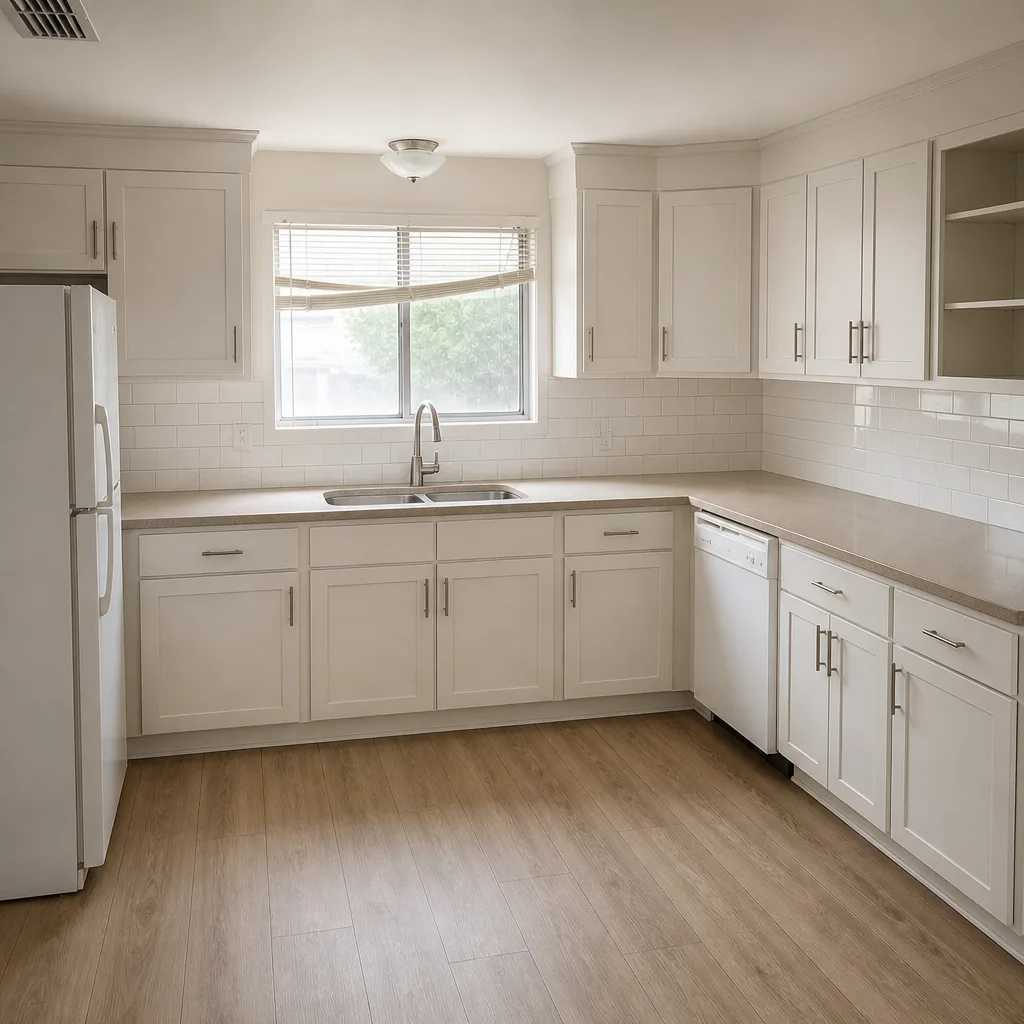
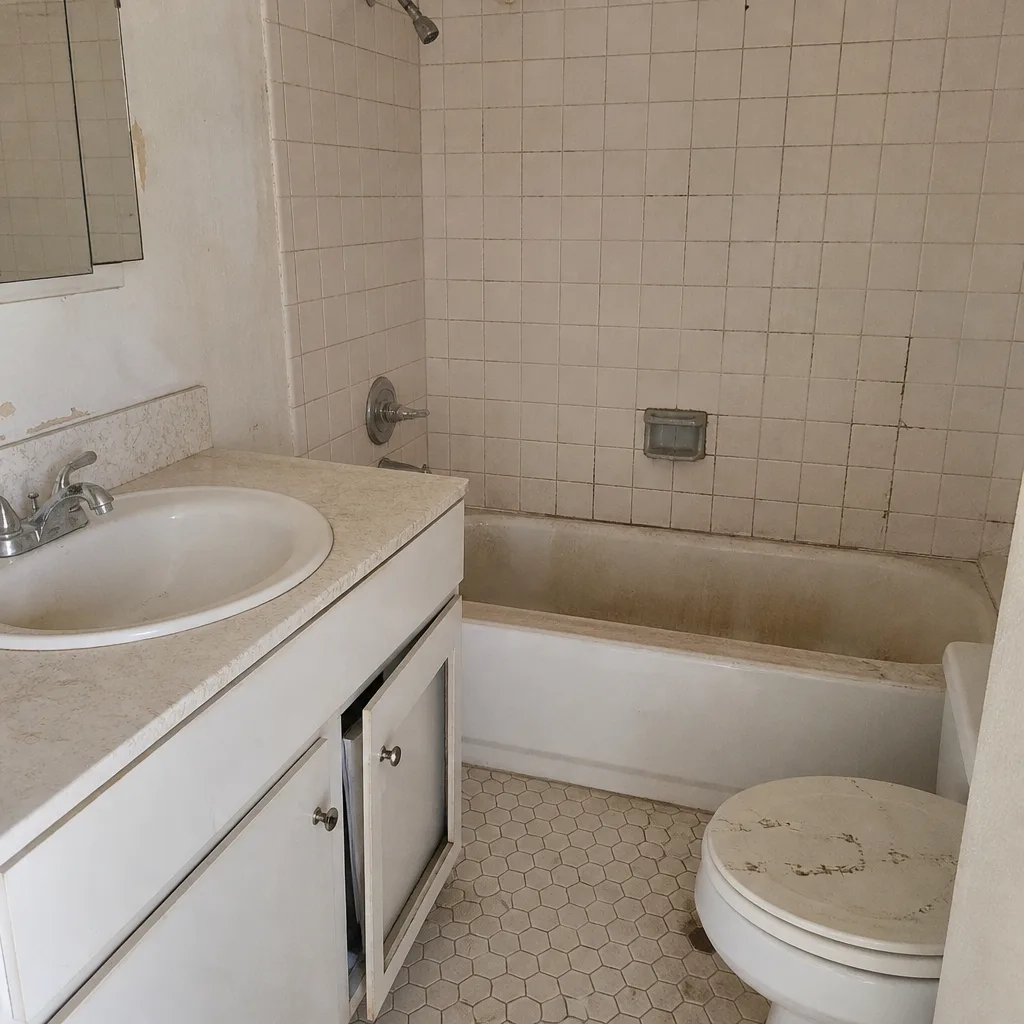
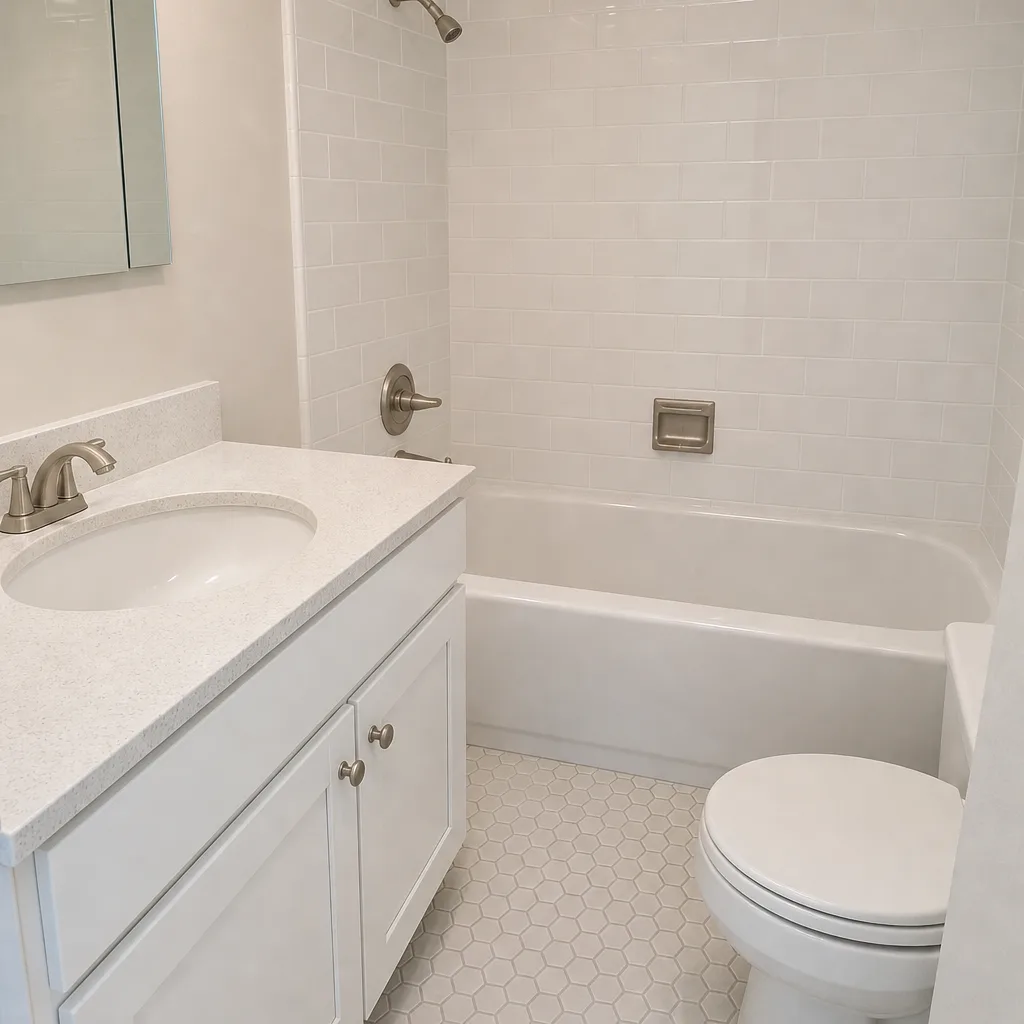
See the difference
 Before
 After
 Before
 After
 Before
 After
When to Call a Professional
Some maintenance is homeowner work, and we’ll say so. The annual caulk-and-filter list is a Saturday job. The calls that genuinely need a professional: any roof inspection or repair (height and heat – not a DIY item), any electrical panel work or new circuit (shock and fire risk), any plumbing inside a wall or at the water heater’s anode rod, and any HVAC refrigerant work. Call us directly if you’re seeing water stains on a ceiling, a breaker that keeps tripping, a shower that smells musty even after cleaning, or a door frame that’s suddenly out of square – those are signs of a failure that’s spreading. Bradford Remodeling Boulder City offers free estimates in Boulder City and can walk the home with you to separate maintenance from repair.
If you’re planning a second project and want to schedule it alongside the maintenance work, the kitchen remodeling in Boulder City page covers scope and what to expect. For a full-home assessment, our general contractor in Boulder City team handles the walkthrough and the written scope.
Frequently Asked Questions

Start immediately, with a first full walkthrough at the one-year mark. The first year is when most workmanship issues surface, and it’s the window when a contractor’s workmanship guarantee is most likely to cover them. Put a one-year walkthrough on the calendar the day the project closes.
No. The annual homeowner list – caulk, grout, filters, GFCI tests, smoke detectors, drain flushes – is DIY work. Roof inspection, electrical panel work, plumbing inside a wall, and HVAC refrigerant work belong to licensed trades. The rule: if it involves height, gas, refrigerant, or wiring inside a wall, call a professional.
Not the guarantee itself, but it can make a claim hard to support, and it can void the manufacturer’s warranty. The 365-Day Done Right Promise covers our work for a full year and we make it right at no charge if the work fails, but a failure caused by a skipped maintenance item (a rotted subfloor under a never-re-sealed shower) is a maintenance failure, not a workmanship one. Keep the log and you’ll never have to argue the difference.
Because attic temperatures above 140°F and daily heat cycling run flexible materials harder than a mild climate does. Caulk, sealant, and flashing lose elasticity faster, so exterior sealant needs a two-to-three-year re-seal and roof flashing needs an annual look – shorter than the five-year intervals national checklists use.
Keep the written scope, the materials list, every product manual, the signed workmanship guarantee, and a dated maintenance log with photos. That packet supports both manufacturer warranty claims and workmanship claims, and it’s the first thing a buyer asks for if you ever sell the home.
You can, and should, keep the packet – but the manufacturer registration is typically the contractor’s responsibility at close. Confirm you received the registration or the literature for each registered product. If a product isn’t registered, the warranty may be shorter than advertised.
The Bottom Line
A finished remodel is a system, not a product. The materials all have a service life, the connections all have a failure clock, and Boulder City’s heat runs that clock faster than most national guides assume. The disciplined approach is simple: a two-window maintenance routine each year, a deeper trade-by-trade check every five years, a maintenance log kept from day one, and the closeout packet kept in one place. Do that and the annual checks stay cheap. Skip it and the first symptom you see is usually the expensive part of the problem. Bradford Remodeling gives you a written price before any work starts and a signed guarantee at close, and we’re here to walk the home with you whenever something doesn’t look right.
Call (844) 797-9259 to schedule your free estimate in Boulder City. A live person answers around the clock, every price is in writing before a single tool comes out, and the crew is background-checked and uniformed before they reach your door.
Written by the team at Bradford Remodeling Boulder City.