Last updated November 17, 2026







Free written scope consultation - allowances, timeline, and change-order rules on paper before a single trade is scheduled
DIY vs Professional Kitchen Remodeling: What’s Safe to Do Yourself
A homeowner who installs their own kitchen faucet saves about $150. A homeowner who moves their own gas line to a new range location without a licensed plumber and a permit saves about $400 – and can void the insurance coverage on their entire home for any gas-related incident, including one that happens five years later. That gap between a small, real saving and a large, hidden liability is the whole decision in a kitchen remodel. In this guide we’ll break a typical Boulder City kitchen down task by task, show you which jobs legally require a permit and a license, which ones are genuine money-savers you can do yourself, and how to run a partial-DIY project without wrecking your warranty or your insurance.
Quick Answer
The safe DIY tasks in a kitchen remodel are demolition, painting, cabinet hardware, and hanging your own light fixtures where no new wiring is needed. Anything that requires a permit or touches a permitted system – gas lines, electrical circuits, plumbing relocations, and structural wall changes – should be done by a licensed tradesperson, because doing it yourself carries a legal and insurance consequence that outweighs the labor you save. Judge each task against one question: does this need a permit? If yes, hire it out. If no, it’s fair game for a cost-saving weekend.
Styles & brands we work with
- Kitchen remodeling
- Bathroom remodeling
- Home additions & ADU
- Roofing
- Windows & doors
- Driveway & pavers
- Fence
Table of Contents
- The Permit Line: What Requires a Permit in a Kitchen Remodel
- DIY Tasks That Genuinely Move the Needle on Cost
- Tasks That Look Like Savings but Create Sequencing Problems
- How to Legally Act as Your Own General Contractor in Nevada
- The Three Tasks Most Likely to Fail Final Inspection
- Structuring a Partial-DIY Contract with a Licensed GC
- Common Mistakes to Avoid
- When to Call a Professional
The Permit Line: What Requires a Permit in a Kitchen Remodel
Here’s the one rule that sorts every task in your kitchen. If a job touches a permitted system – gas, electrical, plumbing, or structure – it needs a permit, and in Nevada the permit requires a licensed contractor to pull it. If it doesn’t touch a permitted system, it’s yours to do. That’s the line. Simple to state, and most homeowners cross it by accident because the work “looks small.”
In Boulder City, kitchen remodels are reviewed against the local building code, and the permits that come up most often on a typical kitchen are mechanical, electrical, and plumbing. A like-for-like swap is one thing; moving a system is another. Swapping a light fixture on an existing circuit is not a permitted electrical change. Adding a circuit for a new range hood, a dishwasher, or under-cabinet lighting is. The distinction matters less to your contractor’s schedule than it does to your insurance carrier and your eventual resale inspection.
Tasks that typically require a permit and a licensed tradesperson:
- Any gas line work – moving, extending, or reconnecting a range or cooktop
- New or relocated electrical circuits, outlets, or a panel change
- Moving or extending plumbing supply or drain lines, including a sink relocation or new dishwasher feed
- Removing or altering a load-bearing wall
- Adding or enlarging a window or exterior door
- Any change to a range hood that vents through the building envelope
Tasks that are typically permit-exempt:
- Demolition of cabinets, countertops, and non-structural finishes
- Painting walls and cabinets
- Cabinet hardware, pulls, and knobs
- Swapping a faucet on existing supply lines (no line relocation)
- Installing a new appliance that plugs into an existing outlet
- Tile backsplash over an existing flat substrate
When we spec a kitchen for a Boulder City home, this split is the first thing we map before a single cabinet is ordered – it determines what’s in a contractor’s scope and what stays in the homeowner’s. You can see how that scope looks on our Kitchen Remodeling in Boulder City page.
DIY Tasks That Genuinely Move the Needle on Cost
Only four jobs in a typical kitchen remodel return a real hourly rate to a homeowner who does them well. We’re specific here because the marketing around DIY kitchen work overstates it. The honest list is short.
1. Demolition. Pulling cabinets, lifting countertops, and hauling debris is unskilled labor with a defined end date. A homeowner demolishing their own kitchen can save $1,500 to $3,000 on a mid-size Boulder City renovation, and the contractor’s schedule is not dependent on your speed. The one rule: know where the water shutoff and gas valve are before you swing a pry bar, and never cut a wall you haven’t confirmed is non-structural.
2. Painting. Walls and, with patience, cabinet boxes and doors. A professionally painted kitchen runs $1,800 to $4,500 in this market; doing it yourself costs materials, plus a week of your summer. If you paint cabinets, use a bonding primer after deglossing – the desert-dry Boulder City air is unforgiving on a poorly prepped surface, and a peeling door finish will fail inside a year.
3. Cabinet hardware and drawer pulls. A $200 hardware upgrade that takes two hours. The only real risk is drilling a pull hole in the wrong location, which is avoidable with a $15 jig.
4. Appliance installation where nothing moves. A new dishwasher, microwave, or refrigerator on the same electrical and plumbing footprint plugs in and slides home. A gas range does not count; that’s a licensed plumber and a permit.
What do those tasks have in common? None of them touches a permitted system, and none of them creates a schedule the licensed trades have to wait on.
Tasks That Look Like Savings but Create Sequencing Problems
The trap here isn’t that homeowners do work poorly; it’s that homeowner work that runs behind stalls a licensed trade who arrives on schedule and finds a half-finished substrate. On a real kitchen schedule, the licensed trades overlap. When one of them is waiting on a homeowner, the whole calendar slides, and every subsequent trade has to be re-booked. That’s how a “money-saving” DIY tile job just cost a week of plumber time.
These tasks tend to look like savings, and usually cost more than the hire:
- Tile setting. A backsplash looks simple; a shower-wall-flush range of full tiles around outlets is not. A failed tile job from improper substrate prep is one of the most common re-do items we’re called in on.
- Drywall finishing. Hanging board is easy. Feathering a level 5 finish so cabinets sit clean against the wall is a craft that takes years, and cabinets installed over a wavy wall show every dip.
- Electrical and plumbing “just a little.” Adding an outlet or extending a drain is where amateurs cross the permit line unknowingly – and where the insurance problem starts.
- Cabinet installation. Getting cabinets level and plumb is the foundation for countertop templates. Get this wrong and a fabricated countertop won’t fit, and the countertop fabricator – working to Cambria or Caesarstone tolerances – is not going to absorb the remeasure.
Every trade on a kitchen has a hand-off to the next. When you DIY one, you take ownership of that hand-off. That’s fine when you can absorb the delay; it’s expensive when the next crew charges you to come back. We’ve written about scope and sequencing in general contracting on our General Contractor in Boulder City page if you want the wider picture.
How to Legally Act as Your Own General Contractor in Nevada
You can be your own general contractor on a kitchen remodel in Nevada without holding a contractor’s license, but only in one specific role: as the owner-builder of the home you live in. That’s a real legal designation with real consequences, and it doesn’t transfer to a rental property or a flip. If you own and occupy the home, you can pull permits and hire licensed subs directly; if you’re remodeling a rental or a property you don’t live in, that path isn’t open to you.
What owner-builder status actually transfers to you:
- Full permit responsibility. You are the applicant on file. Any inspection failure, code violation, or stop-work order is yours, not a general contractor’s.
- Full liability for worker injury. If a sub you hire is injured on your property, the liability lands on you. Ask any licensed sub you hire for a certificate of insurance showing general liability and workers’ compensation, and keep it on file.
- Full warranty responsibility. If the cabinet installation fails, or the countertop fabrication is off, or a plumber’s joint leaks six months later, you are the general contractor that a homeowner – you – has to chase. There is no single party on the hook.
- Resale disclosure. In many jurisdictions, a home sold within a defined window of an owner-builder project must disclose that work. Confirm what applies before you sign the permit.
- No contractor license needed to hire and schedule – and no contractor license held to fix anything gone wrong.
Owner-builder is legal and it can save real money on a straightforward remodel. It also means you are the general contractor, and every one of those four bullets is a general contractor’s job, not a homeowner’s weekend. It’s worth a serious look before you take it on. If you’re remodeling a whole home, not just a kitchen, see how scope widens on our Bradford Remodeling Boulder City home page.
The Three Tasks Most Likely to Fail Final Inspection
Across Boulder City kitchen inspections, three tasks account for the majority of amateur failures we hear about from homeowners who start DIY and then call us to correct. Every one of them turns into a licensed correction at higher cost than the original hire.
1. Gas line work. The most common final-inspection failure in a kitchen is a gas connection that a homeowner “just extended” to a relocated range. Gas piping has specific leak-test and ventilation requirements a homeowner can’t self-certify. When an inspector fails it, the range comes back out, a licensed plumber re-does the line, and the second permit plus re-inspection is billed on top of a plumber you now need urgently. The $400 you saved becomes a licensed correction you can’t schedule on your own timeline.
2. Electrical rough-in. Adding a range hood or under-cabinet lighting looks like a homeowner job until the rough-in inspection fails on box fill counts, grounding, or an un-permitted circuit added to a panel. A licensed electrician’s rough-in inspection is also the point where a homeowner discovers the panel can’t carry the new load.
3. Plumbing relocation for a relocated sink or new dishwasher. Moving a drain isn’t a “couple of feet” job. Slope, venting, and trap-arm dimensions are code-defined, and a drain that doesn’t slope right passes the rough inspection and fails at final when it doesn’t drain. The correction requires opening the wall again – the expensive version of the job you would have paid for once.
If you’ve already started one of these, don’t try to fix it quietly. A failed final inspection is recoverable; an unpermitted gas connection that you never test is not. Call Bradford and we’ll write you a real scope and price to bring it up to code – before you’re in the thick of it.
Structuring a Partial-DIY Contract with a Licensed GC
A partial-DIY kitchen only works when the contract draws a clean scope line. That means the written agreement names, task by task, who does what and where your warranty ends and the contractor’s begins. We put this in writing before any work starts – it’s how we’ve learned to keep a homeowner’s work from falling inside our 365-Day Done Right Promise, and our work from falling inside the homeowner’s.
The steps to structure it:
- Agree on the task split before bids. Decide which tasks are yours and which are the contractor’s, using the permit line from above. Put the split in the contract, not in an email.
- Define hand-off points in writing. If you demo, the contract should state that the contractor’s schedule starts the day after demolition is complete and debris is hauled.
- Name the warranty boundaries. A written scope should state clearly that Bradley’s 365-Day Done Right Promise covers the contractor’s work and does not cover homeowner-installed work – and that a homeowner’s mistake that fails the contractor’s install will be billed as a licensed correction.
- Establish who pulls permits. On a partial-DIY, either the contractor pulls all permitted-system permits, or you take owner-builder status and pull them yourself. Don’t split a permit between parties.
- Get a written price before work starts. A partial-DIY scope should still come with a written price for the contractor’s portion before a tool comes out of a truck. No numbers move at the door.
This is the difference between a partial-DIY project that saves real money and one that ends with a homeowner and contractor arguing over whose drywall sagged. The Garrison Standard – the operating framework we’re held to – is built around putting every price and every guarantee in writing before the first tool comes out.
Common Mistakes to Avoid
- Doing gas line work yourself. The $400 in saved labor is not worth voiding your insurance coverage for a gas-related incident. Nothing else on this list comes close to that consequence.
- Demolishing before the new cabinets are ordered. On a Boulder City schedule, cabinet lead times are the long pole. Tearing out a kitchen before KraftMaid or Wellborn cabinets land means weeks without a kitchen – and a much smaller window for the licensed trades to sequence in.
- Assuming permit-exempt means risk-free. A DIY tile backsplash over a prepped substrate is fine; a tile installation over a bowed wall will crack at the first temperature swing in a dry Nevada spring.
- Hiring unlicensed “handymen” for permitted work. A handyman pulling a permit they aren’t licensed for is the same liability trap as doing the work yourself, with an invoice on top.
- Failure to lock in a written price before work starts. Any bid that can move at the door is a bid you can’t budget a kitchen around – and the reason we put ours in writing every time.
- Not checking a sub’s insurance when acting as owner-builder. If you’re the general contractor, you’re the one exposed when an uninsured sub gets hurt on your property.
- Painting cabinets without a proper primer. The desert air is unforgiving; a bonding primer after deglossing is the difference between a finish that lasts years and one that peels in months.
See the difference
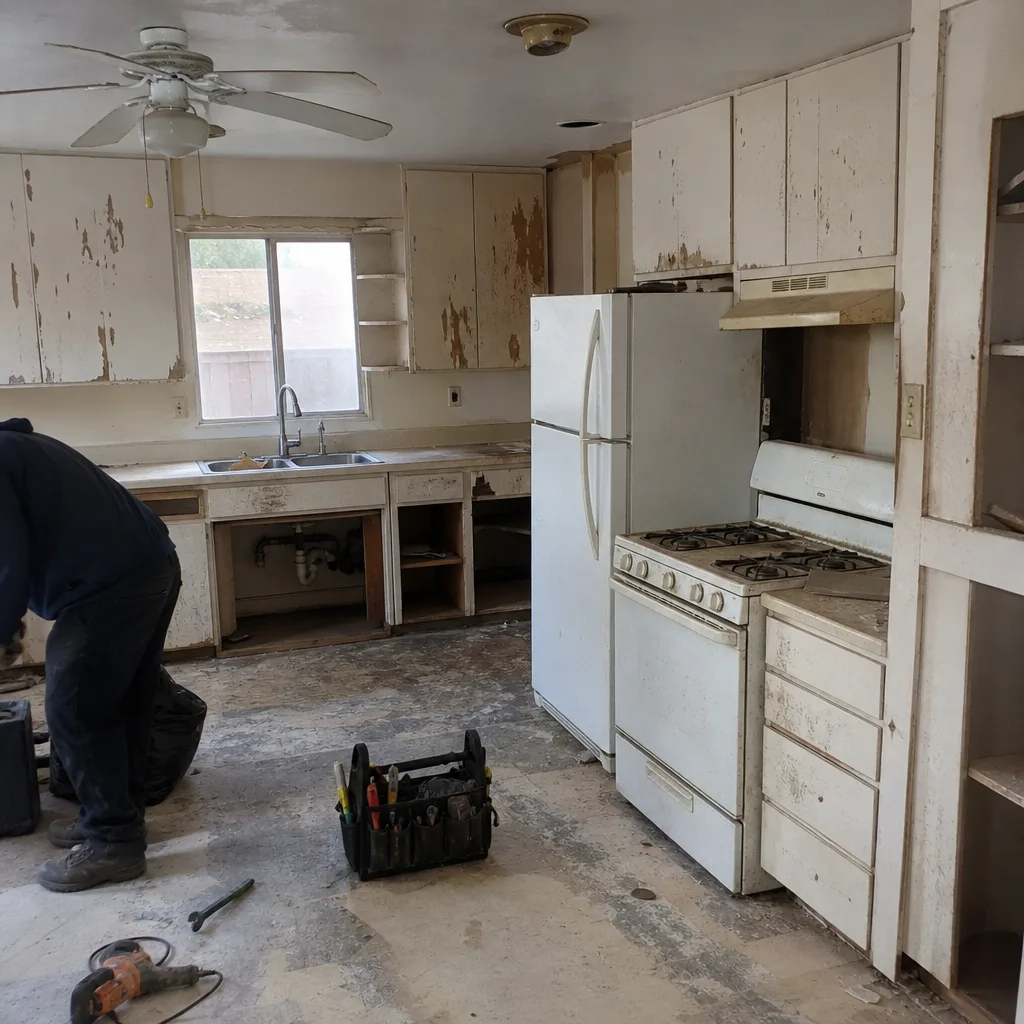 Before
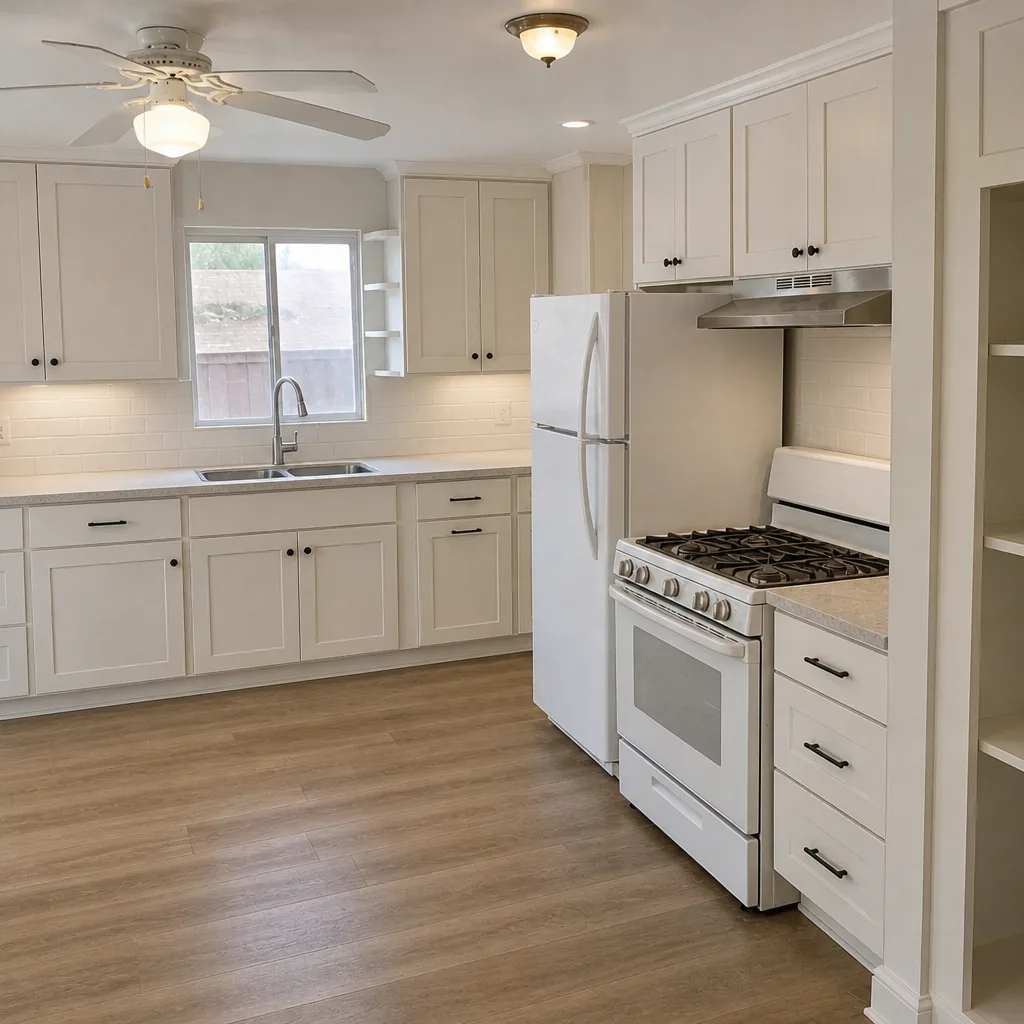 After
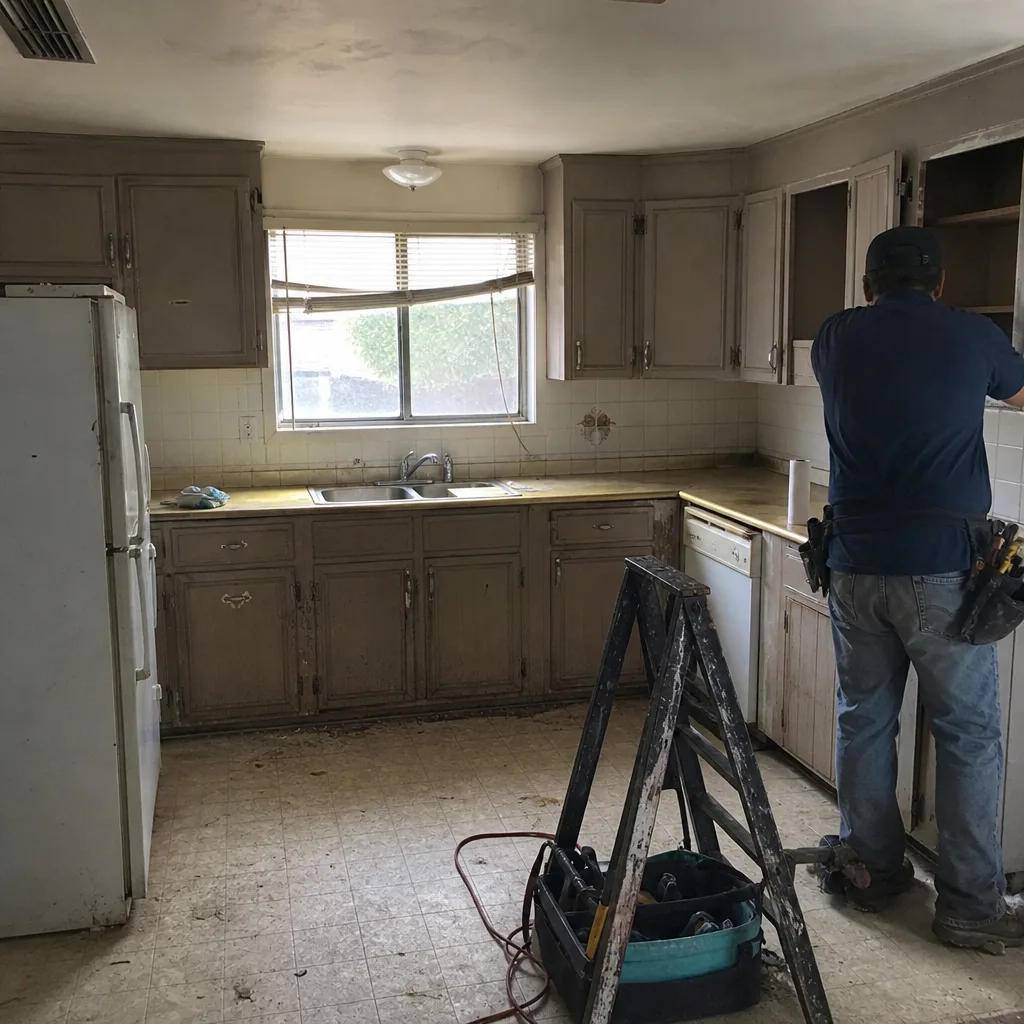 Before
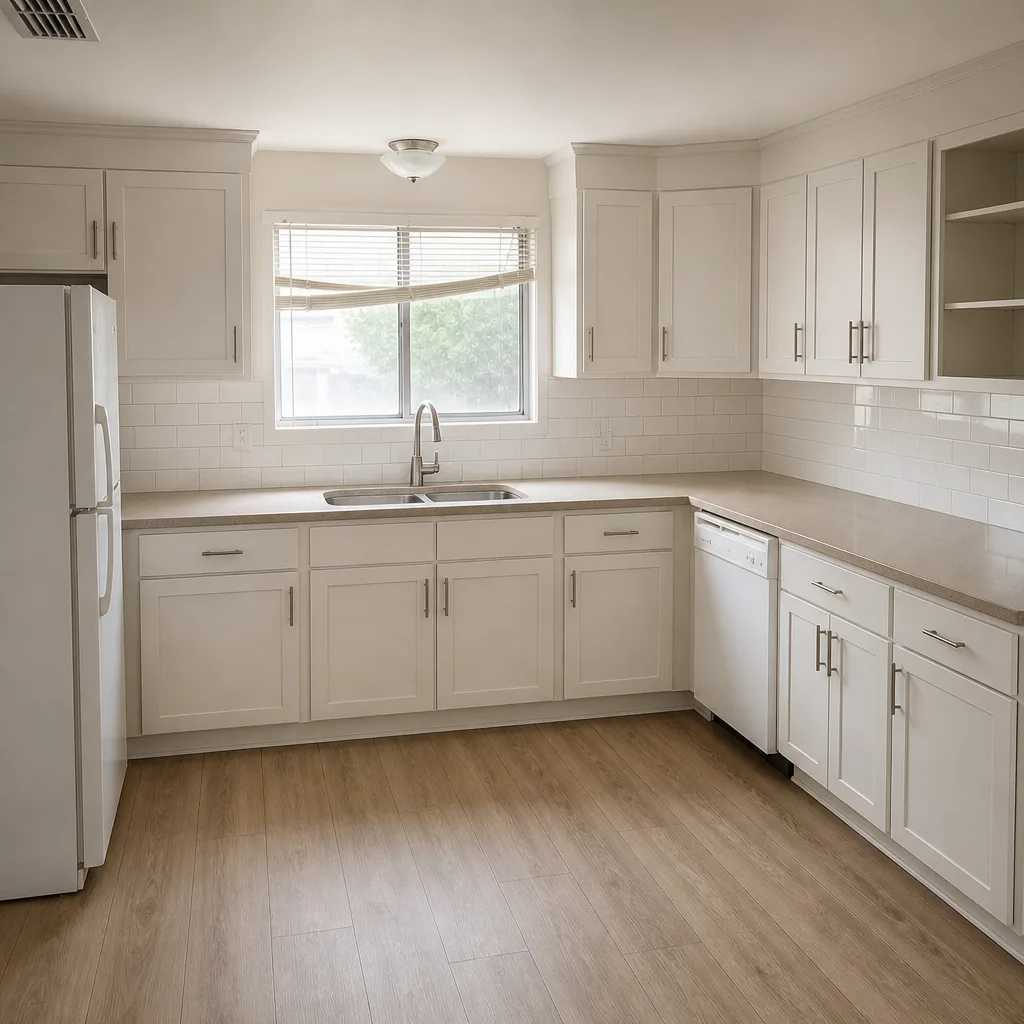 After
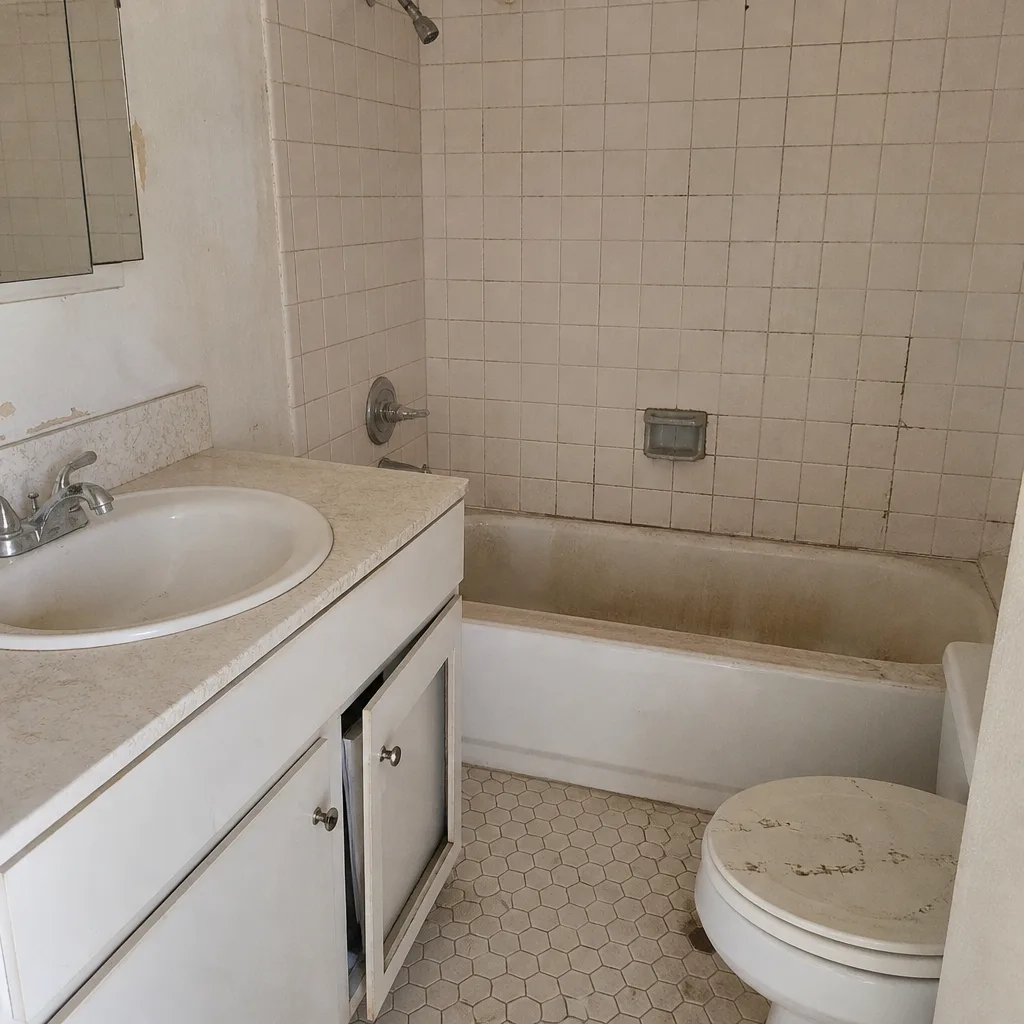 Before
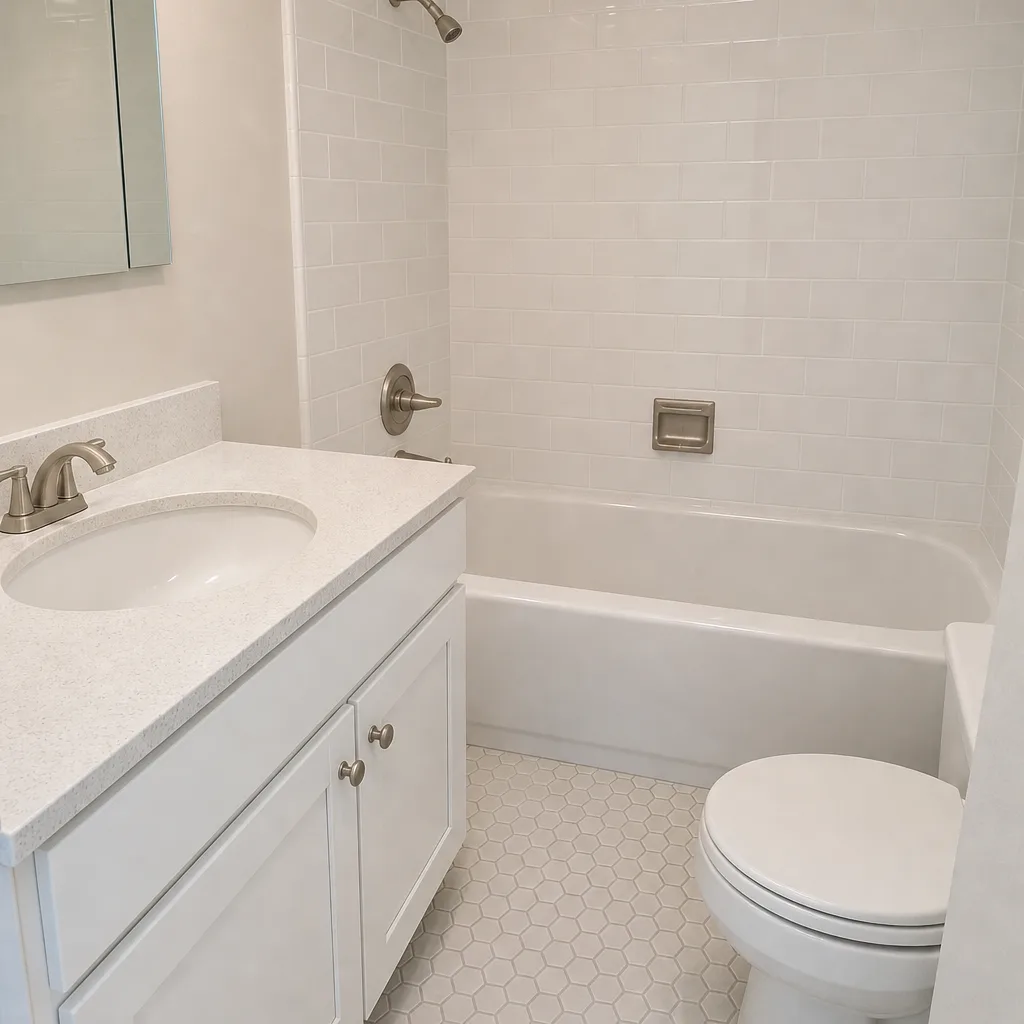 After
When to Call a Professional
Call a licensed professional for anything that touches gas, electrical, plumbing, or structure – and for anything that will be inspected. That’s not a sales line; it’s the legal line. Also call when the job has moved past a single weekend: cabinet installation, countertop templating, and tile setting on a wall that isn’t flat. Those are the tasks where a do-over costs more than the hire. Bradford Remodeling Boulder City offers free estimates in Boulder City on a written scope with a written price before any work starts. Every job we complete carries the 365-Day Done Right Promise – if our work fails inside a year, we come back and correct it at no charge. Call (844) 797-9259 to schedule your free estimate – a live person answers, day or night.
Frequently Asked Questions
You can legally do any task that doesn’t require a permit: demolition, painting, cabinet hardware, a faucet swap on existing supply lines, tile backsplash over a prepped substrate, and appliance installation where nothing moves. Anything that touches gas, electrical, plumbing, or structure needs a permit and a licensed tradesperson. When in doubt, check with the building department before you start, not after.
If the new dishwasher uses the existing electrical outlet and the existing plumbing connection, no permit is needed – that’s a straightforward swap. If you’re adding a new circuit, moving the water supply, or extending a drain line, yes, a permit is required. A dishwasher is a perfect example of a job that’s DIY-permit-exempt on a like-for-like replacement and professional-only the moment anything moves.
Yes, if you own and occupy the home – that’s the owner-builder designation, and it lets you pull permits and hire licensed subs directly. What most homeowners underestimate is what it transfers: full responsibility for inspection failures, full liability if a sub is injured on the property, and full warranty responsibility for the finished kitchen. Owner-builder is legal and can save money, but only if you understand those four consequences going in.
It may not. Insurance policies commonly exclude or reduce coverage for incidents caused by unpermitted or unlicensed work, including gas-related incidents, and that exclusion can apply years after the work was done. That’s the single strongest argument against DIY gas line work. It’s not about whether you can do it; it’s about what happens to your coverage if it’s ever tested.
A partial-DIY kitchen remodel in Boulder City typically saves $2,000 to $5,000 on a mid-size renovation – mostly from demolition and painting labor. The saving is real, but it comes with a catch: homeowner work has to be finished on the licensed trades’ schedule, not yours. Call (844) 797-9259 for a free estimate on the professional portion of your scope, in writing and before any work starts.
Yes, and it’s a common arrangement when the scope is written correctly. The contract needs to state who does which task, where hand-offs occur, and whose warranty covers what. Get it in writing before bids. The biggest mistake in a partial-DIY project is leaving the split informal and discovering at the end whose work failed.
The Bottom Line

The DIY-versus-professional decision in a kitchen remodel isn’t philosophical; it’s a permit question. If the task touches gas, electrical, plumbing, or structure, it needs a licensed tradesperson, and the insurance consequence of doing it yourself outweighs any labor you save – especially on gas. If the task doesn’t require a permit, it’s a legitimate place to put your own labor and save real money. Save your weekend for demolition, painting, hardware, and appliance swaps. Spend your budget on the tasks that carry a permit. If you want a scope that splits cleanly – written price, written guarantee, no numbers that move at the door – call Bradford Remodeling Boulder City at (844) 797-9259. Free estimates, and a written scope before a single tool comes out. If you’re considering the next project after the kitchen, our Bathroom Remodeling in Boulder City page follows the same permit-line logic.
Written by the team at Bradford Remodeling Boulder City.